See the Stunning Archival Photographs That Tell the Stories of Everyday Native Life and Communities

Sarah Grandmother’s Knife, Apsáalooke (Crow), age 10, wearing an elk-tooth dress and sticking out her tongue playfully in Montana, 1910 Fred Meyer photograph collection / National Museum of the American Indian
The Archive Center at the National Museum of the American Indian presents a new exhibition that can help “interrupt the romanticized, stereotypical images often shared of Native peoples throughout history”
It’s 1910. A young girl stands on a road, with trees and buildings behind her. She’s wearing a formal dress with dozens of elk teeth sewn into the fabric. Her expression is light. She closes her eyes and playfully sticks out her tongue. She is Sarah Grandmother’s Knife, an Apsáalooke (Crow) 10-year-old in Montana. She’s the subject of a black-and-white photograph in the Fred Meyer photography collection, whose original card catalog simply identified her as “woman in costume.” However, through looking into archives and genealogies, researchers have been able to identify Sarah Grandmother’s Knife and more information about her life—including that she was married twice, had eight children and died of cancer in 1957.
The photograph of Grandmother’s Knife features prominently in “InSight: Photos and Stories From the Archives,” a new exhibition from the Archives Center at the Smithsonian’s National Museum of the American Indian (NMAI). Opening on May 23, the exhibition shares photographs selected from the more than a half million images stewarded by the museum, ranging from the late 19th century to the present day. “InSight” gives viewers the opportunity to see these photographs on walls, in photo books and, in the case of Grandmother’s Knife, in a large life-size panel.
The museum’s Archive Center began developing the exhibition around 2021, and the collaboration included head archivist Emily Moazami, reference archivist Nathan Sowry and processing archivist Rachel Menyuk. Sowry says that one of the goals of the exhibition was to provide a platform for Native images and stories. Another goal was to show the full scope of Native life.
“One really big thing that we wanted to focus on is a lot of the museum, a lot of the exhibits historically at this museum, have been a more heavy and serious tone,” Sowry says. “We wanted to show that Native peoples are just like everybody else. We don’t have to focus just on negative history, but instead some of the lighter sides, and some of the joyful moments and some of the intimate moments. You can see all of that through these photos.”

Matchua, a young Wixárika (Huichol) boy, with a black puppy, Nayarit, Mexico, ca. 1996 Vita Rose photographs / National Museum of the American Indian
Many of the photographs featured in the exhibition show young people having fun and participating in cultural activities—including a young boy smiling with a black puppy, children enjoying popsicle sticks and a young girl in 1918 holding a porcelain doll. The photographs also show how Native peoples were present during all parts of American history. Other images include military veteran and activist Grace Thorpe’s photos from around Asia as a recruiter in the Women’s Army Corps during World War II and soldiers from the 120th Engineer Combat Battalion playing a game of stickball in Iraq.
Moazami says that pictures of everyday life help interrupt the romanticized, stereotypical images often shared of Native peoples throughout history, such as Edward S. Curtis’ photographs. She references a 1975 family photograph of artist John D. Garcia’s family, an image in which any viewer might see themselves represented.
“I love this dress from the ’70s,” Moazami says, pointing to a patterned outfit worn by potter Lois Gutierrez. “I would wear any of this clothing.” The photograph “dispels the image of Native people always in regalia,” she adds. “This could be anybody’s family from the ’70s.”
The curators for “InSight” stress that this exhibition could only be created through deep collaboration with Native communities and museum visitors, as part of the curatorial process included public surveys where visitors could identify which photos they most wanted to see in the show. Menyuk notes the importance of online spaces for connecting and sharing stories. For example, around 2014, the Archive Center posted a blog featuring a William Stiles photograph of an Innu man, Thommy Mestokosho, playing a guitar. Mestokosho’s granddaughter Lydia Mestokosho-Paradis was able to get in touch with the Archive Center, and the center was able to share the photograph with the family along with some of Mestokosho’s letters. When including the same photograph in “InSight,” they reached out to Mestokosho-Paradis again, who engaged even more with the museum.

Thommy Mestokosho (Innu, 1937–2016) playing guitar, Québec, Canada, 1959 William Stiles / National Museum of the American Indian
Mestokosho-Paradis “went to her whole family, they all sat down and wrote up a little piece about her grandfather Thommy, who had since then passed away,” Menyuk says. “It was just a really beautiful circular moment of being able to get the words about this amazing guy with his hair and his guitar, and just learn a little bit more about him from his family.”
The Archives Center at NMAI includes a huge collection of photographs and archival materials, with many artifacts having their own idiosyncratic history of how they wound up in the museum. For example, the museum obtained a letter written by Grace Thorpe to her mother during World War II because someone had found it in an antique shop. But not all object histories are as easy to trace. NMAI was established in 1989 by an act of Congress, yet much of the museum’s collections come from the older Museum of the American Indian/Heye Foundation, established in New York City in 1916. Many archival materials were initially paired with field notes not written in conversation with Native peoples, or they were simply mailed to the museum and accepted.
Today, the study of museum objects’ origins is called “provenance history,” and NMAI museum specialist Maria Galban is dedicated to studying these histories. The museum also collaborates with others in the Smithsonian Institution to help share information about historical artifacts. These efforts include the Audiovisual Media Preservation Initiative, which helps digitize audiovisual collections (especially quickly deteriorating audio tapes), and the NMAI culture thesaurus, which ensures accuracy for cultural terms within the Smithsonian (a process sometimes called “reparative description”). For the curators, it’s important that their work extends beyond just their own archives.

Nina Cleveland (Ho-Chunk) at home in front of her family photographs, Ho-Chunk Nation of Wisconsin, 1999 The Ho-Chunk People series by Tom Jones / National Museum of the American Indian
“We really don’t think that our job just ends at the entrance to NMAI or to the CRC [Cultural Resources Center],” Sowry says. “We kind of refer to it as the ‘archival diaspora,’ where people’s—especially Indigenous people’s—cultural belongings and cultural materials are spread everywhere at museums and cultural institutions throughout the world.”
And the collaboration the Archive Center most prioritizes is with Native communities themselves, providing reference services to community members, scholars and the general public. Since April, the center has hosted community visits with members from Alaska, North Dakota, El Salvador and elsewhere. During these visits, the center helps look up names within the archives in hope of making connections. The connection works both ways: Sometimes elder community members can identify previously unnamed people in photographs at the center, and sometimes the center will share photographs with family members for the first time.
“It’s such a powerful moment when it happens, and it happens regularly,” Moazami says of helping people recognize family histories. “It’s such an honor to be a part of that experience, to be with a person when they are able to see a relative for the first time, a visual cue for the first time.”

Eva Curtis (Iñupiaq) and Sadie Vestal (Iñupiaq) picking wildflowers, Kotzebue, Alaska, June 23, 1951 Lindell and Ethel Bagley Alaska collection / National Museum of the American Indian
Menyuk says that she sometimes finds fun in the “detective” element of their process, but that overall the curators really see themselves as the “stewards” of these connections more than anything. “We don’t see ourselves as the experts on any of this,” Moazami adds. “It’s the people, the community, that are the experts and the best interpreters of their own culture rather than us.”
Menyuk notes that sometimes there’s a misconception that archives can be “stuffy,” but the “InSight” exhibition offers viewers the opportunity to discover forgotten histories, even going into the future.
“We’re still collaborating with Native communities and with family members, where we might not know the names of the people in these photos yet,” Menyuk says. “That’s a work in progress; this is all still a work in progress. That’s part of the dynamism of archives, that these stories are still developing. Even as this exhibit goes up, we’re still working on it.”
Nathan Pugh – Freelance Writer

Cooking Broke
Poetry


That’s Funny
How Yellow Fever Intensified Racial Inequality in 19th-Century New Orleans
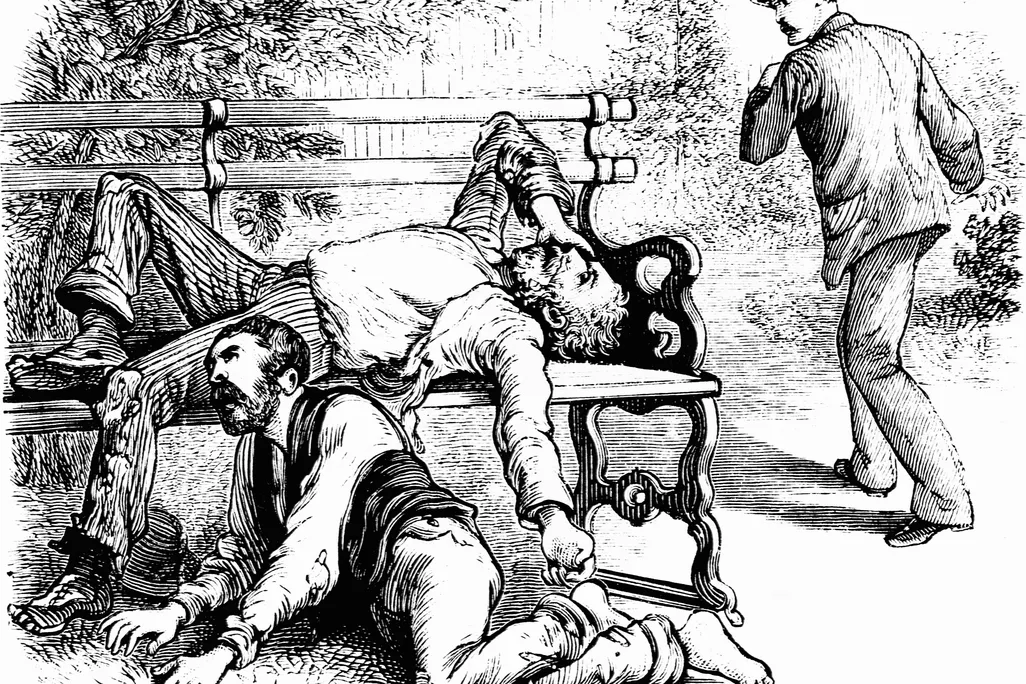
A 19th-century illustration of two yellow fever victims in New Orleans Bettmann / Getty Images
A new book explores how immunity to the disease created opportunities for white, but not Black, people
More than two years into the Covid-19 pandemic, the social, economic and political implications of public health crises are more apparent than ever—as is the fact that people of color and poorer communities often bear the brunt of these contagions’ consequences. A new analysis of yellow fever in antebellum New Orleans highlights striking parallels with the ongoing pandemic, illustrating how the mosquito-borne virus interacted with the Louisiana capital’s unique climate, cotton-driven economy and violently exploitative labor regime to spark wave after wave of epidemics. Against a backdrop of intensifying slavery, yellow fever transformed New Orleans into a city of the dead, claiming as many as 150,000 lives between 1803 and the outbreak of the Civil War. The disease also created a horrific form of what Kathryn Olivarius, a historian at Stanford University, describes as “immunocapitalism”: a “socially acknowledged lifelong immunity to a highly lethal virus, providing access to previously inaccessible realms of … power.”
In her book Necropolis: Disease, Power, and Capitalism in the Cotton Kingdom, out now from Harvard University Press, Olivarius explores the racialized nature of New Orleans’ yellow fever epidemic. For the disease-ridden city’s 19th-century populace, immunity was the key to opportunity, determining where locals lived and worked, who they socialized with, and other aspects of daily life. Because people had no way of proving their immunity in this pre-vaccine world, accruing “immunocapital” was more about convincing others of one’s status than actually being immune to yellow fever. This immunity—whether real or perceived—had wildly conflicting implications for white Orleanians and enslaved Black people.
At the time, medical professionals erroneously believed that African people were immune to yellow fever—a theory that was used, in turn, to justify racial slavery. Slaveholders reasoned that “God intended for enslaved people to be enslaved, specifically in the American South, … because the cotton economy would entirely collapse without the labor of immune Black people,” says Olivarius. “Many pro-slavery theorists and doctors essentially were saying that Black slavery was positively humanitarian, because it distanced white people, who would be vulnerable to yellow fever, from labor and spaces that would kill them, whereas Black people could safely work in these spaces.”
Smithsonian chatted with Olivarius about yellow fever in New Orleans, how surviving the disease played out differently for white and Black people, and what it was like to write about the history of racism and disease in the midst of a pandemic. Read a condensed and edited version of the conversation below. What is yellow fever, and how is it different from Covid-19?
Yellow fever is very, very different from Covid-19. It’s an acute hemorrhagic fever spread by mosquitoes, and in the 19th century and earlier, it was the most terrifying disease in the Atlantic world. This was the disease that kept people up at night, because it was a miserable way to die. Victims experienced a sudden onset of nausea and chills, muscle pains, back aches, and jaundice. Within days, patients would be oozing blood through their orifices. They vomited up partly coagulated blood with the consistency and color of coffee grounds. They could lapse into a coma and die of organ failure. Even the most pious victims—ministers, priests—were screaming profanities as the end neared. It was that painful.
/https://tf-cmsv2-smithsonianmag-media.s3.amazonaws.com/filer_public/38/d1/38d11495-46bf-4118-9226-1e2a7b064ff4/yellow_fevr.jpg)
Yellow fever was terrifying because it was so mysterious. Even the most experienced doctors were flummoxed. There was no cure, no inoculation, no satisfactory explanation for why it killed some people and spared others. It was only at the end of the 19th century that Cuban researchers discovered yellow fever’s vector, the female Aedes aegypti mosquito, and only in the 1930s that an effective vaccine was developed.
How did people at the time understand and treat this deadly disease?
The full impact of yellow fever is hard to calculate because at the time, they bent over backward to not come to grips with the enormity of any epidemic. Every second or third year, an epidemic would strike, and during those epidemics, as many as 8 percent of the population could die. In some immigrant neighborhoods, especially German and Irish ones, epidemics killed off 20 percent of people. In 1853, the year of the worst epidemic in New Orleans, with over 12,000 deaths, about 10 percent of the city’s population died. And one-fifth of the Irish-born population died.
Though little was known about how the virus spread or how and why it was so deadly, people certainly recognized some patterns of transmission and sickness in yellow fever. They understood that yellow fever struck during a fairly well-defined fever season, roughly July to October. They [mistakenly] thought that yellow fever was miasmatic, the organic result of the city’s heat, meteorology, soil and climate. [The now-obsolete miasma theory posits that diseases are caused by miasma, an ancient Greek word that translates roughly to pollution.] It sort of makes sense, because in the summertime, thick, hazy steam arose from the ground, and people actually talked about it as if it had a tangible quality.
Locals called yellow fever a “strangers’ disease,” associating it with foreign-born, poor and hard-drinking folks. Contemporary science also held that all Black people were less impacted by yellow fever than white people, either because they were hereditarily immune or extremely resistant to the virus. This wasn’t true, but the idea stuck. Most of all, 19th-century Southerners had a very strong conception of acclimation, the process by which someone becomes sick with yellow fever, survives and acquires immunity. They had a sense that if someone had been around long enough, they became immune to the disease.
What is immunocapital?
To possess what I call immunocapital, a person in New Orleans had to convince others of their immunity status. They could then leverage that immunity for material gain, whether professional, economic or social. Immunocapitalism is the system of class rule in which disease and immunity were used by the elites to justify vast inequality.
There were occasionally laws that it was illegal to sell unacclimated people in the New Orleans slave market because it was just too risky. These laws were flagrantly ignored, but you can see how important the acclimation credential was even in the buying and selling of human beings.
What made New Orleans such a special—and susceptible—city?
New Orleans is an extraordinary city now, and it was an extraordinary city then. It’s located about 15 feet from the river’s edge, and most of the city sits about just one foot above sea level. So, this is basically a very swampy place, and water has always been this difficult factor: water from the sky, from hurricanes, from the river, from groundwater seeping up. [New Orleans’ wet environment proved to be the perfect breeding ground for the mosquitoes that spread yellow fever.]
/https://tf-cmsv2-smithsonianmag-media.s3.amazonaws.com/filer_public/d0/a1/d0a1c66e-d87c-4430-bddc-727c8b4c2ce3/gettyimages-96820689.jpg)
In the 18th century, New Orleans was controlled alternatively by the French and the Spanish. Colonial officials often wrote back to Europe, saying this city isn’t tenable in the long term. But all that changed in the 1790s because of two things: cotton and sugar. In 1796, sugar was planted successfully for the first time in Louisiana. This set off a chain reaction, and suddenly all these sugar mills started popping up along the lower Mississippi River. Sugar was an incredibly lucrative crop for white planters and enslavers, who used slave labor to cut cane, boil it and refine it into sugar. And cotton became a viable product in this very, very rich soil of the Mississippi Delta, all the way up to Arkansas, Texas, Kentucky, Tennessee and Alabama. The cotton gin increased productivity by a factor of 50. Of course, cotton was also slave-grown.
New Orleans would not exist without slavery. It was integral to the development and prosperity of the city. At the same time that cotton and sugar are on the rise, slavery is on the rise, and New Orleans is on the rise. Once these crops were successful, people started absolutely pouring into New Orleans, and the city was growing very, very quickly. After the Louisiana Purchase in 1803, Americans took over control of the city, and New Orleans became the largest hub for America’s domestic slave trade.
How was race connected to discussions of yellow fever and immunity?
The notion that Black people, no matter where they had been born or where they were from, were inherently more resistant or entirely immune to yellow fever had deep roots in the Atlantic world. This idea wasn’t invented in New Orleans or in the American South. It had been present in the Greater Caribbean, and really since the first outbreaks of yellow fever in the 17th century in Barbados. But it really took off in the American South.
One of the ideological justifications for racial slavery expansion becomes that Black people are immune to yellow fever. … You see this not just with yellow fever but also cholera, which periodically ripped through the South. Enslavers were absolutely petrified that this would quite literally destroy them by killing their capital [in other words, enslaved people]. On the one hand, the public line from these enslavers is that Black people are immune to yellow fever, but on the other, no self-respecting purchaser of enslaved people would ever purchase a person in New Orleans without an express guarantee of acclimation.
What was the public health response to the constancy and intensity of yellow fever outbreaks?
Public health could scarcely have been worse in New Orleans. They had basically no board of health that was tasked with tracking or defining disease. Sanitation was very, very minimal. In the years that a board of health did exist, it might collect some data. But most years, there was no single body tasked with tracking or defining disease or even quantifying it. No epidemic before 1817 was counted. Records always undercounted enslaved people, who almost never appear in the mortality record when it comes to yellow fever. Some years, officials would also remove seafarers or other groups from the lists of the dead, artificially minimizing the numbers even more.
Another big thing is that New Orleans didn’t implement quarantines, which are basically the most powerful weapon in a health officer’s arsenal. Nobody really likes quarantines, and businesses especially hate quarantines. In New Orleans, quarantines were a non-starter. They were implemented only a few times, very briefly, during the entire antebellum period. This was in stark contrast to other American cities at the time that were basically enhancing their quarantine infrastructure with every successive year. New York, Philadelphia and even Charleston had not just a single quarantine station, but often many quarantine stations to deal with different kinds of diseases. Over the course of the 19th century, these cities are really trying to take more control over the public’s welfare, consolidating their power over questions of health and trying to depoliticize the issue. In New Orleans, that just doesn’t happen.
/https://tf-cmsv2-smithsonianmag-media.s3.amazonaws.com/filer_public/ee/ac/eeac8959-801f-4ffd-ac76-f2d87b6e18eb/ambulance_1905_yellow_fever_new_orleans.jpeg)
So, why wasn’t this a leading political issue? That’s a question I find perpetually fascinating. Why weren’t there protests on the streets from people saying clean up the city? There was this fascinating process with most townspeople, in which they would protest the situation early on after they moved to New Orleans. Then, they either came to accept it, they fled the city, they died, or they survived and became acclimated. Once they’re an acclimated citizen, they align their interests with the rest of their epidemiological class.
What was it like writing about epidemics during the Covid-19 pandemic?
It wasn’t ideal. At times, life imitated art to an eerie degree, in ways that could be overwhelming and stressful. There’s this dual tempo of fervent activity and fear, coupled with ennui or melancholy. You can also see that in how people reacted in the past. I feel almost glad to have experienced something at least similar to what they experienced.
One aspect that really resonated early on in the pandemic was the false debate between locking down or keeping the economy open. That was always a false dichotomy in some sense, because do you prioritize the public’s health or the economy? You had politicians saying it’s basically your patriotic duty as an American to not live in fear of this virus, to get out there, to go back to work, to keep our economy buoyant. The way this was politicized, and this notion that facing the disease, getting sick with it and recovering was somehow a patriotic act—there are some deep echoes of the antebellum period with that.
Karin Wulf – History Correspondent

Cooking Broke
Poetry


Charleston, South Carolina, Formally Apologizes for Its Role in the Slave Trade
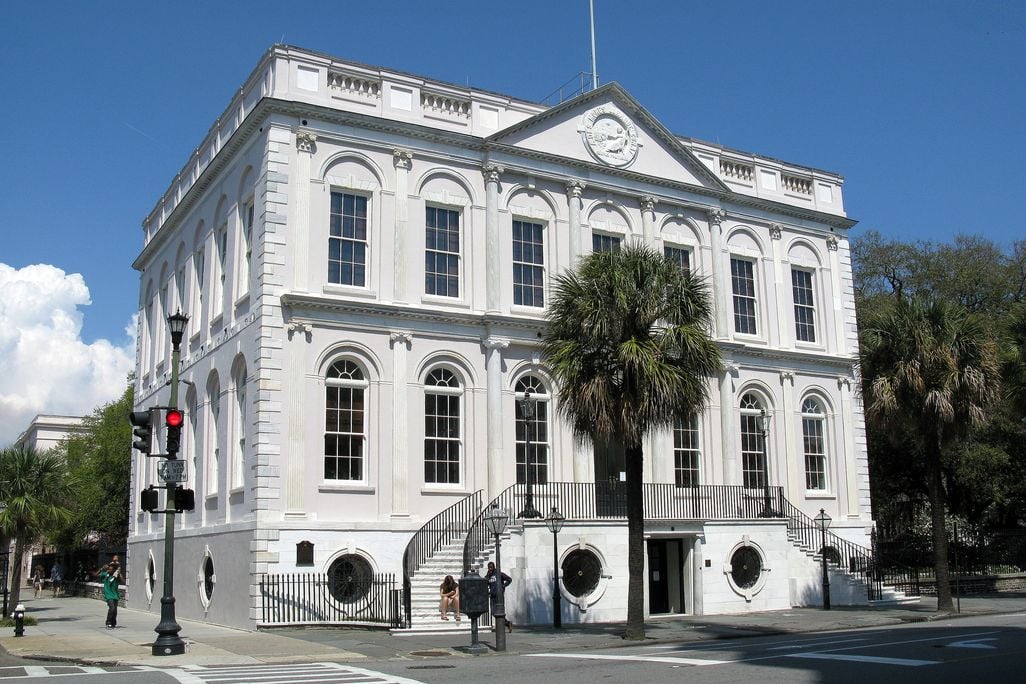
Charleston’s City Hall, where Tuesday’s vote was held, was built by enslaved people. Flickr/Spencer Means
Some 40 percent of enslaved Africans entered the country through Charleston
After a long and emotional council meeting, the city of Charleston, South Carolina, has formally apologized for its role in the slave trade. On Tuesday, according to Hanna Alani of the Post and Courier, city council members voted 7-5 in favor of a resolution that denounces slavery, acknowledges that Charleston profited greatly from slave labor and extends an apology on behalf of the city. Around 40 percent of enslaved Africans that were brought to the United States during the Transatlantic Slave Trade entered the country through Charleston, a port city. Many of these enslaved people remained in South Carolina and Charleston “thrived under a slave economy” for nearly 200 years, writes Brian Hicks in a 2011 article for the Post and Courier. Charleston’s City Hall, where Tuesday’s vote was held, was built with slave labor in the early 19th century.
The vote took place on Juneteenth, which marks the day, more than two years after the Emancipation Proclamation was signed, that enslaved people in Texas learned that the Civil War had ended and they were free. (No one in Texas “was in a rush to inform them,” as Stacy Conradt writes for Mental Floss.) The vote also fell two days after the third anniversary of the mass murder at a church in Charleston, when nine black parishioners were shot and killed by a self-described white supremacist.
Melissa Gomez of the New York Times reports that the new resolution “was approved by voice vote and was met with loud cheers” by people who had gathered to watch the vote.
The two-page resolution states that “fundamental to the economy of colonial and antebellum Charleston was slave labor, Charleston prospering as it did due to the expertise, ingenuity and hard labor of enslaved Africans who were forced to endure inhumane working conditions that produced wealth for many, but which was denied to them,” according to Gomez.
The resolution lays out a number of actionable goals, like creating an office of racial conciliation to help heal longstanding tensions. The document also pledges to memorialize unmarked graves of African slaves, and implement policies that will encourage businesses to strive for racial equality.
But some council members questioned whether the resolution goes far enough, noting that the city’s African American community has urgent needs not fully addressed by the document, like affordable housing.
“Without economic empowerment—as a descendant of slaves—I cannot support this resolution,” Keith Waring, an African American councilman, said during the meeting, according to Alani of the Post and Courier.
Councilman Harry Griffin said that many of his constituents did not want the city to apologize for something that its living residents did not do, and posited that a more serious apology “would be the city moving to address flooding issues on Huger Street, where African-Americans live,” Alani writes.
Charleston mayor John Tecklenburg, however, supported the resolution, noting in the meeting that the city had been “enamored and intertwined” with slavery, reports Gomez of the Times.
“Do we have a reason to be sorry, to apologize?’’ he said. “We do.”
Charleston now joins a list of cities and states that have apologized for their participation in the slave trade, including Virginia, North Carolina, Alabama, Florida, New Jersey, and Annapolis, Maryland. Many cities and institutions are reckoning with their ties to slavery in other ways. Across the country, Confederate memorials are being taken down. New Orleans is erecting markers on sites where people were bought and sold. Last September, Harvard unveiled a plaque honoring the unnamed people enslaved by one of the school’s early benefactors. In 2015, Georgetown University changed the names of two buildings that honored university presidents who had been involved in the sale of 272 enslaved people.
During the debate over Charleston’s resolution, Alex Sanders, a former judge, delivered a speech in favor of the apology, reports Bill Chappell of NPR. Sanders noted that while the apology was coming from the city, its residents “all enjoy the benefits every day of what enslaved people were compelled to produce when they built so much of the city of Charleston.”
“At the very least,” he added, “we can say we’re sorry.”
Brigit Katz – Correspondent

 HPS Magazine