Poetry
Poetry, Arts, Cooking, Communication, Culture and More!
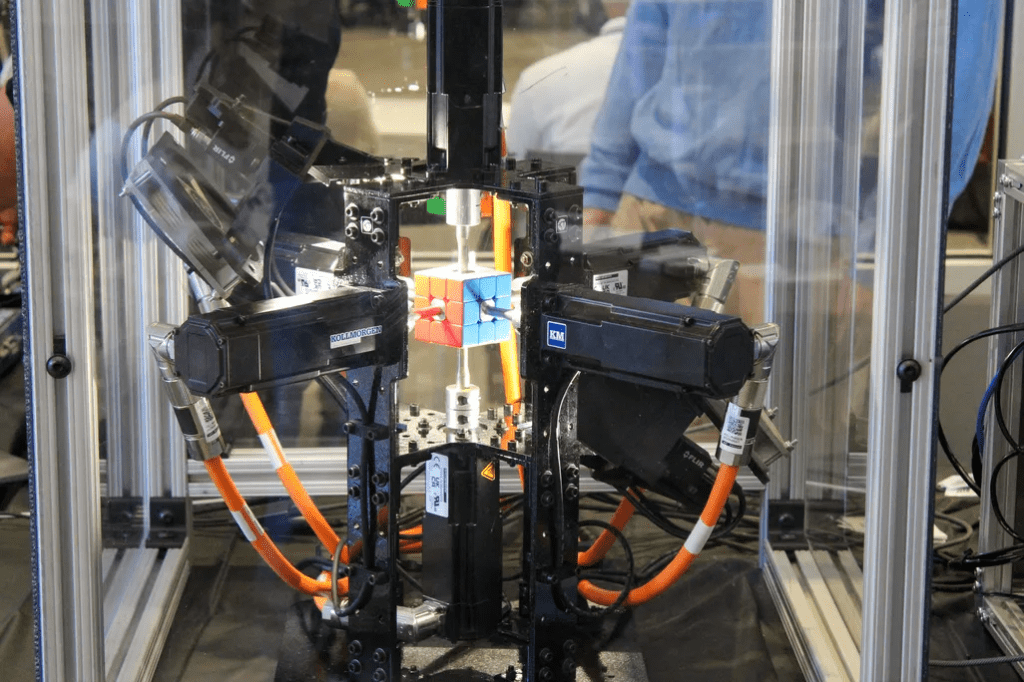
“Purdubik’s Cube” was developed and built by undergraduate students Junpei Ota, Aden Hurd, Matthew Patrohay and Alex Berta. Purdue University
Blink and you might miss it: A new robot developed by college students can solve a Rubik’s Cube in 0.103 seconds, setting a new world record.“We solve in 103 milliseconds,” says Matthew Patrohay, one of the electrical and computer engineering undergraduates at Purdue University who designed and built the robot, in an announcement from the university. “A human blink takes about 200 to 300 milliseconds. So, before you even realize it’s moving, we’ve solved it.”
The high-speed robotic system—named “Purdubik’s Cube”—now holds the Guinness World Record for the fastest robot to solve a puzzle cube. Patrohay, along with fellow students Junpei Ota, Aden Hurd and Alex Berta, officially set the record in a laboratory on the university’s campus in West Lafayette, Indiana, on April 21.
Purdubik’s Cube handily beat the previous record of 0.305 seconds, which was set last year by a Mitsubishi Electric robot.
“[The students] said, ‘You know what? I think we can do better,’” says Milind Kulkarni, who leads the university’s electrical and computer engineering department, in a video accompanying the statement.Though developing the robot was a team effort, it was Patrohay who initially spearheaded the project. His love affair with the scrambled, multicolored puzzle cube dates back to the fourth grade.
“There was a competition, and you get a prize if you could solve it, and I could never solve it,” he tells NPR’s Ailsa Chang. “And I wanted to win the prize, so a few friends and I tried to learn how to solve it.”
Then, while he was in high school, he heard about a pair of MIT students who’d designed a robot that solved a Rubik’s Cube in 0.380 seconds in 2018. He was immediately intrigued.
“I thought, ‘Hey, someday, I should try and beat that,’ and here I am,” he tells NPR.
When Patrohay got to Purdue, he learned everything he could to make his dream a reality. After spending time building the necessary skills for the project, the group actually constructed the robot in just one semester for their senior design class.
To develop a robot that could solve a Rubik’s Cube in record time, the students integrated several systems and technologies, including machine vision for color recognition, custom algorithms and industrial-grade motion control hardware.
They also optimized the Rubik’s Cube itself, designing a strong, custom internal core to hold all the pieces together as it moves at a rapid pace.
“The cubes themselves just kind of disintegrate,” Patrohay says in the video. “The pieces just snap in half and fall apart.”Though 0.103 seconds is fast, Patrohay is optimistic that Purdubik’s Cube might be able to work even faster.
“We’re going to give one last little effort to try and push below 100 milliseconds, so we can say we’re even faster,” he says in the video. “But realistically, I think 103 milliseconds is going to be very tough to beat.”
The Rubik’s Cube was invented in 1974 by Hungarian architect Ernő Rubik. Five decades later, it’s the most popular puzzle toy in the world—especially among “speedcubers,” or competitors who try to solve it as quickly as possible.
For humans, the world record for solving a 3x3x3 rotating puzzle cube is 3.05 seconds, set by Xuanyi Geng of China a little more than a month ago. “Speedcubers” have also set world records for solving them while underwater, while running 100 meters, while blindfolded, while roller skating, while upside down and while juggling.
Sarah Kuta – Daily Correspondent



At the beginning of a new year, many of us zoom out and think about what we want to do with this fresh start. Do you want to take more spontaneous trips in 2025? Lean into a creative pursuit like photography or pottery? Maybe, this is the year you finally get that tattoo you’ve been thinking about.
If anyone can inspire you to leap and try some new ink, it’s fine-line tattoo artist Syd Smith. Smith’s intricate designs — often on the hands and fingers — frequently spark viral trends, like the micro hearts that took off last year. Here, she walks us through some of her favorite tattoo trends for 2025, which are almost guaranteed to become popular. On this list, you’ll find everything from hyper-realistic designs to out-of-the-box placement ideas like finger tattoos and inner-ear tattoos. Whether you’re still mulling over placement or your exact design, these creative tattoo ideas might help push you closer to your New Year ink.
“Realistic tattoos have been around for years,” Smith says, “But 2025 is all about taking hyper-detailed portraits and shrinking them down.” Think of a loved one’s eye or their whole face, all packed with intricate detail. “This trend reflects the skill of today’s tattoo artists and appeals to those who want deeply personal tattoos that double as wearable art.”

“Realistic tattoos have been around for years,” Smith says, “But 2025 is all about taking hyper-detailed portraits and shrinking them down.” Think of a loved one’s eye or their whole face, all packed with intricate detail. “This trend reflects the skill of today’s tattoo artists and appeals to those who want deeply personal tattoos that double as wearable art.”
Finger Tattoos

To many people, finger tattoos feel like jewelry. “Some sets are designed to resemble rings, chains, or minimalist patterns,” Smith says. “They provide a permanent, low-maintenance way to elevate personal style.” According to Smith, these designs will only continue their rise in popularity. “With endless customization options and growing exposure on social media, these tattoos have become a standout trend.”
Inner-Ear Tattoos

The ear is attracting more attention this year — maybe it’s the Ariana Grande effect. “Tiny designs like constellations, abstract shapes, or simple linework tattoos along the helix or lobe add a delicate and playful touch,” offers Smith. “This trend is perfect for anyone who wants a subtle tattoo that makes a big impact.” If you’re looking for inner-ear tattoos, we have plenty of ideas for you.
Spine Tattoos
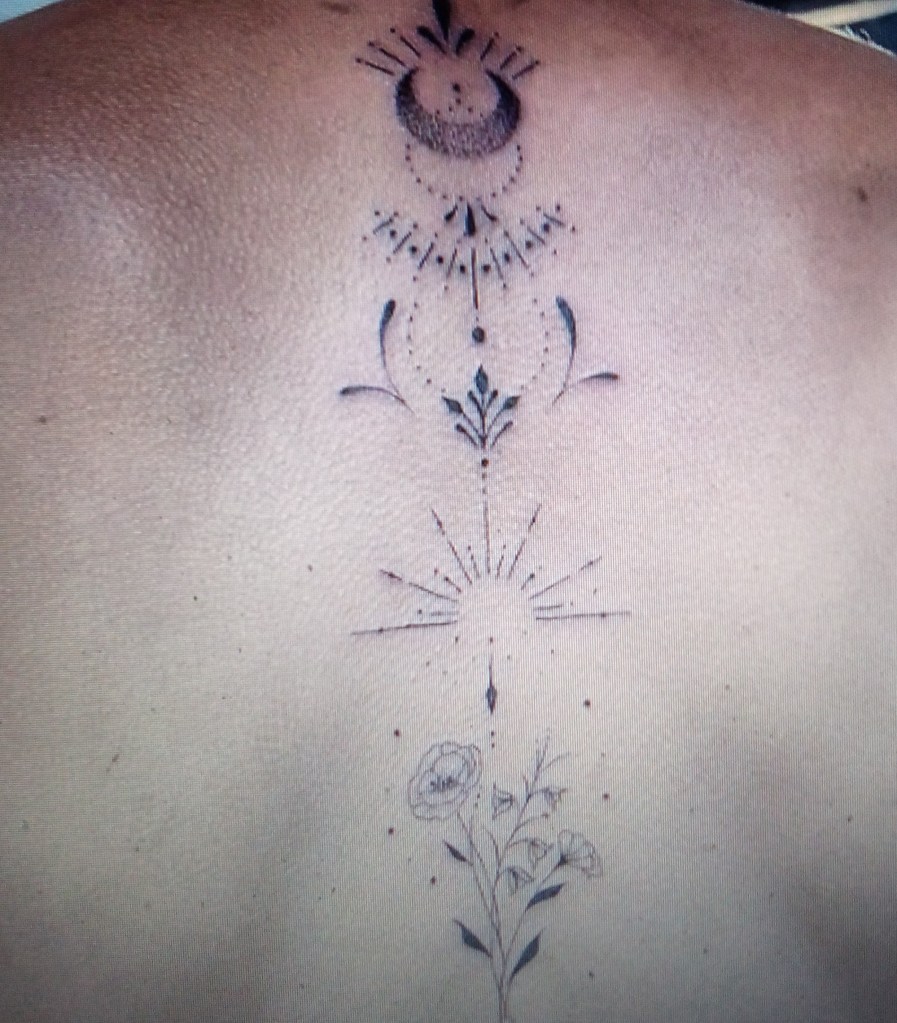
Smith says “delicate” spine tattoos are coming back in 2025. “These minimalist designs complement the back’s natural contours,” she says. “Paired with open-back fashion and a rising demand for personalized body art, these subtle yet striking tattoos are gaining popularity once again.”
Complementary Tattoos
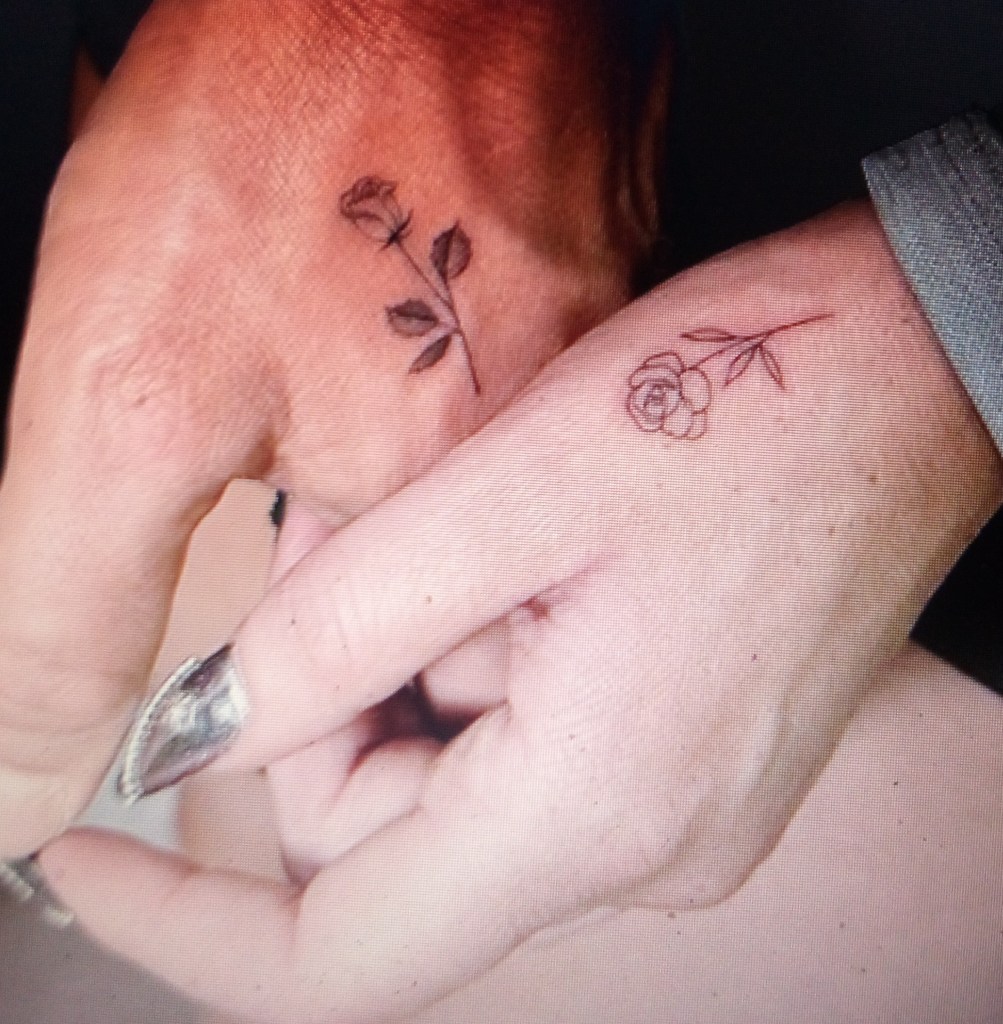
The yin-yang of tattoo trends requires two people to take part. “Couples, best friends, and siblings are gravitating toward tattoos that feel connected without being identical,” Smith says of the trend. “For example, one person might get a sun while the other gets a moon, or one gets the outline of a butterfly while the other gets a filled-in version. It’s a symbolic way to celebrate a relationship without being too direct.”
By Megan Decker
Megan Decker is a freelance writer and editor based in New York City. Formerly the beauty editor at Refinery29, Megan has worked in editorial for over seven years, frequently covering emerging trends and profiling celebrities.


Two original slave cabins, as well as the 1790 Big House, 1790 barn and 19th-century kitchen, survived the storm. But Ida destroyed at least several structures on the historic plantation. Amber N. Mitchell / Whitney Plantation via Twitter
Hurricane Ida’s deadly winds and downpours battered Louisiana this week, destroying buildings and knocking out power across the state. Among the sites affected by the storm was the Whitney Plantation, the state’s only museum dedicated to the lives of enslaved people.
The museum posted an update on its website announcing that it had suffered significant damage and would be closed indefinitely while staff assess the destruction and make repairs. Employees will continue to receive pay throughout the closure.
“We are still assessing damages, but it is certain that we have lost some structures,” wrote Amber N. Mitchell, the museum’s director of education, on Twitter. “Thankfully, two original slave cabins as well as the 1790 Big House, 1790 barn, and 19th-century kitchen survived.”
Arriving on the 16th anniversary of the devastating Hurricane Katrina, Ida wreaked havoc in southern Louisiana and parts of Mississippi before heading north to cause more destruction in the Mid-Atlantic and Northeast. As of late Thursday, about 900,000 Louisiana households were without electricity, and 185,000 had no running water, report Rebecca Santana, Melinda Deslatte and Janet McConnaughey for the Associated Press (AP).
At least 13 people in Louisiana, Mississippi and Alabama were reported dead due to the storm. Flooding linked to Ida also resulted in at least 46 fatalities between Maryland and Connecticut, per the AP’s Bobby Caina Calvan, David Porter and Jennifer Peltz.
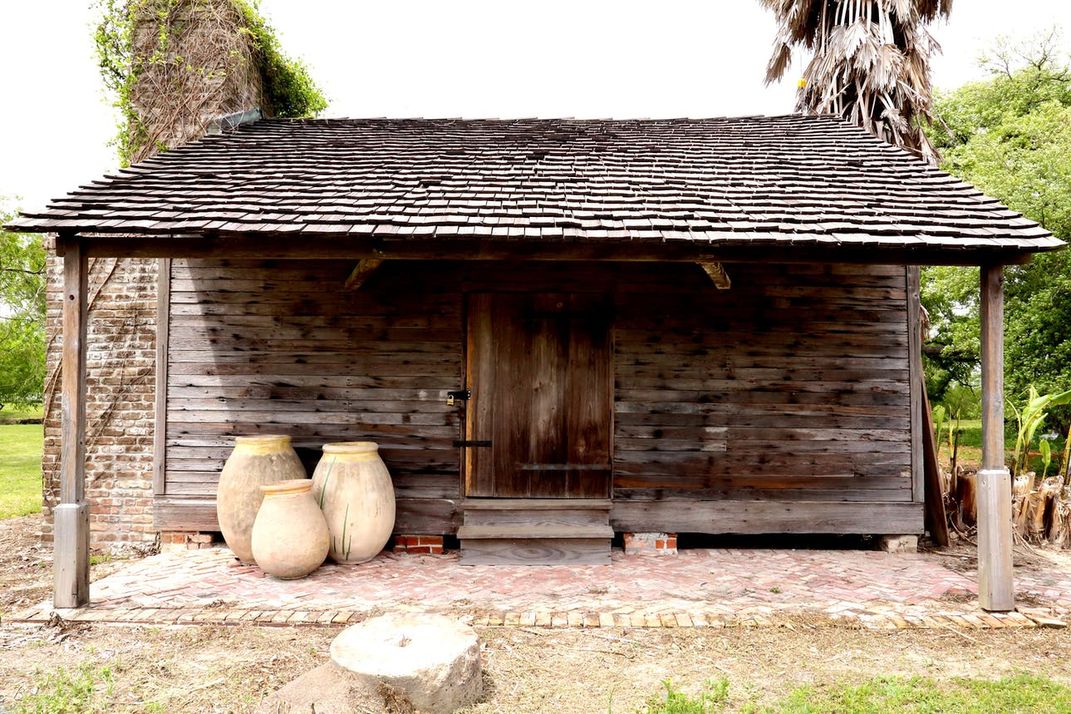
Located east of New Orleans along the Mississippi River, the property was once a sugarcane plantation where enslaved people grew sugar and indigo. As of 1819, notes the museum on its website, 61 enslaved men and women lived there. Nineteen, including individuals of Mande, Bantu and Tchamba backgrounds, were born in Africa. Others were born in bondage in the Caribbean, Louisiana or other parts of the southern United States.
As Jared Keller wrote for Smithsonian magazine in 2016, a German immigrant bought the tract of land in 1752 and turned it into an indigo plantation. His descendants later made the plantation into a major player in the state’s sugar trade. (By the early 19th century, sugar had replaced indigo as Louisiana’s main cash crop.)
Today, visitors begin their tour at a historic church built on the property in 1870. Inside are clay sculptures of enslaved children “who lived and, in short order for many, died on the grounds of the plantation,” according to Smithsonian.
Artist Woodrow Nash created the statues in response to the Federal Writers’ Project, which recorded the testimonies of more than 2,300 formerly enslaved people in the late 1930s. The accounts describe brutal violence, the commonplace deaths of infants and children, and relentless backbreaking labor. Per the Whitney’s website, Nash’s sculptures “represent these former[ly enslaved people] as they were at the time of emancipation: children.”
Attorney John Cummings funded the restoration of the property, which he owned from 1999 to 2019. It opened to the public as a museum in 2014 and received more than 375,000 visitors in its first five years. In 2019, Cummings transferred ownership of the museum to a nonprofit organization governed by a board of directors. The estate stands in contrast to many other restored plantations, which frequently romanticize the lives of white landowners in the pre-Civil War South and downplay the experiences of the enslaved.
On Thursday, Clint Smith, a staff writer at the Atlantic, drew attention to the damage sustained by the plantation in a Twitter post encouraging readers to donate to help rebuild and pay staff. Smith features the museum in his bestselling book How the Word Is Passed, which recounts his visits to sites associated with slavery.
As Meilan Solly writes for Smithsonian, the book challenges common historical accounts that focus on slaveholders rather than the enslaved. Smith argues that “the history of slavery is the history of the United States, not peripheral to our founding [but] central to it.”

Livia Gershon is a daily correspondent for Smithsonian. She is also a freelance journalist based in New Hampshire. She has written for JSTOR Daily, the Daily Beast, the Boston Globe, HuffPost and Vice, among others.

 HPS Magazine