
Comic Strips
Poetry, Arts, Cooking, Communication, Culture and More!
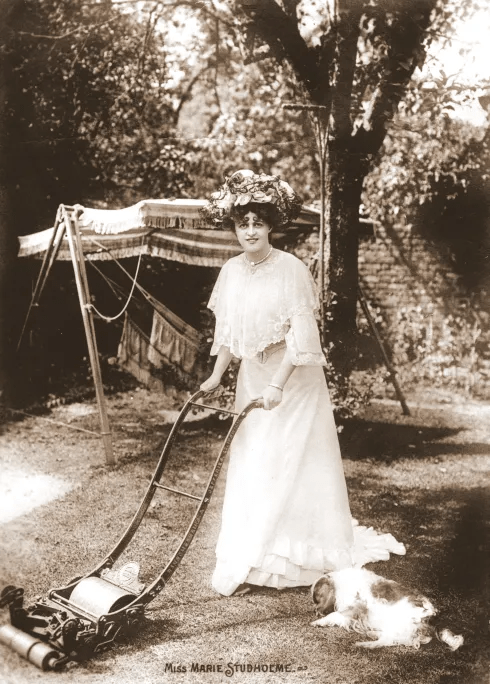
My occasional wanderings through the world of Victorian ephemera have definitely convinced me that bicycles represented a form of liberation–physical and otherwise–for women a century or so ago, but I’m confused by the multitudes of similar contemporaneous images of women operating lawnmowers: why would women actually choose to do tedious men’s work–didn’t they have enough to do, or, weren’t they in a good position to get out of it? Is this a case of advertising push rather than feminine pull? Women in short shorts and other inappropriate attire seem to be featured regularly in post-war advertisements for lawnmowers, but I’m more curious about trade cards and such appearing fifty years earlier, when women were supposed to be a bit more closeted. The first “lady with lawnmower” that captured my attention featured was an apparently quite famous English actress named Marie Studholme (1872-1930), who posed with all sorts of things, so I thought the lawnmower was just one more thing. But she was in good company: between 1890 and 1910 or so there were several manufacturers that seem to be marketing lawn mowers for women, or lawnmowers that were so easy to use that even girls could operate them (in their perfect pinafores). Perhaps this is a case of class trumping gender: after all, the majority of women didn’t have expansive lawns in need of tending. The lawn itself, like the lawn mower, is a nineteenth-century creation. I must confess to having a rather romantic attachment to my own manual lawnmower, but only because my backyard is mostly garden with very little lawn–and my husband always does the mowing.


Miss Marie Studholme with her bicycle and lawn mower, c. 1900; Lawn mower trade cards from c. 1880-1910, Boston Public Library and from a selection at the Trade Card Place.
By daseger



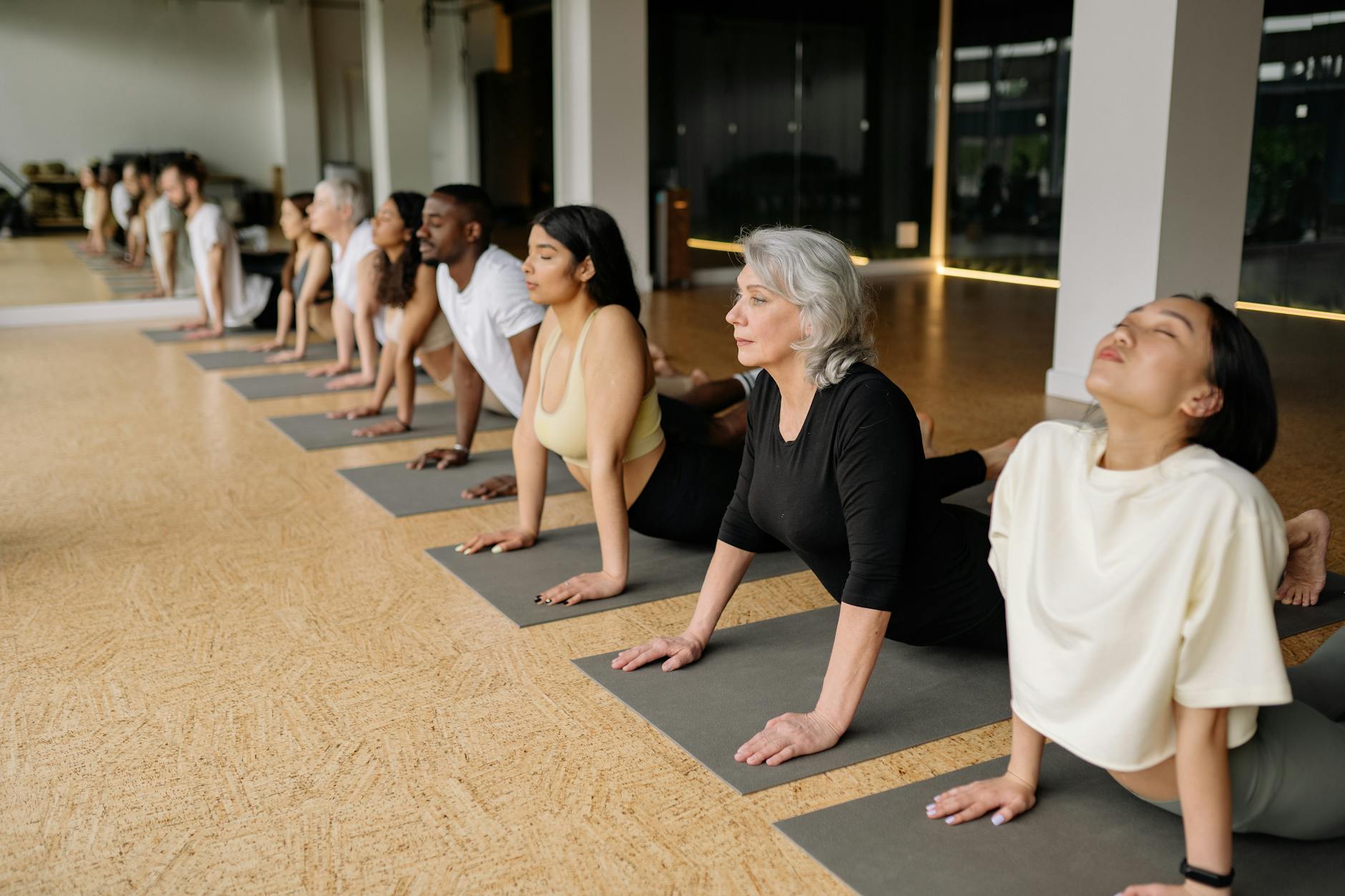
Everyone can benefit from hip conditioning, even if you don’t have any hip concerns. Stretching and strengthening these muscles can help build stability and flexibility.
Many people have weak or inflexible hips due to excessive sitting and too little exercise. On the other end of the spectrum, athletes who overuse their hips can also experience pain and injury.
With so many hip exercises out there, it’s difficult to decide which ones are right for you. We’ve got you covered.
Here are 14 of the best hip exercises that can help everyone, from weightlifters, hikers, and runners to senior citizens and people living with arthritis.
Keep reading to learn what hip exercises are right for you and how to do them.
To stretch and strengthen your hips, you’ll want to target:
Essentially, you’ll be strengthening and stretching the back and sides of the hips.
You’ll need to avoid overworking the tensor fasciae latae (TFL or IT band), which is right in front of the hip joint. If you overuse this muscle, you can cause unwanted knee, hip, or back pain.
Men and women can target the same muscle groups. In general, men often have tighter hips then women, though this can vary. Anyone with tight, inflexible hips should start slowly and gently, building up gradually.
Always warm up the large muscles surrounding your hips before you begin a workout. This boosts your circulation and gets these muscles flexible and fired up before you move into more dynamic exercises.
Here are some warmup exercises you can begin with:
This exercise works your hips, quads, and hamstrings. It also increases range of motion. Maintain good posture, avoid bending at the waist, and increase your speed as you progress.
Instructions:
Once you feel comfortable, do the exercise by reaching your arm out to touch your opposite foot, extending your other arm behind you.

This movement increases flexibility and stability. For more support, use a stable object for support.
Instructions:
To make this exercise more difficult, increase the size of the circles and do 2–3 sets.

You’ll need a resistance band for these exercises. Use a thicker band to increase the resistance.
Keep your hips and toes facing straight ahead. Increase the intensity by lowering the band so it’s above your ankles and lowering your squat position.
Instructions:

This exercise builds strength in your hips, thighs, and glutes. It stabilizes your pelvic muscles and can relieve tightness in your lower back, which helps prevent overuse and injury. Once you’ve mastered the basic pose, check out a few variations.
Instructions:

This exercise works your glutes, quads, and hamstrings while stabilizing and strengthening your core. Up the intensity by increasing the weight.
Instructions:

Improve your balance, hip mobility, and core strength with this exercise. It also targets your glutes and hamstrings.
Instructions:

These exercises can help improve balance, coordination, and movement patterns, helping to prevent falls and injuries.
This exercise builds strength and flexibility in your hips and thighs.
Instructions:

This exercise stretches your hip flexors, thighs, and glutes.
Instructions:

If you have arthritis, it’s advised that you stretch every day, even if it’s for a short time. Stretching every day when you have arthritis is better than doing a longer session only a few times per week.
This exercise stretches your hips while improving blood circulation.
Rest your sitting bones on the edge of a cushion or folded blanket to support the pelvic tilt. If you feel tight, place blocks or cushions under your thighs for support.
Instructions:
You can deepen the stretch by bringing your heels in closer to your body.

This pose stabilizes your pelvis and stretches your hips.
Rest your head on a flat cushion or folded blanket for extra support. If you can’t reach your arms around your shins, place your hands around the backs of your thighs.
For added ease, do the exercise one leg at a time, keeping the other leg extended straight out or with a bent knee.
Instructions:

Runners can experience poor flexibility and hip pain due to high-impact movements and overuse. These exercises can correct imbalances by stretching and strengthening tight muscles.
Do this exercise to tone and strengthen your hips and glutes.
Instructions:

This exercise strengthens your glutes and thighs. To increase difficulty, place a weight on your thigh.
Instructions:

This exercise works your core, glutes, and hamstrings while giving your hips a nice stretch and promoting good posture.
Instructions:

This pose stretches your glutes and hips.
Instructions:
You can increase the difficulty by straightening your lower leg.

There are certain exercises you should avoid if you’re experiencing hip pain. Rest and take a break from daily activities that cause strain for as long as possible.
In general, high-impact activities, such as sprinting, jumping, or lifting weights, should be done with extreme care. When walking on uneven ground, such as during a hike, pay special attention to your movement and try to create stability.
Exercises like squats, lunges, and step-ups can also put too much stress on your hips. Do these exercises with care, and avoid them during any type of flare-up.
Do what feels best for your body. Go only to the degree that’s comfortable. Avoid any movements that cause you pain.
Keeping your hips strong and active is key to most of your daily and athletic movements. Be safe and consistent in your approach so you’re able to build and maintain results over time.
Choose the exercises that are most suited to your fitness level and goals and incorporate them into your fitness routine. Talk to your doctor before beginning any new exercise program if you have any health concerns.
Written By
Emily Cronkleton
Edited By
Frank Crooks
2025 Healthline Media LLC.

 HPS Magazine