What’s the Best Way to Cut Onions Without Crying? New Research Suggests That Thin, Sharp Blades Are Key to Minimizing Tears

For a new study, physicists visualized and quantified the tear-producing droplets that get expelled from onions when they’re cut

From wearing goggles to rubbing the knife with lemon juice, home cooks have come up with a wide variety of clever tricks to keep themselves from crying while cutting onions in the kitchen.Now, physicists have come up with another possible solution. Using a sharp knife while making slow, controlled cuts seems to be the best way to minimize the spray of tear-producing compounds in onions, according to a new study.

The paper has been published on the preprint server arXiv and has not yet been peer reviewed.

Scientists know why onions make us cry: When cut, these spherical alliums produce a chemical that stimulates the nerves responsible for producing tears. The volatile, irritating compound is called syn-propanethial-S-oxide.

But, recently, a team of physicists decided to explore the underlying mechanisms at play when syn-propanethial-S-oxide gets released from onions. Using techniques known as high-speed particle tracking velocimetry and digital image correlation, they were able to visualize and count droplets as they were being expelled from cut onions, per IFLScience’s Russell Moul. They also studied the onions themselves, making note of strain and deformations on the flesh during chopping.To start, the team gathered fresh onions from local vendors, cut them into halves or quarters, then coated them in black spray paint. (This step made it easier for them to see and track what was happening when the alliums got cut.) Then, they set up a high-speed camera and started chopping.

“Cutting is a really strange process,” says Anne Juel, a physicist at the University of Manchester who was not involved with the research, to NewScientist’s Alex Wilkins. “We cut things with knives every day, but to cut something, you need to go down to the atomic scale.”

Using a custom guillotine, the researchers experimented with cutting speeds ranging from 1.3 and 6.5 feet per second and blade thicknesses between 5 and 200 millimeters. They changed the steel blades manually and modified the speed by adjusting the height of the blade, which was released from above.

By analyzing the footage from the high-speed camera, they could investigate the dynamics of tear-producing particles that sprayed out from the onion as it was cut. The thinner, sharper blades produced fewer droplets that moved more slowly and with less energy, they found.

Meanwhile, the thicker, duller blades caused an explosion of high-speed particles that moved at up to 141 feet per second. This is because the dull blade initially bent the onion skin, which caused pressure to build up inside. When the blade finally sliced through, it released all that built-up energy and sent onion juice flying. Then, once the particles were in the air, they also fragmented into smaller pieces to create “an even more diffuse mist of all-natural mace,” writes Andrew Paul for Popular Science.The duller blades produced as much as 40 times more particles than the sharper blades. Faster cutting speeds produced up to four times as many droplets as slower speeds.

This suggests that the best way to minimize tear-producing chemicals while chopping onions is to cut slowly with a thin, sharp knife. However, the researchers did not test this theory in their experiments, per NewScientist.

Onion cut in half
Refrigerated onions released a “noticeably larger volume” of droplets compared to room-temperature onions, the researchers write. Pixabay

Home cooks are often advised to chill their onions before cutting them to minimize crying. So, the researchers also experimented with onions that had been refrigerated for 12 hours. However, in their tests, the refrigerated onions released a “noticeably larger volume” of droplets compared to room-temperature onions.Preventing tears while cutting onions might seem like a trivial research topic. But the scientists say their work could also have important implications for food safety. The fragmented droplets that spray out of raw foods while they’re being cut could contribute to the spread of disease-causing pathogens, the researchers write in the paper.

“Ejected droplets can come into direct contact with contaminated blades or carry surface-borne pathogens as they leave the food surface,” they write. “Lighter droplets [are] readily suspended and can be transported by ambient air currents, thereby posing a potential risk for airborne transmission.”

Keeping knife blades sharp, then, might be an easy way to help reduce food-borne illnesses, they posit.

“Sharper blades reduce not only the number of droplets but also their speed and kinetic energy,” the scientists write in the paper. “This is particularly relevant for fruits and vegetables, which can carry food-borne pathogens such as Salmonella.”Many other recent research projects have attempted to use science to solve everyday problems. Scientists have visualized the plume of aerosolized particles ejected from commercial toilets during flushing, and some are even coming up with new urinal designs to help reduce urine splashing. And in the realm of enhancing food, Italian physicists came up with the perfect cacio e pepe recipe, while others have figured out the best way to make pour-over coffee and boil an egg.

Sarah Kuta

Sarah Kuta – Daily Correspondent

We Tried 8 Kinds of Ramen–This Is the One You Should Stock in Your Pantry

If, like me, you only grew up aware of one or two types of ramen, then you might be quick to write it off as an inexpensive and relatively lackluster meal. But increased interest in Japanese and Korean snack foods has made it easier to access a wider, tastier array of ramen noodles. With some toppings, sauces, and maybe an egg, these cup and packet ramen varieties can make a great addition to your lunch rotation. And you can always take your ramen to the next level with a quick dinner that starts with instant ramen noodles.

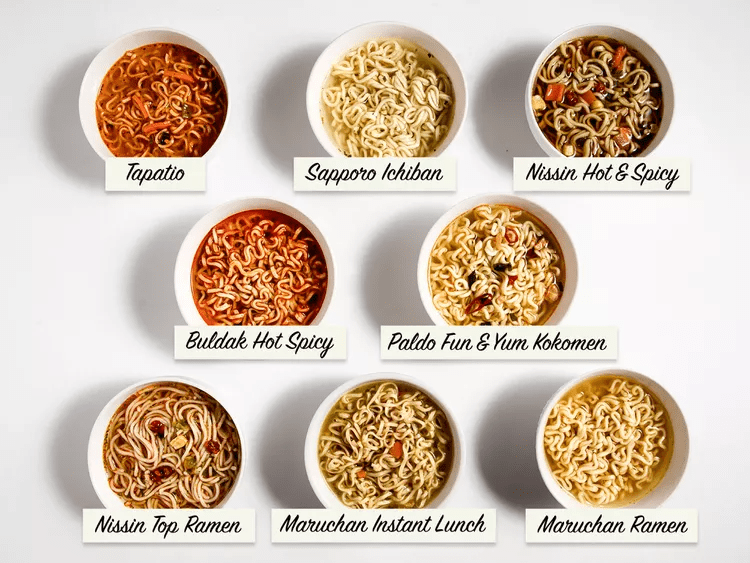
To help you decide which ramen deserves space in your cupboard, we rounded up eight varieties of chicken ramen in packet and cup form, all of which are available online or in stores. Here are our picks, from best in show to best budget option.

Best Chicken Ramen at a Glance

Best Cup Ramen: Tapatio Chicken Ramen Noodle Soup

Best Packet Ramen: Sapporo Ichiban Chicken Ramen

Spiciest Ramen: Nissin Hot & Spicy Chicken Noodles

Best Thick Noodle: Paldo Fun & Yum Kokomen Spicy Chicken Ramen

Best Toppings: Nissin Top Ramen Chicken Soup Bowl

Best Budget Option: Maruchan Instant Lunch Chicken Flavor; Maruchan Ramen Noodle Soup Chicken Flavor

What We Looked For When Ranking Chicken Ramen

Taste: When comparing different flavors of chicken ramen, we looked for which products had the best-tasting broth among the eight we tested. We also considered which manufacturers included dried vegetables or other seasoning packets in their ramen, and how that affected the overall quality of the dish.

Price: By nature, ramen is—or should be—a cheap meal. For this taste test, we took note of which ramen provided the best quick comfort food for your buck. Most of the options we tested were $1.50 or less, but a couple were a bit more expensive.

Texture: Whether you like your ramen on the thin side or you vie for heartier noodles, we’ve got you covered. Below, we’ll note which ramen varieties work best for fans of thick and thin ramen alike. We’ll also note which noodles cooked well and which tended to stay a bit crunchy.

Additional Features: Ramen is definitely not a meal that’s light in sodium. Most of the brands we tested contained half or more of the daily recommended amount of salt at around 1500 milligrams. There were a couple of brands that contained slightly less sodium, and we’ll indicate them below.

How We Tested Each Ramen

Given that each product is a meal unto itself, this test was conducted over the course of several days. For the cup ramen, I prepared each according to the manufacturer’s instructions. For all but Maruchan’s cup ramen, that meant using the microwave. For the packet ramen, I used my Instant Pot—a method I heartily encourage if you haven’t already tried it. All you have to do is set it to pressure cook for 0 minutes, release the pressure (carefully), and then stir in your toppings and seasoning. If you throw in an egg or two before you start the Instant Pot, they should come out a bit jammy in the center but mostly boiled. The result in my experience is perfectly cooked, fluffy noodles. I used the Sauté function as well for Buldak’s chicken ramen since the packet recommended stir-frying as a final step. To learn more about how that turned out, read on.

The Best Instant Ramen Taste Test Results

Best Cup Ramen: Tapatio Chicken Ramen Noodle Soup

ramen taste test
Sara Haas/Allrecipes

Tapatio’s noodles were pretty standard, as were the assorted dried veggies included as toppings. The real star of this dish is the seasoning, which hands down had the best flavor of any of the ramen varieties we sampled. The seasoning had a bit of zing but was not so spicy that those who detest heat shouldn’t be able to enjoy it, and it contained just the right hint of Tapatio’s signature hot sauce. Another selling point: Tapatio included their dried veggies in the microwaveable bowl instead of separating them into a packet, so this ramen contains a bit less packaging than some of the others.

Best Packet Ramen: Sapporo Ichiban Chicken Ramen

ramen taste test
Sara Haas/Allrecipes

Compared to some of the other ramen we tested, Sapporo Ichiban’s offering is pretty simple. It doesn’t include any additional veggies or sauces outside the main seasoning packet. However, the included seasoning packet had the strongest chicken flavor of the ones we tried, and the noodles in Sapporo Ichiban’s ramen were also some of the most fluffy. It basically tastes like a slightly more gourmet version of the cheap chicken ramen many of us have leaned on in lean times. If you have nostalgia for chicken ramen, but have the money to spend a bit more, then Sapparo is a delicious and still budget-friendly choice.

Spiciest Cup Ramen: Nissin Hot & Spicy Chicken Noodles

ramen taste test
Sara Haas/Allrecipes

Nissin’s spicy chicken ramen has a slow-building kind of heat; I didn’t notice it much at the beginning, but by the end, I had a few tears in my eyes. In addition to including a packet of dried veggies with scallions and peppers, this ramen comes with a sachet of chili oil that definitely brings some depth to the overall dish. Surprisingly, at 1,300 milligrams, it’s also one of the options we sampled that had a bit less sodium than some of the other contenders. If you like your ramen spicy, but not overwhelming, this makes for an excellent choice.

Best Thick Noodles: Paldo Fun & Yum Kokomen Spicy Chicken Ramen

ramen taste test
Sara Haas/Allrecipes

As mentioned above, Buldak actually wins the award for thickest noodles. But we’ve awarded the title of best thick noodle to Kokomen because these noodles, which are a tad thinner than Buldak’s, are a bit less slippery, making them a bit easier to grab with chopsticks (or whatever utensils you might be using). They’re still hearty, though, so if you prefer noodles with a bit more heft to thin ones, you’ll love Kokomen’s ramen. In addition to having great noodles, Kokomen’s chicken ramen also had one of the most colorful veggie packets, with thin slices of red pepper and scallions, making it a very attractive bowl of ramen to serve up.

Best Toppings: Nissin Top Ramen Chicken Soup Bowl

ramen taste test
Sara Haas/Allrecipes

Looking for toppings and plenty of them? Then look no further. Nissin’s chicken bowl includes a large variety of veggies, including huge slices of dried carrot and red bell pepper, along with onions and corn. The included teriyaki sauce packet is also a welcome addition to the overall flavor profile of this ramen, giving it some of the much-needed umami that any ramen should have.

Best Budget Option: Maruchan Instant Lunch Chicken Flavor and Maruchan Ramen Noodle Soup Chicken Flavor

ramen taste test
Sara Haas/Allrecipes

There’s nothing particularly fancy about these varieties, but that doesn’t mean they don’t hit the spot. If you don’t have much change to spend but are still craving ramen, either of these classics will satisfy. Going for the cup variety will give you a few veggies and the ability to take your ramen on the road a bit more easily, and either earns a place in a well-stocked pantry.

By Tadhg Hylier Stevens

Picture of Tadhg Hylier Stevens

Tadhg Stevens is an independent journalist and food writer with more than 15 years of experience. In addition to writing food history and home-cooking guides, Tadhg has conducted dozens of taste tests to help consumers find the best for their pantries. They are a writer for Allrecipes.

Allrecipes’ editorial guidelines

Nearly all judges believe the public’s respect for judges has declined

Photo by KATRIN BOLOVTSOVA on Pexels.com

In what may reflect a devastating blow to the morale of the judiciary, 9 out of 10 judges believe the public’s esteem for judges has fallen, according to our informal survey.

February’s Question of the Month* emailed to NJC alumni asked, “Do you think that the public’s esteem for judges has risen, declined, or stayed the same over the last 10 years?”

More than 90 percent of the 479 judges who responded said they thought it had declined. Two percent thought it had risen; 8 percent felt it had stayed the same.

In 2017, the College asked the same question of its alumni in the debut of this series of informal monthly one-question polls. At that point a discouraging 63 percent thought esteem for judges had declined over the previous 10 years, 8 percent thought it had risen, and 29 percent thought that it had stayed the same. The latest result translates to a 43 percent increase in the share of judges who perceive a decline in the public’s esteem.

In other words, seven years ago a clear majority of judges weren’t feeling the public’s love for their profession. Now that’s the case among nearly all judges.

“If 100% of us don’t say ‘declined,’ I will be shocked,’” predicted one anonymous judge among the 213 comments posted on the survey.

The most common explanations offered for the reputational decline:

  • A perceived politicization of the Supreme Court of the United States (both in decisions and because of partisan confirmation battles);
  • National leaders’ attacks on the judiciary (especially by former President Donald Trump);
  • The COVID-19 pandemic (some judges perceived that a portion of the public turned against the government generally because of measures such as mask mandates and vaccination protocols);
  • Increasing distrust of public institutions and reduced respect for authority generally over time;
  • Greater visibility of negative news and comments about the justice system (e.g., police brutality, George Floyd killing) because of social media and conventional mass media coverage.

“Sadly, I feel like the Judiciary at all levels is being discredited because of the politicization and polarization of national politics,” wrote one anonymous judge.  

NJC faculty member Anthony J. Baratta, former associate chief administrative judge for the Atomic Safety and Licensing Board Panel, wrote, “Recent decisions by the SCOTUS as well as partisan language in their decisions have contributed to a perception by the public that judges aren’t independent but are partisan.”

Without naming any particular culprit, Magistrate District Court Judge Doug Bell of Meyersdale, Pennsylvania, mentioned criticism of judges by high-profile individuals.

“[N]ational leaders openly and frequently disrespect the office and the person holding the same,” he wrote. “That blatant disregard emboldens others – litigants and lawyers – to feel free to do the same.”

Some judges speculated that the isolation younger people experienced during the pandemic, combined with extra time spent on social media during school closings, may have exacerbated a deterioration in social skills and respect for authority.

Some judges also said the decline in esteem was not limited to the judiciary.

“Public institutions have been under assault for the last decade like at no time in my lifetime,” wrote one anonymous judge.       

Among the 8 percent of voters who felt esteem for judges had held steady over the past 10 years, some thought opinions varied by level and category of judges.      

“With respect to trial judges at the state level, the public’s perception of them has remained the same,” an anonymous judge wrote. “[T]he highest courts (state supreme courts and U.S. Supreme Court) and federal circuits are uniformly seen as political and held in lower esteem.”

One unnamed judge felt esteem for most judges had actually risen overall but “unfortunately declined for some Supreme Court Justices.” The writer did not specify which justices. 

Chief Judge Melissa Pollitt Bright of the Orphans’ Court for Wicomico County, Maryland, saw the decline as part of a broader phenomenon.

“The rule of law is being eroded away at an ever-increasing rate; esteem for judges is part of that,” she wrote. “I believe we have gone from small, quiet erosion to (a) catastrophic landslide, and I sadly believe that the destruction of our democracy may be imminent, perhaps as soon as the next election.”

A newly elected judge, Amy Wilson of the Las Vegas Township Justice Court, Department 7, was among the 2 percent who felt the public’s view of the judiciary had improved.

“[I]t was my experience while campaigning and interacting with the public that there was a sentiment of respect and appreciation for the judiciary. I consistently receive feedback that the work we do is appreciated and acknowledgement that our job is not easy.”

* Each month the College emails an informal, non-scientific one-question survey to its more than 12,000 judicial alumni in the United States and abroad. The results, summarized in the NJC’s Judicial Edge Today, are not intended to be characterized as conclusive research findings. The NJC is a nonpartisan, nonpolitical organization and these monthly polls are designed to engage our alumni in thought-provoking dialogue.

Jenna Delacruz is currently with the Wolf Pack Internship Program.

NJC News