20+ Healthy Dessert & Treat Recipes

Healthier Dessert Recipes

Yes, you are on a baking website with lots of butter and sugar-filled treats! But while my site focuses mainly on traditional dessert recipes, I also have a good handful of healthier recipes, and they’re usually what I bake the most often.

I’ve spent quite some time in the kitchen developing recipes that incorporate more wholesome ingredients—think oats, fruit, nuts, yogurt, and unrefined sugars. Obviously not the healthiest, but much less refined. Things like this are important for anyone trying to eat more whole foods, or anyone who may have allergies to gluten or dairy.

The recipes on this page, while on the healthier side, still hit the spot when you’re looking for a bite of something sweet. Flavor and fun—two things I simply won’t skimp on!

Keep this list of 20+ healthy dessert recipes handy for the next time you’re looking for a sweet treat that’s more wholesome than, say, a piece of chocolate cake. Instead, try my chocolate coconut almond tart. It’s naturally vegan and gluten free, and I promise you won’t be bothered by the absence of butter and flour.
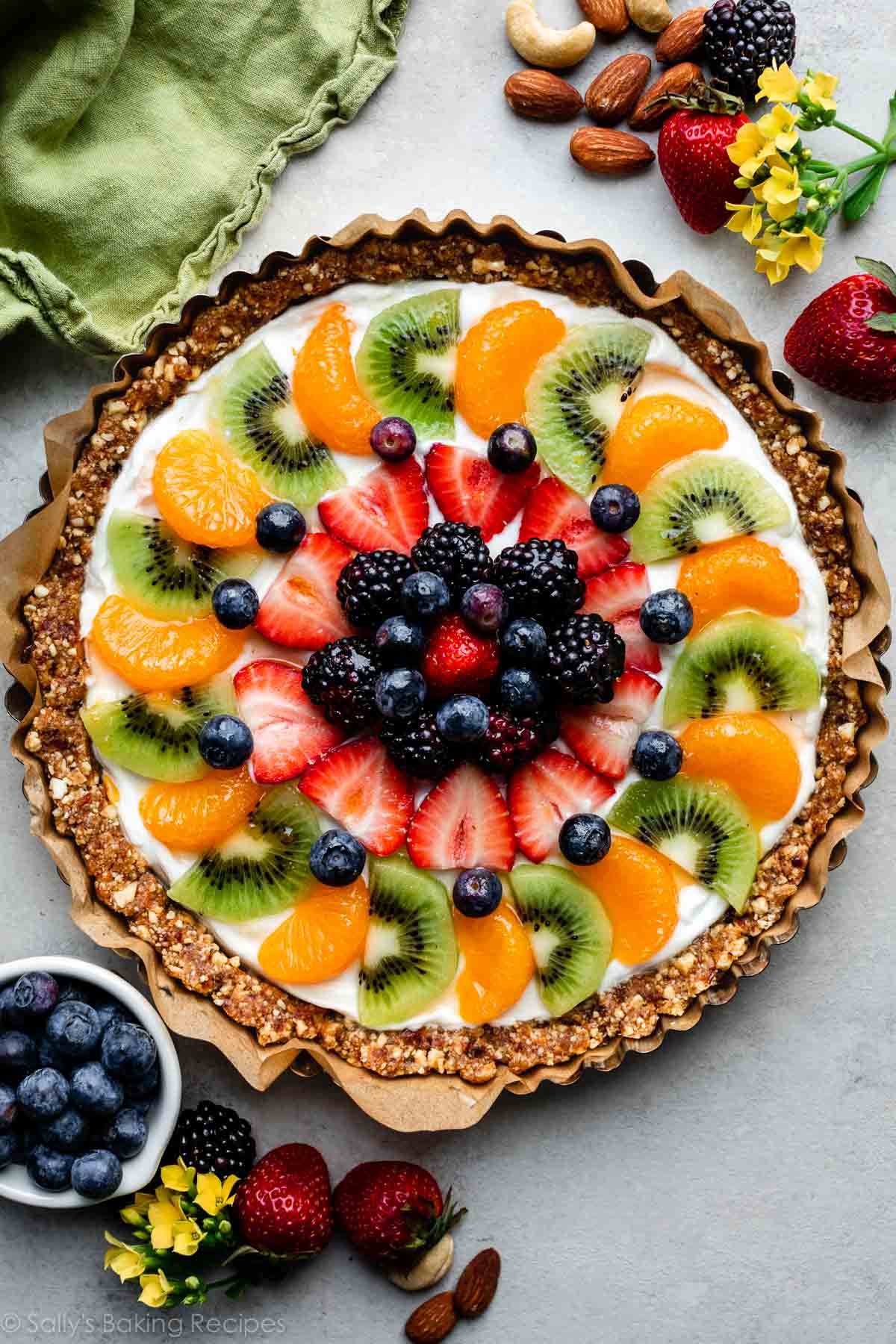
no bake fruit tart with yogurt inside tart pan on gray backdrop with strawberries and blueberries around it.

Or enjoy the natural sweetness of fresh fruit atop my no-bake Greek yogurt fruit tart. In addition to being a lighter dessert option, I love serving this at breakfast or brunch, too.

I hope you find some wholesome inspiration below. For even more healthier recipe ideas, I have 30+ healthy breakfast ideas for you, too.


What Makes a Recipe “Healthy”?

When labeling a recipe as “healthy,” remember that the term is relative. Like my healthy berry streusel bars and no-bake chocolate fudge oat bars, many of these recipes are made with healthier alternatives to traditional baking ingredients but still include some sugar (refined or unrefined). When it comes to labeling recipes as healthy, use the best judgement for YOU.
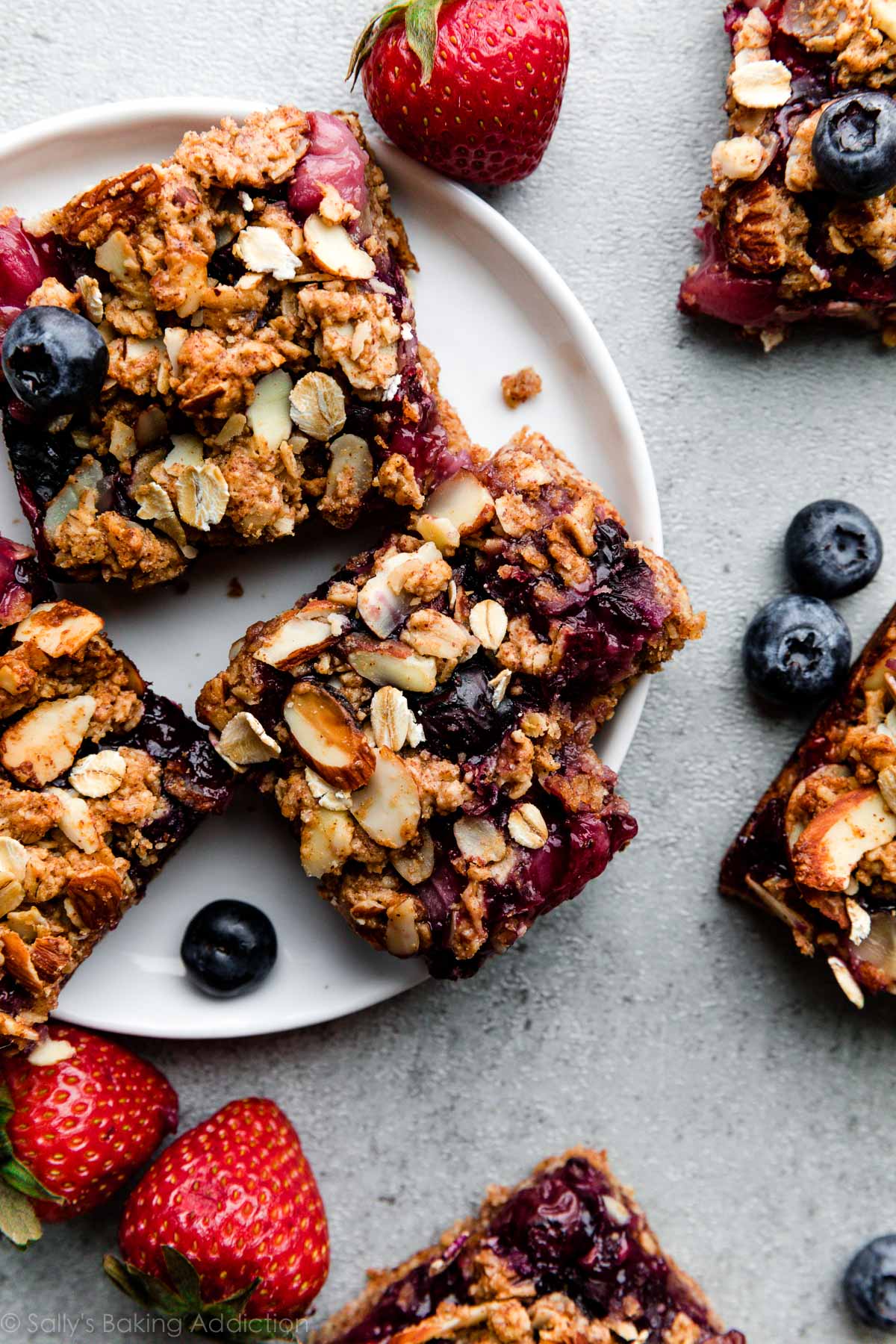
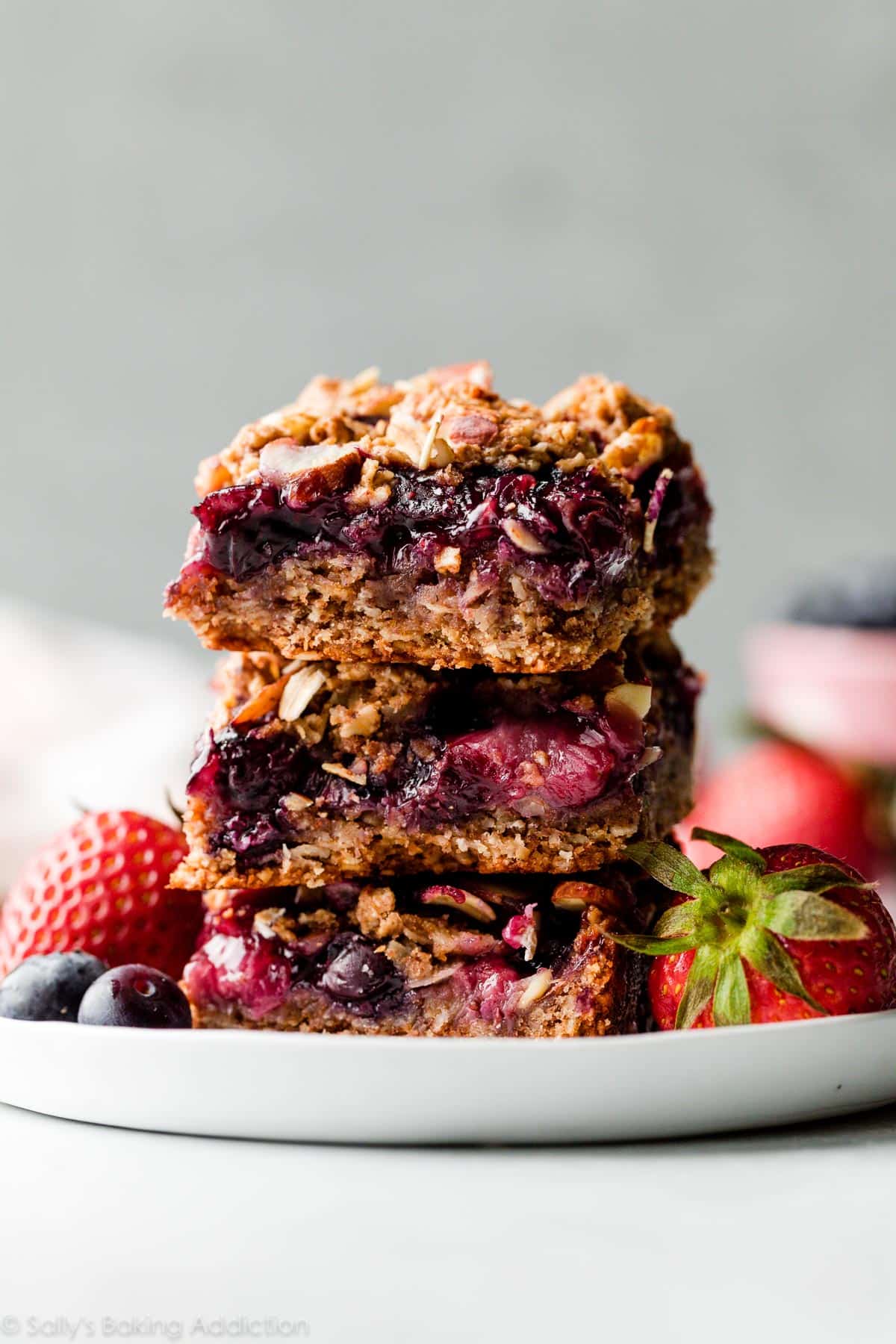
healthy berry oat streusel bars
Healthy berry streusel bars are naturally vegan and gluten free if using certified gluten free oats.

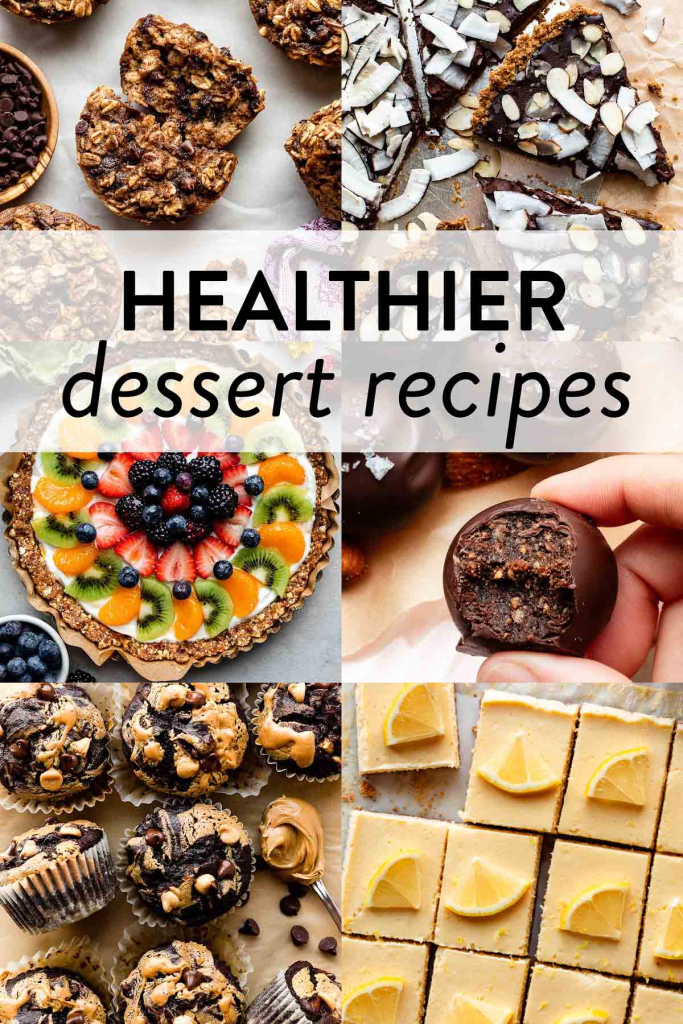
22 Healthy Dessert Recipes

healthy berry streusel oat bars

Healthy Berry Streusel Bars

These easy healthy berry streusel bars combine 2 layers of almond oat streusel and one thick layer of mixed berry filling, using your favorite combination of berries.

Try the Recipe

No-Bake Greek Yogurt Fruit Tart (GF)

This wholesome Greek yogurt fruit tart comes together with a simple 3-ingredient crust, protein-packed Greek yogurt, and all your favorite seasonal fresh fruits.

Try the Recipe

Healthier Chocolate Almond Truffles

Sweeten the filling with dates and cover in dark chocolate, or you could even roll them in cocoa powder.

Try the Recipe

Pumpkin Chocolate Chip Oatmeal Bars

Pumpkin chocolate chip oatmeal bars are soft and chewy with satisfying pumpkin flavor. An obvious fall favorite, but they’re sure to be enjoyed any time you can get your hands on pumpkin puree!

Try the Recipe

Flourless Almond Butter Chocolate Chip Cookies (GF)

Almond butter chocolate chip cookies are simple and satisfying, and you need just 5 simple ingredients. You won’t miss the butter and flour in these naturally gluten free cookies.

Try the Recipe

Baked Apples Recipe

Like individually portioned apple crisp, baked apples are great for a small family and you easily can halve or double the recipe as needed.
Try the Recipe

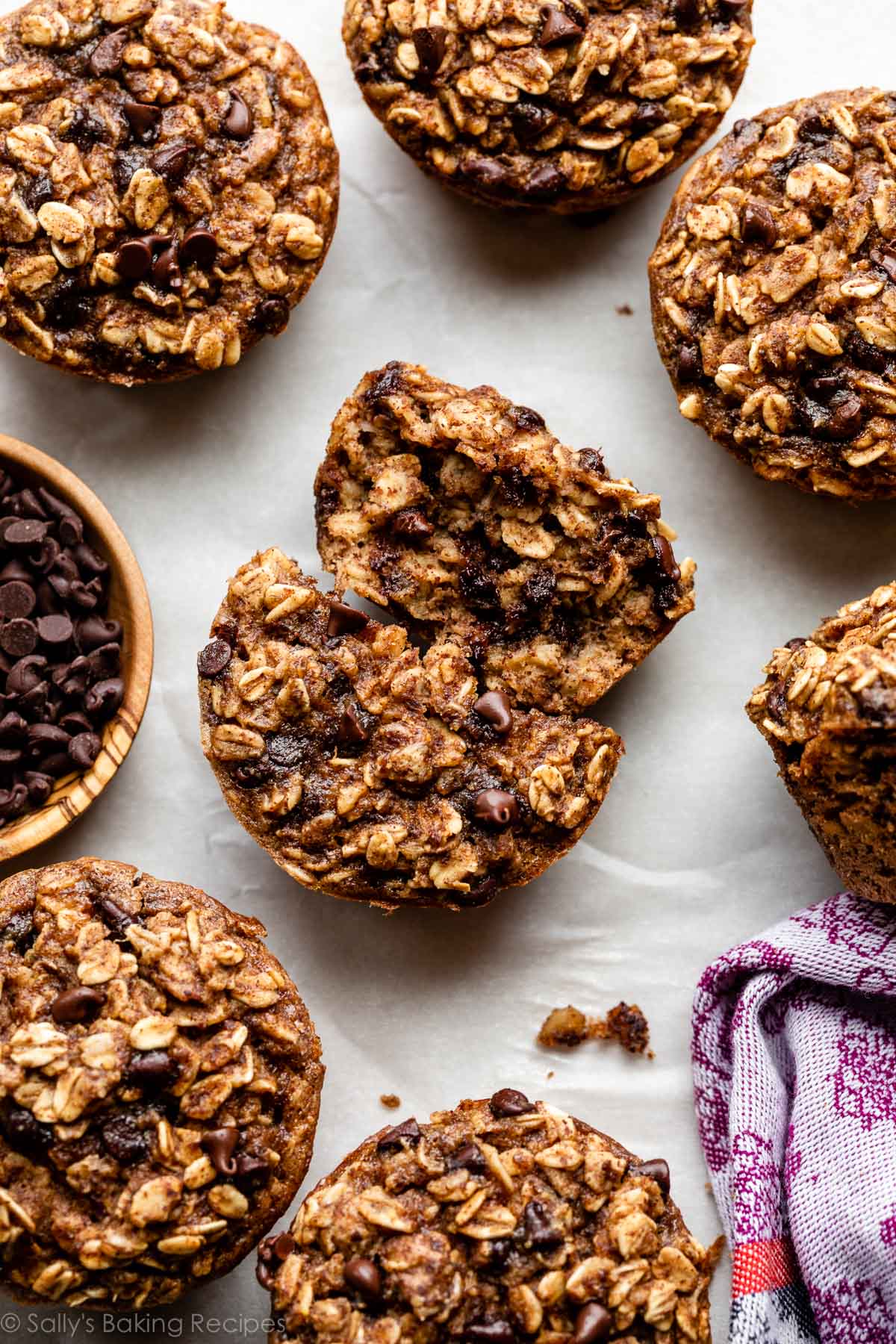
chocolate chip baked oatmeal cup muffins on white parchment paper with one in center broken open.

Chocolate Chip Baked Oatmeal Cups

You need just 1 bowl and some simple, wholesome ingredients to make these healthy-ish chocolate chip baked oatmeal cups. They’re ready in about 30 minutes and can double as an on-the-go breakfast or end-of-day treat.
Try the Recipe

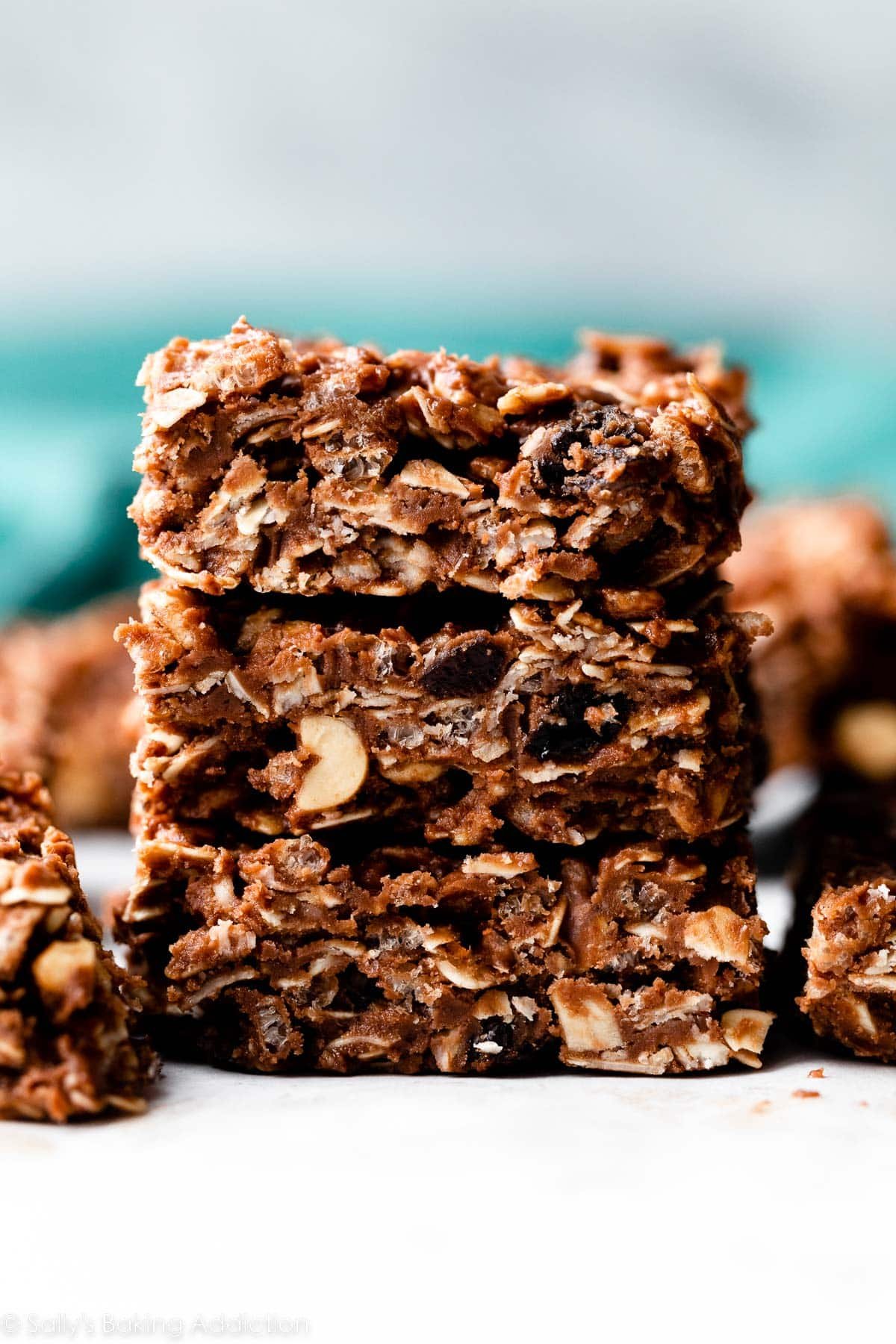
stack of 3 chocolate fudge oat bars.

No-Bake Chocolate Fudge Oat Bars

Enjoy a delightful combination of chewy-crispy-crunchy textures and salty-sweet chocolate-peanut butter flavors in every bite of these oat-based bars.
Try the Recipe

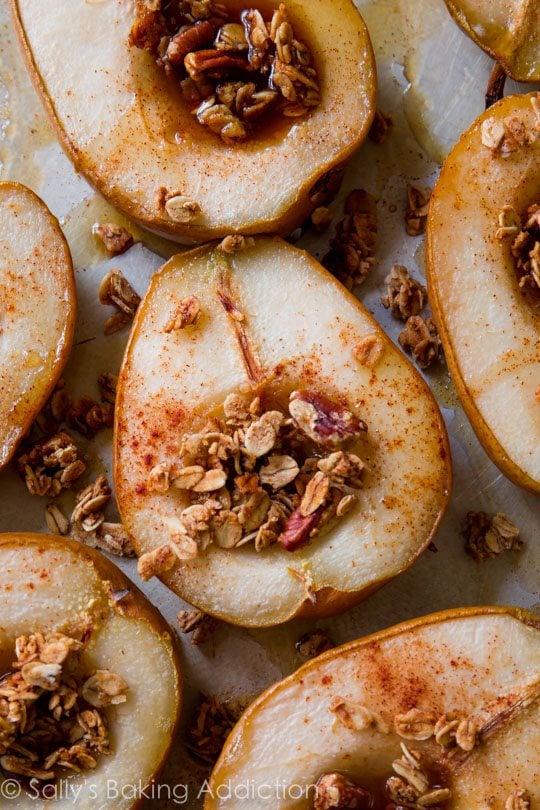
maple baked pears filled with granola

Maple Vanilla Baked Pears

You only need 4 ingredients to make these incredibly simple maple vanilla baked pears. They’re cooked until warm and soft, completely infused with maple and vanilla, and topped with crunchy granola.
Try the Recipe

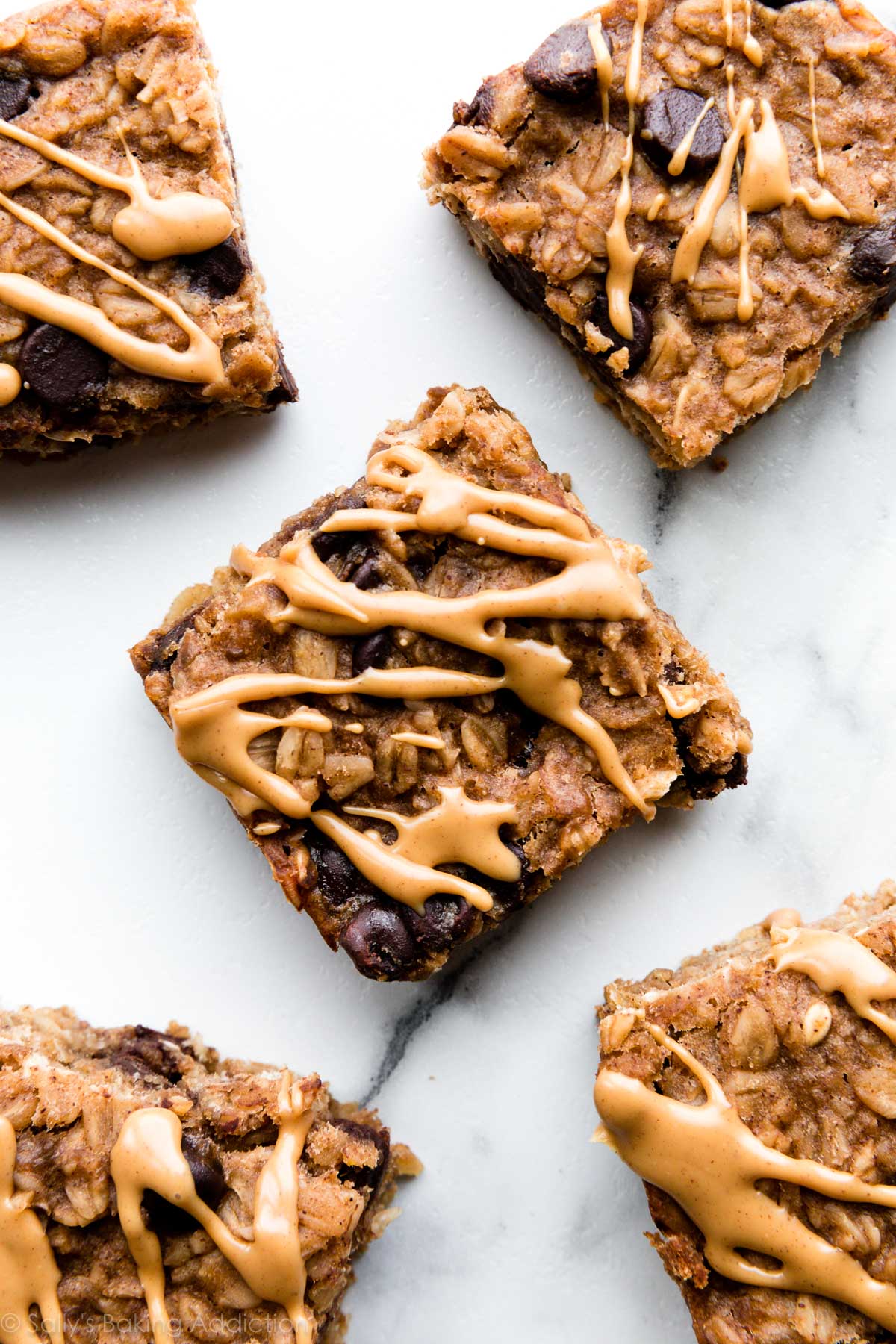
peanut butter banana chocolate chip oatmeal bars

Peanut Butter Banana Chocolate Chip Oatmeal Bars

Out of all the recipes published on my website, I make these peanut butter banana chocolate chip oatmeal bars most often. They’re naturally gluten free, adaptable to many different ingredients, and require just 1 mixing bowl.
Try the Recipe

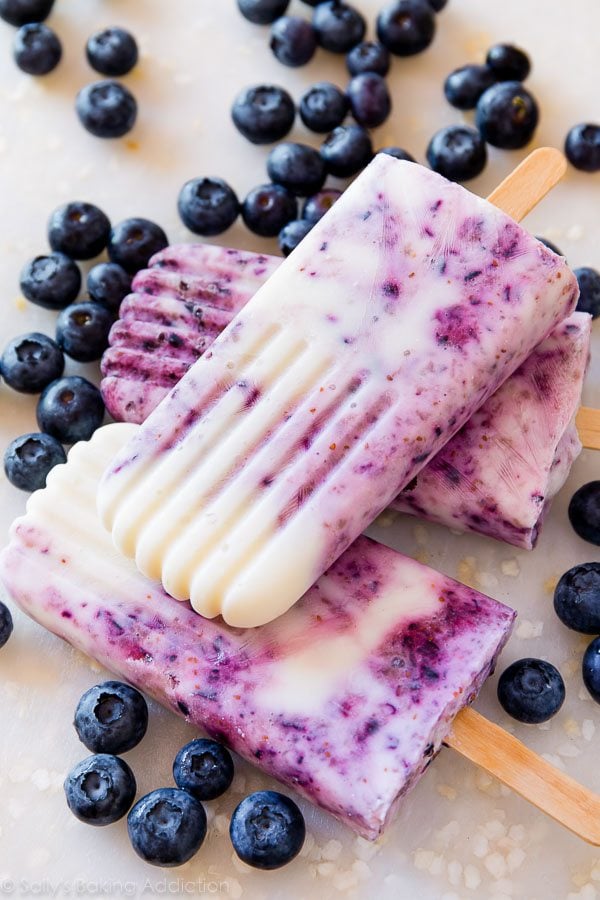
blueberry yogurt swirl popsicles

Blueberry Yogurt Swirl Popsicles

These super simple, protein-packed 3-ingredient blueberry yogurt swirl popsicles are naturally gluten free and hit the spot when the weather heats up. Kids love them, too.
Try the Recipe

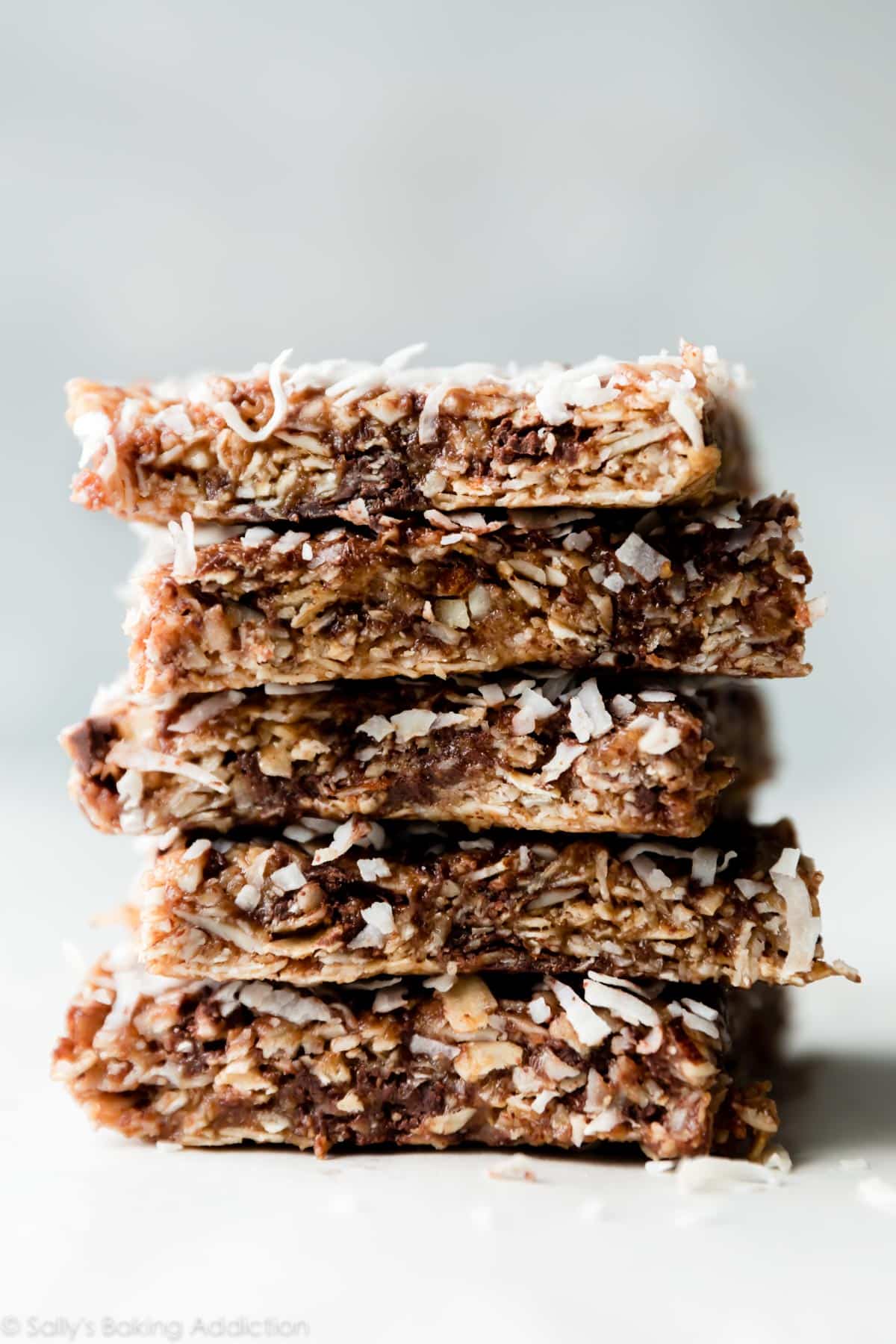
stack of no-bake chewy coconut granola bars

No-Bake Chewy Coconut Granola Bars

Sweet and salty no-bake coconut granola bars are soft, chewy, and pack huge flavor—and taste like Almond Joy candy bars!
Try the Recipe

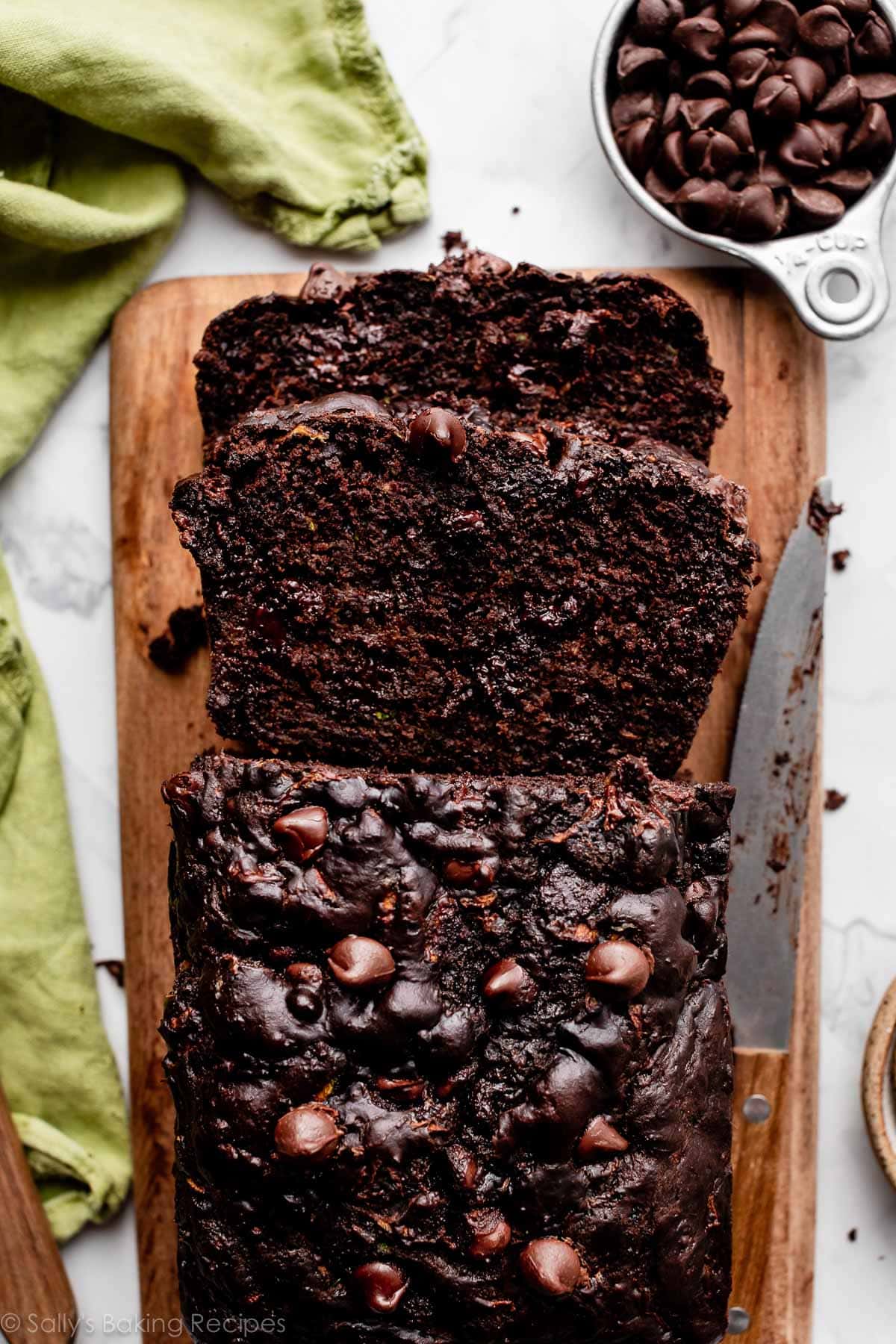
loaf of chocolate zucchini bread with chocolate chips cut with 2 slices on wooden cutting board.

Double Chocolate Zucchini Bread

This is dense, fudgy, and packed with a whopping 1 and 1/2 cups of shredded zucchini. This is certainly a sugary treat, but even with Greek yogurt and a vegetable, can also satisfy those chocolate cake or brownie cravings.
Try the Recipe

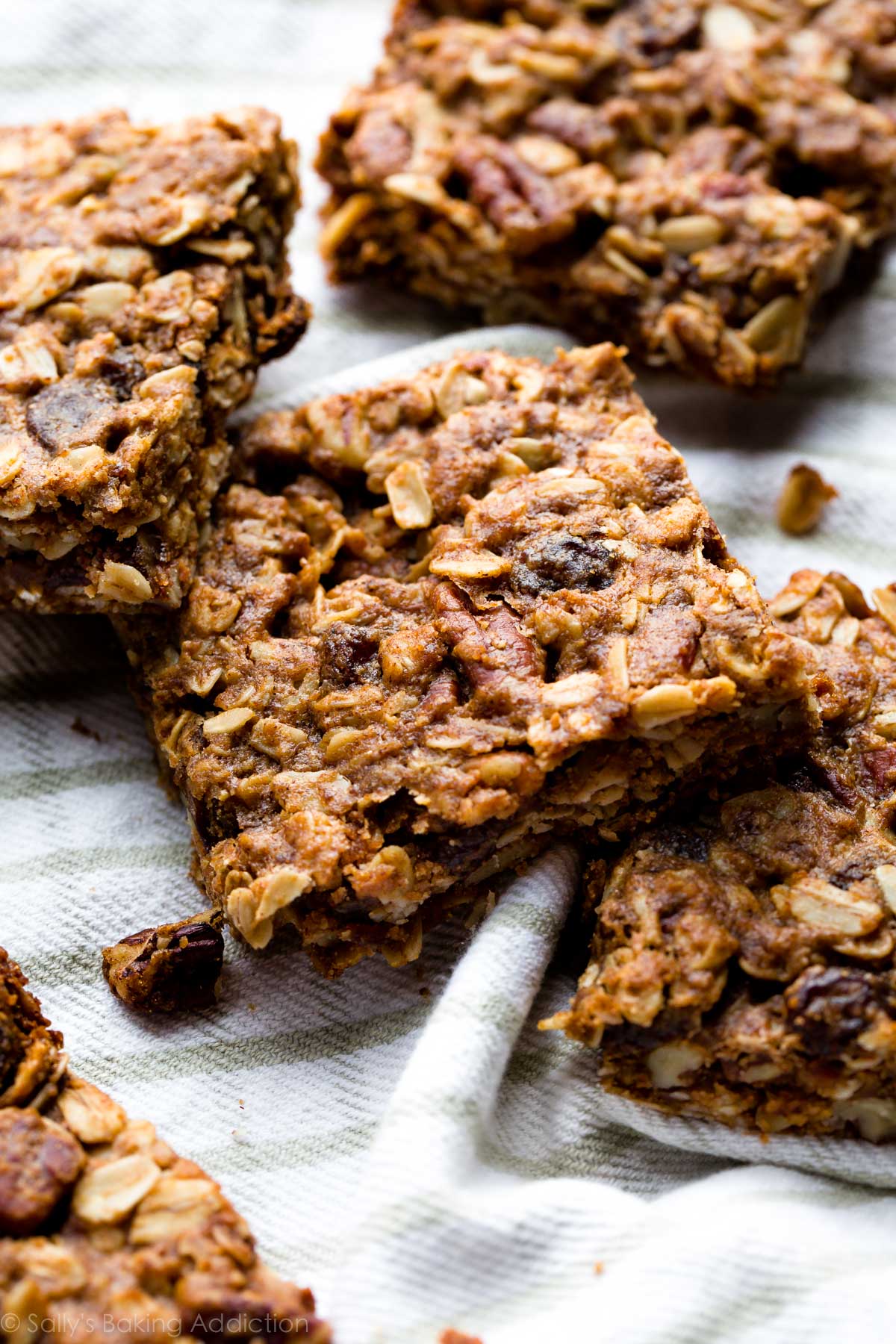
oatmeal raisin granola bars

Soft Oatmeal Raisin Cookie Granola Bars

These super soft and chewy oatmeal granola bars taste just like oatmeal raisin cookies, but are made with unrefined sugars and whole wheat flour. An easy 1-bowl recipe.
Try the Recipe

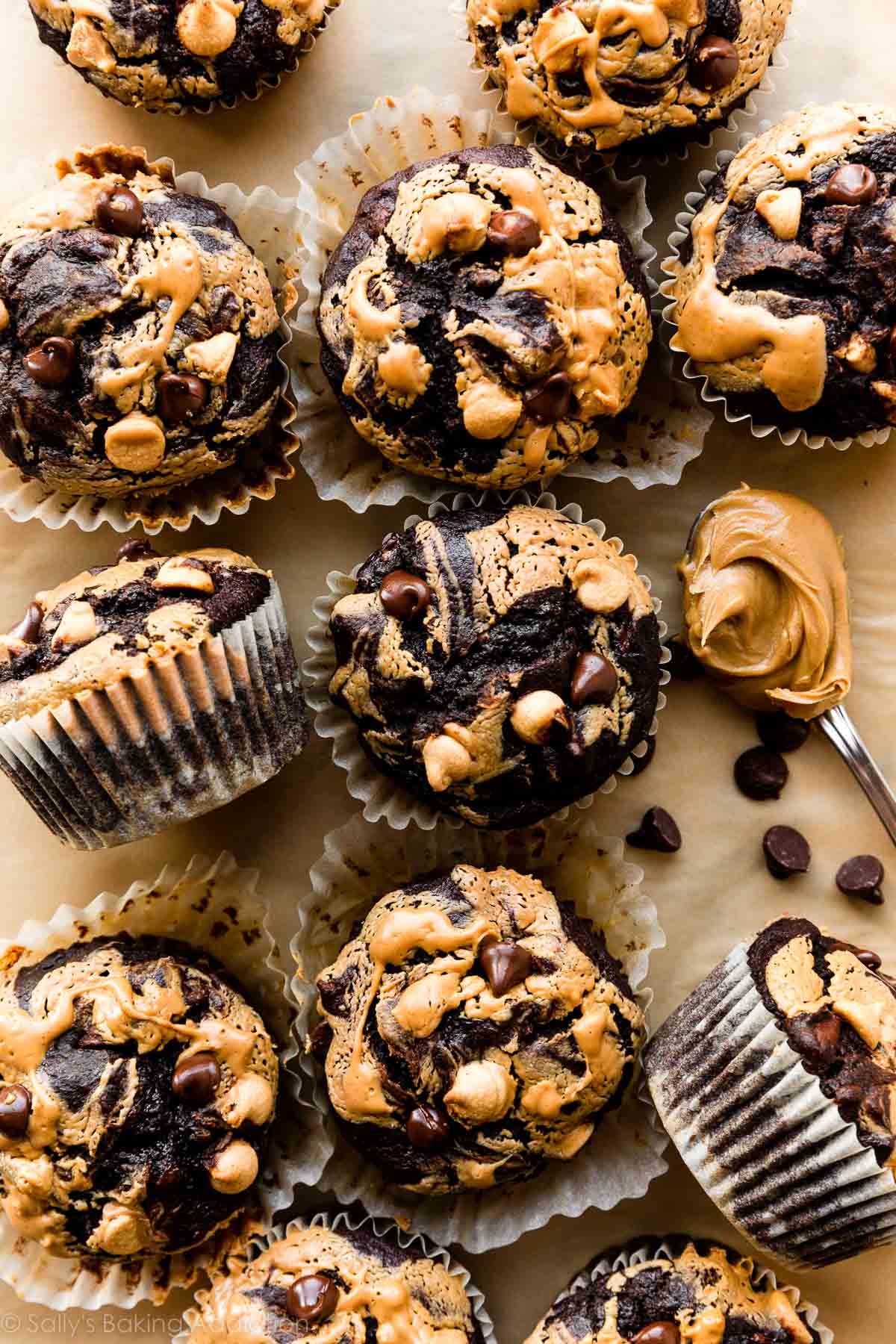
double chocolate banana muffins with peanut butter swirl and peanut butter chips on top.

Healthier Chocolate Banana Muffins

Enjoy all of the rich chocolate flavor and moist texture of chocolate cake, but in a slightly healthier whole wheat muffin. I like adding a peanut butter swirl on top. What a treat!
Try the Recipe

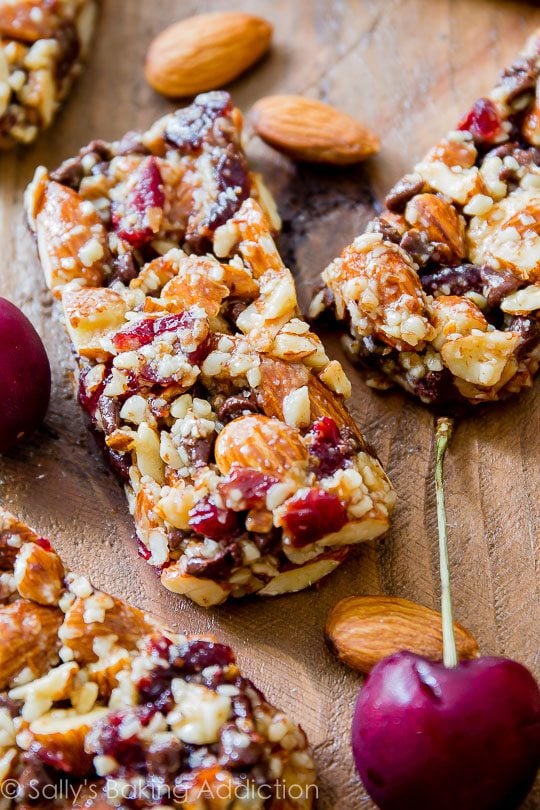
chocolate cherry almond snack bars

Chocolate Cherry Almond Bars

Think of these as a homemade KIND bar. Grain free and gluten free, with a little chocolate to satisfy. Only 8 ingredients.

Try the Recipe

creamy yogurt lemon bars on oval serving platter.

Greek Yogurt Lemon Bars

Everyone always loves the lightened-up lemon goodness in these protein-packed Greek yogurt lemon bars. Feel free to swap the lemons with limes.
Try the Recipe

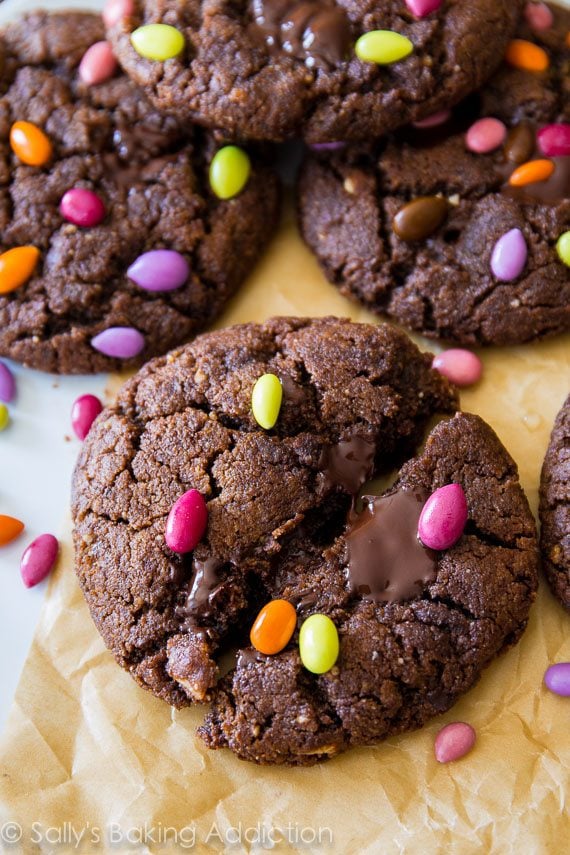
flourless dark chocolate almond butter cookies

Dark Chocolate Almond Butter Cookies

These flourless brownie-like cookies are so rich and indulgent tasting, even without flour and butter!
Try the Recipe

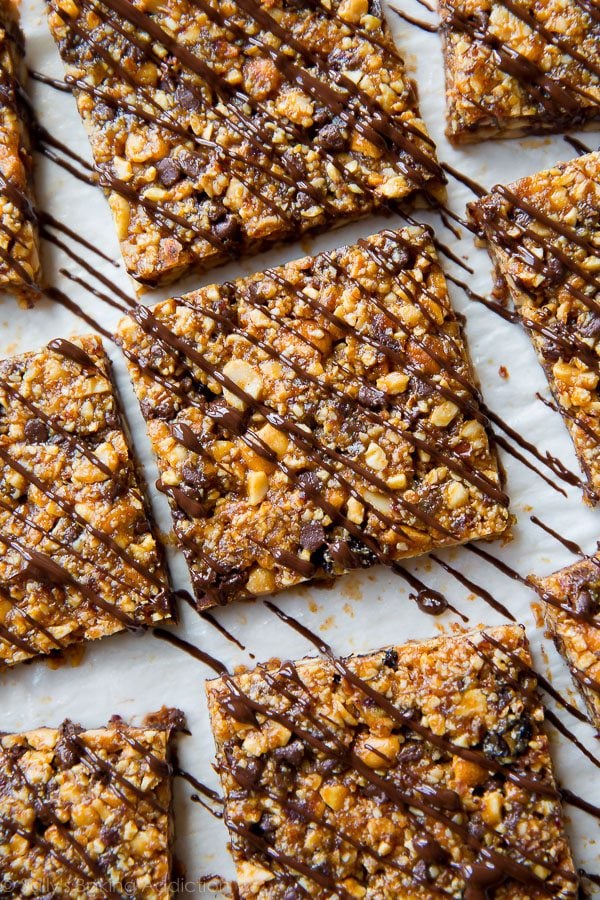
chocolate peanut butter snack bars

Chocolate Peanut Butter Snack Bars

Another easy 1-bowl recipe to keep handy for snacks or dessert throughout the week, these bars are gluten free & grain free.
Try the Recipe

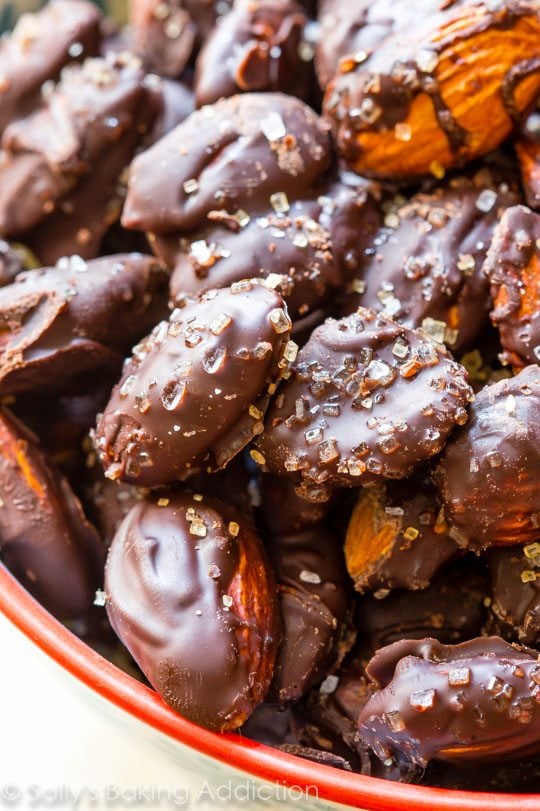
Dark chocolate sea salt almonds in a bowl

Dark Chocolate Sea Salt Almonds

Making a batch of dark chocolate sea salt almonds could not be easier. Give your almonds a good dunk in chocolate, sprinkle with sea salt and coarse sugar, and snack away.
Try the Recipe

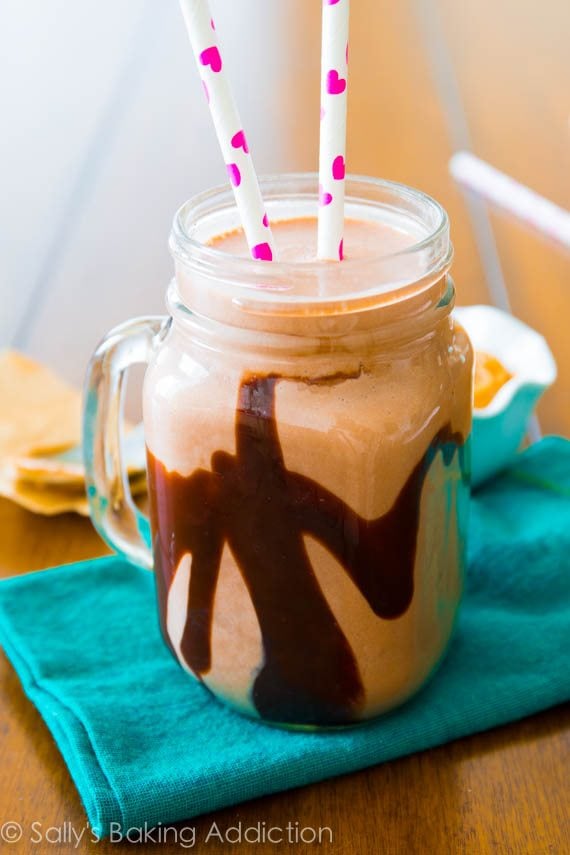
chocolate peanut butter smoothie in a glass mug with straws

Chocolate Peanut Butter Protein Smoothie

Think of this smoothie as a healthier peanut butter cup milkshake. It’s brimming with flavor and packed with protein, and will leave you feeling full and satisfied.
Try the Recipe

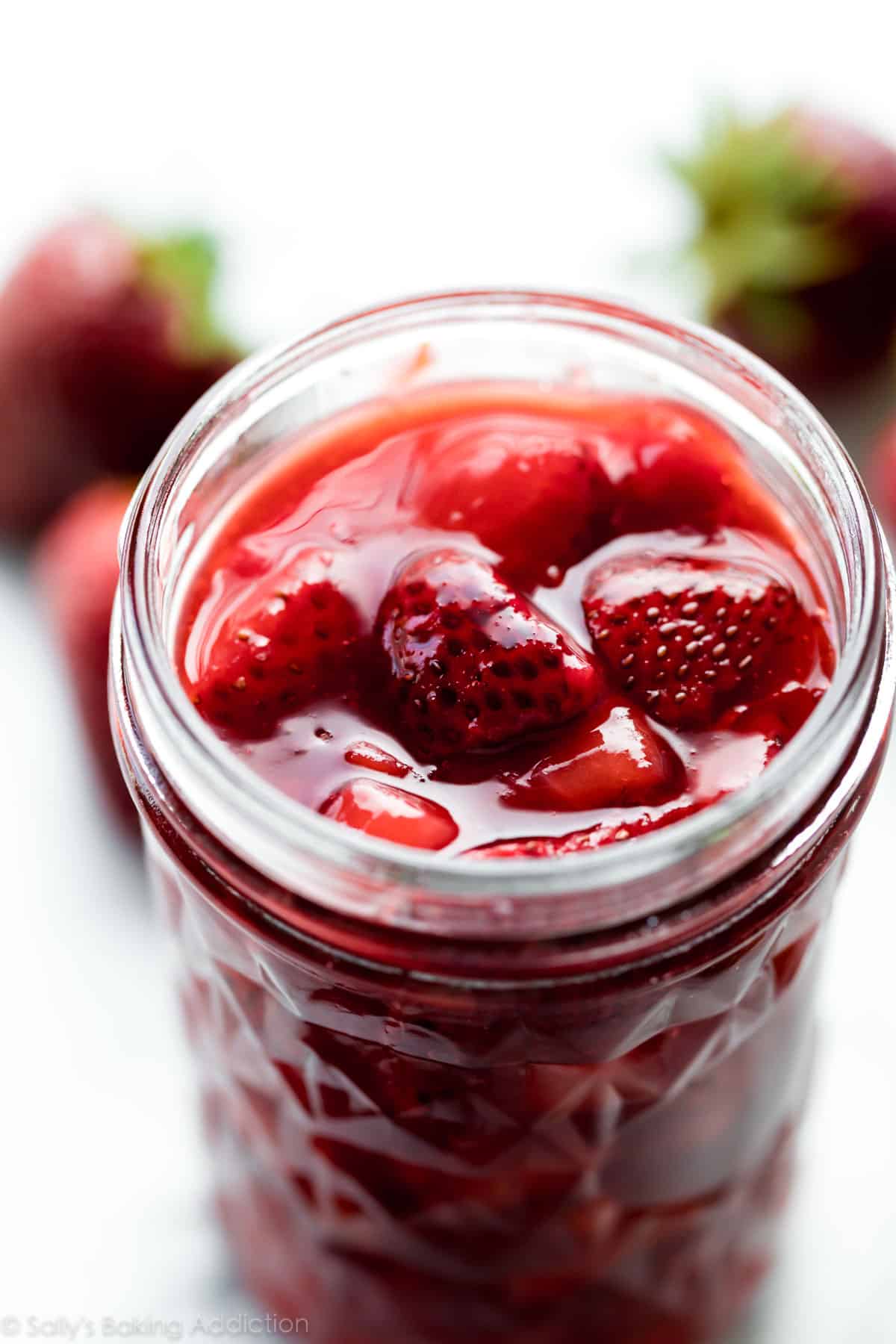
strawberry sauce dessert topping in glass jar

Homemade Strawberry Sauce (Topping)

In just 10 minutes, you can enjoy homemade strawberry sauce on top of Greek yogurt, oatmeal, and pretty much anything you can think of. It’s only lightly sweetened with sugar, without taking away from the berry’s natural flavor.
Try the Recipe

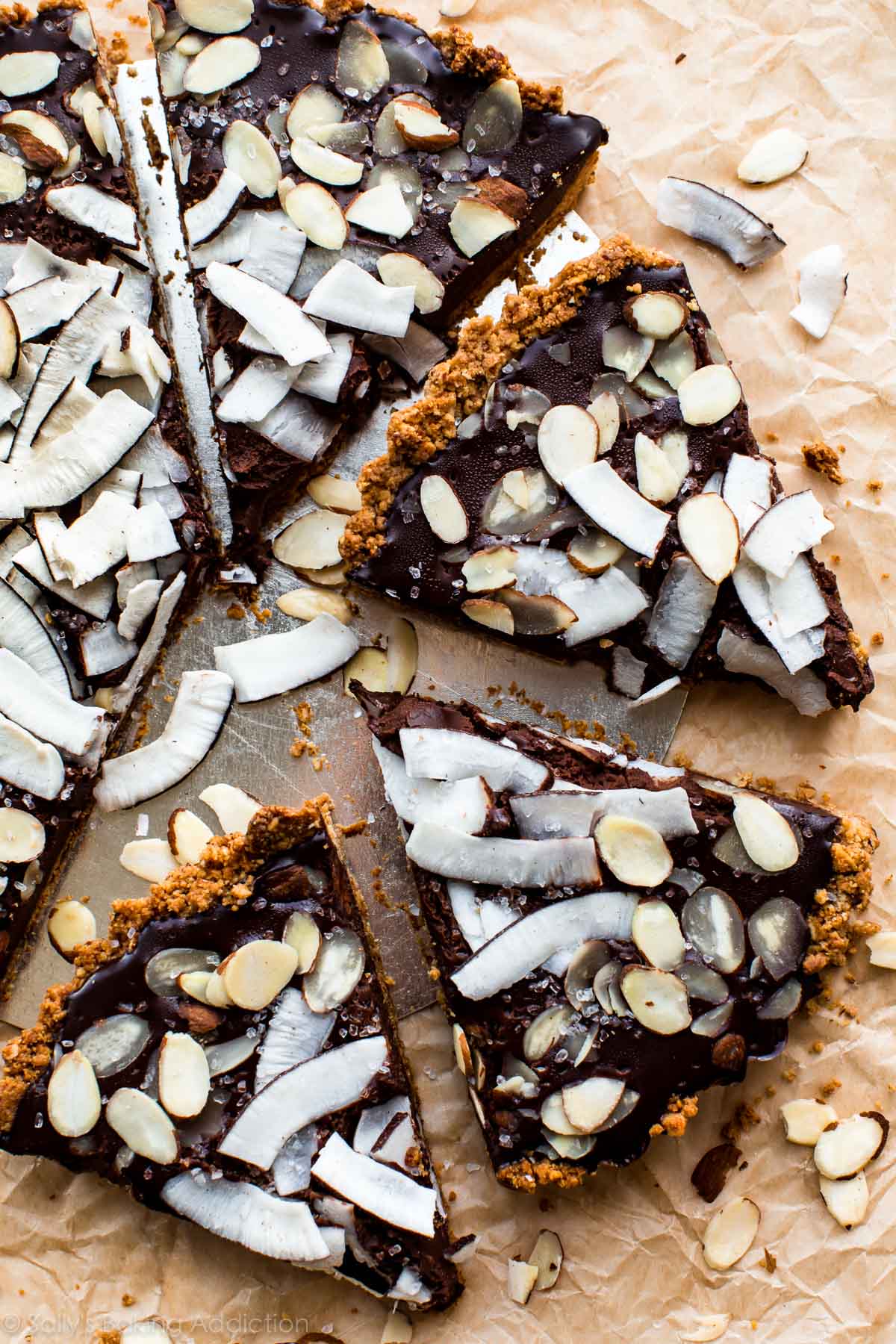
slices of chocolate coconut almond tart

Chocolate Coconut Almond Tart (GF & Vegan)

Coconut milk is the secret ingredient in this silky smooth and deeply decadent treat. Bonus: you only need the oven for 10 minutes because most of the magic is done in the refrigerator.

Try the Recipe

Healthier Dessert Recipe: Greek Yogurt Pineapple Bars

My lightened-up Greek yogurt lemon bars get a makeover with this tasty tropical pineapple version. Greek yogurt takes the place of some of the cream cheese in these cheesecake-style bars for a refreshing, ultra creamy treat. While I do use a scant 1/4 cup of granulated sugar, these aren’t overly sweet. The pineapple flavor is really front and center, and pairs beautifully with a crispy, buttery graham cracker crust.

For a piña colada-inspired version, swap half the vanilla extract with coconut extract.
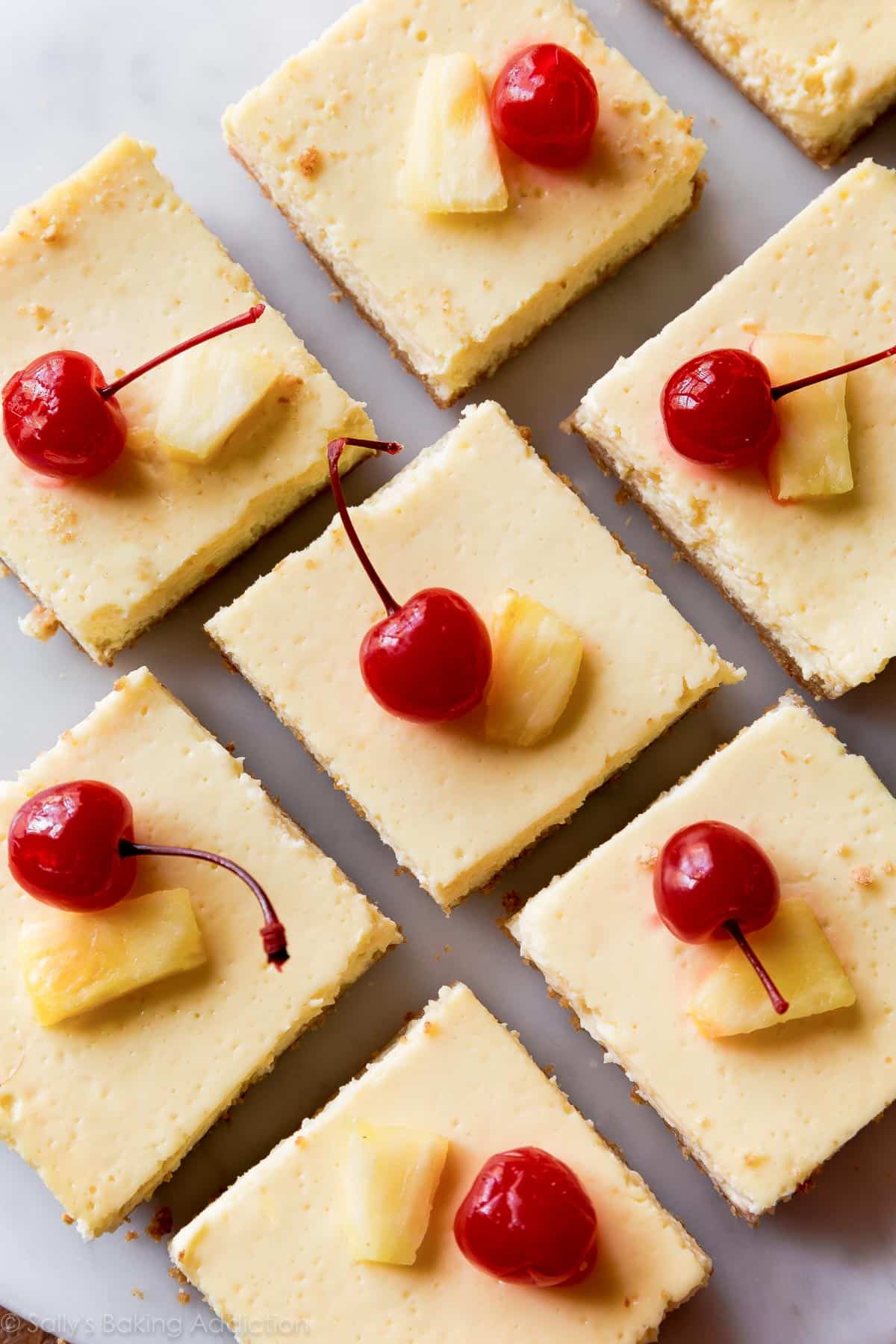
Pineapple bars topped with pineapple slices and cherries

Want to Save This Recipe?

Enter your email below, and we’ll send the link straight to your inbox. Plus, you’ll join 250,000 fellow bakers and receive my trusted baking recipes each week!I agree to receive emails from Sally’s Baking Recipes!Subscribe

pineapple Greek yogurt bars on a green plate

Greek Yogurt Pineapple Bars

5 Stars4 Stars3 Stars2 Stars1 Star5 from 3 reviews

  • Author: Sally
  •  Prep Time: 15 minutes
  •  Cook Time: 30 minutes
  •  Total Time: 4 hours, 45 minutes
  •  Yield: 12 bars

 Print Recipe

 Save Recipe


Description

Super creamy pineapple bars made with protein-packed Greek yogurt & sweet pineapple juice. Don’t skip the chilling step—these bars need to properly set in the refrigerator like traditional cheesecake.


Ingredients

Crust

  • 1 cup (120g) graham cracker crumbs (about 8 full-sheet graham crackers)
  • 1 Tablespoon (12g) granulated sugar
  • 3 Tablespoons (43g) unsalted butter, melted (or melted coconut oil)

Filling

  • 6 ounces (168g) brick-style light cream cheese, softened to room temperature
  • 3/4 cup (181g) plain nonfat or low fat Greek yogurt, at room temperature
  • 2 large eggs, at room temperature
  • 1 large egg yolk, at room temperature
  • 1/4 cup (50g) granulated sugar
  • 1/3 cup (80ml) pineapple juice
  • 1 teaspoon pure vanilla extract*
  • optional: top with cherries and pineapple slices when serving

Cook Mode Prevent your screen from going dark


Instructions

  1. Preheat oven to 300°F (149°C). Line the bottom and sides of an 8-inch square baking pan with parchment paper, leaving an overhang on 2 sides to easily lift the bars out of the pan before cutting. Set aside.
  2. Make the crust: In a medium bowl, whisk the graham cracker crumbs and sugar together. Add the melted butter and stir until combined. Press evenly into the prepared baking pan. Bake for 8 minutes. Remove from the oven and set aside to cool slightly.
  3. Make the filling: In a large bowl using a handheld or stand mixer fitted with a whisk attachment, beat the cream cheese on high speed until completely smooth, about 1 minute. On medium-high speed, beat in yogurt until completely combined. Then beat in the eggs and egg yolk until combined. Finally, beat in the sugar, pineapple juice, and vanilla extract until everything is combined and no lumps remain. Filling is thin. Pour filling into the crust—it’s ok if the crust is still slightly warm.
  4. Bake for 34–36 minutes or until the middle is no longer wobbly. A little jiggle is ok—the bars will continue to set up as they chill in the refrigerator, so you don’t need to bake them until the center is perfectly solidified. Don’t over-bake these bars, or the surface may crack.
  5. Set the pan on a cooling rack and cool for 1 hour, then transfer to the refrigerator to chill for 3–4 hours or even overnight.
  6. Once chilled, lift the bars out of the pan using the parchment overhang on the sides and cut into bars. For neat bars, I use a very sharp knife and wipe it clean with a paper towel after each cut.
  7. Cover and store leftover bars in the refrigerator for up to 5 days.

Notes

  1. Make Ahead & Freezing Instructions: Prepare the bars 1-3 days in advance and store covered tightly in the refrigerator until ready to serve. Bars can be frozen for up to 3 months. Thaw overnight in the refrigerator before serving.
  2. Special Tools (affiliate links): 8-inch Square Baking Pan | Glass Mixing Bowl | Electric Mixer (Handheld or Stand) | Cooling Rack
  3. Eggs: You need 2 large eggs plus an additional egg yolk making a total of 3 egg yolks and 2 egg whites.
  4. Room Temperature Ingredients: Room temperature dairy and eggs mix easily and more evenly into one another. I always recommend room temperature, especially cream cheese, when making these types of bars.
  5. Pineapple Coconut Squares: Replace the vanilla extract with 1/2 teaspoon of coconut extract.

Nutrition

  • Serving Size: 1 bar
  • Calories: 123
  • Sugar: 9.8 g
  • Sodium: 86.7 mg
  • Fat: 6.6 g
  • Carbohydrates: 11.9 g
  • Protein: 3.9 g
  • Cholesterol: 62.9 mg

Baking Made Easy

Are you new to this website? This free email series is a great place to start. I’ll walk you through a few of my most popular recipes and show you how and why they work. You’ll learn some handy baking science and quickly gain the knowledge to become a better baker.I agree to receive emails from Sally’s Baking Recipes!Yes, Sign Me Up

About the Author

Sally McKenney

Sally McKenney is a professional baker, food photographer, and cookbook author. Since 2011, she has been sharing meticulously tested recipes and step-by-step tutorials, helping home bakers gain confidence in the kitchen. Over the years, her dedication to approachable baking has built a loyal community of millions. Her work has been featured on Good Morning America, in People Magazine, and on popular sites like BuzzFeedHuffPostThe Kitchn, and Country Living.

36 Things That Will Be Obsolete Soon

When’s the last time you popped in a cassette tape? Rented a movie at a video store? Wrote a check for groceries?

Maybe you still do some — or all — of these things. But chances are good you’ve replaced many of what used to be common, everyday activities with more technologically updated trends.

It can be tough to believe that many of the things we once considered essential could one day disappear. “Little House on the Prairie” author Laura Ingalls Wilder couldn’t foresee the end of the covered wagon era back when she was crossing the prairie in one, either.

But as the co-author of two books about faded childhood trends — Whatever Happened to Pudding Pops? and The Totally Sweet ’90s — I can assure you, obsolescence is always grabbing new victims.

Here’s a look at some of the things that are still with us, yet are slowly but surely fading from everyday use.

1. Shopping malls

mother and child shop for the new school season
Dragon Images / Shutterstock.com

Shopping mall culture has suffered numerous blows over the past few years. Even Grandma has an Amazon Prime account these days. And with the anchor stores for those malls disappearing, the days of strolling around the mall for hours on end are going the way of the big hair from the 1980s.

While there are still some Black Friday stampedes at brick-and-mortar stores, shopping online means you won’t get pushed under a coat rack by someone in a quest for this year’s top toy. And malls as a hangout have given way to a more 21st-century gathering spot: the coffeehouse.

2. Cash

Wealthy businessman with cash
jesterpop / Shutterstock.com

In the old days, people had to set foot inside a bank branch, fill out a form and wait in line to get their hands on their own money. We actually carried cash.

Sure, cash will have a place for a while. But simply being able to use a credit or debit card — if not mobile payment technology — everywhere from McDonald’s to the farmers market has made cash much less necessary.

3. Pay phones

GaudiLab / Shutterstock.com

“Please insert another 25 cents.” That’s a phrase you don’t hear much these days, as public pay phones are no longer the every-other-corner standard they once were, especially for those once-costly long-distance calls. They’re still out there, but the number dwindles every year.

It’s clear why pay phones are fading into history like the stagecoach: Most everyone has a phone in his or her pocket these days, and it’s just not worth it to maintain a public pay phone for those few who don’t, or for the rare time when your phone charge is dwindling. (Wondering where Superman will change clothes now? Turns out that he really didn’t change in a phone booth all that often to begin with.)

Are you in the market for a new cellphone or cellphone plan? Be sure to check out Money Talks News’ free comparison tool to search for the best deal for your needs.

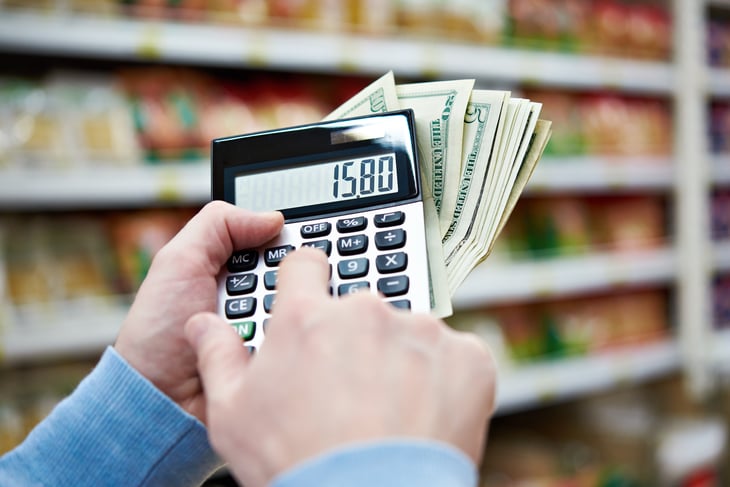
4. Calculators

comparison shopping
Sergey Ryzhov / Shutterstock.com

Let’s face it: Over the years, those carefully memorized multiplication tables start to slip out of your brain. So, calculators, once fiercely banned by teachers, come in awfully handy.

But who needs a separate physical calculator when you can calculate any sum via the calculators found on the internet or your smartphone? These days, you can even ask smart speakers, such as the Amazon Echo, to solve a math problem for you. Alexa, sum it up!

5. Paper maps

Couple with map near car.
Africa Studio / Shutterstock.com

Thanks to internet guidance, Google Maps, built-in-car GPS devices, smartphones and smartwatches, paper maps now seem like a nostalgic throwback. After all, a paper map can’t adjust itself for road detours or bad weather, or suggest a faster or more direct route.

But that said, there are reasons to keep a paper map in your glove compartment. On a meandering road trip, paper maps can let you look closely at a large area at one time.

And if you happen to have vintage road maps lying around, don’t toss them — we list them among the “17 Surprising Things You Can Sell for Decent Money.”

6. Print catalogs

Mikhail Pozhenko / Shutterstock.com

The J.C. Penney and Sears catalogs of the past were printed dream factories. Whether you grew up in the 1950s (coonskin caps!), the 1960s (go-go boots!), the 1970s (“Star Wars” figures!) or beyond, the colorful and beautifully laid out pages let kids drop into a fantasy world like no other.

Today, retailers’ catalogs are few and far between, and modern kids aren’t accustomed to turning to them for gift ideas anyway. If they show up, most catalogs head directly to recycling, or maybe get a second life as a doorstop.

7. Business cards

Business card exchange
Rawpixel.com / Shutterstock.com

Business cards used to be a staple accessory for many offices. But when’s the last time you handed one out? The information a business card offers — name, company, phone number and email address — is mostly shared digitally now, which means it is less likely to be lost and can be easily updated.

Like a Rolodex, business cards are the victim of an era that’s simply found a better way to deal with the information they offer. We’re still takin’ care of business, just not with as many small scraps of paper.

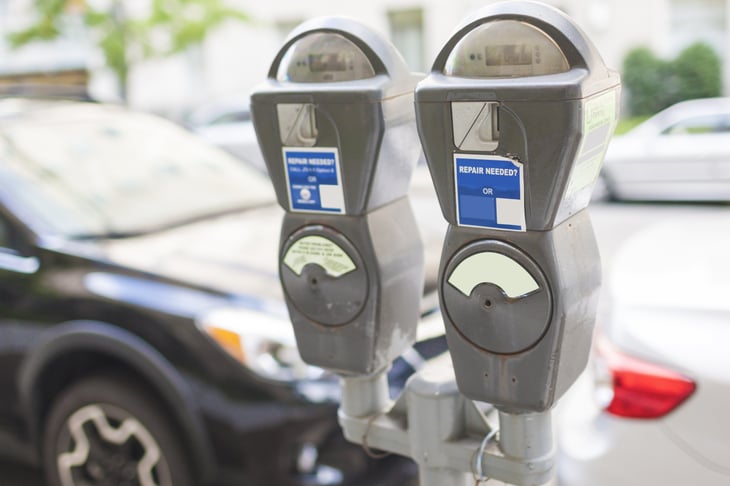
8. Parking meters

Parking meters
Dmitry Morgan / Shutterstock.com

Major American cities are still going to demand that drivers pay for parking. But the old-fashioned meters — where you toss in a few coins and your allotted parking time publicly ticks down — are disappearing.

Parking payment is moving to smartphones, with many services now posting signs telling a driver what app to download and what assigned number to punch in. It can be complicated for those who aren’t tech-savvy, but it’s the future. And, hey, at least it frees you up from carrying around all those quarters.

9. House keys

house key
Jakub Krechowicz / Shutterstock.com

House keys are still used by many, but there are advantages to changing to smart locks, such as those with numeric codes that open the door once the correct numbers are punched in. For example:

  • There are no keys that can be lost, stolen or forgotten.
  • Homeowners can set up a temporary code for a worker who needs access, then delete it the next day.
  • Kids can memorize a simple code and no longer have to worry if they lose or forget a key.
  • Vacationing homeowners can pass on the code and allow a neighbor to check on a home without needing to hand out an extra physical key.

10. Manual-transmission cars

Manual transmission car and driver
Syda Productions / Shutterstock.com

Cars utilizing stick shifts, also called manual transmissions, are disappearing around the bend. Fewer manufacturers make manual transmissions now. The Wall Street Journal reports that fewer than 2% of new car sales now are manuals, compared with 6.8% in 2012.

For those who love the stick shift, this transition will really grind your gears.

11. College textbooks

Young man with stack of books.
Aaron Amat / Shutterstock.com

If you’ve been out of college for a while, you probably remember having to fork out money for heavy, expensive textbooks for your classes. Well, welcome to the 21st century.

Textbooks are moving to the digital world. Some schools have already removed hard copies of books from their on-campus bookstores. No question, digital texts have plenty of advantages — they can be updated, and students can highlight text and remove highlights easily. They also can look up definitions or footnotes instantly and enjoy videos and interactive exercises.

But maybe best of all: It’s bye-bye to backaches from carrying backpacks overloaded with these massive bricks around campus.

If you or your offspring are grappling with college costs, check out “7 Cheaper Paths to a Great College Education.”

12. Classroom chalkboards

Undrey / Shutterstock.com

Want to make your kids think you’re really old — like “rode-dinosaurs-to-school” old? Tell them about your school days spent clapping erasers to get the chalk dust out of them. That’s a chore today’s students may never understand.

Chalkboards, aka blackboards, have long been on the way out, replaced by their cleaner, smoother cousin, the whiteboard. But even traditional whiteboards are likely to be replaced with emerging smartboards — a high-tech, interactive version — as the price of the new technology comes down.

13. Mail-collection boxes

Mail drop boxes
Allard One / Shutterstock.com

Pity regular letters, the kind for which you lick envelopes and apply stamps. Not only are they saddled with the insulting term “snail mail,” but they’re also fast slipping away, to be replaced by their nearly instantaneous competitors, email and texting.

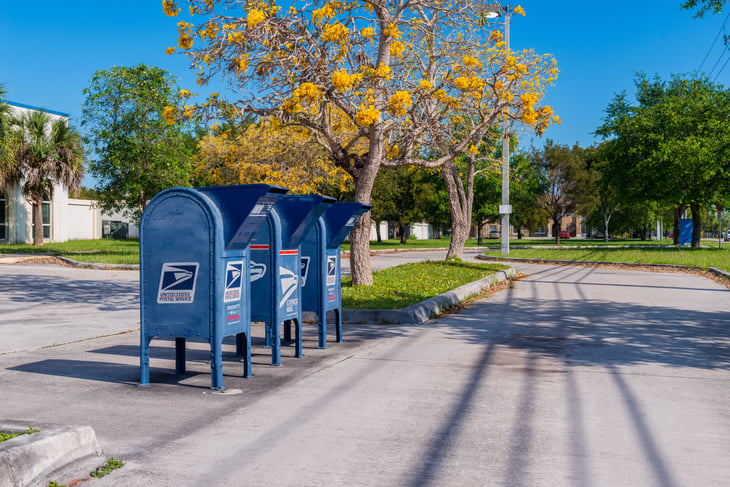
Disappearing even faster are the bright blue U.S. Postal Service mail-collection boxes that used to decorate many a neighborhood curb. Nationally, the number of collection boxes declined by more than 12,000 from 2011 to 2016, the U.S. Postal Service Office of Inspector General’s webpage declares. Roughly 140,000 remain today.

14. In-person voting

Vote by mail ballot
Castleski / Shutterstock.com

Heading to the polling place is a cherished part of American life — albeit a process that can be plagued by problems from long lines to voter-identification issues.

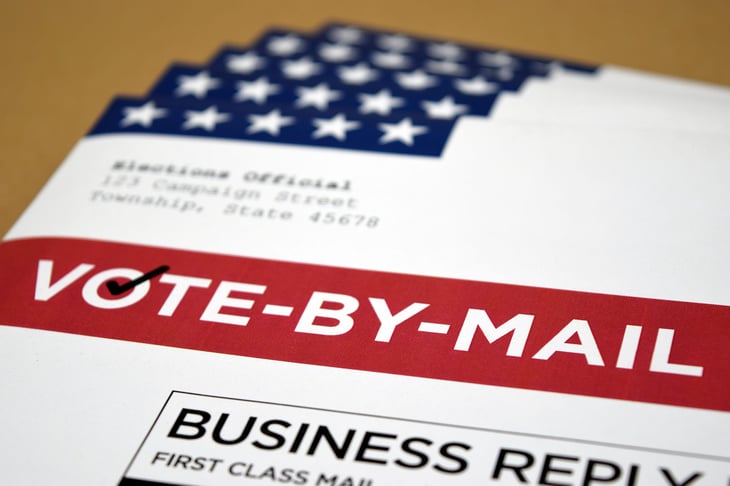
But there’s another way: Several states, including my own home state of Washington, have moved to voting by mail. Voters receive their ballots in the mail, settle in at a table to read over the candidates and issues, mark their ballots at leisure, then pop them back in the mail. (Worried your ballot wasn’t counted? You can track it online.)

Some folks are still unsure about voting by mail, but eventually, we’ll all likely vote this way.

15. Plastic shopping bags

Plastic shopping bags
ARIMAG / Shutterstock.com

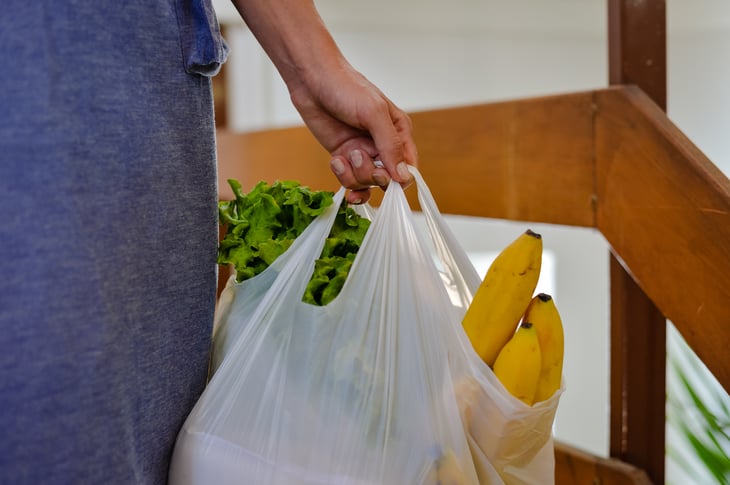
If your city or state hasn’t banned one-time-use plastic shopping bags by now, that move is probably coming. A more environmentally safe way to shop is to bring your own reusable tote bags. And if you’re ever given that old-school choice — “paper or plastic?” — choose paper.

16. Plastic, single-use straws

Steve Cukrov / Shutterstock.com

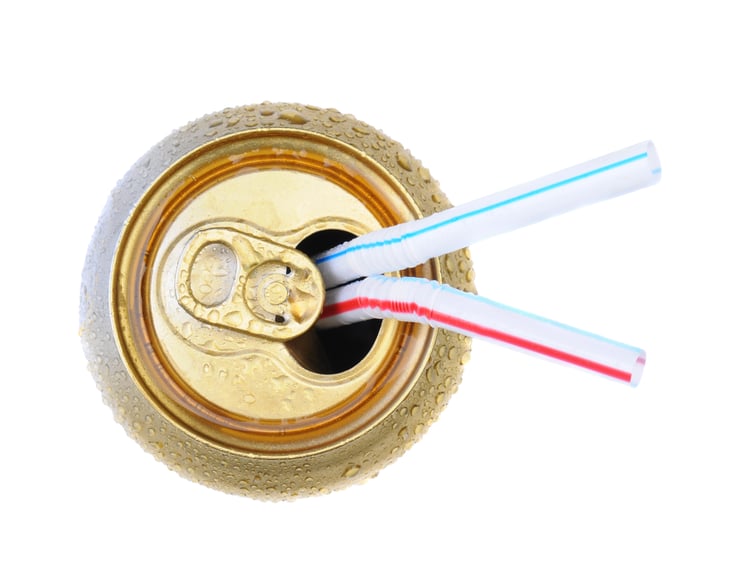
Speaking of plastic, many locations are moving away from plastic, single-use straws. Even such giant corporations as McDonald’s and Starbucks have moved toward more environmentally friendly choices.

Even though the widespread use of straws looks set to end, they will likely survive at some level until someone comes up with an alternative for those who genuinely need them, such as the disabled.

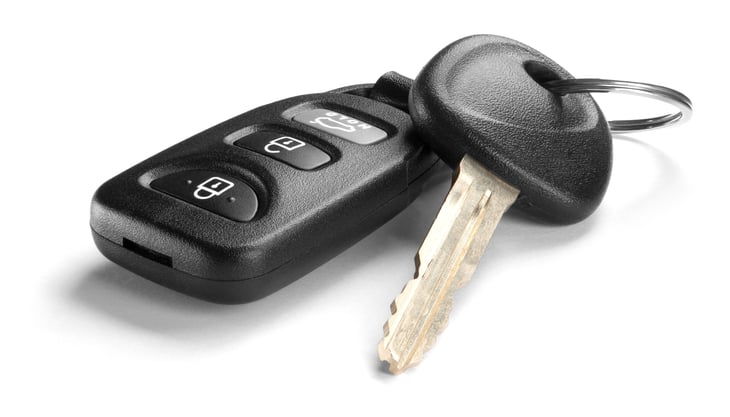
17. Car keys

Car key and fob
Chimpinski / Shutterstock.com

If you’ve bought a newish car in recent years, you may never have touched it with a key. Modern cars come with key fobs and mini-remotes that can lock and unlock the car with the push of a button.

Some don’t even require that: When I get close enough to my car, it senses that I’m carrying the key fob and remote, and it unlocks the door once I encircle the handle with my hand. I can start the car from inside my home so it warms up while I finish getting ready. And I never have to put a key in the ignition like the old days — the car has a start button instead.

18. Checks

Woman writing a check
Sean Locke Photography / Shutterstock.com

It’s become an easy cliche in TV and movies: A character is in a hurry to check out at a store, and the person in front of them slowly pulls out a checkbook and proceeds to write a check as if they’re meticulously addressing a wedding invitation.

The habit of writing checks, once the default way to pay many bills, is in decline. Many stores no longer accept checks, and many shoppers are too impatient to deal with payments that must be recorded in a register and reconciled. Swiping one’s debit or credit card or using a mobile payment app seems much simpler — and it is faster.

19. Desktop computers

employee at work
Monkey Business Images / Shutterstock.com

Wait, what? Computers are fading away?

Not computing in general, just the big old desktop dinosaurs that sit atop an office desk like a Volkswagen.

In this era when more workers want the option of working from home, a laptop or tablet gives portability and flexibility. But don’t toss the big ol’ brick out the window just yet. Desktop PCs remain useful for very specific jobs, including 3D modeling, video editing and software development.

20. Cursive

Scisetti Alfio / Shutterstock.com

Can cursive handwriting ever make a comeback? Only a very small percentage of us use it on a daily basis anymore. Computer use has replaced much of the writing we used to do, and some schools make only a cursory (sorry) attempt at teaching handwriting to the next generation.

While it’s sad to think that many young people may not be able to read older documents written in beautiful, flowing script, it still seems as if the writing is on the wall for cursive.

21. Remote controls

Television remote
ChameleonsEye / Shutterstock.com

A remote control for the TV seemed like an absolute luxury back in the 1970s and 1980s, when the devices first started to flourish. No more hopping off the couch to turn the channel dial! But now, cable, smart TVs and streaming media players offer smartphone apps that do everything from changing the channel to turning on captions and cranking up the volume.

And unlike the cumbersome remote that always seems to be lodged between the couch cushions, an app is always just as close as your smartphone.

While we’re on the subject, traditional TV is also getting gobbled up by streaming services. If you’re in the market to save on TV costs, check out “13 Streaming TV Services That Cost $20 a Month — or Less.”

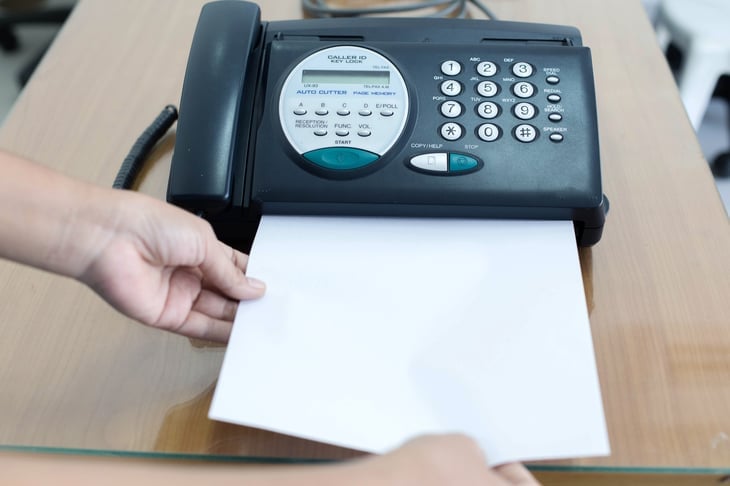
22. Fax machines

Reephotoeasy / Shutterstock.com

Certain businesses will rely on fax machines for years to come, as a way to share contracts or other documents. But technology is making it easier to turn the fax off for good. It’s now possible to download and fill out many documents via computer.

Plus, fax-machine technology is now frequently built into printers and copiers. Why make room for three giant clunky machines when one will do? That’s the fax, Jack.

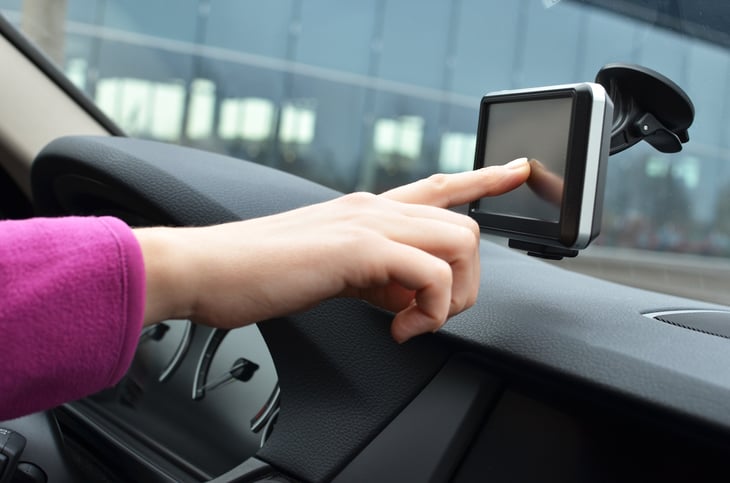
23. GPS devices

Pincasso / Shutterstock.com

Global positioning system technology is here to stay, at least until we all have direction-giving chips implanted in our brains. But standalone global positioning systems are becoming less necessary.

If your car or truck isn’t new enough to come with built-in GPS guidance, you can punch the needed address into your smartphone or smartwatch and let it guide your way. It’s just one more way those compact little phones are replacing older, one-use devices.

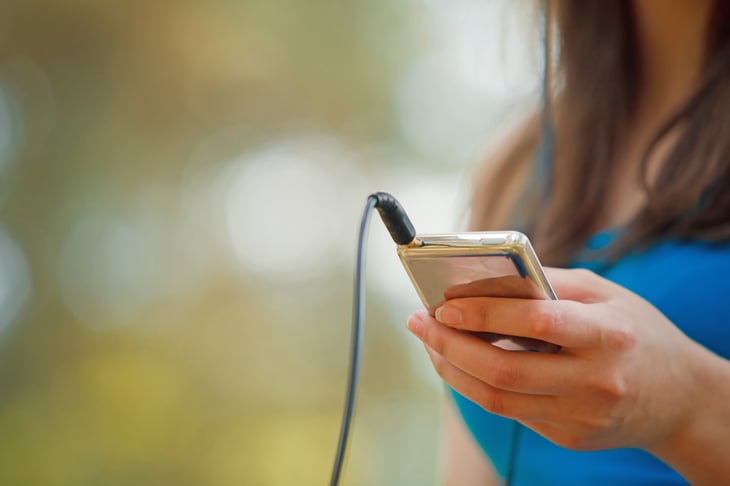
24. Portable music players

iPod
Sasharec / Shutterstock.com

What’s that we just said about phones replacing one-use devices? The iPod was a wonderful invention. (We shall not speak of the short-lived Microsoft Zune.) Finally, runners and walkers could take their entertainment with them, enjoying tunes, audiobooks and podcasts on the go.

But now the smartphone can play all those things, so why carry around two devices where one will do? As a farewell, crank up your iPod one last time. Maybe play taps.

25. Sharing school photos

Kid in glasses
Dima Sidelnikov / Shutterstock.com

Today’s parents may have fond memories of the day their school photo package arrived. Each package was usually loaded with trade-able wallet-sized images, and once Grandma got her giant 8-by-10, the rest could be swapped with friends.

But head to any elementary school the day the school photos arrive nowadays, and it’s just not the same. Kids who have grown up with smartphone cameras being thrust in their faces (and hands) don’t have the same love for trading formally posed photos.

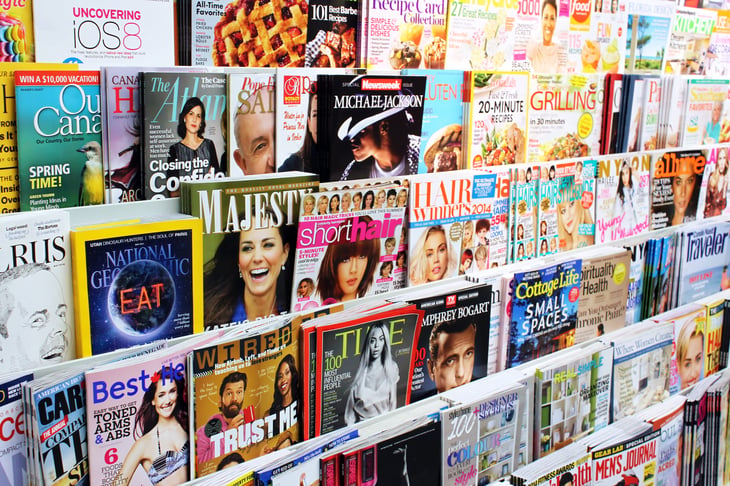
26. Print magazines

Shutterstock.com / Shutterstock.com

This one’s a toughie for those of us who still have boxes full of recipe magazines and Martha Stewart Living, who remember mooning over wedding gowns in Brides magazine or saving a Sports Illustrated from the year our hometown team finally won something. (The Minnesota Twins, 1987 and 1991 World Series for me.)

But more print magazines cease publication every year. Some publications are simply moving online or switching to fewer print issues.

27. Alarm clocks

hours passing
nalinratphi / Shutterstock.com

Hey, guess what tiny device is challenging the alarm-clock industry? You guessed it: It’s smartphones, again.

Smartphones — and smartwatches, too — have their own alarm clocks and plenty of advantages over more cumbersome physical clocks. You can set multiple alarms, program each one with a different ringtone or other alarm sounds, and you can take them with you on a business trip or vacation. How come we didn’t wake up to this concept earlier?

28. Headphones with cords

Teen listening to music on headphones
Milica Nistoran / Shutterstock.com

Hooray for headphones: They let listeners tune in privately to music, podcasts and audiobooks, or just cancel out the annoying noise of a busy plane or office.

But headphones are changing: Eventually, they’ll mostly move to a wireless version, where you don’t have to plug in the headphones to a computer or phone. The cordless versions do seem safer: No more worries about tripping over the cord while running on a treadmill, or accidentally stepping on it while bending down.

For now, you can still use your corded ones, but the next time you buy a set, you’ll probably want to think seriously about cutting the cord.

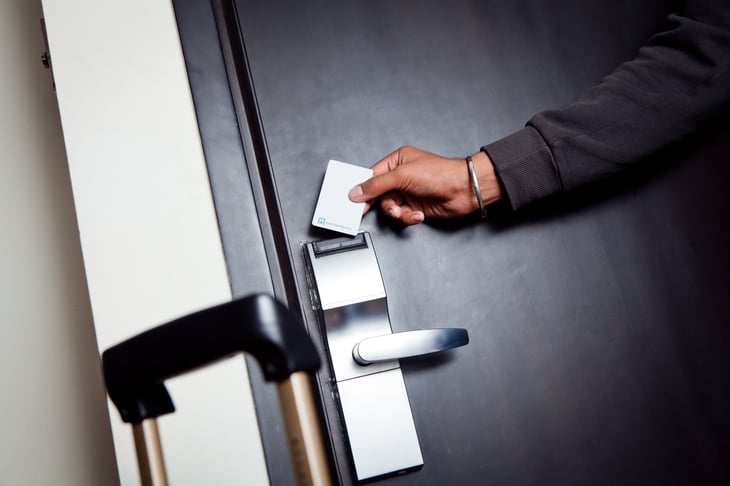
29. Hotel room keys

nullplus / Shutterstock.com

Hotels have jumped on the modern key bandwagon even faster than car manufacturers. It is now rare to get a metal key attached to a giant plastic tag for a hotel room, as once was the standard.

Key cards are cheap, easy to use, fit comfortably in a pocket or wallet, and can be recoded and reused. Plus, no one has to rekey a room door if a visitor loses their card on the beach.

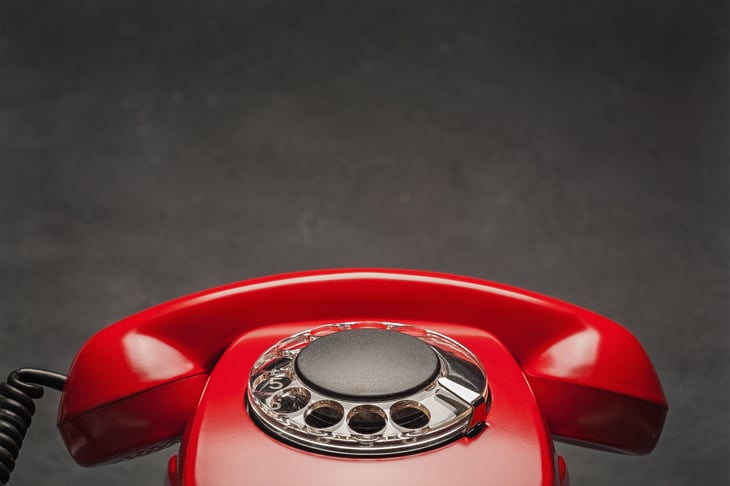
30. Landline phones

rotary phone
evkaz / Shutterstock.com

Yes, landlines do have their benefits. Calls rarely drop out as they do on mobile phones. And it’s comforting to think that in case of an emergency when cellular service is down — or in the case of a babysitter or child who may not have a cellphone — there’s a way to connect.

But many people now see the landline as an expense that can be easily cut.

31. CDs

Ken Tannenbaum / Shutterstock.com

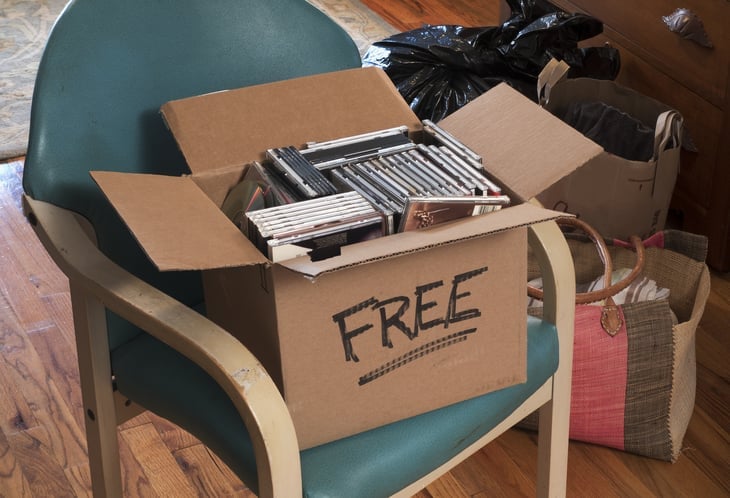
Remember when the music industry was singing the new song of compact discs (CDs)? Smaller than vinyl records! No ribbons tangled mid-tune as with cassette tapes! And don’t even get us started on how much better they sounded than clunky eight-tracks!

But, the tune has changed. Modern music users are moving to getting — and storing — their tunes digitally. Ironically, as CDs decline, an older musical medium, vinyl records, is reviving.
“The vinyl boom is not going bust anytime soon. In the first half of 2023, vinyl LP sales were up 21.7% from the same period the year before, a robust vote of confidence for the format that has dominated album sales in recent years,” says Variety.

32. Paper receipts

Shocked looking couple studying receipt.
Stokkete / Shutterstock.com

From grocery stores to gardening centers, businesses are increasingly ditching the old paper receipt. It’s not surprising anymore to be asked at checkout if you want a paper receipt or prefer an emailed one.

And emailed ones can come in handy if you have to return an item. Just search your inbox for proof of purchase. Wondering when exactly you bought that coat, or where? An email search will give you the answers — and the whole trend will save some trees.

33. Movies on DVD

Iakov Filimonov / Shutterstock.com

Nowadays, you can buy or rent digital movies through various streaming video services. And really, are you going to want to watch “Grumpy Cat’s Worst Christmas Ever” (a real 2014 title) more than once?

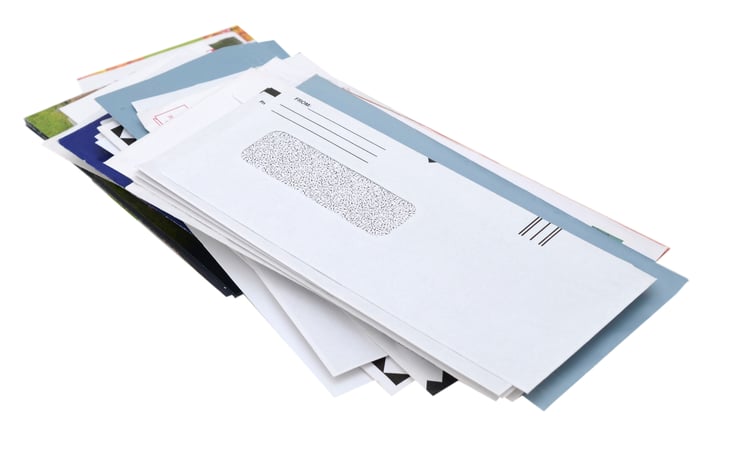
34. Paper bills

Quang Ho / Shutterstock.com

Opening your mailbox only to pluck out a pile of paper bills can be discouraging indeed. But these days, it’s possible to eschew almost all paper bills, whether from a utility, credit card or even doctor.

Most places that charge you money for something are happy to do it electronically. You’ll receive an email or text nudge when your bill is due, and you can often pay it automatically right from your bank’s website. That doesn’t make the charges go down any easier, but at least you don’t have to hunt for a stamp.

35. Paper airplane tickets and boarding passes

air travel
TravnikovStudio / Shutterstock.com

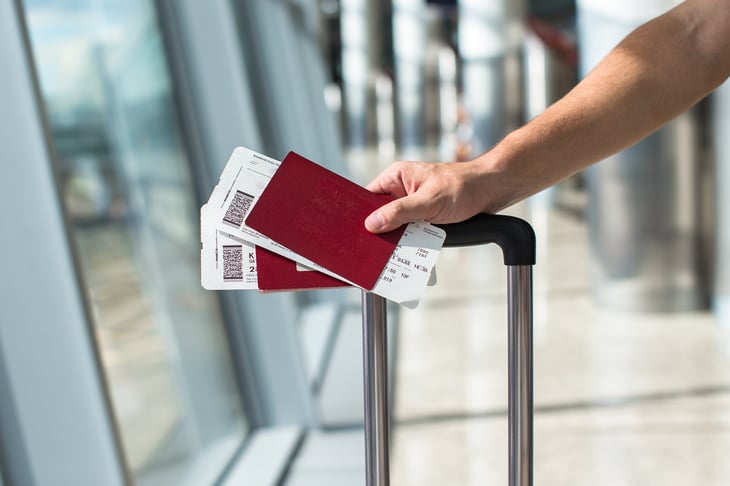
If you’ve traveled by air lately, you know that paper tickets are on the way out. Even paper boarding passes are taking flight: You can now have those passes sent to your smartphone, and need only show it to the gate agent when boarding for a quick scan.

With so many airline amenities getting worse — smaller seats, terrible or no food, etc. — at least this is an efficient change in the air.

36. Theater tickets

Woman showing her movie theater ticket
antoniodiaz / Shutterstock.com

Sure, you can still purchase paper tickets at your local movie theater. But increasingly, digital tickets are becoming an option. Purchase your tickets online and have them sent to your smartphone. Then, skip the line at the box office and simply show the usher your virtual ticket to be scanned.

Less time waiting in line means more time checking out the candy choices at the concession stand!

If you’re a movie fan, be sure to check out 12 Ways to Save Big at Movie Theaters.”

Gael F. Cooper