Black History day #24 Comic Artist Billy Grahm

A graduate of New York City’s Music & Art High School, Billy Graham was influenced artistically by the work of Al WilliamsonFrank FrazettaBurne Hogarth, and George Tuska.

One of his earliest comics projects was illustrating writer Don Glut‘s “Death Boat!” in Vampirella #1 (Sept. 1969), one of Warren Publishing‘s influential black-and-white horror-comics magazines. Graham would pencil and self-ink a story in nearly each of the first dozen issues of Vampirella, and an additional tale in issue #32 (April 1970) of its brethren publication Creepy

Publisher James Warren recalled in 1999 that he promoted Graham to art director shortly after recruiting him as an artist:

I sensed Billy had the ability to handle it; certain artists and writers are great but they can’t shift out of their specialty and do something else. Billy could. So I said, ‘Billy, you are now art director! Whether you like it or not.’ Now you have to understand that all Billy wanted to do his whole life was just be Jack Kirby. I said, ‘ You’ll be the Black Jack Kirby, but not today! Today you are art director of Warren Publishing.’ But he said, ‘I can’t art direct!’ And I said, ‘I’ll show you how. There’s your office; you now have a full-time job. A paycheck every Friday. Do you accept?’ And he said, ‘Yer goddamn right!’ And I taught him how to art direct during our slow period, and it only took a couple of issues — and he did pretty well (though I gave him a nervous breakdown).

In a 2005 interview, Warren mentions tweaking a Rolling Stone reporter who asked about his decision to hire an African-American art director, a rarity in comics at the time: “‘What!?’ mock-screamed Warren. ‘Is Billy black? I didn’t know that. Get him in here! Billy, are you black? You’re fired!

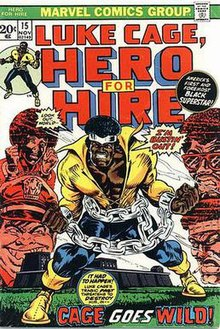
Graham eventually left Warren and joined the creative team that launched Marvel’s Luke Cage, Hero for Hire, inking the premiere issue (June 1972) over pencilers John Romita Sr. and George Tuska.  He either inked or himself penciled every issue of the book’s 16–issue run under its original title, and the first as the retitled Luke Cage, Power Man (Feb. 1974). One reviewer of the reprint collection Essential Luke Cage, Power Man wrote, “The majority of the art is by George Tuska, initially inked by Billy Graham (with several solo pieces by Graham [that] give an intriguing record of his progression as an artist: His initial work has a rough, half-finished look to it, but his later issues are clean and beautifully detailed)….

Steve Englehart, who wrote issues #5–16, said Graham “helped me plot, so that by the end it was pretty much a co-production.” Graham is formally credited as co-writer of issues #14-15, though as Englehart’s writing collaborator for those issues, Tony Isabella, recalled, “Billy Graham is credited as the co-scripter of my first issue [#15] and, try as I might, I simply do not recall getting anything other than the usual penciled pages to script. I skimmed a little of that issue and, making no judgment as to whether this is a good or bad thing, the writing does strike me as all mine.”

Graham collaborated with writer Don McGregor on the critically lauded “Black Panther” series that ran in Jungle Action #6–24 (Sept. 1973–Nov. 1976), becoming the series’ regular penciler with issue #11 (Sept. 1974) and leaving after penciling the first five pages of issue #22 (July 1976).[4] Bob Almond, inker for much of the run of The Black Panther vol. 3, dedicated his work in memoriam to Graham in an introductory note to issue #17 (April 2000). The pseudonymous Buzz Maverik wrote in Ain’t It Cool News, “I know the [Jungle Action] artist, Billy Graham, was black. His cool Marvel Bullpen name was ‘The Irreverent’ Billy Graham. For me, even though I later learned that Jack Kirby created the Panther, Graham will always be the definitive Panther artist. His art, even more than McGregor’s writing, made T’Challa one of what I call the ‘grown men’ of the Marvel Universe, the others being Daredevil and Iron Man. Those three seemed like the kind of

adult I aspired to be, with cool jobs, cool hobbies (superheroing), and cool chicks.” In 2010, Comics Bulletin ranked McGregor and Graham’s run on Jungle Action third on its list of the “Top 10 1970s Marvels”.

Graham illustrated issues #3–9 of McGregor’s 1980s Eclipse Comics series Sabre, a spin-off of one of the first graphic novels. He also illustrated a story each by McGregor in Marvel’s black-and-white horror-comics magazine Monsters Unleashed #11 (April 1975); an issue of the 1980s anthology Eclipse Monthly; and two issues of the black-and-white Eclipse Magazine. He was both writer and artist of the six-page story “The Hitchhiker” in Eclipse Magazine #5 (March 1982).

He additionally illustrated the Marvel story “More Than Blood”, scripted by science-fiction author George Alec Effinger, in Journey into Mystery vol. 2, #2 (Dec. 1972); and two “Gabriel: Devil-Hunter” stories by Doug Moench in the black-and-white magazine Haunt of Horror #2–3 (July–Aug. 1974), as well as a Moench story in the black-and-white Vampire Tales #7 (Oct. 1974).

Graham’s last comics work was co-penciling, with Steven Geiger, Power Man and Iron Fist (the again-retitled Luke Cage series) #114 (Feb. 1985), written by Jim Owsley, who would later write the Black Panther under his pen nameChristopher Priest

Graham appeared as an extra in TV commercials for products including beer and chewing gum, and played the artist father of one of the lead characters in McGregor’s unreleased, low-budget film adaptation of his Detectives Inc. graphic novels. Graham wrote several plays and received awards for his set design work as well.

Bibliography

Eclipse Comics

Marvel Comics

Warren Publishing

Black History day #23 Mamie Smith

On February 14, 1920, Smith recorded “That Thing Called Love” and “You Can’t Keep a Good Man Down” for the Okeh label in New York City, after African-American songwriter and bandleader Perry Bradford persuaded Fred Hagar to break the color barrier in black music recording. Okeh Records recorded many iconic songs by black musicians. Although this was the first recording by a black blues singer, the backing musicians were all white. Hagar had received threats from Northern and Southern pressure groups saying they would boycott the company if he recorded a black singer. Despite these threats the record was a commercial success and opened the door for more black musicians to record.

Smith’s biggest hit was recorded later, on August 10, 1920, when she recorded a set of songs written by Perry Bradford, including “Crazy Blues” and “It’s Right Here for You (If You Don’t Get It, ‘Tain’t No Fault of Mine)”, again for Okeh Records, A million copies were sold in less than a year. Many were bought by African Americans, and there was a sharp rise in sales of “race records“. Because of its historical significance, “Crazy Blues” was inducted into the Grammy Hall of Fame in 1994 and was selected for preservation in the National Recording Registry of the Library of Congress in 2005.

Although other African Americans had been recorded earlier, such as George W. Johnson in the 1890s, they were performing music that had a substantial following among European-American audiences. The success of Smith’s record prompted record companies to seek to record other female blues singers and began the era of what is now known as classic female blues.

Smith continued to make popular recordings for Okeh throughout the 1920s. In 1924 she made three releases for Ajax Records, which, while heavily promoted, did not sell well. She made some records for Victor. She toured the United States and Europe with her band, Mamie Smith & Her Jazz Hounds, as part of Mamie Smith’s Struttin’ Along Review.

She was billed as “The Queen of the Blues”, a billing soon one-upped by Bessie Smith, who was called “The Empress of the Blues”. Mamie found that the new mass medium of radio provided a means of gaining additional fans, especially in cities with predominantly white audiences. For example, she and several members of her band performed on KGW in Portland, Oregon, in early May 1923 and received positive reviews.

Recording lineups of the Jazz Hounds included (from August 1920 to October 1921) Jake Green, Curtis Moseley, Garvin BushellJohnny Dunn, Dope Andrews, Ernest Elliot, Porter Grainger, Leroy Parker and Bob Fuller, and (from June 1922 to January 1923) Coleman HawkinsEverett RobbinsJohnny Dunn, Herschel Brassfield, Herb FlemmingBuster Bailey Cutie Perkins, Joe Smith, Bubber Miley, and Cecil Carpenter.

While recording with the Jazz Hounds, she also recorded as Mamie Smith and Her Jazz Band, comprising George Bell, Charles Matson, Nathan Glantz, Larry Briers, Jules Levy, Jr.Joe Samuels, together with musicians from the Jazz Hounds, including Hawkins, Fuller and Carpenter.

Smith appeared in an early sound filmJailhouse Blues, in 1929. She retired from recording and performing in 1931. She returned to performing in 1939 to appear in the motion picture Paradise in Harlem, produced by her husband, Jack Goldberg.

She also appeared in other films, including Mystery in Swing (1940), Sunday Sinners (1940), Stolen Paradise (1941), Murder on Lenox Avenue (1941), and Because I Love You (1943).

Smith died in 1946 in New York, New York, reportedly penniless. She was interred at Frederick Douglass Memorial Park on Staten Island, on ground which remained unmarked until 2013, when a monument was finally erected.

Initially, according to the Jas Obrecht Music Archive website, Smith was buried in an unmarked grave until 1963, when musicians from Iserlohn, West Germany used the money from a Hot Jazz benefit to buy a headstone that read “Mamie Smith (1883–1946): First Lady of The Blues”. With the help of fellow blues singer Victoria Spivey and Record Research Magazine publisher Len Kunstadt, Smith was re-interred at Frederick Douglass Memorial Park in Richmond, New York. Smith’s re-interment was celebrated with a gala honoring the late singer on January 27, 1964. However, according to the 2012 campaign website, Mamie Smith was still buried without a headstone 67 years after her death in 1946.

A successful campaign to finally acquire and erect a headstone for Smith was begun in 2012 by Michael and Anne Fanciullo Cala. The couple, respectively a blues journalist and editor, developed a months-long crowdfunding campaign on the Indiegogo Web site to purchase a headstone for Smith. The philanthropy Music Cares also supported the effort. The campaign raised over $8,000 that funded the creation of a four-foot-high etched granite headstone featuring an image of the late blues singer.

The monument was erected with great fanfare at Frederick Douglass Cemetery in Staten Island, New York, on September 20, 2013. Excess funds from the campaign were donated to the cemetery for grounds care.

Black History day #22 Kindred Stories

In her fiction debut, Destiny O. Birdsong offers three different stories of Black women coming of age in Shreveport, Louisiana while navigating albinism. While each character has something to lose, Birdsong shapes each story around what they have to gain, which is their own internal magic. With an exquisite attention to southern visuals and vernacular, Birdsong offers a compelling image of vulnerability and inherent humanity that lives in us all. ​​​​​​​​

Feb 25:IRL Poet Talk: BloodFresh with Ebony Stewart – Feb 25 @ 7:00 PM CST at Kindred Stories

Join us for a night of poetry this Friday, February 25th at 7 PM.

We’re celebrating Baytown’s own Ebony Stewart for the release of her newest work BLOOD FRESH and the re-release of HOME.GIRL.HOOD.

We will be joined by featured poets Ariana Brown, Aris Kian, and Ayokunle Falomo who will share their thoughts on Ebony’s work, and perform a piece of their own.

Afterward, Ebony herself will join us as she performs a couple of her pieces from BLOOD FRESH, and we will close it out with a one-on-one artist talk.

If you are a lover of poetry, this is an event you won’t want to miss.

Reading With a Rapper (RWAR) CULTREVERSE – Feb 26 @ 4 – 7 PM at the ION Houston

We’re excited to join Reading With A Rapper (RWAR) at CULTREVERSE: An Interactive City in partnership with The Ion on Saturday, Feb 26, 2022, 4-7 PM at The Ion 4201 located at Main St, Houston, TX 77002.At this event, the Ion will be transformed into an imaginative community curated by the RWAR team, showcasing what The Ion District has to offer.Kindred Stories’ book pop-up and “Listening Station” will bring all the vibes. With the help of Libro.fm, you’ll be able to listen to a curated selection of audiobooks, each inspired by our favorite musical artists and their works.

Join us for a conversation around safe sex with Normal Anomaly.  Our facilitators, Jordan and Joelle, will offer prompts around common sex practices to debunk common misinformation and hopefully expand participants’ thoughts around safe and healthy sex practices, all inspired by a curated selection of books featured at Kindred Stories

February Adult Book Club – Lose Your Mother by Saidiya Hartman – Feb 24 @7:00 PM at Kindred Stories

Seats for this month’s book club have sold out, but please stay tuned for next month’s book club announcement via our newsletter and Instagram!  If you snagged a seat before they sold out, we’ll see you there!

February YA Book Club – Blackout edited by Ibi Zoboi – Feb 27 @2:00 PM at Kindred Stories

It’s not too late to register for this month’s YA/Teen book club with guest moderator Liara Tamani!  Parents – if your teen didn’t finish the book it’s OK!  Please still plan for them to attend!  We’ll be serving hot chocolate and donuts!

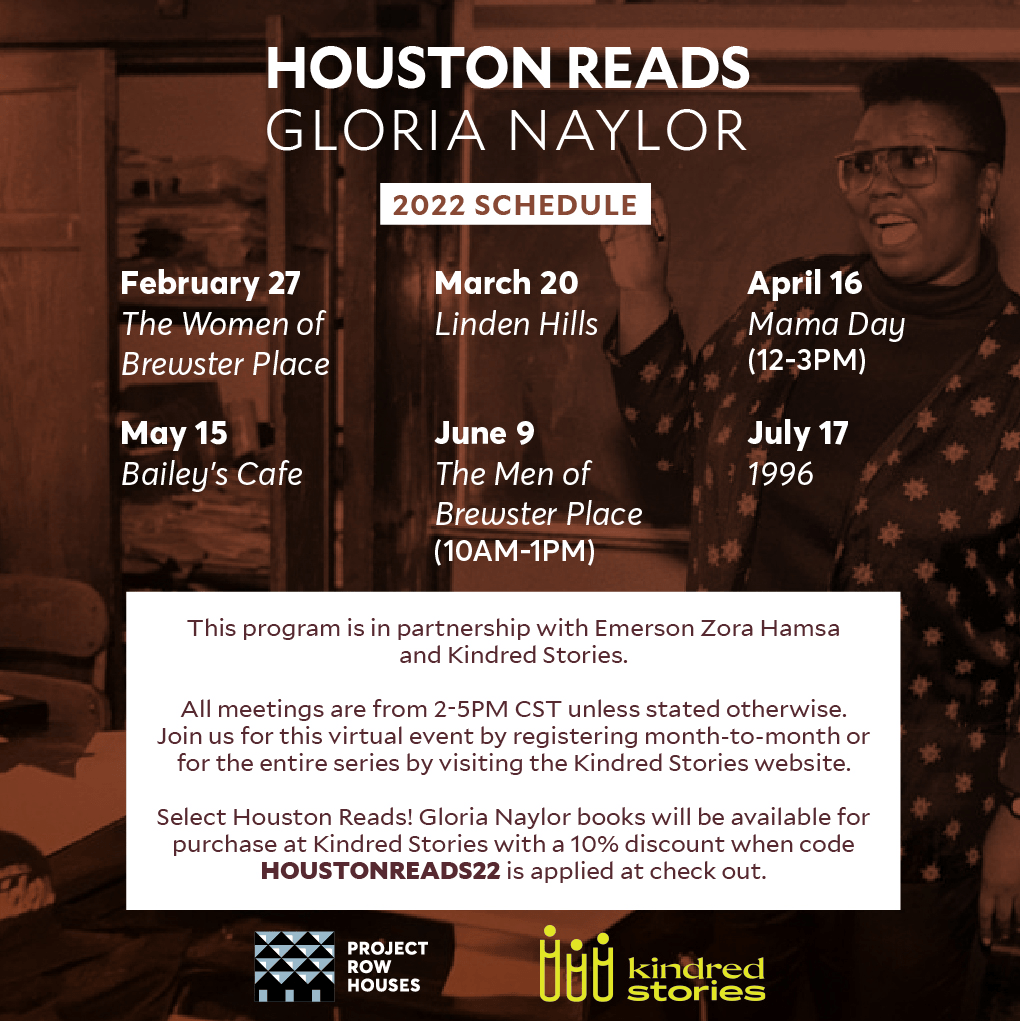
February Houston Reads Gloria Naylor – The Women of Brewster Place – Feb 27 @ 2:00 PM via Zoom

It’s time for the launch of Houston Reads 2022 Gloria Naylor!  Here’s a note from the Houston Reads founder, Emerson Zora Hamsa:

“This year we chose the novels of ancestor Gloria Naylor (1950-2016) because Naylor’s body of work offers a historically fresh and necessary perspective on Black life/living. Her novels, screenplays, essays, and other works reveal a deep love for Black people, as well as a serious consideration for the ways Black people often navigate hardship while seeking joy and practicing community care.” – Emerson Zora Hamsa

We hope you can join us!

SHOP WITH US ONLINE

Shop our full collection of books and artisan-made goods online!  Website purchases are now available for in-store pickup and delivery.  

VISIT OUR WEBSITE

Ways to Support Our Store

VISIT US IN THE TRE

Shop with us in-store!  We are located at 2304 Stuart Street, Houston, TX 77004 in Houston’s Third Ward.  Our store hours are Wednesday-Saturday, 11 am-6 pm.
SPECIAL ORDERS

We know there’s a whole big book world out there, and you may not find what you’re looking for on our site.  If that’s the case, you can shop a much wider selection of titles on our Bookshop.org affiliate page. You also always have the option of special ordering any title with us by simply sending us an email.
 
EMAIL US

Black History day #21 the First Black Nurse

Jessie Sleet Scales

Jessie Sleet Scales was the first black public health nurse in the United States. Scales contributed to the development and growth of public health nursing in New York City and is considered by many to be a health nurse pioneer. Here is more about this amazing woman.

Scales was born in Stratford, Canada. She attended Provident Hospital in Chicago and graduated in 1895. She then took a half-year course at the Freedman’s Hospital in Washington, D.C. She subsequently worked at a winter health resort in Lakewood, New Jersey for two years and then decided to become a district nurse.

Such a feat was unheard of at the time for a black woman but Scales was undeterred from her goal. Scales first applied to the St. Phoebe’s Mission in Brooklyn, New York and, although they showed interest, Scales was told that there were no openings. However, they directed her to the Charity Organization Society (COS) where she was interviewed by their general secretary, Dr. Devine. Dr. Devine is accredited with noting the high incidence of tuberculosis within the African American population in New York City and decided a Black district nurse should be hired due to the time period where there were many racial barriers.

Two months later on October 3, 1900, despite opposition from the committee Scales became the first black district nurse at the COS on the recommendation of Dr. Devine. Her job was to persuade the African American community of New York City to accept treatment for tuberculosis, a major health problem during this time period. She entered the contract knowing that her salary may be discontinued after a two-month experimental period. She did so well at her job however, one year later she was fully accepted as an employee by the committee and was published by The American Journal of Nursing.[5] Her report was titled “A Successful Experiment” and read:

“I beg to render to you a report of the work done by me as a district nurse among the colored people of New York City during the months of October and November. I have visited forty-one families and made 156 calls in connection with these families caring for nine cases of consumption, four cases of peritonitis, two cases of chickenpox, two cases of cancer, one case of diphtheria, two cases of heart disease, two cases of tumor, one case of gastric catarrh, two cases of pneumonia, four cases of rheumatism, and two cases of scalp wound. I have given baths, applied poultices, dressed wounds, washed and dressed newborn babies, cared for mothers” (Sleet, 1901, p. 729).

In addition to her work with the Charity Organization Society, Scales also worked in collaboration with a lady by the name of Elizabeth Tyler. Together, they successfully established a branch of the Henry Settlement known as the Stillman House. The Stillman House functioned to improve health conditions in the black community.

She went on to stay there for the nine years until she married her husband, John R. Scales.This branch functioned to serve Black persons. Scales and Tyler then went on to be successful in providing outstanding nursing care to underprivileged families.

Outside of her professional career, Scales was married to John R. Scales. The two of them lived in New York and had one daughter, Edna Scales.

Black History in Sports day #20 Fritz Pollard, Kenny Washington, Woody Strode, Bill Willis & Marion Motley

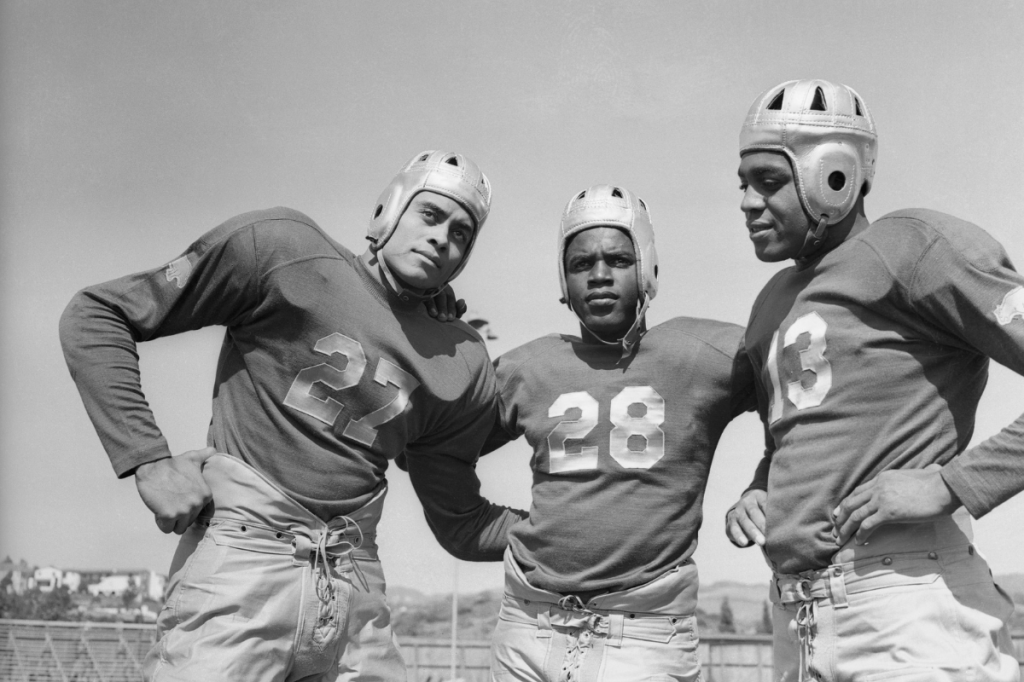
In 1920, Fritz Pollard became the first African-American to play in the NFL during its formative years. However, in the years after Fritz’s departure, the NFL owners imposed a “gentleman’s agreement” preventing the signing of more black players. The four men below are credited with re-integrating the NFL in 1946.

The Los Angeles Coliseum threatened to evict the Los Angeles Rams unless the team signed an African-American player, which set the stage for UCLA stars Kenny Washington and Woody Strode to the roster. A few months later, Bill Willis and Marion Motley started their journeys in professional football with the Cleveland Browns.

Kenny Washington and Woody Strode, Los Angeles Rams

Washington led the nation in scoring in 1939, playing 580 out of 600 minutes for the Bruins en route to becoming first All-American UCLA player. Despite his obvious athletic prowess, there was no place for Washington at the professional level. At the time, the league was in the midst of a 12-year ban on African-American players, steered into place in 1933 by Washington Redskins owner George Preston Marshall.

After signing with the Los Angeles Rams, Washington had three solid NFL seasons, with highlights including 7.4 rushing yards per attempt. He still holds a 92-yard running record for the Rams.

Washington’s UCLA teammate, Woody Strode, also signed with the Rams in 1946. After his first season alongside Washington at the Rams, Strode decided to pursue other career paths, citing issues such as a lack of playing time and constant racial abuse as contributing factors to his quick departure. Once being quoted by a reporter in 1971, Strode said, “If I have to integrate heaven, I don’t want to go.”

Fortunately, Strode found success in other talents, making his professional acting debut in the 1960s. Strode starred in several films including The Ten Commandments (1956), Spartacus (1960), Once Upon A Time in the West (1968) and The Man Who Shot Liberty Valance (1962).

Bill Willis and Marion Motley, Cleveland Browns

After an All-American career at The Ohio State University, Bill Willis joined the newly-formed Cleveland Browns of the All-America Football Conference playing defensive tackle. The 210-pound defensive star was extremely quick and light on his feet — so much so that his play helped create the position we know today as “linebacker.” He played eight seasons and appeared in three NFL Pro Bowls, anchoring the team’s defense as the Browns dominated their conference.

Marion Motley joined the Cleveland Browns in 1946 alongside Willis. Playing on both sides of the ball, Motley demanded respect on and off-the-field with his focus on game performance. Although Motley’s addition to the team was initially to provide a roommate for Willis, Motley finished his four-year career with 3,024 yards, a 6.2 yards-per-attempt average and 26 touchdowns.

Unpleasant and racially charged moments were not foreign. Willis shared in “The Game That Was” how he coped with moments of tension from opposing players:

“I soon won the respect of my opponents,” Willis said. “They learned that I could take it and dish it out, and I didn’t really have to play dirty ball to hold my own. Speed was my greatest asset, but I could unleash a pretty solid forearm block and a rather devastating tackle.”

“They found out that while they were calling us n*ggers and alligator bait, I was running for touchdowns and Willis was knocking the sh*t out of them,” Motley once said. “So they stopped calling us names and started trying to catch up with us.”

Both Motley and Willis were elected to the Pro Football Hall of Fame, in 1968 and 1977 respectively.

Black History Month day #19 Community Market Trailer

Don’t miss the Community Market Trailer this Wednesday, February 2310am-1pm
Greetings Members! Please don’t forget to join us this week for the Community Market Trailer located at the 3rd Ward MSC in the big parking lot. If you or someone you know could use some extra groceries at no cost please stop by… We look forward to seeing you.Please Join Us!If you have any questions please don’t hesitate to call DAWN at 832-393-4055
Houston Health Department: Office of Chronic Disease, Health Education, and Wellness | 8000 N Stadium Drive, 3rd Floor, Houston, TX 77054

Black History Month day #18 Blacks in Politics

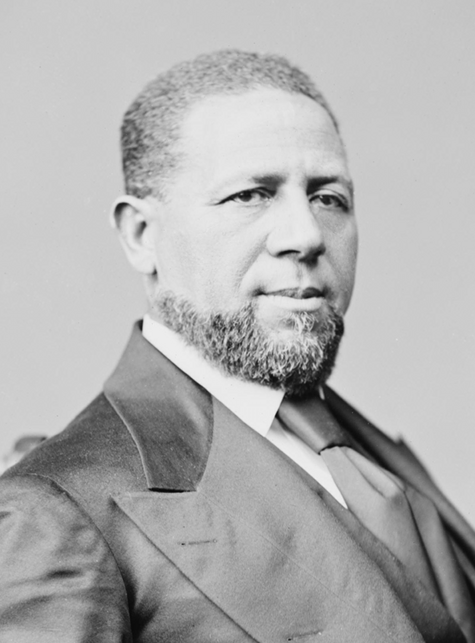
In 1870 Hiram Revels of Mississippi became the first African American senator. Five years later, Blanche K. Bruce of Mississippi took the oath of office. It would be nearly another century, 1967, before Edward Brooke of Massachusetts followed in their historic footsteps.

Hiram Rhodes Revels, the first African American to serve, was elected by the Mississippi State Legislature to succeed Albert G. Brown, who resigned during the Civil War.

Five years later Blanche K. Bruce of Mississippi took the oath of office and became the first African American to preside over the Senate and to serve a full term.

Since 1917, when Representative Jeannette Rankin of Montana became the first woman to serve in Congress, a total of 397 women have served as U.S. Representatives, Delegates, or Senators.

Carol Moseley Braun broke new ground in 1993, becoming the first African American woman to serve as U.S. senator.

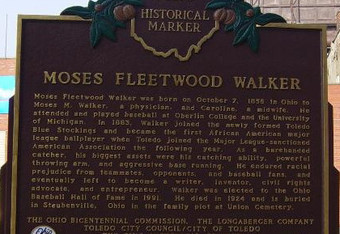
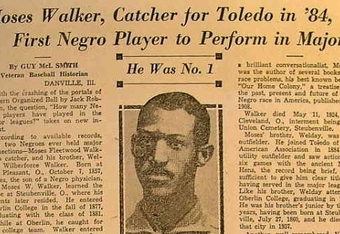
Black History Month day # 17 Moses Fleetwood Walker

OBERLIN COLLEGE BASEBALL

Never could two completely separate adages have come to me at a more seemingly random time.

Watching the celebration of Jackie Robinson Day throughout Major League Baseball yesterday reminded me of two truisms that are often repeated in our society, even in the world of sports.

The first by Winston Churchill: “History is written by the victors.”

The second by Dr. Martin Luther King Jr: “We are not makers of history. We are made by history.”

At this point, you may be asking, how does this have anything to do with Jackie Robinson or Major League Baseball?

But to those who have studied the history of baseball, it means everything.

See, the clear majority of society has been living under a false pretense for their entire lives. One that even the most credible sports news outlets have done nothing to change

Jackie Robinson was not the first to break the “color barrier” in baseball.

In fact, the day that Jackie Robinson is credited with integrating baseball (April 15, 1947), came nearly 63 years after Major League Baseball’s color barrier was really broken.

A man by the name of Moses Fleetwood Walker, a Michigan grad and catcher for the Toledo Blue Stockings, is actually the first African-American to play in Major League Baseball.

Shocked to hear that?

Now, before I go any further, this article is not meant to discredit what Jackie Robinson did in any way.

The courage he showed in literally risking his life to pursue his dream cannot be diminished, no matter the truth of the situation. Instead, I seek to shed light upon one of the greatest injustices in not only the history of American sports, but American society.

Moses Fleetwood Walker’s incomprehensible accomplishment on May 1, 1884 will never be celebrated by Major League Baseball. All 32 teams will never wear his number.

But, what Moses Fleetwood Walker went through—and what his successes meant for players like Jackie Robinson—can never be replicated or overstated.

Walker rose through the collegiate ranks after transferring from Oberlin College to the University of Michigan in 1882 and experienced immediate success. Walker batted .308 for the Wolverines and helped lead the team to a solid  10-3 record.

After finishing his career in Ann Arbor, Walker signed with the minor league team, the Toledo Blue Stockings of the Northwestern League in 1883.

Being a starting catcher during this time was not ideal, especially by modern standards. Walker (like most catchers during the late 19th century in major league baseball) did not wear gloves and protection.This would became a large factor in contributing to the injuries that would prematurely end his career.

Even worse, Walker’s participation on the Blue Stockings caught the ire of one of the most famous players during this time period, Cap Anson, who refused to take the field opposite Walker if he was in the starting lineup. Eventually Anson relented, but this was the beginning of Walker’s struggles as he attempted to fulfill his dream to make the big leagues.

Despite these hindrances, Walker would catch a lucky break that would change the course of history in Major League Baseball.

In the beginning of the 1884 season, a burgeoning professional baseball league, the American Association (which would later become the modern-day American League) formed.

Its mission was to compete with the dominant baseball league of this team, the National League. One of the American Association’s first moves was to add the Toledo Blue Stockings to its list of participating franchises.

This meant that on opening day of the 1884 season, the starting catcher of the Toledo Blue Stockings would become the first African-American player to play a professional baseball game.

On May 1, 1884, against the Louisville Eclipse, Moses Fleetwood Walker took the field, and in doing so, officially broke the color barrier of Major League Baseball.

Ironically enough, Walker would go on to have the worst game of his career on the day he integrated baseball, going hitless in four at-bats and committing four errors.

What could have contributed to this forgettable debut?

How about the constant hurling of racial slurs and death threats throughout the game.

Over time, after the nerves of the first game and the immense pressure began subsiding, Walker proved himself to be a solid contributor for the Blue Stockings.

In his time as the starting catcher for the Blue Stockings, Walker batted .264 (which was well above the league average in this pitching-dominated time period) and scored 23 runs. One of the greatest validations of Walker’s skills was that his backup, Deacon McGuire, would go on to catch 1,600 games in a career spanning 26 seasons.

We have all heard stories about what Jackie Robinson suffered through while playing baseball. His struggles, however, pale in comparison to what Moses Fleetwood Walker suffered through during his only season playing professional baseball.

Walker’s teammate with the Blue Stockings, pitcher Tony Mullane, once stated of Walker that he “was the best catcher I ever worked with, but I disliked a Negro and whenever I had to pitch to him I used to pitch anything I wanted without looking at his signals.”

This viewpoint was common among the Blue Stockings and was a contributing factor as to why several passed balls were attributed to Walker. In addition, these instances caused Walker to break his rib one game and play in the outfield in other games where he was too hurt to play catcher.

As such, it was no surprise that after playing in 42 games in 1884, Walker suffered a season-ending injury in July which finished his season.

It would be the last time he ever played Major League Baseball.

The Toledo Blue Stockings folded in 1885 and Walker bounced around different minor league teams until 1888.

In 1889, with Walker working his way back up to the big leagues, his dreams to return were dashed for good. It was in this year that the American Association and the National League “unofficially” banned African-American players, allowing for Major League Baseball to fall in line with the Jim Crow laws that were permeating throughout American society.

Unfortunately for Walker, his post-baseball career would take a turn for the worst that would deeply affect the latter stages of his life.

In April of 1891, in an act of self-defense, he stabbed and killed a man by the name of Patrick Murray. A jury acquitted Walker of second-degree murder, but the horrors of the trial would have an irreversible affect on his view of race relations in the United States.

In 1908, Walker published a book titled Our Home Colony: A Treatise on the Past, Present, and Future of the Negro Race in America. In it, Walker argued that whites and blacks could never peacefully co-exist in the United States, espousing views that alienated him from much of American society.

It is here that the tragedy of Moses Fleetwood Walker is realized.

Despite the immense courage he illustrated in doing what no African-American had done before, during a time in American society where threats on his life were the result, his actions were not celebrated.

Instead, his book and the ideology behind it caused American society in the early 20th century to diminish his achievements to the point where history no longer remembers him.

Which brings us back to Jackie Robinson Day in Major League Baseball.

Jackie Robinson certainly displayed courage on April 15, 1947, a day celebrated across the country, and rightfully so.

But, lost in the annals of history is a man who overcame the ugly racial divide of the post-Civil War era and helped integrate a sport now know as the “American pastime.”

Which is why, despite the inherent truth displayed by Winston Churchill and Martin Luther King’s comments, we need to celebrate the true winners of the past.

Jackie Robinson did not make history. His achievement was made possible by Moses Fleetwood Walker, despite what history books may tell us today.

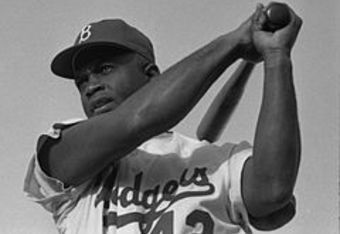
Jackie Robinson
Moses Fleetwood Walker Memorial
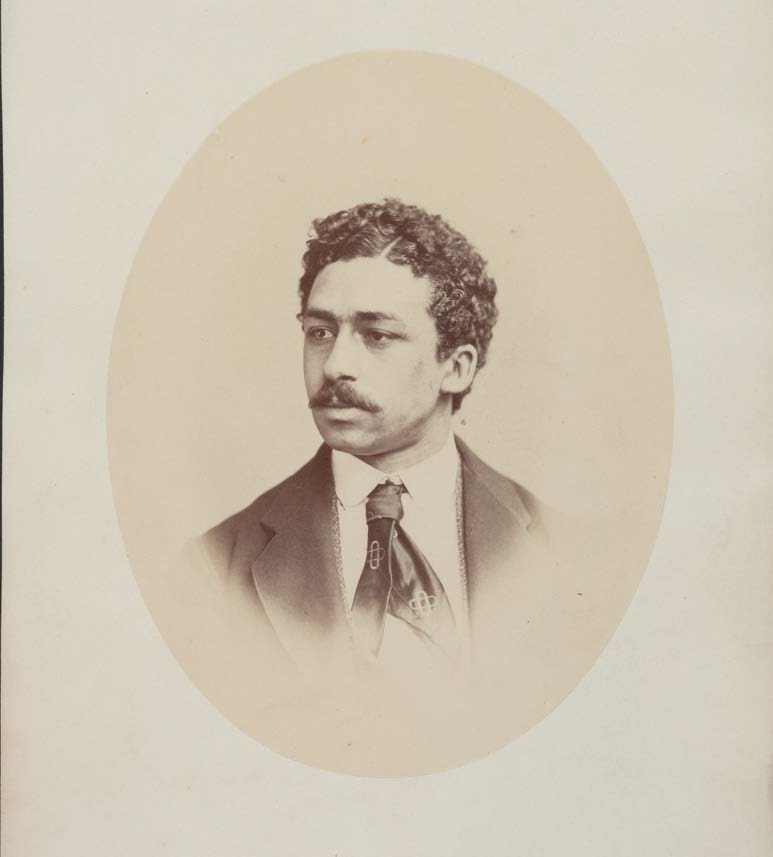
Moses Fleetwood Walker

Black History Month day #16 Richard Theodore Greener

Harvard University Archives. Richard Theodore Greener (1844-1922), professor, lawyer, and diplomat, was the first Black graduate of Harvard College, receiving his AB from the College in 1870.

not to mention but also Lillian Lincoln Lambert is an American businesswoman, and the first African-American woman to graduate from Harvard Business School (HBS), where she was one of the co-founders of the African-American Student Union. She graduated in 1969 and received the W. E. B.

From 1876 to 1879, Greener represented South Carolina in the Union League of America and was president of the South Carolina Republican Association in 1887 and was active in freemasonry. In 1875, Greener was appointed by the South Carolina Assembly to a commission to revise the South Carolina school system.

From 1880 until February 28, 1882, Greener served as a law clerk of the Comptroller of the United States Treasury.

In 1883, Greener and Frederick Douglass conducted a heated debate. Greener and the rising generation of black leaders advocated moving away from political parties and white allies, while Douglass denounced them as “croakers.” Greener, who nonetheless still respected Douglass’ achievements, helped organize a major convention to present black grievances to the nation. Decades had passed since the Civil War, the Emancipation Proclamation, and years since the passage of the Fourteenth and Fifteenth Amendments, but these advances had been rolled back or left unenforced, while Jim Crow laws spread in the South. Greener joined younger black leaders in questioning Douglass, who remained loyal to the Republican Party that had first fought for Black freedom then abandoned them. Douglass accused Greener of writing anonymous attacks motivated by “ambition and jealousy” that charged the older leader with “trading off the colored vote of the country for office.” Greener wrote that there were two Douglasses, “the one velvety, deprecatory, apologetic – the other insinuating, suggestive damning with shrug, a raised eyebrow, or a look of caution.”

From 1885 to 1892, Greener served as secretary of the Grant Monument Association, where he is credited with having led the initial fundraising effort that eventually brought in donations from 90,000 people worldwide to construct Grant’s Tomb. From 1885 to 1890 he was chief examiner of the civil service board for New York City and County. In the 1896 election, he served as the head of the Colored Bureau of the Republican Party in Chicago.

Just as Greener opposed Douglass, he was on the Washington side of the growing split in the African American world. On the one side was accomodationist, and therefore politically powerful and adequately funded, Booker T. Washington. On the other were Monroe TrotterW. E. B. DuBois, and their followers, who insisted that under the Constitution they had rights and that those rights should be respected. From it were born the Niagara Conferences, and from them the NAACP. Greener was so closely allied with Washington that Washington sent him to the Second Niagara Conference with the explicit charge of spying and reporting.

Along with having accomplished many African-American firsts, Greener earned several awards in his lifetime.

In 1902, the Chinese government decorated him with the Order of the Double Dragon for his service to the Boxer War and assistance to Shansi famine sufferers.

He received two honorary Doctorates of Laws, from Monrovia College in Liberia in 1882 and Howard University in 1907. Phillips Academy and University of South Carolina both grant annual scholarships in Greener’s name.

The central quadrangle at Phillips Academy was named in honor of Greener in 2018. The University of South Carolina erected a statue of Greener.

In 2009, some of his personal papers were discovered in the attic of an abandoned home on the south side of Chicago by a member of a demolition crew.

On February 21, 2018 a nine-foot statue of Greener was unveiled at the University of South Carolina. It stands in front of the Thomas Cooper Library.

Black History day #15 African American Authors

I can’t believe we’re almost done with this month. February goes by too fast for me, but while I mellow in the time span please enjoy a few more authors to catch up on your reading. And I hope to be adding more interviews before the month is over with.

Enjoy everyone.