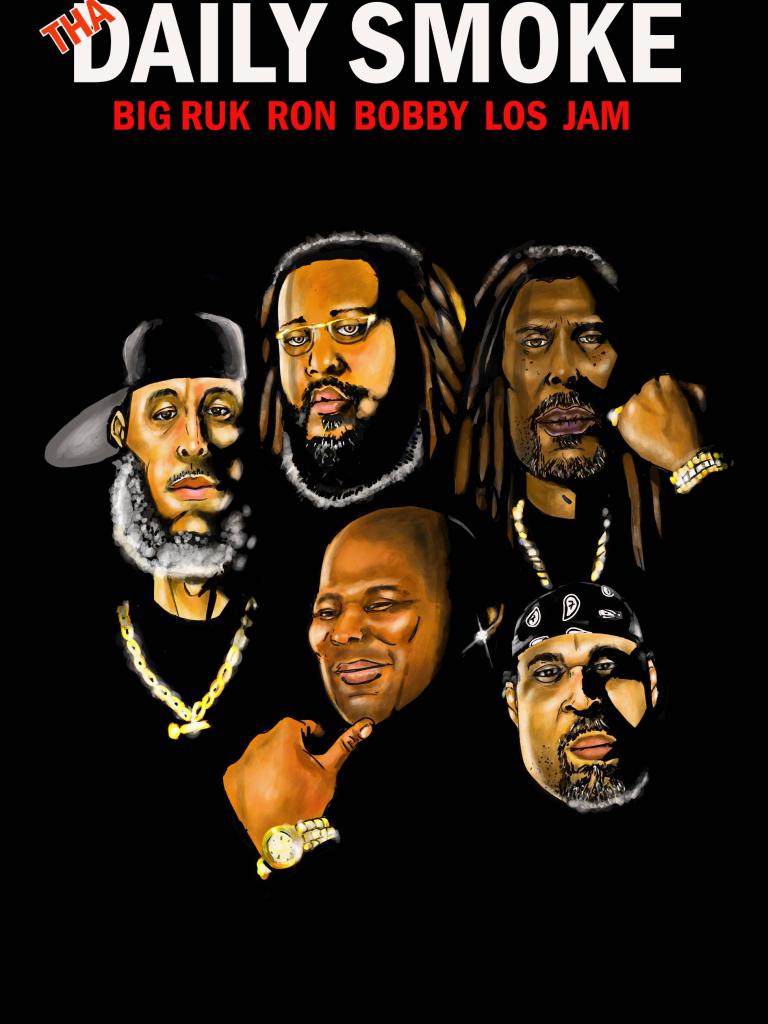
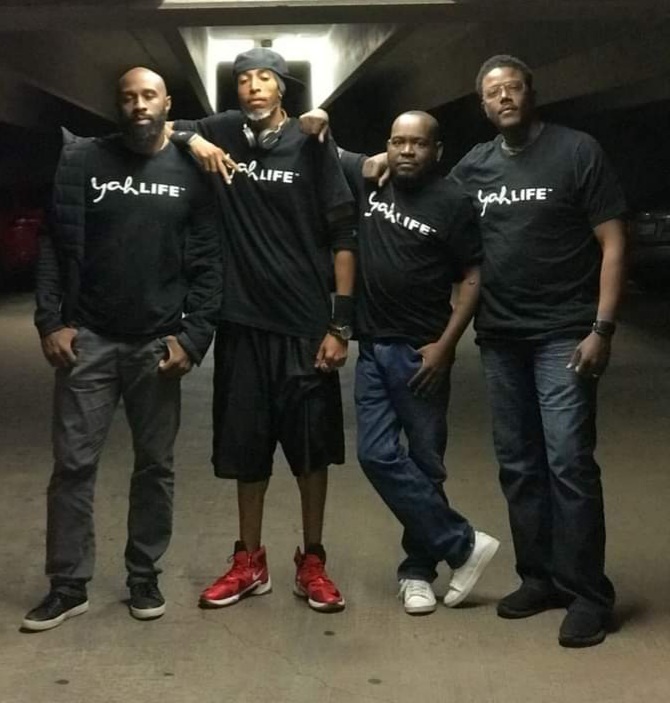
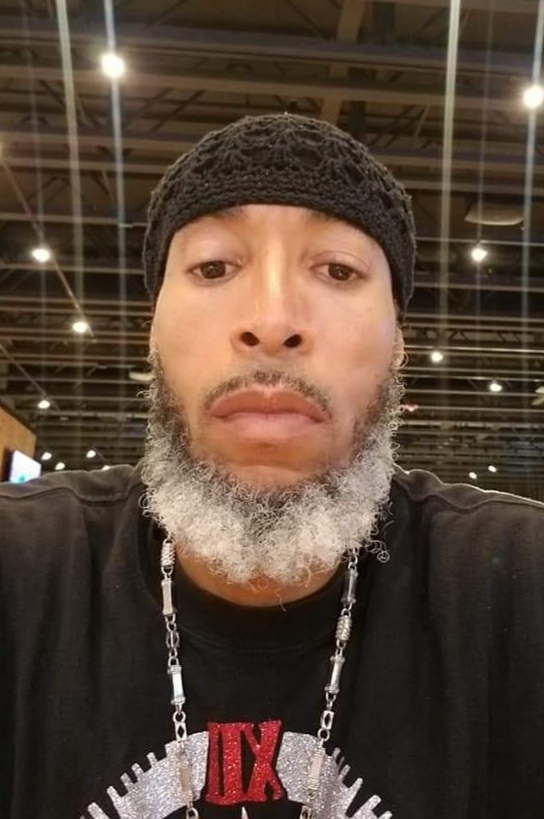
The Daily Smokes Devin Wilburn

Can you give readers more info about The Daily Smoke?

Devin: Absolutely. Tell how we started. Right about a year ago actually. But before that I attempted to start it out with about 9 of us and it was too many hands in the pot and it didn’t take off so I decided to grab 2 friends whom I knew their enthusiasm was strong as mine and we got it started in no time. We began to grow and as it says in the scriptures…” Build it and they will come” and that’s exactly what happened. Most of the people I started out with slowly filtered in and made the house a home. 

What is the Wolf’s Den?

Devin: That’s my brother Los’ man cave that we turned into TDS studios. This was our 3rd location. We continued to grow and evolve and needed more suitable spaces to work and this provided us the perfect place for TDS to grow.

How long has the Daily Smoke had its doors open?

Devin: We are a little over a full year now.

Who all is involved with your podcast?

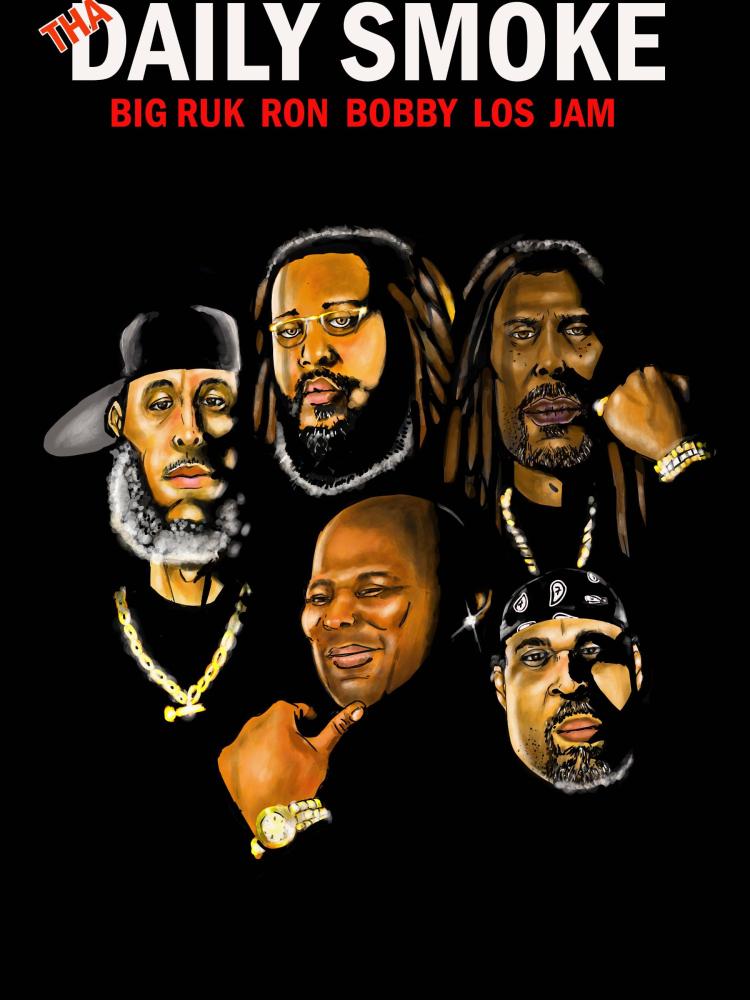
Devin: My brothers Ron, Bobby, Los & Jam and behind the scenes Mrs. Los aka Amy whom is our Accountant and Bookkeeper. And we all have our specific rolls to make this thing work.

How often does it air?

Devin: Originally every Mon. & Wed. Now Monday-Friday with all days live except Tuesday & Thurs. All at 7 pm.

What are the topics that you try to cover and choose not to cover?

Devin: We cover any and everything. More serious topics anywhere from politics, mental illness-on, social and family dynamic to religion, sex, you name it on the Live Mon. & wed. shows which are the main shows then Tues. & Thurs. being geared more towards fun and all things creative, artsy, fun and imaginative. And Fridays are brand new and more comedy geared.

What would you say is something that is a misconception about the Daily Smoke?

Devin: I have absolutely no idea. I don’t think there are any misconceptions because we are very transparent about who we are individually and as a unit and that we are not judgmental and not always right and open to new ideas if they are presented in a valid way that makes sense even if we don’t agree personally. So there is no hard cannon on our viewpoints so as far as misconceptions about the podcast the only thing I could say is if you just look and don’t take time to listen and you are somewhat closed minded or sheltered and very stereotypical minded in terms of how you view people you may think we are not speaking about topics on an intellectual level but you would be incorrect. But if you listen you would know that.

How do you help your community?

Devin: We provide a space for people to reach out to an audience they may not have access to to promote whatever they are doing. We connect and network people for everyone’s benefit. We talk about things that people may be scared to discuss or have no one to discuss with and they have the ability to call in or type in the messages their comments questions and responses and not be seen or herd if that is more comfortable.

What is one message you try to spread to younger generations?

Devin: Just be aware of things, be open minded to being wrong and or learning new things especially things that someone older that you can trust & truly has your best interest in mind can pass on to you. But also not to be easily manipulated and stand your ground until your ground is proven shaky then listen. And that honesty and integrity are keys to everything.

What do you believe can happen with the podcast if it keeps getting the support that it is getting?

Devin: I know it will grow to be a platform that everyone whom is a part of it in some form can and will positively gain from it. Too many scenarios to cover because it’s infinite. It will grow into something finominal. Whatever that may be. We just keep pushing forward.

What is your favorite aspect of doing it?

Devin: I’m literally doing it with my family. We may not be related by blood but we are blood related. Meaning our immediate families may differ but the struggle is the same period.

What advice would you give someone wanting to follow in your steps?

Devin: Stop waiting for the right time and just do it.

Who’s your dream guest?

Devin: I actually can’t say there are way too many but to name a few…Minister Farakahn, Jay-Z, Pharoahe Monch, Black Thought & Lauren Hill

Besides doing a podcast, what other things are you involved in?

Devin: First i’m an emcee so lots of musical endeavors, Acting, Writing for film and TV, being a father to 5 of the most extraordinary daughters you can find, a husband bringing extraordinary people together for greater things, and trying to continue to improve on being the best me.

Using one word how would you describe your team?

Devin: Perfect

If your team had to describe you using only 3 words what do you think they would say?

Devin: Trustworthy, Late, retired man whore….lmao

What was the motivation to create the podcast?

Devin: Literally to bring all the extraordinary people the creator surrounds me with together for a bigger purpose and to create a platform we can all use as a springboard to reach for our potential.

Who caught you off guard by tuning into a taping of the show?

Devin: A high ranking Muslim Brother named Robert Mohammad

What are your thoughts about Black businesses not supporting each other more than other cultures?

Devin: I think it’s a travesty, it’s one of our very biggest detriments and it was planned that way so we need to realize it accept it and correct it in order to put our selves in a better economic space in terms of being in charge the very large amount we contribute to spending so we can then add that to the many steps we must take in order to take charge of our own destiny as a people.

What stereotype do you hope would vanish from African Americans in America?

Devin: The false stereotype that we are a negative threat. And I emphasize Negative. I like us being known as a positive threat where it serves us and the world around us positively. Lime Business Savy, sports, music, creativity, entertainment period, the arts, cooking, inventing, these things we are masters at and in some or most of these things we don’t get the shine we deserve.

OPEN MIC!!!!

Devin: I just wanted to say that the most important things in my strong opinion and experience is a strong team, a strong sense of integrity and accountability. Surround yourself with those you know have your best interest at heat at all times and you can lean on them and they can lean on you even and especially when it comes to being able to vent and or cry on their shoulder. Keep the Creator first!!!

The Blue Triangle (formally the first Branch of the YMCA)

HISTORY

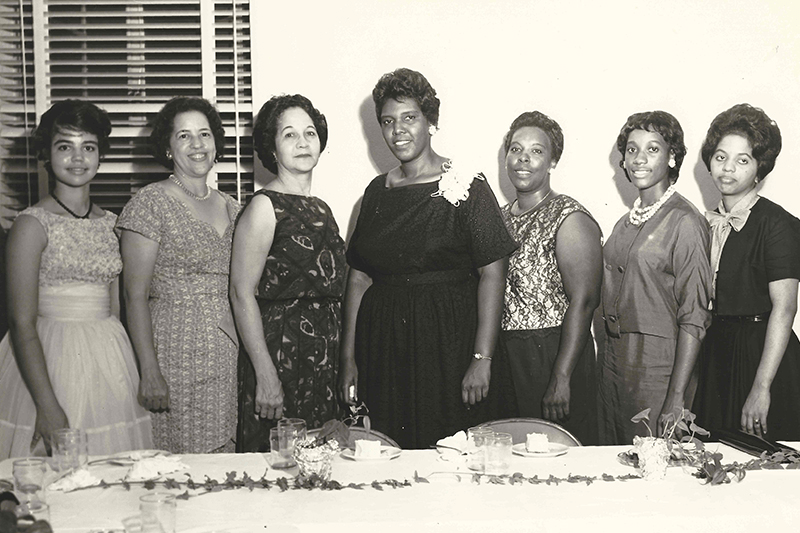
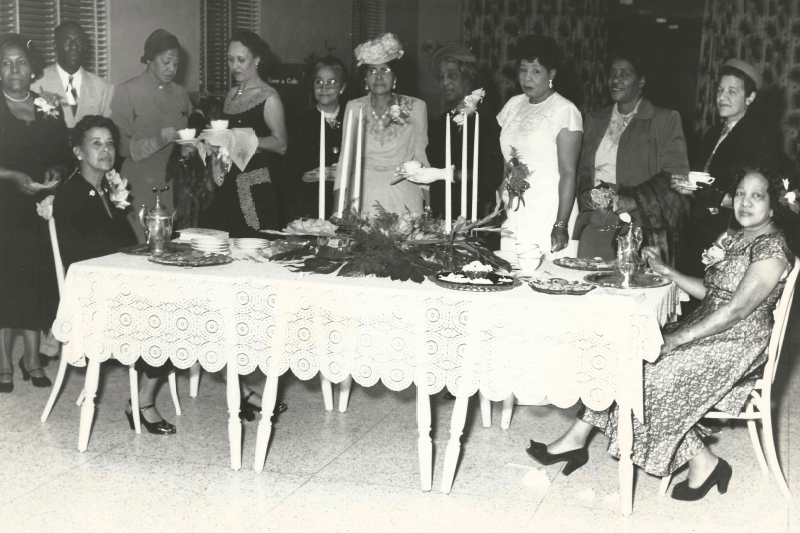
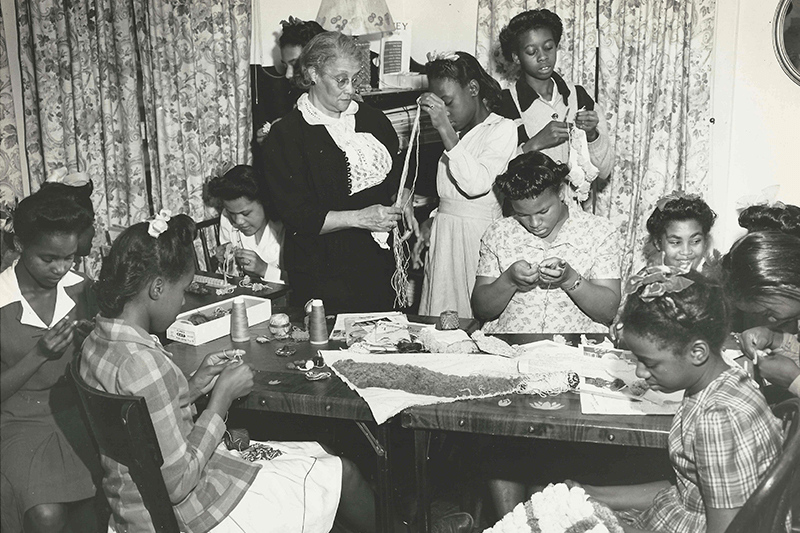
The Blue Triangle (formally the first branch of Houston’s YWCA), was founded (1919) during World War I. This basis of this organization grew out of the pressing need for a central meeting place where women and girls of color could safely meet, learn and recreate. It opened at 806 Clay Ave. in the old Masonic Building, under the War Work Council, sponsored by the National YWCA. We were organized 1918, by Ms. Josephine Pinyon of New York City, with Mrs. B.J. Covington, chairman and Ms. Ruby Craig, executive secretary. After two years of satisfactory services to the community,

an official application to the Central Association for Branch relationship. The application was approved and request was granted, February 1920. Our programs began. The first major project was to develop a campsite, which had been made available. This provided area for recreation, picnics, fishing, crabbing and a summer home with conveniences. The site was located 25 miles from downtown Houston on the bay, La Port Texas. In 1921, plans were made for a residence, where young women and girls would find a Christian environment at reasonable prices. The house (12 rooms), opened at 406 Sauliner, Street.

Fund raising efforts of the membership, churches and friends provided funds. The home accommodated 12-15 girls. Once again the residence moved to 2104 Hutchins St. In 1930, an activity center and cafeteria was opened 608 Louisiana Street along with the Hutchins Street residence.

The national depression resulted in having to turn to Social Services for relief. In 1935, there were 20 paid members which resulted in residence closure. (avg. wage-for domestic workers, was $36.00/month). During 1935, the operating funds were insufficient to maintain the facilities however, youth memberships were drastically increased. Blue Triangle Branch memberships were high and activities were planned for those with little income. There were 907 Girl Reserves and 207 adults

in clubs and classes. By 1936, emergency relief was discontinued. More people volunteered services and the paid membership increased to 140.The cafeteria closed during that year.

During the Depression, the Branch became an employment agency-many girls and women registered to work. This service continued until the early 1940’s when defense industries began to employ large numbers of women. Fewer calls for household and domestic workers lessened the need for the employment agency. At the end of the war, the project continued until 1948. Houston Y leased 1419 Live Oak St. for Blue Triangle during 1940.Programs for girls 9 to 12 yrs. of age, with Y-Teens and young employed women.

The dream “of a building of our own” was begun. A group of (10) women in the community organized and purchased land- 3000 McGowen St. for $1000. After the purchase, the property was deeded to Houston YWCA. The City of Houston Community Chest gave permission to hold a Capital Funds drive 1948, with Ms. Sylvia Coleman, chair. The funds provided for an Activity Center. Construction began summer of 1950 and was completed December 1951. Programs and activities for children and adults, daycare, Bible Class, art, drama and dance classes continued many years. Leisure learning and social activities made Blue Triangle “the social spot” for Houston’s people of color.

Breakfast With Santa, and Reunion Dinners were annual events. Life Memberships, Silver and Gold Members – many of whom were sponsored by organizations, churches, civic groups and fraternal organizations provided funding to benefit Program and operations.

Houston Y lost United Way funding , prompting the sale of each of the branches. July 28, 1998, Kathy Johnson, Chair of Committee on Administration for Blue Triangle Branch, presented to the Houston Metropolitan Board of Directors a letter of agreement and recommendation to keep Blue Triangle open to the community. She further requested that Blue Triangle Branch YWCA Building be turned over to the newly organized Blue Triangle Multi-Cultural Association, Inc., at a cost of $1.00.

The majority of this community group were Life Members of Houston YWCA, who wanted to preserve the history, tradition and programs in Third Ward community. Inclusive rites and ownership of the Art of Dr. John Biggers and real property located 2805 Berry St. would complete the request. January 2000, Blue Triangle M. C. A. Inc. became the new owners of 3005 Mc Gowen Building. The appraised $1.4 mil. and the appraised mural in Suite 15 is $1.mil. Antique furnishings appraised at approximately $4,500.00. New owners cleaned, repaired the interior and revived programs for children and adults.

Several organizations recognized and awarded the restoration and revived programs. Blue Triangle was presented the ACE Award, Good Brick Award and NAACP Image Award. The Building was certified-Texas Registered Historical Site May 2002.

Children’s Programs: After School, and Summer Day Camp. Adult programs, Quilt Guild, Social and Garden Clubs. In 2004, the indoor, 9 meter swimming pool was restored/upgraded as salt water pool. Since, over 400 children, youths and adults can swim and are currently water safe. Blue Triangle MCA Board provides excellent leadership in the management of the building and its programs. Resources mainly come from building rentals, sale of Biggers’ Art, memberships, grants, contributions and fund raising events. Commercial Kitchen area is currently under renovation, and will be fully functional by late spring 2018.

Anything for a Kiss by Sebastian Iturralde

Naly left her house early morning. She enjoyed watching the sunrise and being prepared for any mishap. As she used to, she watched the dawn shine with all its splendor before setting off in search of an adventure.

Since graduating from the knight academy, with a decoration that few could achieve, her life has revolved around heroism. Her basic needs were too simple for her—defending the innocent, on the other hand, was what Sir Naly came into the world to do.

Her silver armor had to be specially modified to fit her body type. Despite her prestige, it was difficult for Naly to be a woman in a world of men. The locksmith was opposed to making the modifications, but she always found a way to make things work her way.

Today was just another day. The meadows were empty and the people were safe in their homes. Naly rode her trusty steed into the rising sun. She cautiously patrolled the trails until she reached the darkness of the forest.

Multiple reports of bandits in the area caught her attention. All the townspeople spoke of them hiding in shadows of the forest. Naly decided to stay hidden in the woods until she found them.

A little before reaching the main road, she tied her horse under the shade of a tree. The white stallion wasted no time and began eating the wet grass. Naly decided to join him, taking out some dehydrated food from her bag.

Shortly after entering the forest, Naly heard voices in the distance. Wasting no time, she found a path that leads directly to it.

As soon as she arrived…

“Good morning,” Naly said after she was close enough to four men around a maiden. Another man was behind the carriage, facing an old man. “Nice morning, right?”

Trarko, one of the men surrounding the maiden, addressed Naly. “That’s up to you, beautiful!”

Naly felt offended by the remark. “I am one of the King’s knights,” she said.

“That armor says otherwise,” Trarko said, laughing.

The other men present also began to laugh. “Your curves are more pronounced than this maiden’s,” Pelhe said.

“I beg you,” Naly said, “don’t you dare insult a knight’s honor.”

“What are you going to do, beautiful?” Trarko asked, approaching Naly.

The movement was almost imperceptible. Naly drew her sword. When she stopped, she had her arm straight out in front of her.

They fell silent, waiting. Anxious to know what had happened, Trarko’s arm fell to the ground.

The riotous screams of the wounded man made Naly step back. She held her sword in an attack stance. “Anyone else has a smart remark about my honor,” she said, pushing Trarko away from her path with her foot.

“Are you mad!” Pelhe said and drew his sword. The rest of the men also prepared to fight. “You have no idea what we’re going to do with you.”

Naly couldn’t wait to start the battle so she ran towards them. While the armed men waited for her. She stopped and deflected one of their attacks with her sword, then stepped back to defend against another attacker.

“I see you are eager for some fun,” Pelhe said, surrounding her with his companions.

“You have one chance to give up,” Naly said, taking a step back to avoid being surrounded.

“Must you be kidding?” Adrame said with a smile. “You’ll feel better when we’re done with you.”

“You’ve been warned…” Naly said, before attacking.

Adrame fended off the first attack, then felt Naly’s shoulder slammed into his chest. Pelhe received an elbow to the head, followed by a slice of the cold metal of her sword on his torso.

Naly managed to deflect Milko’s attack with her sword. Pelhe sneaked a swing of his sword against Naly’s back armor, causing her to push Milko and impaled him with the sword.

Pelhe looked at Adrame standing next to him.

Naly pretended to attack again but backed off as the two men got closer to her. “Are you sure you want to continue this?” she asked

Adrame charged forward, raising his sword, letting the movement of his arm lead the motion. It was obvious to him that the armored woman would not be able to defend against two simultaneous attacks. Pelhe also attacked when he saw his partner.

Naly spun on her right foot to fend off Adrame’s attack and place him between her and Pelhe. She immediately used her sword again to cut the skin from Adrame’s back as Pelhe watched perplexed.

“You are the only one left, boy,” said Naly. “I will allow you to defend my honor.”

“I’m sorry, King’s knight,” Pelhe said, kneeling.

Naly accepted the show of respect. “Drop your sword and get up. You have a new chance to live, take it.”

Pelhe dropped his sword and ran, while Naly sheathed her own.

Naly approached the old man and the maiden, both of them looked surprised. “I’m sorry I had to behave in this manner with your friends,” she said, once she stopped near them.

“They were bandits,” said the maiden, Celestine. “You have saved us.”

Naly felt Celestine’s thin arms around her neck.

“I’m willing to do anything,” said Celestine, “but I demand that you be my escort.”

“I’m flattered,” Naly said, as Celestine continued to hang around her neck, “but my service is for the king.”

Celestine planted her toes on the ground and moved back to look at Naly’s blue eyes. She then kissed the knight’s lips.

Naly was surprised to feel the maiden’s lips against her own.

“I’ll do anything,” Celestine said, stepping back.

YMCA:The Unsung Legacy of Black Feminism: From Jane Crow to Intersectionality

Photo by Flavia Jacquier on Pexels.com

At YWCA, our mission is inspired by the perspectives of Black feminists who have consistently transformed the fights for gender equity and racial justice. During Black Herstory Month, we’re celebrating Black feminism and centering the work of powerful Black sheroes past and present doing the critical work to eliminate racism and empower women. As leaders in the women’s empowerment and racial justice movement, it is our duty to uplift and center the Black feminist voices that have been the backbone of feminist and civil rights movements. Therefore, we are proud to uplift the unsung legacy of Black feminism, from Jane Crow to intersectionality.

Over the last century, Black feminists like Pauli Murray and Kimberlé Crenshaw have created terminology and tools that have helped many of us to work towards collective liberation. It was in 1947 at Howard University that civil rights advocate, lawyer, and ordained priest Pauli Murray coined the term “Jane Crow”. Pauli Murray’s articulation of Jane Crow alluded to the system of Jim Crow, which often focused on the experience of Black men. Additionally, this term informed her critiques of the male-dominated civil rights movement, arguing that women should be foregrounded within the movement because racial and gender-based oppressions combine to circumscribe Black women’s freedom and must be battled in tandem to ensure ALL Black people are treated equitably.

More recently, pioneering civil rights advocate, professor, and leading critical race theory scholar Kimberlé Crenshaw built upon Murray’s legacy when she coined the term “intersectionality” in 1989. In her own words, Crenshaw described intersectionality as “a lens through which you can see where power comes and collides, where it interlocks and intersects. It’s not simply that there’s a race problem here, a gender problem here, and a class or LGBTQ problem there. Many times, that framework erases what happens to people who are subject to all of these things.” Crenshaw’s work was derived from her experience as a Black woman, however, intersectionality can be applied to the analysis of power and privilege across the spectrum by helping us understand how individuals who experience compounding inequalities are the most equipped to lead all of us in the fight for equity and collective liberation.

Throughout the years, many women have contributed to the unsung legacy of Black feminism through their work, building upon their fore sisters and ensuring the wisdom of Black women is heard. Some of these empowered women include:

  • Dorothy Height: The godmother of the civil rights movement, leader of the National Congress of Negro Women for over 30 years, and former Director of YWCA Harlem who advanced YWCA’s One Imperative, which fuels our intersectional mission to eliminate racism and empower women. Dr. Height consistently pushed movements to be more inclusive by centering Black women in her activism.
  • Alice Walker: An award-winning novelist, poet, and social activist who coined the term “womanism” in response to how Black women are treated in feminist spaces to ensure they had space to center their own experiences, priorities, and concerns in the movement.
  • Roxanne Gay: A New York Times best-selling author, professor, and social commentator whose essay collection “Bad Feminist” challenges us all to humanize the flaws within feminist and social justice movements while inspiring us to be better allies and co-conspirators.

 we will continue our work of empowering women and eliminating racism by uplifting these and many other incredible Black feminists whose work inspires, informs, and guides so many advocates for equity and justice.

We are thankful for the work of these powerful thought leaders, which has been monumental in how feminism has evolved to become more inclusive. Black feminists like Pauli Murray, Kimberlé Crenshaw, and Dorothy Height have been – and continue to be – at the forefront of how we all think, strategize, and co-conspire to address interconnected systems of inequality. Their contributions, in addition to many others, consistently push us all to examine our intersecting privileges and challenge social justice movements to be more inclusive. Through their work, Black feminists invite us all to work together with respect to our differences to build a better world where injustice is rooted out for everyone. We are forever grateful for their calls to action which bring attention to the intersection of race and gender and informs YWCAs across the country doing the work to eliminate racism, empower women, and create a world of peace, justice, freedom, and dignity for all.

Join us as we continue to uplift the lives, experiences, and contributions of Black feminists throughout the month of February by following us on TwitterFacebook, and Instagram. You can also join the conversation using#BHM2022, and #EmpoweredWomen to highlight the unsung legacy of Black feminists in your community

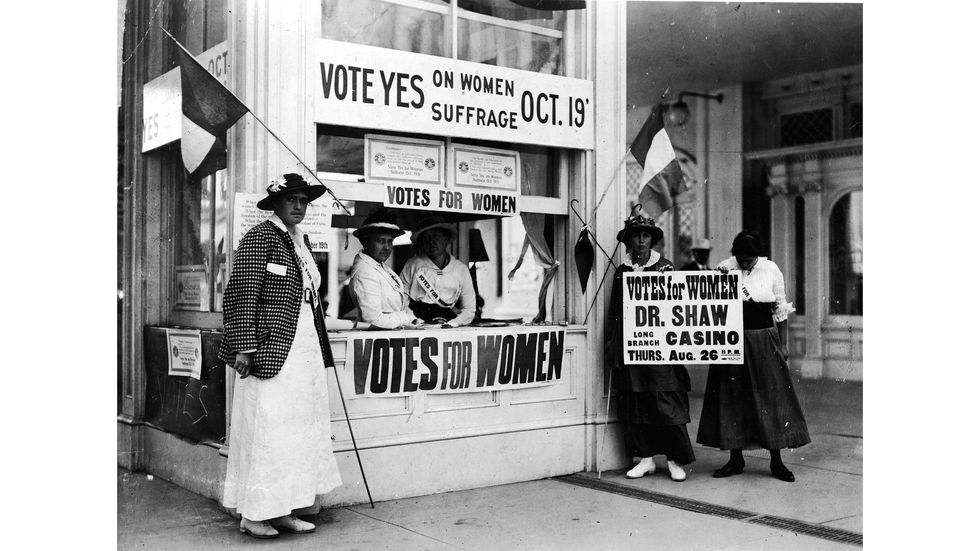
National Women month

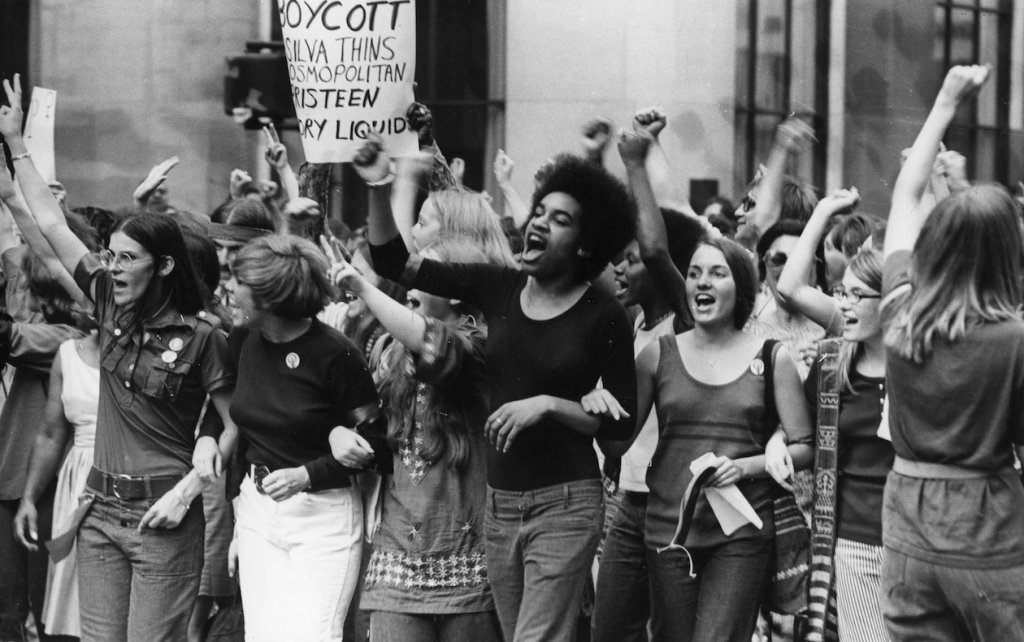
Observed throughout the United States since the 1980s, Women’s History Month was born out of a feminist push for equal access to jobs and education—one of the main demands of the Strike for Equality march that filled New York City streets to capacity on August 26, 1970.

To commemorate the day and stand in solidarity, many people wear the official color of International Women’s Day—purple.

Purple, green and white are the colors of International Women’s Day. Purple signifies justice and dignity. Green symbolizes hope. White represents purity, albeit a controversial concept.

Women’s History Month celebrates the often-overlooked contributions of women in history, society, and culture. It has been annually observed in the United States and other countries, including the United Kingdom and Australia, every March since 1987. The month is observed in October in Canada. March is selected as the month for observing Women’s History Month to correspond with International Women’s Day on March 8, and Canada observes it in October in correspondence with Persons Day on October 18. 

The month-long commemoration started with Women’s History Day in 1978, organized by the school district of Sonoma, California. Hundreds of students participated in the essay competitions, many presentations were given, and a parade was held in Santa Rosa. The idea caught on and, a few years later, school districts, communities, and organizations all over the country were celebrating the day. In 1980, the National Women’s History Alliance championed for the holiday to be observed as a national week, and this was backed by President Jimmy Carter, who issued the first proclamation declaring the week of March 8 as National Women’s History Week. The following year, Congress forwarded a resolution establishing a national observance. Six years later, the expansion of the event to the whole month of March was successfully petitioned by the National Women’s History Project. 

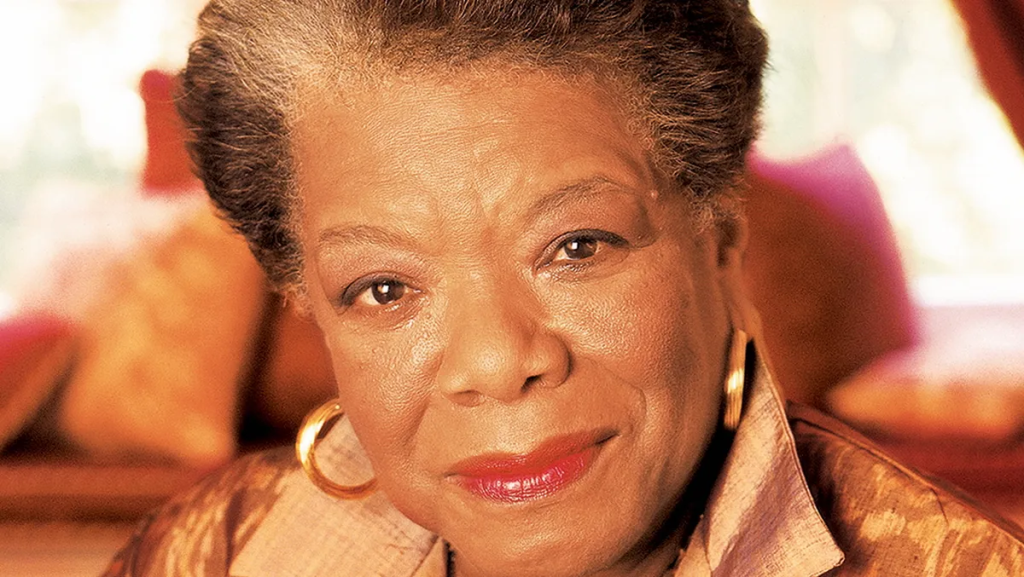
Maya Angelo
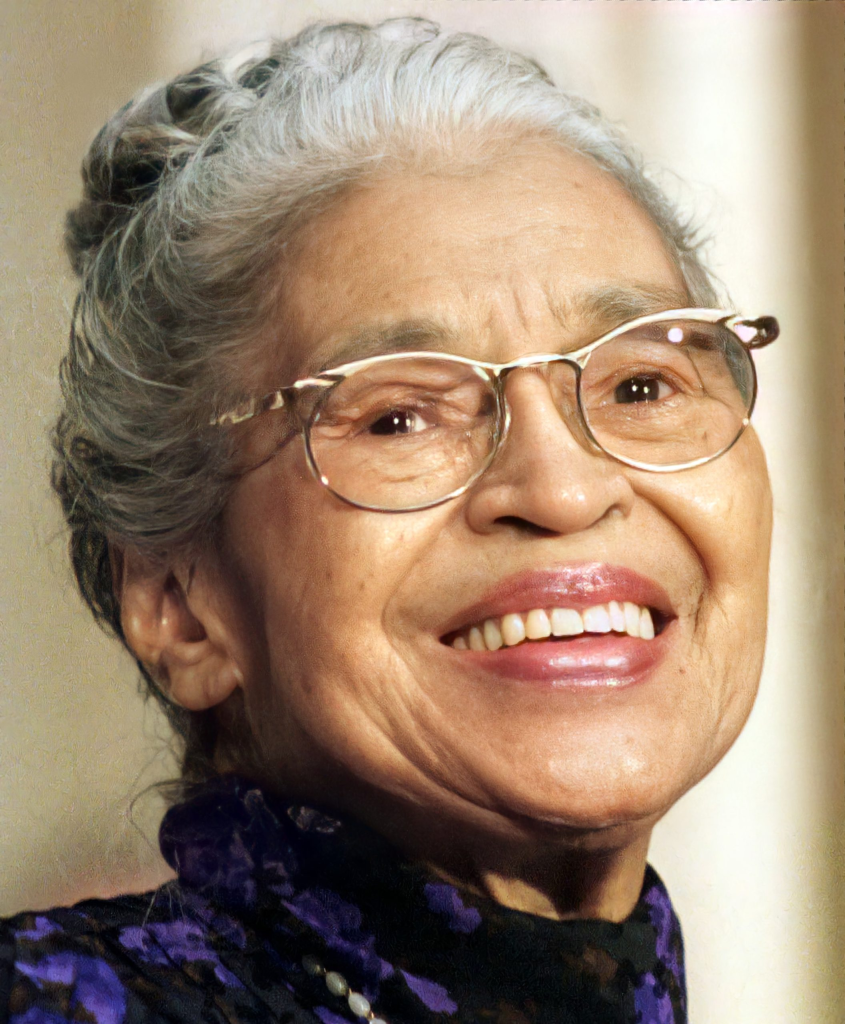
Rosa Parks
Vice President Harris
J. California Cooper
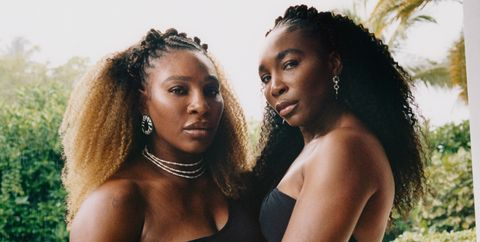
Venus & Serena Williams
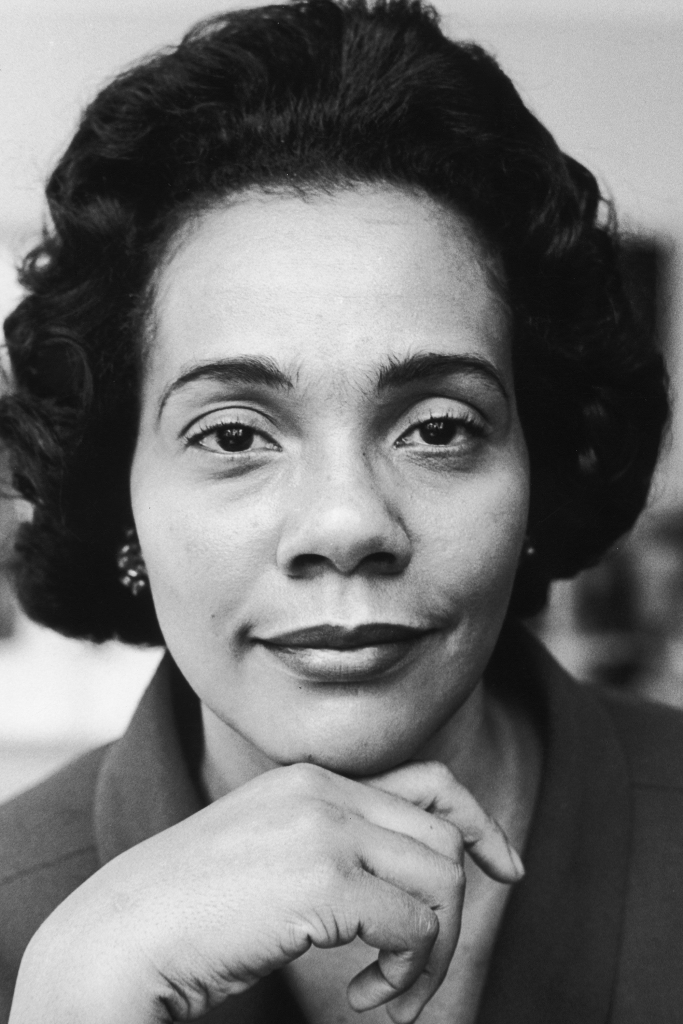
Coretta Scott King
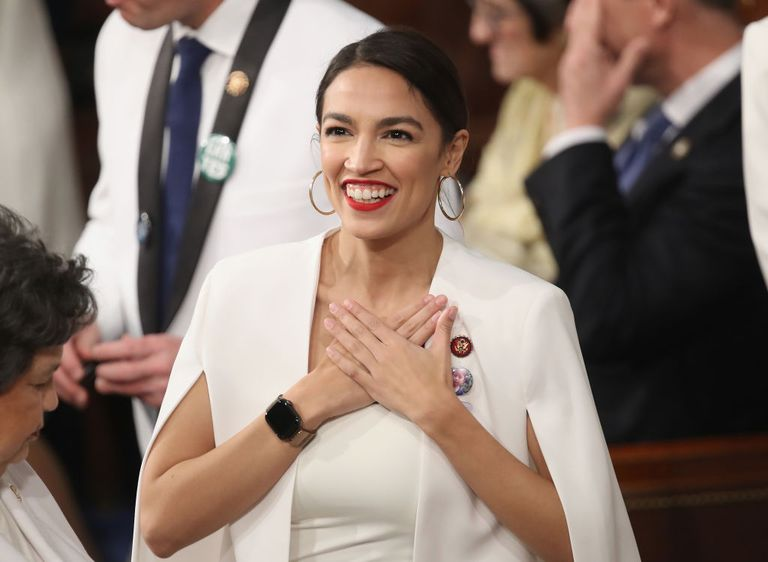
Alexandria Ocasio-Cortez
Michell Obama

Breaking Chains By Sebastian Iturralds

Looking aimlessly, enjoying the sunset over the skyline, hurt by the injustice—Jared admired the city. Life was too much for him. Unable to complain, Jared was forced to answer for the bills that arrived at his house. How long has it been like this?

Nobody could remember the beginning of the cost of living. Everyone Jared remembered was forced to go through the same process, and silently dreamed of a different future. Was it always like this? He asked himself.

On his desk were the bills and notices. He had no alternatives. In a few days he would be living on the streets of a big city. Through the cold of the night between dark alleys. Fearing a night without shelter.

Jared was tired of playing. The rules seemed unfair and designed to benefit a few. Who is not affected by the rules? It was a simple question but the answer was hidden. He sat in front of his computer to find out more. There must be an answer?

The hours passed quickly. Jared got lost in an ocean of information. It was almost impossible to find a true answer. Little by little he was tying ideas until he got to the root of the problem. It had to be that, it was as deep as he could go.

Behind it all, beyond the smoke screen, was the creator of the game. Society revolves around rules that everyone accepts because everyone is involved. It is a board in which we have the dice and reach for the cards. Our turns allow us to move in a circle that always returns us to the same place.

That’s it, thought Jared, the game belongs to the owners of the cards. He quickly began to imagine that all the cards were created solely for the game to exist. Official documents that everyone must accept in order to play. Money. This cannot be. The largest number of official documents printed for the game are money.

Jared was surprised by his discovery. Is everything a game? But that was not enough. Jared was about to have to live on the streets. What good would it do him to know… It was all over. Jared was lousy at playing, and now he was beginning to think the game was rigged.

At that moment he remembered the word decentralized, and began to search for everything within his reach. The Internet was full of information about the new game. This time, the bank was a computer with rules that cannot be changed. The game was starting but nobody knew what could happen.

Jared looked for people currently playing the new game. Companies that have decided to stop working with the old rules, entrepreneurs who have realized the pitfalls of the old system. There were quite a few. They will discover the rules for future generations, hoping that this time the game will be fair to everyone.

Black History Month day #28 Phillis Wheatley Americas first Black Poet

Phillis Wheatley

Despite spending much of her life enslaved, Phillis Wheatley was the first African American and second woman (after Anne Bradstreet) to publish a book of poems.

Born around 1753 in Gambia, Africa, Wheatley was captured by slave traders and brought to America in 1761. Upon arrival, she was sold to the Wheatley family in Boston, Massachusetts. Her first name Phillis was derived from the ship that brought her to America, “the Phillis.”

The Wheatley family educated her and within sixteen months of her arrival in America she could read the Bible, Greek and Latin classics, and British literature. She also studied astronomy and geography. At age fourteen, Wheatley began to write poetry, publishing her first poem in 1767. Publication of “An Elegiac Poem, on the Death of the Celebrated Divine George Whitefield” in 1770 brought her great notoriety. In 1773, with financial support from the English Countess of Huntingdon, Wheatley traveled to London with the Wheatley’s son to publish her first collection of poems, Poems on Various Subjects, Religious and Moral—the first book written by a black woman in America. It included a forward, signed by John Hancock and other Boston notables—as well as a portrait of Wheatley—all designed to prove that the work was indeed written by a black woman. She was emancipated her shortly thereafter.

Wheatley’s poems reflected several influences on her life, among them the well-known poets she studied, such as Alexander Pope and Thomas Gray. Pride in her African heritage was also evident. Her writing style embraced the elegy, likely from her African roots, where it was the role of girls to sing and perform funeral dirges. Religion was also a key influence, and it led Protestants in America and England to enjoy her work. Enslavers and abolitionists both read her work; the former to convince the enslaved population to convert, the latter as proof of the intellectual abilities of people of color. 

Although she supported the patriots during the American Revolution, Wheatley’s opposition to slavery heightened. She wrote several letters to ministers and others on liberty and freedom. During the peak of her writing career, she wrote a well-received poem praising the appointment of George Washington as the commander of the Continental Army. However, she believed that slavery was the issue that prevented the colonists from achieving true heroism.

In 1778, Wheatley married John Peters, a free black man from Boston with whom she had three children, though none survived. Efforts to publish a second book of poems failed. To support her family, she worked as a scrubwoman in a boardinghouse while continuing to write poetry. Wheatley died in December 1784, due to complications from childbirth. In addition to making an important contribution to American literature, Wheatley’s literary and artistic talents helped show that African Americans were equally capable, creative, intelligent human beings who benefited from an education. In part, this helped the cause of the abolition movement.

Black History day #27 Madam C. J. Walker

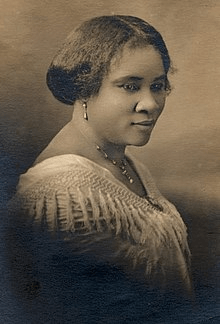
Madam C.J. Walker (born Sarah Breedlove; December 23, 1867 – May 25, 1919) was an African American entrepreneur, philanthropist, and political and social activist. She is recorded as the first female self-made millionaire in America in the Guinness Book of World Records. Multiple sources mention that although other women (like Mary Ellen Pleasant) might have been the first, their wealth is not as well-documented.

Walker made her fortune by developing and marketing a line of cosmetics and hair care products for black women through the business she founded, Madam C. J. Walker Manufacturing Company. She became known also for her philanthropy and activism. She made financial donations to numerous organizations and became a patron of the artsVilla Lewaro, Walker’s lavish estate in Irvington, New York, served as a social gathering place for the African-American community. At the time of her death, she was considered the wealthiest African-American businesswoman and wealthiest self-made black woman in America. Her name was a version of “Mrs. Charles Joseph Walker,” after her third husband.

Early life

Sarah Breedlove was born on December 23, 1867, close to Delta, Louisiana. Her parents were Owen and Minerva (Anderson) Breedlove.She had five siblings, who included an older sister, Louvenia, and four brothers: Alexander, James, Solomon, and Owen Jr. Her older siblings were enslaved by Robert W. Burney on his Madison Parish plantation. Sarah was the first child in her family born into freedom after the Emancipation Proclamation was signed. Her mother died in 1872, likely from cholera (an epidemic traveled with river passengers up the Mississippi, reaching Tennessee and related areas in 1873). Her father remarried but died a year later.

She was orphaned at the age of seven. Sarah moved to Vicksburg, Mississippi, at the age of 10, where she lived with Louvenia and her brother-in-law, Jesse Powell. She started working as a child as a domestic servant. “I had little or no opportunity when I started out in life, having been left an orphan and being without mother or father since I was seven years of age,” she often recounted. She also recounted that she had only three months of formal education, which she learned during Sunday school literacy lessons at the church she attended during her earlier years.

Marriage and family

In 1882, at the age of 14, Sarah married 22-year old Moses McWilliams to escape abuse from her brother-in-law, Jesse Powell. Sarah and Moses had one daughter, Lelia McWilliams, who was born on June 6, 1885. When Moses died in 1887, Sarah was twenty and Lelia was two. Sarah remarried in 1894, but left her second husband, John Davis, around 1903.

In January 1906, Sarah married Charles Joseph Walker, a newspaper advertising salesman she had known in St. Louis, Missouri. Through this marriage, she became known as Madam C. J. Walker. The couple divorced in 1912; Charles died in 1926. Lelia McWilliams adopted her stepfather’s surname and became known as A’Lelia Walker.

Career

C. J. Walker Manufacturing Company, Indianapolis, Indiana, 1911

In 1888, she and her daughter moved to St. Louis, where three of her brothers lived. Sarah found work as a laundress, earning barely more than a dollar a day. She was determined to make enough money to provide her daughter with formal education. During the 1880s, she lived in a community where Ragtime music was developed; she sang at St. Paul African Methodist Episcopal Church and started to yearn for an educated life as she watched the community of women at her church.

Sarah suffered severe dandruff and other scalp ailments, including baldness, due to skin disorders and the application of harsh products to cleanse hair and wash clothes. Other contributing factors to her hair loss included poor diet, illnesses, and infrequent bathing and hair washing during a time when most Americans lacked indoor plumbing, central heating, and electricity.

Madam C. J. Walker’s Wonderful Hair Grower in the permanent collection of The Children’s Museum of Indianapolis

Initially, Sarah learned about hair care from her brothers, who were barbers in St. Louis. Around the time of the Louisiana Purchase Exposition (World’s Fair at St. Louis in 1904), she became a commission agent selling products for Annie Malone, an African-American hair-care entrepreneur, millionaire, and owner of the Poro Company. Sales at the exposition were a disappointment since the African-American community was largely ignored.

While working for Malone, who would later become Walker’s largest rival in the hair-care industry, Sarah began to take her new knowledge and develop her own product line. In July 1905, when she was 37 years old, Sarah and her daughter moved to DenverColorado, where she continued to sell products for Malone and develop her own hair-care business. A controversy developed between Annie Malone and Sarah because Malone accused Sarah of stealing her formula, a mixture of petroleum jelly and sulfur that had been in use for a hundred years.

Following her marriage to Charles Walker in 1906, Sarah became known as Madam C. J. Walker. She marketed herself as an independent hairdresser and retailer of cosmetic creams. (“Madam” was adopted from women pioneers of the French beauty industry.) Her husband, who was also her business partner, provided advice on advertising and promotion; Sarah sold her products door to door, teaching other black women how to groom and style their hair.

In 1906, Walker put her daughter in charge of the mail-order operation in Denver while she and her husband traveled throughout the southern and eastern United States to expand the business. In 1908, Walker and her husband relocated to Pittsburgh, Pennsylvania, where they opened a beauty parlor and established Lelia College to train “hair culturists.” As an advocate of black women’s economic independence, she opened training programs in the “Walker System” for her national network of licensed sales agents who earned healthy commissions (Michaels, PhD. 2015).

After Walker closed the business in Denver in 1907, A’lelia ran the day-to-day operations from Pittsburgh. In 1910, Walker established a new base in Indianapolis.  A’lelia also persuaded her mother to establish an office and beauty salon in New York City‘s growing Harlem neighborhood in 1913; it became a center of African-American culture.

In 1910, Walker relocated her businesses to Indianapolis, where she established the headquarters for the Madam C. J. Walker Manufacturing Company. She initially purchased a house and factory at 640 North West Street. Walker later built a factory, hair salon, and beauty school to train her sales agents, and added a laboratory to help with research. She also assembled a staff that included Freeman RansomRobert Lee Brokenburr, Alice Kelly, and Marjorie Joyner, among others, to assist in managing the growing company. Many of her company’s employees, including those in key management and staff positions, were women.

Walker’s method of grooming was designed to promote hair growth and to condition the scalp through the use of her products. The system included a shampoo, a pomade stated to help hair grow, strenuous brushing, and applying iron combs to hair; the method claimed to make lackluster and brittle hair become soft and luxuriant. Walker’s product line had several competitors. Similar products were produced in Europe and manufactured by other companies in the United States, which included her major rivals, Annie Turnbo Malone’s Poro System from which she derived her original formula and later, Sarah Spencer Washington’s Apex System.

Between 1911 and 1919, during the height of her career, Walker and her company employed several thousand women as sales agents for its products. By 1917, the company claimed to have trained nearly 20,000 women. Dressed in a characteristic uniform of white shirts and black skirts and carrying black satchels, they visited houses around the United States and in the Caribbean offering Walker’s hair pomade and other products packaged in tin containers carrying her image. Walker understood the power of advertising and brand awareness. Heavy advertising, primarily in African-American newspapers and magazines, in addition to Walker’s frequent travels to promote her products, helped make Walker and her products well known in the United States.

In addition to training in sales and grooming, Walker showed other black women how to budget, build their own businesses, and encouraged them to become financially independent. In 1917, inspired by the model of the National Association of Colored Women, Walker began organizing her sales agents into state and local clubs. The result was the establishment of the National Beauty Culturists and Benevolent Association of Madam C. J. Walker Agents (predecessor to the Madam C. J. Walker Beauty Culturists Union of America).

Its first annual conference convened in Philadelphia during the summer of 1917 with 200 attendees. The conference is believed to have been among the first national gatherings of women entrepreneurs to discuss business and commerce. During the convention Walker gave prizes to women who had sold the most products and brought in the most new sales agents. She also rewarded those who made the largest contributions to charities in their communities.

Walker’s name became even more widely known by the 1920s, after her death, as her company’s business market expanded beyond the United States to CubaJamaicaHaitiPanama, and Costa Rica.

Activism and philanthropy

Walker’s home at 67 Broadway in Irvington, New York

As Walker’s wealth and notoriety increased, she became more vocal about her views. In 1912, Walker addressed an annual gathering of the National Negro Business League (NNBL) from the convention floor, where she declared: “I am a woman who came from the cotton fields of the South. From there, I was promoted to the washtub. From there, I was promoted to the cook kitchen. And from there, I promoted myself into the business of manufacturing hair goods and preparations. I have built my own factory on my own ground.” The following year she addressed convention-goers from the podium as a keynote speaker.

She helped raise funds to establish a branch of YMCA in Indianapolis’s black community, pledging $1,000 to the building fund for Senate Avenue YMCA. Walker also contributed scholarship funds to the Tuskegee Institute. Other beneficiaries included Indianapolis’s Flanner House and Bethel African Methodist Episcopal Church; Mary McLeod Bethune’s Daytona Education and Industrial School for Negro Girls (which later became Bethune-Cookman University) in Daytona Beach, Florida; the Palmer Memorial Institute in North Carolina; and the Haines Normal and Industrial Institute in Georgia. Walker was also a patron of the arts.

About 1913, Walker’s daughter, A’Lelia, moved to a new townhouse in Harlem, and in 1916, Walker joined her in New York, leaving the day-to-day operation of her company to her management team in Indianapolis. In 1917, Walker commissioned Vertner Tandy, the first licensed black architect in New York City and a founding member of Alpha Phi Alpha fraternity, to design her house in Irvington-on-Hudson, New York. Walker intended for Villa Lewaro, which cost $250,000 to build, to become a gathering place for community leaders and to inspire other African Americans to pursue their dreams. She moved into the house in May 1918 and hosted an opening event to honor Emmett Jay Scott, at that time the Assistant Secretary for Negro Affairs of the U.S. Department of War.

Walker became more involved in political matters after her move to New York. She delivered lectures on political, economic, and social issues at conventions sponsored by powerful black institutions. Her friends and associates included Booker T. WashingtonMary McLeod Bethune, and W. E. B. Du Bois. During World War I, Walker was a leader in the Circle For Negro War Relief and advocated for the establishment of a training camp for black army officers. In 1917, she joined the executive committee of New York chapter of the National Association for the Advancement of Colored People (NAACP), which organized the Silent Protest Parade on New York City’s Fifth Avenue. The public demonstration drew more than 8,000 African Americans to protest a riot in East Saint Louis that killed 39 African-Americans. Also, from 1917 until her death she was a member of the Committee of Management of the Harlem YWCA, influencing development of training in beauty skills to young women by the organisation.

Profits from her business significantly impacted Walker’s contributions to her political and philanthropic interests. In 1918, the National Association of Colored Women’s Clubs (NACWC) honored Walker for making the largest individual contribution to help preserve Frederick Douglass‘s Anacostia house. Before her death in 1919, Walker pledged $5,000 (the equivalent of about $77,700 in 2019) to the NAACP’s anti-lynching fund. At the time, it was the largest gift from an individual that the NAACP had ever received. Walker bequeathed nearly $100,000 to orphanages, institutions, and individuals; her will directed two-thirds of future net profits of her estate to charity

Death and legacy

The grave of Madam C. J. Walker

Walker died on May 25, 1919, from kidney failure and complications of hypertension at the age of 51. Walker’s remains are interred in Woodlawn Cemetery in the Bronx, New York City.

At the time of her death, Walker was considered to be worth between a half million and a million dollars. She was the wealthiest African-American woman in America. According to Walker’s obituary in The New York Times, “she said herself two years ago [in 1917] that she was not yet a millionaire, but hoped to be some time, not that she wanted the money for herself, but for the good she could do with it.” The obituary also noted that same year, her $250,000 mansion was completed at the banks of the Hudson at Irvington. Her daughter, A’Lelia Walker, later became the president of the Madam C. J. Walker Manufacturing Company.

Walker’s personal papers are preserved at the Indiana Historical Society in Indianapolis. Her legacy also continues through two properties listed on the National Register of Historic Places: Villa Lewaro in Irvington, New York, and the Madame Walker Theatre Center in Indianapolis. Villa Lewaro was sold following A’Lelia Walker’s death to a fraternal organization called the Companions of the Forest in America in 1932. The house was listed on the National Register of Historic Places in 1979. The National Trust for Historic Preservation has designated the privately owned property a National Treasure.

Indianapolis’s Walker Manufacturing Company headquarters building, renamed the Madame Walker Theater Center, opened in December 1927. It included the company’s offices and factory as well as a theater, beauty school, hair salon and barbershop, restaurant, drugstore, and a ballroom for the community. The building was listed on the National Register of Historic Places in 1980.

A museum in Atlanta is devoted to Walker, as well as historic radio station WERD. Established in 2004, the museum is located at the site of a former Madam C. J. Walker Beauty Shoppe.

In 2006, playwright and director Regina Taylor wrote The Dreams of Sarah Breedlove, recounting the history of Walker’s struggles and success. The play premiered at the Goodman Theatre in Chicago. Actress L. Scott Caldwell played the role of Walker.

On March 4, 2016, Sundial Brands, a skincare and haircare company, launched a collaboration with Sephora in honor of Walker’s legacy. The line, titled “Madam C. J. Walker Beauty Culture,” comprised four collections and focused on the use of natural ingredients to care for different types of hair.

TV series

In 2020, actress Octavia Spencer committed to portray Walker in a TV series based on the biography of Walker written by Walker’s great-great-granddaughter, A’Lelia Bundles. The series is called Self Made: Inspired by the Life of Madam C. J. Walker.  Reviews for the series were mixed because of the inaccuracies of the story line that created more of a fictional work than an authentic biography. The portrayal of Annie Malone as Addie Monroe, another black female self-made millionaire as a villain and the daughter of Walker as a lesbian were some of the complaints by audiences.

Documentary

Madam Walker is featured in Stanley Nelson‘s 1987 documentary, Two Dollars and a Dream, the first film treatment of Walker’s life. As the grandson of Freeman B. Ransom, Madam Walker’s attorney and Walker Company general manager, Nelson had access to original Walker business records and former Walker Company employees whom he interviewed during the 1980s.

Tributes

Various scholarships and awards have been named in Walker’s honor:

  • The Madam C. J. Walker Business and Community Recognition Awards are sponsored by the National Coalition of 100 Black Women, Oakland / Bay Area chapter. An annual luncheon honors Walker and awards outstanding women in the community with scholarships.
  • Spirit Awards have sponsored the Madame Walker Theater Center in Indianapolis. Established as a tribute to Walker, the annual award has honored national leaders in entrepreneurship, philanthropy, civic engagement, and the arts since 2006. Awards presented to individuals include the Madame C. J. Walker Heritage Award as well as young entrepreneur and legacy prizes.

Walker was inducted into the National Women’s Hall of Fame in Seneca Falls, New York, in 1993. In 1998, the U.S. Postal Service issued a Madam Walker commemorative stamp as part of its Black Heritage Series.
Black History day #25 Sarah E. Goode

Entrepreneur and inventor Sarah E. Goode was one of the first African American women to receive a United States patent.

Who Was Sarah E. Good?

Born into slavery in 1850, inventor and entrepreneur Sarah E. Goode was one of the first African American women to be granted a patent by the U.S. Patent and Trademark Office, for her invention of a folding cabinet bed in 1885. She died in 1905.

Life, Invention and Death

Born into slavery in 1850, inventor and entrepreneur Sarah E. Goode went on to become one of the first African American women to be granted a patent by the U.S. Patent and Trademark Office, for her invention of a folding cabinet bed in 1885.

After receiving her freedom at the end of the Civil War, Goode moved to Chicago and eventually became an entrepreneur. Along with her husband Archibald, a carpenter, she owned a furniture store. Many of her customers, who were mostly working-class, lived in small apartments and didn’t have much space for furniture, including beds.

As a solution to the problem, Goode invented a cabinet bed, which she described as a “folding bed,” similar to what nowadays would be called a Murphy bed. When the bed was not being used, it could also serve as a roll-top desk, complete with compartments for stationery and other writing supplies.

Black History Month day #25 Thomas Mundy Peterson

Peterson was born in Metuchen, New Jersey. His father, also named Thomas, worked for the Mundy family. His mother, Lucy Green, was a slave of Hugh Newell (1744–1816) of Freehold Township, New Jersey. She was manumitted at age 21 by Newell’s will. After moving to Perth Amboy, Peterson’s father married Daphne Reeve, whos parents had also been slaves on an estate in Perth Amboy.

For several years (between 1871 and 1878) Peterson was an employee of the Board of Education, serving as a custodian of School No. 1 located on State Street in Perth Amboy. He was also a general handyman around town and was active in both the United States Republican Party and the Prohibition Party. He also holds the distinction of being the city’s first “colored” person to serve on a jury.

Peterson is most notably remembered for voting in the local election held at Perth Amboy City Hall over the town’s charter. Some citizens wanted to revise the existing charter while others wished to abandon the charter altogether in favor of a township form of government. Peterson cast his ballot in favor of revising the existing charter. This side won 230 to 63. Peterson was afterward appointed to be a member of the committee of seven that made subsequent amendments leading to the final version that was approved by the State Legislature on April 5, 1871. Historical records as to his contribution to revisions in the form of minutes, writing, or other records are still wanting. Through his work on the committee, he helped shape the city’s educational system by aiding in organization of the Perth Amboy Board of Education in 1870 and construction of School No. 1, the city’s first public school. When the school opened for classes in 1871, 378 students enrolled and Peterson became its first custodian.

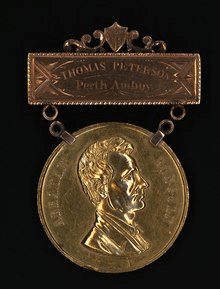
To honor Thomas Mundy Peterson as the first African-American voter after the passage of the 15th Amendment, the citizens of Perth Amboy raised $70 (about $1,800 in 2019 dollars) to award him with a gold medal. The full medal consists of a gold bar from which a two-inch diameter medallion was hung. The hanging medal featured a profile bust of a clean-shaven Abraham Lincoln. It was presented to Thomas Mundy Peterson on Memorial Day, which was then called Decoration Day, May 30, 1884. The celebrations included a mass meeting to honor Mr. Peterson, held at the City Hall. The committee in charge was composed of James Lawrence Kearny, Patrick Convery, both of whom had been city officials; J.M Boggs, former collector of the port; Alderman John Fothergill; Ex-Mayor Uriah Burdge Watson; and I.T. Golding, former city official. The committee was representative of the Democratic and Republican parties. There was a program of speaking in tribute to Mr. Peterson, presided by Mayor James M. Chapman. The Reverend Dr. David Stevenson, Pastor of the Presbyterian Church, delivered the invocation. The principal speaker was Ex-Mayor William Paterson, Judge of the Court of Errors and Appeals. James Kearny, on behalf of the people of Perth Amboy, presented Mr. Peterson with his medal, which he is said to have loved and never considered himself properly dressed without it affixed to his left breast.

Charles F. Heartman (1883-1953) was a prominent Mississippi book dealer known for collecting and dealing in African-Americana and materials related to the history of the American South. As described by Heartman in 1945, “Little remains to be said. Peterson-Mundy sported a beard, and a portrait of him, wearing the medal, is known. In his old age, when he could not hold a full-time job, he was occasionally in want. Too proud to ask for anything, voluntary charitable administrations of his friends were apparently not sufficient, and it seems that on several occasions he had to pledge the medal for a small loan, to be redeemed at the earliest possible moment, until one day the greatest redeemer took hold of him, with the pledge unclaimed. It [the medal] passed into the hands of the Honorable Harold E. Pickersgill, Recorder of the City of Perth Amboy for many years, an indefatigable collector of New Jerseyana. It was one of his prized possessions. Some time after the judge’s death I was fortunate to acquire the medal, an important memorabilia in the collection, where also can be found the pamphlet describing the history and transactions for the presentation, as well as a pencil-portrait sketch of Thomas Peterson-Mundy.” In 1948 Xavier University of Louisiana acquired a large portion of Heartman’s Collection of Material Relating to the Negro Culture, the Peterson-Mundy medal included. It is presently preserved in the Library Archives & Special Collections and has been utilized for exhibitions at numerous historical institutions including the National Museum of African American History and Culture.

While he is known today as “Thomas Mundy Peterson,” there are no contemporary records that include the three names together. The one exception is the cover for the program describing the ceremony when he was given the “voting medal,” and that calls him “Thomas Peterson-Mundy.” Contemporary documents refer to him as either Thomas Peterson or Thomas (or Tom) Mundy. His death certificate, the undertaker’s accounts book, and a land deed all refer to him as “Thomas H. Peterson.” In the obituary appearing in The Perth Amboy Evening News, he is called Thomas Henry Peterson.

In October 1989, the school where Peterson had worked was renamed after him. It is currently on State Street, Perth Amboy.

In New Jersey, March 31 is annually celebrated as Thomas Mundy Peterson Day in recognition of his historic vote.

Thomas Mundy Peterson Medal in its current state at the XULA Archives & Special Collections