Magu was a normal guy, at least that’s what he thought. Today, just like on many occasions before, he went out to experience life.
Walking through the streets he found people to be strange beings. Dark beings without a predetermined form. He saw them with imposing poses. Creatures that rule their environment. They seemed powerful.
Magu was one of them. Something had to be wrong. Despite his determination, he wasn’t able to feel part of the rest. What gave other humans the power to walk with such confidence? he wondered.
The world was dangerous from Magu’s perspective. A mysterious place where other beings could appear without warning. Different creatures. Of course, Magu had only seen images of these wild animals. For some reason, being surprised by one of them was his constant fear.
Sounds were more familiar to him. Trapped in a dark environment, he went in search of places that would help him calm his anxiety. Somehow, and from an early age, Magu discovered peace near singing birds.
Over time, he noticed that silence portends danger. He also realized that there was nothing to fear. He learned to live in the dark. He discovered that beings like him were harmless, for the most part. Avoiding those who weren’t had become easy.
Interacting socially made him realize that he was different. Different in a way that seemed impossible. Magu couldn’t understand the rules the rest followed.
Being part of a social group has always been difficult for him. Everyone seemed to naturally follow the pre-established norms. It was curious to see how groups without any connection respected the same laws. Magu had to learn them, but they didn’t feel natural. Paying attention to follow them left him exhausted.
Even going to work was a difficult task. Of course, he had to continue staying away from the others: Fulfill his obligations and return home. There was always someone ready to start a conversation.
Magu found the conversations surprising. He understood that the subjects were important, he also understood that the rules directed the interests of the people. It was strange, but he could become interested in any of the topics. Everything seemed trivial to him.
Despite that, Magu was happy. He lived in peace and enjoyed what life had to offer. Until one day he was going about his daily routine when Claris approached him.
“Magu,” she said, “I need to show you something.”
Magu was surprised to hear his boss’ voice. “How can I help you?”
“Follow me.”
Both of them crossed the meadow. They enjoyed the beautiful scenery on the way to the main house. Magu was afraid, this job was the only thing that allowed him to be an independent person. Losing it would be terrible.
“Have a seat,” Claris said, once the two of them were inside the house.
Magu looked from one side to another, searching for clues.
“Look at this,” Claris said.
Magu looked at the laptop screen on the table in front of him. “What am I supposed to see?”
“Can’t you see?” Claris said. “It’s yours. A gift from my family to you.”
Magu smiled happily.
Claris was surprised to note that Magu couldn’t read his name on the screen. “Be right back.”
Magu waited sitting in front of the laptop. Observing the darkness that surrounds him. Imagining a good use for his new tool.
“Try this on,” Claris said, walking back with a pair of glasses in her hand.
Magu stood motionless, waiting for Claris to finish placing the strange artifacts on his face.
In that instant, the universe changed. Suddenly the darkness disappeared and all the objects around him took shape. What is this? he thought, getting up. Taking off the glasses he noticed that the darkness returned.
“What did you see?” Claris asked.
“I can see…” Magu said, placing the glasses back on, finally understanding his experiences. “This is amazing.”
Claris smiled at the sight of her young employee.
Magu turned to look at Claris. This cannot be. She was beautiful. The most beautiful creature Magu could imagine. Immediately, he lost the ability to communicate his ideas. He could only admire the beauty.
“Are you okay?” Claris asked.
Magu couldn’t answer, as his gaze traveled over every inch of Claris’s face.
She smiled.
“Can I touch you?” Magu asked, raising a hand.
“Of course.”
Magu ran his hand down the side of Claris’s face. In his brain, millions of neural connections were created. After so many years, Magu finally understood the rules of society.
I admire work that moves mountains and I consider my mind just that mountain. One of my recent followers not only moved me but changed me as well. Here is a snippet of how he was able to do just that. Thank you for sharing.
“This exhibition is magnificent.” —Andrew Dansby, Houston Chronicle
Photographer Dawoud Bey portrays communities and histories that have been underrepresented or even unseen. From portraits in Harlem to nocturnal landscapes, classic street photography to large-scale studio portraits, his images combine an ethical imperative with an unparalleled mastery of his medium.
Dawoud Bey: An American Project spans the breadth of Bey’s career through nearly 90 works, from the 1970s to the present. Photographs in this retrospective of the influential photographer range from his earliest street portraits in Harlem (1975–78) to his most recent historical explorations: the Underground Railroad (2017) and Louisiana plantations (2020).
Born in New York City in 1953, Bey received his first camera as a gift when he was 15. The following year, he saw the landmark, highly divisive exhibition Harlem on My Mind at the Metropolitan Museum of Art in New York. Widely criticized for its failure to include significant numbers of artworks by African Americans, the exhibition nonetheless made an impression on Bey and inspired him to take up his own documentary project about Harlem, in 1975. Since that time, Bey has worked primarily in portraiture, making tender, psychologically rich and direct portrayals of Black subjects and rendering African American history in a form that is poetic, poignant, and immediate.
Dawoud Bey: An American Project introduces Bey’s deeply humanistic photographs into a long-running conversation about what it means to represent America with a camera.
Dawoud Bey: An American Project /March 6–May 30, 2022
This exhibition is co-organized by the San Francisco Museum of Modern Art and the Whitney Museum of American Art, New York.
Generous support provided by: The African American Art Advisory Association (5A) at the MFAH Krista and Michael Dumas Merinda Watkins-Martin and Reginald Martin Nancy Powell Moore Joan Morgenstern
I took yesterday off to reflect on my present so if you were looking for a post yesterday my apologies. If you have been following this site from the beginning then you know why I brought the magazine back, but for those that don’t let me explain.
This magazine was started over 10 years ago when it was more common to be in a paper format. That’s why I call it HPS #2. Since paper isn’t really used as it use to be I’m adapting to presenting it as a blog format. I’m slowly working on getting the exposure that the original way received attention. I can say for me my most memorable achievements in my life were through HPS and learning how to continue doing so is a process. I’ve at times turn into that old guy sitting around telling war stories, but instead of war its when your mouth drops in aw of realizing who you were talking to teaching you different ways to write poetry or award winning artist sharing their spotlight with you so you can enjoy that moment as well.
The content I try to share now is very close to the original way but there hasn’t been any funny pages or sister’s & brother’s views yet. The view is a section where you see just that. A woman’s or Brother’s view on a topic that gets confused by the opposite sex and they give their insight to help close or understand that topic. I like to think I’m pretty transparent with much of my life and I try to show the similarities that life brings to every individuals so I share private moment’s to show how relatable and also how to overcome different aspects of life. I share the good the bad and the flat out embarrassing moments so yes I’m not scared to share an opinion about anything but I don’t do drama.
My goals for HPS is one to continue showcasing individuals talents to whoever I can reach on this planet and bring insight on topics that makes a difference in this world. Even if it’s just entertainment, sports or health. Whatever comes up I want to showcase people who are making a mark in that situation. Second, I want this site to grow. I’m amazed when I see someone who has checked this site or liked something I’ve posted. It means my goals are happening. And I’m doing a job that I never imagine having but doing it well. From day #1 HPS has outlasted many people who tried to mimic us and we’re still here. So my last goal is longevity. Trying to continue when life tries to pause your growth. This is where my stubbornness comes into play and works in my favor for once. As long as there’s air in these lungs HPS won’t stop and when that day comes I know who I can pass the torch to continue this journey. So reflecting yesterday and today I just wanted to share that when you reflect about your life you don’t have to go back 20 or 30 years ago. Take a moment and see where you are now. Yes the past matters, but so does the present and it can surprise you to help you realize you’ve gotten further than you expected. Try and see what happens.
Don’t be nervous. Work calmly, joyously, recklessly on whatever is in hand.
Good mental health is essential to overall well-being. More than 1 in 5 women in the United States experienced a mental health condition in the past year, such as depression or anxiety. Many mental health conditions, such as depression and bipolar disorder, affect more women than men or affect women in different ways from men. Most serious mental health conditions cannot be cured. But they can be treated, so you can get better and live well.
Understanding what is considered “normal” mental health can be difficult. For example, when does nervousness become a phobia? When does “just feeling sad” become depression, which is a serious condition? A mental health professional can help you figure out whether you have a mental health condition. If you do, treatment can help you feel better. People can and do recover from mental health conditions.
If you’re experiencing a change in your thoughts, behaviors, or moods that is interfering with your work or relationships for longer than 2 weeks, you may have a mental health condition. It can be difficult to tell whether you have a mental health condition if you feel sadness, anxiety, or other intense emotions most of the time. Many mental health conditions first appear early in life, usually before 25 years old.
Symptoms of a mental health condition can include extreme anxiety most of the time, feelings of hopelessness about everything, or drug or alcohol abuse.
If you are in any doubt about your mental health, reach out to your doctor or nurse, a mental health professional, or a trusted loved one for help. If you have health insurance, this type of health care might be called “behavioral health” by your insurance plan. Many insurance plans call problems with drug or alcohol misuse “substance abuse” services.
Mental health conditions are medical problems and can have just as big an effect on your life as physical problems. Researchers know that the brains of people with mental health conditions often work differently from others. Some mental health conditions are related to higher or lower levels of certain brain chemicals. Events such as violence, abuse, and other traumatic experiences can make mental health conditions worse or more difficult to manage.
Many people with mental health conditions may be embarrassed to talk to a counselor or doctor or nurse about mental health or may think it’s a sign of weakness. But mental health conditions are health problems just like physical illnesses, and getting help when you need it is actually a sign of strength. If you are concerned about your mental health, do not hesitate to talk to someone or get help.
Talk to a mental health professional if you are experiencing:
A lack of interest in things that you used to enjoy
Crying spells
Lack of motivation
Inability to concentrate
Significant changes in your eating or sleeping patterns
An inability to cope with problems or daily activities
More anxiety than usual over events or situations
Feelings of hopelessness
Sudden changes in your personality for no reason
An inability to stop thinking about certain ideas or memories
Sadness for longer than 2 weeks
Thoughts about suicide (call 911 if you are in immediate danger)
Drug or alcohol abuse or illegal use of prescription drugs
Extreme mood swings
Violent behavior or a lot of anger or hostility
Hearing voices or seeing things that other people don’t hear or see
There is no one test for mental health conditions. Your doctor, nurse, or a mental health professional may ask you about your symptoms and experiences and how long you’ve had them and talk with you about ways to deal with them.
Treatment for a mental health condition depends on the specific condition and how severe it is. Your doctor, nurse, or therapist may give you medicine, or your doctor or nurse may refer you for therapy, or do both. In very rare but serious cases when your life is in danger, such as a suicide attempt, you may need to stay at a hospital or other treatment facility.
There are also different types of therapy for different types of mental health conditions. For example, phobias (fears of specific things or situations that make a person avoid everyday activities) are treated differently from depression. Certain types of therapy can teach you skills to retrain how you think or act.
Other types of support that can help include building life skills (such as how to find a job or a place to live), learning how to manage your thoughts, eating healthy and exercising, finding a new community (such as a place of worship or a hobby group), and joining support groups.
people can get better with treatment and other types of support. Different types of supports and treatments might work for different people. Try different types of treatment and support until you find what works for you. You may need to try different approaches at different times in life.
If you have been diagnosed with a mental health condition, it’s important that you follow the advice of your mental health professional. You may need more than one treatment or a different treatment if your symptoms do not get better.
Take your medicines as directed. Some medicines take time to work. Medicines may also have side effects. Work with your doctor or nurse to find the medicine that works best for you. Some people stop taking the medicine once they start feeling better, but this can be risky. Stopping a medicine very suddenly may cause serious side effects, including thoughts of suicide. Try not to stop taking medicine without talking to your doctor or nurse first. If you have concerns about your medicine, let your doctor or nurse know so you can work together to adjust the amount of medicine or find a different medicine.
Participate fully in therapy. Therapy, sometimes called “talk therapy,” works best when you attend sessions as scheduled, are honest with yourself and your therapist, and do any “homework” between sessions.
Reach out to friends and family or others for support. You are not alone. There are people who want to help you. If you are having thoughts about hurting yourself or someone else, call the National Suicide Prevention Lifeline at 1-800-273-TALK (8255).
Learn steps you can take to stay mentally healthy. Get enough sleep, make healthy eating choices, and get regular physical activity. Learn more steps you can take to support good mental health.
Some medicines that doctors prescribe for mental health conditions can make women more likely to gain weight than other types of medicine. This may be due to how your body processes the medicine. It may also be because getting treatment for a mental health condition can improve your appetite if you weren’t eating well before treatment.1
The most common medicines linked to weight gain are a type of medicine called antipsychotics, often used to treat schizophrenia (a serious mental health condition). Some antidepressants and mood stabilizers, which can be used to treat depression and bipolar disorder, can also increase the chances of gaining weight.2
All medicines have risks. Talk to your doctor or nurse about the benefits and risks of your medicines. If you’re concerned about gaining weight from your medicine, talk to your doctor or nurse about whether a different medicine or treatment method may work better.
Most health insurance plans cover mental health treatment in the same ways they cover medical or surgical treatments. There is not a different copay, coinsurance, or deductible for mental health treatment.
If you have insurance, check with your insurance provider to find out what’s included in your plan. If you have insurance through your employer, you may be able to get help through an employee assistance program (EAP). Through your EAP, you may be able to get short-term counseling for stress, mental health symptoms, and substance abuse.
If you have Medicaid, your plan will provide some mental health services. Some plans offer substance use disorder services.
If you have Medicare, your plan may help cover mental health services, including hospital stays, visits to a therapist, and medicines you may need.
If you do not have insurance, use the mental health services locator on this page to find free or low-cost care on a sliding scale according to your income.
For more information about knowing whether you have a mental health condition, call the OWH Helpline at 1-800-994-9662 or check out the following resources from other organizations:
Treatments for Mental Disorders — Information on types of mental disorders, including signs and symptoms, from the Substance Abuse and Mental Health Services Administration.
Equal representation in organized sport for girls and women is commonly referred to as the “battle for equality” and includes a variety of competing feminist ideologies. Worldwide, the dominant representative sex in sport is male both financially and globally except in the rare case of sports created specifically for girls and women and certain sport disciplines. Sports dominated by women instead of men are few and the majority of organized sports dubbed “women’s sports” or the “women’s game” were created as the female equivalent of sports which were first popularized by men and male athletes. Over time there have been gradual and increasing efforts by different groups, individuals and lobbies in different countries to find ways which enable women to gain equal representation and support like their male counterparts. This change can be witnessed at the national level in different countries and in women’s professional leagues. In terms of finding ways to acquire better pay and better funding, efforts largely began in the 20th century. A significant historical marker occurred during the 2012 London Olympics where it became the first Olympic games in which women competed in every sport.
In some areas, sex and gender can serve as a selective and primary factor in terms of determining if women’s sports should receive the same treatment as men’s. Whether or not women are as able-bodied as men can serve as the basis of decision making criteria. Gender-based characteristics associated with masculinity and femininity can become the deciding factor for individuals in terms of their potential sports participation, but can also affect organizing sporting bodies where this has been held as a justifiable dismissal of sports equity for female participants.
Although there are various goals and reasons behind organized team sports participation in Western cultures, one perspective claims that sport is principally organized around the political project of physically and symbolically elevating men over women. One study has claimed that notions of audience interest or preference were based on personal beliefs and assumptions rather than evidence or research and that in some cases these beliefs and assumptions were the reason why coverage of men’s professional sports is prioritized. Social media
The advent of social media has had a positive impact on women’s sports by providing more platforms for advertising and conversation. It has created more opportunities to increase the promotion of women’s sports and helped form the establishment of communities both online and offline around women’s and girls sports, including access to women’s sports news. This pattern is expected to continue into the future and has been presented as a powerful tool to help offset the issues of gender bias and other disparities.
The pay gap in women sports is a controversial issue. Women athletes, in their respective sports, are often paid far less than their male counterparts. The difference between the American men’s and women’s soccer teams’ salaries has been used as an example regarding pay inequality. Women on the U.S national team earned $99,000 per year, while men earned $263,320 if they were to win 20 exhibition matches. There is a substantial gap in rewards in regards to winning the FIFA World Cup. The German men’s national team earned 35 million dollars, while the American women’s national team earned 2 million dollars after winning the World Cup. The battle in equality for fair pay divulges in to other sports in which men earn far more than women. Golf is another sport which has a significant rising female presence. In 2014, the PGA Tour awarded US$340 million in prize money for men’s tournaments, compared to 62 million dollars awarded to the LPGA Tour. Basketball is another sport which has surged in popularity in the last few decades and has significant female presence. In the United States, the NBA organizes top-level professional basketball competition for both sexes, with men playing in the NBA proper and women in the WNBA. As of 2021, a WNBA player’s minimum salary is $57,000, while an NBA player’s minimum salary is $898,310. An average NBA player makes over $5 million while an average WNBA player makes $72,000.In September 2018, the World Surf League announced equal pay for both male and female athletes for all events, contributing to the conversation in the world of professional sports surrounding equality.
Sania Mirza, a former world No. 1 in women’s tennis doubles, is an Indian Muslim.
Professional sports refers to sports in which athletes are paid for their performance. Opportunities for women to play professional sports vary by country. Some women’s professional sports leagues are directly affiliated with a men’s professional sports league like the WNBA. Others are independently owned and operated like the Premier Hockey Federation, formerly the National Women’s Hockey League.
While women today do have the opportunity to play professional sports, the pay for women’s professional sports is significantly lower than it is in men’s professional sports. An American feminist theory known as the gender pay gap in sports is an attempt to explain the causes behind these differences.
It isn’t uncommon for professional athletes hold second jobs in order to supplement their income due to low salary. Female professional athletes often play in smaller lower-quality facilities than male professional athletes due to low attendance. Women’s professional sports are rarely broadcast regularly on live television. New developments in digital technology have created an opportunity for female leagues to live-stream competitions and events on social media platforms such as Twitter or Twitch instead.
Not only do female athletes themselves face inequality, but so too do women looking to enter the business side of sports. Research has shown that women occupy leadership positions in sports business at a lower rate than men. When women do occupy the same positions as men, they may be paid less, although some research has shown revenue-specific variables may be more relevant than gender-specific variables when examining compensation levels.
Although several professional women’s sports leagues have been established throughout the world in the post-Title IX era, they are generally behind in terms of exposure, funding, and attendance compared to the men’s teams. However, there are notable exceptions. The 2015 Women’s World Cup final was the most-watched soccer game ever in the United States. And in 2017, Portland Thorns FC of the NWSL had higher average attendance than several men’s professional teams, including 15 NBA teams, 13 NHL teams, and 1 MLB team. The Thorns’ 2019 season saw an even higher average attendance of 20,098. This was higher than all but one of the 30 NBA teams in the 2018–19 season, all but three of the 31 NHL teams in the 2018–19 season, 15 of the 24 MLS teams in the 2019 season, and 6 of the 30 MLB teams in the 2019 season
In 1972 the United States Congress passed the Title IX legislation as a part of the additional Amendment Act to the 1964 Civil Rights Act. Title IX states that: “no person shall on the basis of sex, be excluded from participating in, be denied benefits of, or be subjected to discrimination under any educational programs or activities receiving federal financial assistance”; in other words, Title IX prohibits gender discrimination in schools that receive federal funds through grants, scholarships, or other support for students. The law states that federal funds can be withdrawn from a school engaging in intentional gender discrimination in the provision of curriculum, counseling, academic support, or general educational opportunities; this includes interscholastic or varsity sports. This law from the Education Act requires that both male and female athletes have equal facilities and equal benefits. The equal benefits are the necessities such as equal equipment, uniforms, supplies, training, practice, quality in coaches and opponents, awards, cheerleaders and bands at the game. In 1979, there was a policy interpretation that offered three ways in which schools could be compliant with Title IX; it became known as the “three-part test”.
Providing athletic participation opportunities that are substantially proportionate to the student enrollment. This prong of the test is satisfied when participation opportunities for men and women are “substantially proportionate” to their respective undergraduate enrollment.
Demonstrating a continual expansion of athletic opportunities for the underrepresented sex. This prong of the test is satisfied when an institution has a history and continuing practice of program expansion that is responsive to the developing interests and abilities of the underrepresented sex (typically female).
Accommodating the interest and ability of the underrepresented sex. This prong of the test is satisfied when an institution is meeting the interests and abilities of its female students even where there are disproportionately fewer females than males participating in sports.
Schools only have to be compliant with one of the three prongs. A 1999 study by Sigelman and Wahlbeck found many schools were “nowhere near compliance”. Many schools attempt to achieve compliance through the first prong; however, in order to achieve that compliance schools cut men’s programs, which is not the way the OCR wanted compliance achieved. Equity is not the only way to be compliant with Title IX; athletic departments need to show that they are making efforts to achieve parity in participation, treatment, and athletic financial assistance.
According to research done by the National Women’s Law Center in 2011, 4500 public high schools across the nation exhibited high rates of gender inequality and were considered to be in violation of the Title IX laws. Further research done by the Women’s Law Center in 2017 found schools with a high number of minority students and a higher number of people of color, mainly found in the southern American states, had a much higher rate of gender disparity. A large disparity gap regarding sport-related scholarships for men and women, with men getting 190 million more in funding than women, was also found. Despite an increase in participation in sports by girls and women, this pattern persists. Most colleges focus on their male athletics teams and invest more money into those already successful programs. This disparity is presented by some feminist ideologies as a phenomenon illustrating a cause and effect link between race and gender, and how it plays a significant role in the hierarchy of sports.
Effect of Title IX on women’s sports
Title IX has had a positive effect on women’s sports in America and aided their participation. American female athletes now have grounds to help support the stance that women athletes deserve a higher level of respect and consideration that is necessary in order for their participation. Additionally it has enabled their sports programs and competitive athletes to be taken seriously just as their male counterparts long had.
While the mandate did not immediately go into effect it had been publicized to such an extent that it enabled the general public to sense its future implications. There had been great anticipation for the bill prior to its passage which helped it gain media coverage in time for when the bill was mandated to be followed.
Women’s sports is given very high priority in U.S. from school itself. Picture on left shows a U.S. high school girls’ water polo team (with their male coaches in background) posing with their trophy. Picture on right shows a U.S. university girl practising a difficult gymnastics manoeuvre under the watchful eyes of her coach.
The involvement in women’s sports spiked after Title IX was put into place, mostly in high school level sports as well as collegiate. Title IX’s effect on women in sport was observed to have far reaching implications that were not restricted to those who were participating in a professional or intermediate way. Girls and women who did not see themselves in a more “serious athlete” light felt increasingly empowered to participate and compete.
The bill allowed for the equal treatment of female athletes to become a part of the larger sports institution and culture and is considered to have played an important role in increasing the popular view in America that female participation and competition in sport was a valid part of society and life.
Participation in America
American women’s ice hockey player, Hilary Knight. Women’s ice hockey is a variant of men’s ice hockey, one of the most expensive sports to play in North America and rare: one among only 4 ice skating team sports worldwide.
Title IX is American law. Its main objective when created was to ensure equal treatment in organized sports and schools regardless of sex, in a federally funded program. It was also used to provide protection to those experiencing discrimination. However, Title IX is most commonly associated with its impact on American athletics and more specifically the impact it has had on women’s participation in athletics at every age.
Since Title IX became law, records have illustrated an increasing number of opportunities in American educational institutions in a variety of sports for women and girls. As of the 2007–2008 school year, females made up 41% of the participants in college athletics. In 1971–1972 there were 294,015 females participating in high school athletics and in 2007–2008 there were over three million females participating, a 940% increase in female participation in high school athletics. in 1971–1972 there were 29,972 females participating in college athletics and in 2007–2008 there were 166,728 females participating, a 456% increase in female participation in college athletics. In 1971, less than 300,000 females played in high school sports. After the law was passed many females started to get involved in sports. By 1990, eighteen years later, 1.9 million female high school students were playing sports.
American studies have investigated whether or not there is a strong correlation between female participation in sport and positive outcomes in women’s education and employment later on in life. A 2010 study found that the changes set in motion by Title IX explained about 20 percent of the increase in women’s education and about 40 percent of the rise in employment for 25-to-34-year-old women. This is not to say that all women who are successful later on in life played sports, but it is saying that women who did participate in athletics received benefits in their education and employment later on in life.
In 1971, fewer than 295,000 girls participated in high school varsity athletics, accounting for just 7 percent of all varsity athletes; in 2001, that number leaped to 2.8 million, or 41.5 percent of all varsity athletes, according to the National Coalition for Women and Girls in Education. In 1966, 16,000 females competed in intercollegiate athletics. By 2001, that number jumped to more than 150,000, accounting for 43 percent of all college athletes. In addition, a 2008 study of intercollegiate athletics showed that women’s collegiate sports had grown to 9,101 teams, or 8.65 per school. The five most frequently offered college sports for women in America are, in order: (1) basketball, 98.8% of schools have a team, (2) volleyball, 95.7%, (3) soccer, 92.0%, (4) cross country, 90.8%, and (5) softball, 89.2%. Since 1972, women have also competed in the traditional male sports of wrestling, weightlifting, rugby, and boxing. An article in the New York Times reported lasting benefits for women from Title IX, citing a correlation between participation in sports and increased educational opportunities as well as employment opportunities for girls. Furthermore, the athletic participation by girls and women spurred by Title IX was associated with lower obesity rates while other public health program failed to claim similar success.
Participation in leadership roles
U.S. Air Force women personnel do a cross-country run on snow, 2004.
Although female participation in sports has increased due to Title IX, there has not been a similar effect in terms of women holding coaching or other managerial positions in sports. Most sport teams or institutions, regardless of gender, are managed by male coaches and managers. For example, according to 2016 data, 33% of WNBA teams are led by women coaches or managers. The International Olympic Committee also consists of 20% female members. The data presented also showed that 15% of athletic directors in colleges nationwide were females, and that number is much less in the southern states. There are various reasons that have been suggested to account for this trend. Messner and Bozada-Deas (2009) suggest traditional gender roles may play a role and that society’s historical division of labor leads to men volunteering as team coaches and women volunteering as team “moms”. Everhart and Chelladurai (1998) show that this phenomenon may be part of a larger cycle — girls who are coached by men growing up are less likely to view themselves as coaches when they are adults, and so the number of female coaches decreases, meaning more girls are coached by men.
The sound of mechanical rotors was heard throughout the warehouse. Men controlled the operation of the rollers, while the material traveled through the printing press.
Standing next to a wide window on the second floor of the factory, Otis watched the printer mint the bills. Until the sound of a call brought him back to the present.
“Freedom letters,” he said, after picking up the phone. “Otis to serve you.”
“Otis… Mr. President,” Alberth said, “we have a problem.”
“Easy, Alberth,” said Otis—founding president and owner of the national currency press—Freedom letters. “Come, chat in my office.”
“Right away, Mr. President.”
Otis waited by his office window. Observing the business he created thanks to his effort and dedication. The company that made him admired for his ability to generate resources for the country.
Eventually, Otis heard a knock on his office door.
“Come in.”
“With your permission, Mr. President,” Alberth said as he passed.
“Tell me, what is so important?”
“The citizens of the country have found a way to carry out transactions without the use of our currency.”
“That’s impossible,” Otis said, and walked over to his office bar. “We just have to destroy whoever is printing the new coins.”
“It’s a digital currency,” Alberth said.
“We control the communication networks, right?” Otis said, pouring himself a glass of whiskey. “We can block their servers.”
“The server is distributed among the users,” Alberth said.
“We can institute laws to prohibit their use,” Otis said, and took a sip from his glass.
“It is impossible to know who is using it,” Alberth said. “Anyone with a computer can create an account and start receiving and sending payments.”
“What are you talking about?”
“We have done everything in our power,” Alberth said sincerely. “We even created other digital currencies to decrease its popularity. People continue to find it convenient to use this digital currency for immediate transactions with each other.”
“There must be a way to destroy it,” Otis said, on his way to his desk.
“Unlike us,” Alberth said, “no one can increase the total number of digital coins in circulation.”
“What do the owners of this currency gain?”
“It has no owner,” Alberth said, looking at Otis sitting down on the large chair behind his desk.
“How troublesome do you think it is for us?”
“In the long term, traditional currencies are going to disappear,” Alberth said. “We cannot compete with a currency that does not make a profit from the minting of coins.”
“I think…yes, I have a solution,” Otis said. “We must change the system, make any type of currency lose its value. That way it will be impossible to show that we are devaluing the currency.
“We will have to start using all our resources to manipulate people. Make them see how evil capitalism is. Make them pay more attention to the pollution we are generating; we can stop managing the waste of the country and blame capitalism.
“In a few years we will have them convinced that the only way to survive is by letting the state control the polluting entities. By then, we will have everyone in congress on our payroll.
“Instead of a currency, we will create a point system and only give them to those following our rule. We’ll give everyone what they deserve and take total control of the private sector.
“By the time they realize what we’ve done; a pandemic should keep them busy. It would also be a great way to make the global economy collapse.
“Only those who obey my laws will have a chance to survive after the great reset.
“It might sound impossible, but using the power of our minting press and those from other countries, we can create a totalitarian state and maintain control over the world.”
“What if something goes wrong?” Alberth asked. “If people decide to continue using this digital medium for all their transactions.”
“That would be the end of the traditional financial system,” Otis said, looking down. “The end of our domain… after all we’ve done for them. Ungrateful bastards. I don’t want to imagine a world where people have control over the growth of their money; instead of losing their purchasing power every time we print our fair share.”
“There will be people who are against a totalitarian state,” Alberth said.
“In war and in love anything goes,” said Otis. “I want the press at full capacity. We need to double the current amount of total currency. No one will know what’s happening until it’s too late.”
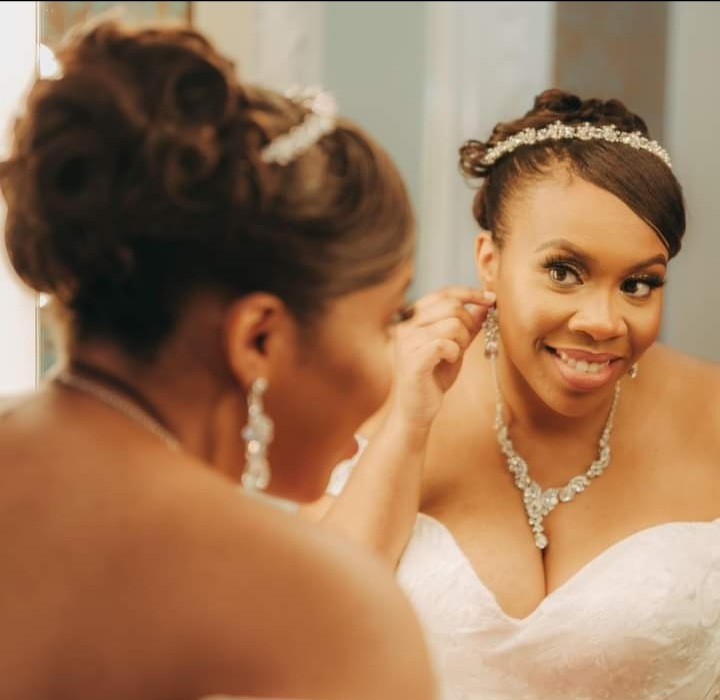
Yes its National Women’s Month and I want to celebrate Women not just because I am one of them but because its well deserved and much needed. We have to be the most underrated individuals to this day. We can give birth to holding down multiple jobs and family but still be considered less valued as a male. We see this in income and most day to day aspects of life. I personally LOVE to celebrate any and everything and knowing as a woman doing what we consider basic things is a surprise or shocking even in 2022.
I love the fact that we can run companies and raise families but also that we have each other to confide in. Mental health is something that has become more talked about in the past few years but I like to think women have been on it before it became popular. We do check in with each other as friends and family before we go into the work place. But even there we find our strength and passions and drive. This post is for me to say THANK YOU to those who have touched my life and the magazine’s life from the beginning to now and the majority of those people are Women. Not surprised but grateful .
19th Century Women Publishers Women who were able to become publishers during the 19th century often faced discrimination, not least in terms of salary, where they were paid just one-third of what men earned. This was one of the reasons why women in the printing business organized their own trade union in 1870. Some African American women also took charge of periodicals.
Sarah Josepha Hale Widowed in 1822 with five children to support, Sarah Josepha Hale began a career as a professional writer. In 1828, she moved to Boston and assumed the editorship of America’s first magazine tailored exclusively for women, Boston Lady’s Magazine. The magazine was billed at the time as “the first magazine edited by a woman for women… either in the Old World or the New.”
Hale conceived of the magazine as promoting ‘female improvement’ and used her column The Lady’s Mentor to push that cause. She used the publication to broadcast her support for women’s education and their and involvement in professions such as academia, medicine and writing. However, she supported the existing social standards and the ideology of separate male and female spheres. Therefore, she refrained from participating in the emerging women’s rights movement, insisting that women should not enter the masculine fields of business, politics and government.
By 1836, outstanding unpaid subscriptions for Boston Lady’s forced Hale to move to Philadelphia and merge her magazine with that of Louis Godey. The partners established Godey’s Lady’s Book in 1837. Although it was expensive, Godey’s soon became the most widely read periodical in the nation. Hale continued to write on topics such as women’s education and later reevaluated her perspective on separate male and female social spheres, but never formally joined the suffrage movement.
Sarah Josepha Hale also wanted to promote a new American literature, so rather than publishing primarily reprints of British authors, as many other periodicals did, she solicited work from American writers. She wrote a considerable portion of each issue herself. Other contributors included Lydia Sigourney and Sarah Helen Whitman.
Cornelia Walter Talented American women found opportunities in the newspaper business as publishers and as editors. In 1842 after the death of Lynde Walter, editor of the Boston Transcript, his sister Cornelia Walter took over, becoming the first woman editor of a major daily newspaper in the United States. One of the highlights of her career came on August 3, 1842, when she reported the plight of black citizens who had been victimized and left homeless during a race riot in Philadelphia.
When Cornelia Walter retired from the newspaper business to get married in 1847, her departure was noted by newspapers around the country, and the Transcript’s owners commended her work:
The experiment of placing a lady as the responsible editor of a Paper was a new and doubtful one. It was a bold step on her part to undertake so much labor and responsibility. She made the trial with fear and trembling, and her success has been triumphant. The task had never been undertaken in this or any other country, to the knowledge of the publishers, by one of her sex; it was consequently the more trying, and her victory the more brilliant.
Ann Stephens Inspired by the success of Godey’s, publisher Charles Peterson and writer Ann Stephens launched Peterson’s Magazine in 1842. Stephens served as editor from 1842-1853. Unlike others who entered the field only after the death of a husband, Stephens established herself as the primary financial provider for her family. While she worked and traveled for business, her husband tended to the children at home.
Although Peterson’s was similar to Godey’s both aesthetically and topically, Peterson’s made a greater commitment to publishing works by women writers. Both magazines were published from Philadelphia, and by the 1860s, each magazine could claim more than 150,000 subscribers. Amazingly enough, Stephens also found time to write two-dozen novels, some of which won high literary praise.
Godey’s and Peterson’s dominated the women’s magazine market in the first half of the 19th century, but the Civil War marked a turning point in this, as in so many things. Improvements in distribution techniques, the mechanics of printing, and a growing and diversified national readership prompted the birth and growth of new, innovative periodicals geared toward a broader female readership.
Today, Exceptional Women in Publishing (EWIP), a non-profit organization, offers programs that are meant to foster growth for smaller, independent publications by and for women and to offer a range of community building and professional development programs through its gatherings. EWIP’s mission is twofold: to educate, empower and support women in publishing and to educate, empower and support women through the power of publishing.
Changes in Publishing Our nation began to industrialize in the early nineteenth century, and small, family run printers and publishers gave way to larger corporate publishers. The growth of the school system and more educational opportunities for women meant that literacy rates also rose, and periodicals flourished. By the 1850s, four-page weeklies and monthly magazines were in full circulation throughout the country.
Publishers appealed to this new readership by deepening their pool of skilled writers in women’s magazines and by adding ‘society pages’ in newspapers and ‘women’s sections’ in magazines. Furthermore, new opportunities in reporting were sought out by pioneering, bold women, while causes such as abolitionism and women’s rights opened new doors for women publishers.
The new nation’s first unisex periodical, Gentlemen and Ladies’ Country Magazine, began in 1784, the year after the American Revolution ended. It included articles specifically for women and requested submissions from women writers. From then until the Civil War, 25 women’s magazines were in circulation. However, they were bound by the social restrictions of the time, publishing articles fit for a female audience: fashion, recipes, poetry, and marriage and child rearing advice.
Anna Zenger Peter Zenger was arrested for libel in 1734, when his newspaper, the New York Weekly Journal, published multiple articles criticizing the Royal Governor of New York. His wife Anna Zenger then assumed control of the publication, becoming one of the earliest women publishers. Zenger gave his wife printing instructions during their visits in his prison cell.
Zenger was brought to trial for criminal libel in April 1735. He was defended by Andrew Hamilton, uncle of Founding Father Alexander Hamilton. The judge was ready to direct the jurors to retire and return with a guilty verdict, but Hamilton argued that the articles Zenger published were not libelous because they were true. He appealed to the jury to stand up to arbitrary power that would prevent the colonists from speaking and writing the truth.
On August 5, 1735, twelve New York jurors ignored the instructions of the Governor’s hand-picked judge and returned a verdict of not guilty, concluding that Zenger’s articles were based on fact, and therefore not libelous. This case and others like it prompted the Founding Fathers to emphasize the right to freedom of the press in the First Amendment of the U.S. Constitution.
After his release from prison, Zenger resumed his position as publisher of the New York Weekly Journal. In 1736 he wrote an account of his trial, A Brief Narrative of the Case and Tryal of John Peter Zenger. Anna again became the publisher of the Journal when Peter died in 1746, and she continued to criticize the Governor and English rule over the colonies.
Clementina Bird Rind Women publishers were among the first to record, comment on and publicize the events leading up to the Revolutionary War. After her husband died in 1773, Clementina Bird Rind took over publication of Williamsburg’s Virginia Gazette for her dear infants: William, John, Charles, James and Maria. Rind was careful to preserve the integrity of the newspaper’s motto: Open to ALL PARTIES, but Influenced by NONE.
During her tenure as publisher, Rind’s periodical highlighted new scientific research, debates on education and philanthropic causes. She is also known for being the first to print Thomas Jefferson’s Ideas on American Freedom and for her staunch insistence that writers refrain from using pseudonyms or anonymity. She stated, “As I am in some measure, amenable to the public for what appears in my Gazette, I cannot think myself authorized to publish an anonymous piece.”
In May 1774, the House of Burgesses recognized her as Virginia’s official public printer. Rind became popular with her criticism toward England, denouncing its authority. In 1774 the Virginia Gazette published Thomas Jefferson’s pamphlet A Summary View of the Rights of British America, in which he laid out for delegates to the First Continental Congress a set of grievances against the King and Parliament’s response to the Boston Tea Party.
18th Century Women Publishers In the 1700s, women edited approximately 16 of the 78 small, family-owned weekly newspapers circulating throughout the American colonies. Even if they did not run the printing operations, wives, mothers and sisters probably contributed significantly to many of the other publications. Because of their overwhelming duties as wives and mothers, women typically assumed control of a publication only after the death of a male relative.
Women were restricted from becoming professional publishers through custom and law in America until the late 19th century, and only became involved in the production of newspapers if they or their family owned the title. As is the case with many small businesses, the various tasks of operating a newspaper often overlapped. Women worked as publishers, printers, typesetters, journalists, and carved wooden engravings for illustrations.
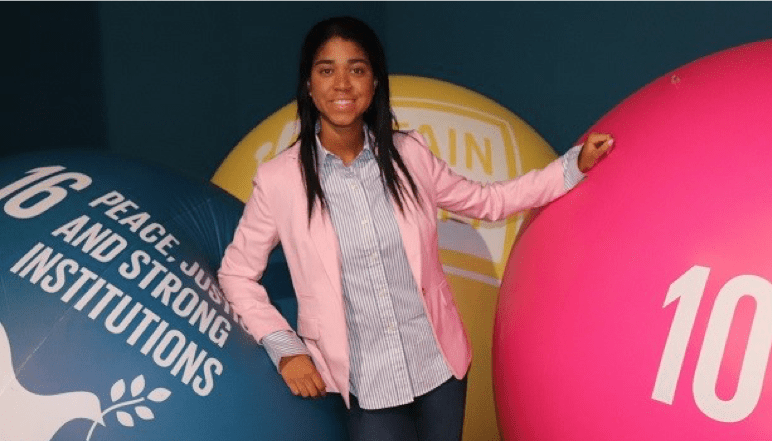
A filmmaker and girls education advocate, Zuriel Oduwole strives to show the world what an educated girl can do. Oduwole’s documentary films have been shown on The History Channel, and her newest film was released in 5 countries. In addition to films focusing on African issue, Oduwole has interviewed 14 government leaders on climate change.
Her “Dream Up. Speak Up. Stand up” campaign seeks to give every child in the world a chance at education by encouraging girls to stay in school and fight for their rights and educating parents on the importance of education.
“I spoke to students in some schools in Lagos about the need for the girls to dream big and speak loudly on important issues. I also wanted them to know that the girl child can do the same as the boy child, if she is given the opportunity to try. Girls are just as creative as boys.”
Marley Dias 18
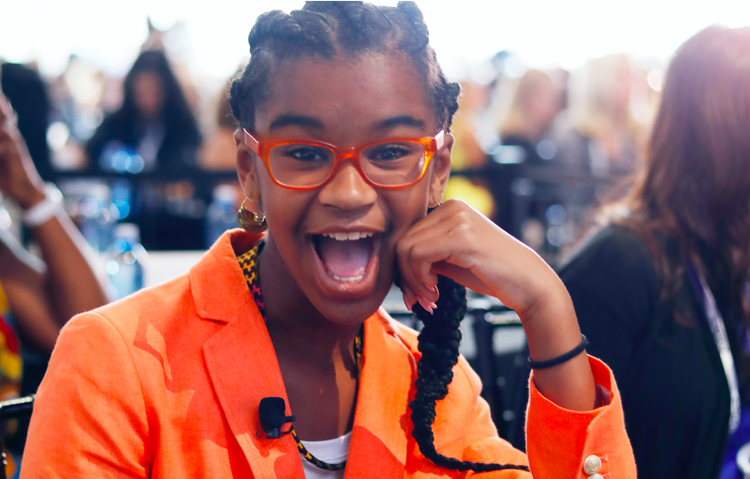
At age 11, Marley Dias launched the campaign #1000BlackGirlBooks with the goal of collecting and donating 1000 books featuring black girls as main characters. By the age of 12, she has collected over 9,000 books and earned a book deal. In July of 2019, Dias’ efforts resulted in free book vending machines being placed in the boroughs of New York City.
In January of 2019, Dias’ book Marley Dias Gets It Done: And So Can Youwas published. It featuresadvice for young people on how to organize campaigns of their own.
“I put out the truth and everyday experiences of myself so that people can see me as their equal, not as just a little kid or as a public figure.”
Naomi Wadler 16
One of the youngest speakers at the March For Our Lives rally in 2018, Naomi Wadler gave a compelling speech urging the nation to remember the Black women and citizens disproportionately affected by gun violence. Wadler and a friend organized a walkout at their school prior to the March, leading a group of students in a haunting display outside the school.
“I am here today to acknowledge and represent the African American whose stories don’t make the front page of every national newspaper. Whose stories don’t lead on the evening news.”
Sophie Cruz 13
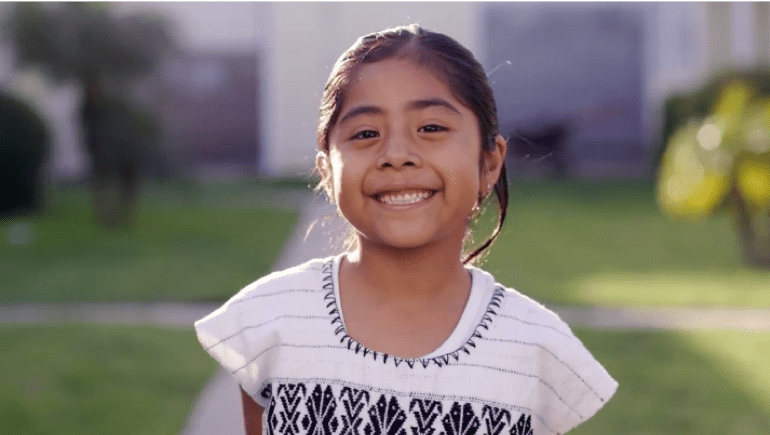
The youngest influential woman on the list, a 5-year-old Sophie Cruz made headlines by reaching out to the Pope in the hopes of saving her immigrant parents in 2015. Though Cruz is an American citizen, her parents are undocumented immigrants. Cruz went on to give a speech at the Women’s March in English and Spanish, asking that families be allowed to remain together. She wenton to receive the Define American award for Activist of the Year in 2017.
“I also want to tell the children not to be afraid, because we are not alone. There are still many people that have their hearts filled with love … Let’s keep together and fight for the rights.”
Amariyanna “Mari” Copeny 15
Also known as “Little Miss Flint,” Mari Copeny made her mark by fighting for Flint, Michigan, a city that has been without clean water since 2014. A letter sent by Copeny gained Obama’s attention, as well as the public’s. Copeny went on the create the non-profit Pack Your Back, which has fundraised over $500,000 and impacted over 25,000 children.
“Flint has taught me that we need to listen to and believe in science and to always question, even the things we take for granted the most.”



_Amy_Winczura_(5694030475).jpg)




 HPS Magazine


