In an instant, life changed course. Everything seemed normal at the beginning of the day; one was already used to constant discomfort. The days of solitude only seemed to be accompanied by a childish inner child. Letting that voice guide you was the only pure thing to do.
Getting carried away by the routine was almost annoying. A little inconvenient. The inner child kept getting in the way. Acting like a normal adult was almost impossible. Pretending was enough. Exhausting but accurate for the situation.
There was no intention for change. Nothing was strong enough to force its growth. Time showed that pretending would guide you through existence without much effort. Routinely living out the days until the future arrived.
Why make an effort if life has proved it useless.
Without warning, the most wonderful being ever created passed by.
Who are you?
The newborn baby was dazzling. His eyes were drops of water. Fragile. Crystals that open the door to a portal. His mother immediately wanted to find out all the secrets of this stranger. The immense need to take care of him and make all his wishes come true.
Every inch of his skin was perfect. His beautiful hands were a masterpiece. Tools to shape the world; strong legs so that distances are not a limitation; a work of art.
In an instant, the protective energy that is born from mother nature took over her body. Her priorities disappeared like footprints on the seashore. The only thing she could imagine was caressing the baby’s delicate skin. Hugging his body to never let go. She wanted to ensure he was okay and that his every need is met.
At that moment Gil saw the sparkle in Tammy’s eyes. That flash that is so familiar among men. He saw the energy that seduces, allowing you to do anything. How could it be possible? he wondered with jealously of his son.
It was incredible to see the awakening of the feminine energy that was so familiar to Gil. The force that appears and makes you chase a woman. Now, as on hundreds of occasions, he saw a person get lost in that delusion. Love.
It was hard for him to accept that the person he loves now loves another. However, his emotional maturity, which made him different from the others, helped him understand.
The cycle had to be closed. Gil had to keep loving his wife. He understood that she accepted being loved by him—she allowed Gil to love her. Seeing that his son was going to be loved and protected by his wife. Admiring the ability of the little human to allow others to love him. Gil learned that to close the cycle by letting himself be beloved by his son.
Like many other immigrant families, my strict Haitian parents longed for the day when they could send me off to study either law or medicine at university. I forced an interest in the medical field to make my parents proud. Although she did not work in the industry, my mother was the first Black woman who introduced me to the world of fashion and the art of getting dressed. To this day, I vividly remember her getting ready for a party while I sat in her room and studied the way she styled her black diamanté wrap dress with a pair of black open-toe heels, and a clutch so sparkly that it hurt to look directly at it. And although she did not understand my desire to work in the fashion industry, she taught me persistence and resilience and is the reason I believed in my ability to succeed in any career.
Even still, I ignored my mounting interest in the fashion industry because, at the time, I only knew of a handful of Black people who worked in the industry, and they were all men. I was young and impressionable so I allowed the lack of representation of Black women in the fashion industry to diminish any belief that I could successfully be a part of an industry that seemingly did not accept women who looked like me.
It wasn’t until I discovered some of the Black women who held coveted positions in fashion that I started to truly see a future for myself in the industry. Like any young girl in high school, I was obsessed with all things Teen Vogue, and when I happened across an article on Fashion Bomb Daily spotlighting Shiona Turini, who was the accessories director of Teen Vogue at the time, my entire outlook of the industry changed. The fashion space held little regard for Black women, both in their offices and in their glossy issues, so it was critical to see someone who looked like me be in a position of power in a career I dreamed of being a part of. I made a promise to myself to not let anything or anyone get in the way of my aspirations to “make it” in the fashion industry. To make sure I kept this promise with myself, I made a vision board with the Vogue masthead on it as a reminder of what I wanted to accomplish for myself. That vision board still hangs in my childhood room, and I am still in disbelief that I made my 16-year-old dreams come true.
I have so much gratitude for the Black women who paved the way for me. I will never forget the night when Rajni Jacques—the fashion director at Teen Vogue at the time—stopped by my desk on her way out and took the time to see how I was acclimating to my new position as the fashion market assistant at Vogue. In that brief exchange, Rajni empowered me by speaking to her own experiences as a Haitian woman breaking into the fashion industry. That conversation helped put my purpose in perspective and restored the certainty that I belonged and deserved to be in the position that I was in.
The last two weeks have been increasingly trying as conversations within the Black fashion community are being amplified due to the lack of representation and support for Black creatives. These conversations are overdue and coincide with the global pandemic and worldwide protests advocating against the racial injustices of the Black community. So naturally, I have been searching for ways to stay inspired and find joy regardless of the circumstances. And as I scroll through social media, read, and watch the news, I am constantly made aware of Black pain but never of Black joy. To combat the encompassing feeling of hopelessness, I seek solace in using this time to reconnect with my parents and learn more about my Haitian heritage. It has been comforting to speak to other Black women on how they are finding joy for both guidance and inspiration. Below, I spoke with 11 Black women in the fashion industry who have made a major impact in my life and career on what is bringing them joy during this time as well as the organizations they are supporting.
Rajni Jacques, Fashion Director, Allure
It’s been hard trying to find delight in the world with everything that’s happening. But you can always go deeper and find meaning in the lousy and the awful. With COVID, it’s about seeing what you do have over what you don’t have. Super simple things like a bed, food, family who aren’t sick, and even silence to regroup. With the needed and meaningful uproar of all the racial tensions, I’ve begun to teach my three-year-old son who he is, his history, how people will view him, and how to hold his head up high and be proud of being Black—how he should be proud of being from such rich heritage. I’ve also been finding joy in having time to paint more. I’m creating pieces that reflect what’s happening now as well as works that I’ve sketched out but never had the time or discipline to execute. I’m also finding bliss in organizing with friends. We are starting Building Black Bedstuy (to launch shortly), to help find new ways to give back to the dwindling Black businesses in the community.
The cause I believe in, because I am a Black woman who is raising another Black woman, is Black Women’s Health Imperative. Why? Because health equity for Black women and girls is abysmal in America. The health system is failing us at alarming rates, especially when it comes to Black pregnant women—no matter the economic status.
Chioma Nnadi, Fashion NewsDirector, Vogue.com
For me finding joy in this moment has been tied to sisterhood and connecting with the other inspiring Black women in my life. I recently watched Mahogany with a group of friends over Zoom, and just feeling that sense of togetherness while Diana Ross is twirling onscreen—talk about Black joy!—was one of the most uplifting moments of the past few weeks. I’ve really been cherishing that kinship more than ever. With that in mind, I’d like to spread the word for the #QuietAsWereKept fund supporting black and WOC freelancers.
These past couple of weeks have been a reminder of things Black people have experienced our entire lives; however, there is a glimmer of hope when actually allies are working alongside us and in front of us to spark real systematic change. The temporary joy can be found in realigning my energy by meditation, volunteering where I can between working, and knowing there is potential for real change in our lives in the near future. I think my main goal is to stay levelheaded. I have been actively running, taking long walks, and keeping my phone on “do not disturb” most of the day. It is easy to over consume news and information while neglecting your mental health. I’m currently supporting Good Call NYC and the Brooklyn Community Bail Fund, as well as the Harlem Arts Alliance.
My joy comes from God, and even in the midst of these two pandemics, the one thing I can still choose is joy. I also practice gratitude as soon as I open my eyes in the morning, which helps to set my perspective for the day. There is still so much to be grateful for, such as my beautiful and witty four-year-old daughter, Sky Grace, who makes me laugh daily.
I am supporting Until We Do It. It is a nonprofit that mobilizes to care for vulnerable populations that have been overlooked in times of crisis. They recently donated 20,000 masks to protesters in Atlanta to protect all those marching. I also support Until Freedom, who are on the front lines of the movement, sacrificing their own livelihoods for justice.
Shiona Turini, Consultant, Stylist and Costume Designer
Being away from my family in Bermuda has been the hardest thing for me. I am sure many others feel this way as well, and hopefully it’s making everyone value their family time more. We get together for a Zoom dinner every Sunday night, which has really become the highlight and most joyful moments of my weeks. It’s almost as beautiful as the chaotic, energetic, boisterous, loving, fun mess as our in-person dinners. Over Zoom, about eight households (my parents, sister, aunts, cousins, and nephews) still have found a way to gang up on me about my attempts at cooking.
I’ve been making donations to almost every organization that comes my way, honestly. There are so many excellent causes, and even small amounts can make a big difference. Recently I’ve been volunteering weekly with the organization Watts Community Core. They distribute approximately 300 bags of groceries and hot meals directly to residents in Nickerson Gardens in Watts in Los Angeles. Access to nutritious food has historically been a racial issue—Black and brown communities have often been deprived. I’ve seen firsthand how important it is to support smaller organizations that are focused on fixing things directly within their own communities.
Julee Wilson, Beauty Director, Cosmopolitan
Finding joy is tricky for me right now between COVID-19, the fight for racial equality, starting a dope new job, and trying to keep my family happy and healthy. I’m honestly exhausted. But amid all the chaos, I’ve been trying to find true moments of rest. That can look like taking a much-needed afternoon nap, taking a long bath, or watching a silly movie with my husband and son. We have to understand that mental health is just as important as physical health. Adding those very simple things in my weekly routine are helping me stay both sane and joyful. I am currently supporting the Loveland Foundation, a therapy fund for Black women and girls.
Nikki Ogunnaike, Deputy Fashion Director, GQ
I’ve been finding joy by doing a few things: running and walking outside, drinking new-to-me wines from Black-owned wineries, watching black comedies like Insecure and Yvonne Orji’s new HBO special, Momma, I Made It!, and listening to the First Corinthian Baptist Church of NYC podcast. The fight against systemic racism is long and winding, so I work to keep myself fit in mind, body, and spirit!
An organization I would like to highlight and support is the Okra Project. From their website: “The Okra Project is a collective that seeks to address the global crisis faced by Black Trans people by bringing home cooked, healthy, and culturally specific meals and resources to Black Trans People wherever we can reach them.”
Lindsay Peoples Wagner, Editor in Chief, Teen Vogue
Honestly, what brings me joy more than anything else right now is giving. Right now, we’re going through a pandemic, a race war, and an economic crisis during Pride—but if I can use my privilege and position to help someone else, even just a little, I know that makes a difference. I would encourage people to support the Marsha P. Johnson Institute because the revolution we see right now is primarily due to Black and brown trans women doing the work for decades, and they deserve to be honored and uplifted every day.
Crystal Anderson, Cofounder and Head of Production, A Very Good Job
Everyone has been saying “during these crazy times,” but as my dear friend Sara Elise said, “It’s crazy for y’all, but shit’s been crazy for Black folk.” I am finding joy in holding my people close, laughing where I can, checking on my friends and protesting the systemic racism and violence against Black people in this country, specifically Black femmes, and I won’t begin to let up until Breonna Taylor’s killers are charged and convicted.
I’ve been personally donating to grassroots movements and directly to the cash apps of people who are in need now. HillmanHelps, my good homie Lena Waithe’s initiative, is where I suggest people donate so that folks who need help in real time can get what they need!
As Black women, we have been conditioned to press on and to put our joy and mental health aside. Our stories are often erased and we are not heard, although we are often screaming. I am taking time to reeducate myself, learning to make noise that can lead to action. I have been listening to a Black women in history bootcamp on @girltrek as a part of my daily affirmations.
Self-care has always been a big part of my life and managing my anxiety, and even more so during this uprising, which has been bringing up so much past hurt and anger. Activities like journaling, playing music, taking baths, and meditating have been really restorative for my peace of mind.
I’m donating to the Marsha P. Johnson Institute to support the Black trans community during Pride month. Marsha was a prominent figure during the Stonewall uprising in 1969.
Are you looking for a great way to help others, learn new skills, gain experience, build your resume, and meet more people? Try volunteering! There are many ways you can help those in need, whether it’s in your own community or on the other side of the world. 1st Financial Bank USA believes in the importance of giving back. Here are 25 different ways to volunteer in your community.
1. Serve in a Soup Kitchen
Soup kitchens are always looking for volunteers to help serve food and cook meals. For some people, a meal at a soup kitchen may be the only food they have for the day. You also might be asked to greet regular patrons and welcome newcomers to the facility. A soup kitchen gives you the opportunity to accept people at their various stages of life. It’s a rewarding way to connect with the veterans, elderly folks, parents, and children in your community.
2. Aid Your Church
There’s a good chance that churches in your community are seeking volunteer help. Churches usually host a variety of activities to bring members and non-members together. Some churches are non-profit organizations, meaning that they have a few staff members on the payroll, and rely on volunteers to assist with the rest of their activities. In your church, you can help serve, sing in the choir, hand out offerings, organize church events, or even join a mission trip.
3. Spend Time at Summer Camp
Maybe you’ve wondered, “How can I volunteer in my community, but still have a lot of fun?” If so, being a summer camp counselor could be for you. Summer camps offer great opportunities for children to stay entertained until school is back in session. Not only do you get to teach the next generation of kids some valuable life skills, but you also get to enjoy the activities while teaching them. Volunteers typically help children learn new skills or information, but they also may facilitate watersports, provide meals, build campfires, play fun games, and form bonds with the children participating.
4. Assist Your School
Schools are almost always looking for volunteers, and because they have a wide variety of activities, you can usually help with an activity that you are interested in. If you prefer to work with adults, you can be a teacher’s assistant or take tickets at a sporting event. If you want to assist children, you can help serve lunch or watch recess. Volunteering at a local school is a great way to interact with younger minds and give back to your community.
5. Tutor Students
If you have ever been stuck on an algebraic equation or needed help with the phrasing of an important paper, you might have wished you had a tutor to help you. Tutors help give one-on-one attention to students who need to hear the material in a different way. Usually, a tutor will help find an easier way for the student to interpret and learn the material. This is a great way to spark your own creativity. Plus, you’ll get to help students build a lifelong love of learning.
6. Mentor a Child
While tutoring is helping a student academically, mentoring is helping a student in all aspects of life. Specific to Lee University, Big Pal, Little Pal, is a program that pairs up college students with children from the boys and girls club or other homes. This program, and mentorship in general, gives kids who may not have a good role model a chance to experience a healthy relationship with an adult.
7. Organize a Summer Reading Program
Students may forget some of the information they learned during the year over the course of the summer. Summer reading programs keep their reading skills active and minds fresh. Organizing a summer reading program is an excellent way to get kids to read a book, broaden their vocabularies, and learn something new. You can share your favorite books, offer prizes to children who meet their goals, and turn the program into a friendly competition, all while teaching children the importance of reading.
8. Donate Books
Donating books is a great way to give back to the children and families in your community. Old books from your childhood that you’re still holding onto can help other children learn to read! Donating also helps maintain the budgets of schools and nonprofit organizations that may otherwise have to purchase new books. Plus, you can free up some space on your shelf to find another book you are interested in.
9. Help Out at a Homeless Shelter
The National Law Center on Homelessness & Poverty found that roughly 3.5 million Americans per year are sleeping in homeless shelters, transitional housing, and public places not meant for housing (bridges, bus stops, etc.) Giving your time to those who are going through an unfortunate stage of life can make a difference. With the older residents in a shelter, you could cook food, clean the community kitchen/common room, or teach them a new language. Alternatively, you could spend time with the children in a homeless shelter by creating an art project or making cookies with them.
10. Visit the Elderly
The residents of nursing homes, along with the patrons of senior centers, may not see visitors often enough and would love to have some company. Even if you don’t have a family member who lives in the nursing home or goes to the senior center, you can volunteer at events, paint nails, read books, bring baked goods, make birthday cards, and so much more. The residents will enjoy the company, and the facility will be grateful for your help! You’ll probably also hear some great stories about the good old days.
11. Assist Hospitals
You don’t have to have a background in medicine to volunteer at a hospital. Although hospitals are usually in need of healthcare workers, you can also help entertain the patients, their families, and the staff. Because a stay in a hospital is usually stressful, you can relieve some of the tension by playing an instrument in the lobby or by showing off your magic tricks. You may be able to bring a smile to a sick child’s face or make an exhausted nurse laugh!
12. Help in a Food Bank
A food bank is a warehouse that stores all of the food to be distributed to communities in need, and a food pantry delivers the food directly to the families and individuals that need it. Volunteering at a food bank or local food pantry may consist of donating foods, purchasing foods with a budget, and delivering food to those in need. As a volunteer, you will help provide those in need with the food necessary to keep them healthy.
13. Organize a Blood Drive
Blood drives are essential for hospitals and their patients. Often, the patients that need blood need it urgently. If you help organize a blood drive, you could actually be helping to save lives! If it is accepted, the blood that is donated at your drive will be waiting in a blood for those who need it, not the other way around. Consider working with others to see if you can organize a blood drive for your school or workplace. Best of all, you’ll meet new people who are just as eager to help others as you are.
14. Donate Unwanted Items
Some people are not fortunate enough to be able to purchase every item at full price. These people head to shelters or thrift stores to pick up the items necessary for everyday life. Donating items that are unwanted or no longer used is a great way to help out your community. The gently used coats, blankets, and shoes in the back of your closet can make a big difference to others, while cleaning up some of the clutter in your home. Consider donating to local charities and women’s shelters.
15. Volunteer in an Animal Shelter
Have you ever wondered, “What can I do to volunteer in my community that doesn’t involve people?” Consider an animal shelter, as they are always looking for volunteers to keep lively animals entertained, fed, and groomed. You may think that playing with the animals cannot be considered volunteering, but helping the cats, dogs, and other animals become more sociable and friendly to humans, will increase their chances for adoption.
16. Help With Building Homes
Unfortunately, some people don’t have a place to call home. You may feel that you can’t help with their situation, but you can make a difference through organizations like Habitat for Humanity. This organization is local, national, and worldwide. They build and improve homes for those in need. Pictured: Two Siouxland Habitat for Humanity homes built with assistance from 1st Financial Bank USA.
17. Coach a Youth Sports Team
If you enjoy being active or have skills in a particular sport, coaching a youth sports team might be the perfect volunteer opportunity for you. You’ll be able to share your passion, act as a role model, and help out parents who may be too busy to take on the role themselves. You may even learn a little more about the sport yourself.
18. Gift Christmas Presents
Operation Christmas Child is a great organization that allows families to put together shoe boxes of gifts to send to less fortunate children overseas. Any fun items or necessities that you can pack into the shoebox can be sent over. This is a great way to help others without having to travel yourself. Some common gift ideas are stuffed animals, crayons, coloring books, chapter books, and many other hygiene items.
19. Maintain the Environment
Take a moment to imagine a beautiful local park. There may be a playground and some botanical gardens, but you probably didn’t picture trash blowing through the park. Not only does this look unkempt, but it’s also bad for the environment. In rural areas, you can adopt a section of the highway to clean up the roadside ditches. Another way to keep the earth clean and beautiful is by planting trees in your neighborhood.
20. Package Meals
Many organizations around the U.S. make it easy for colleges, high schools, churches, and other groups to package meals for those living in poverty. These meals provide proper nutrients for the children and adults who receive them. No Kid Hungry and Orphan Grain Train are some of the organizations working to end world hunger one meal at a time.
21. Assist With Voter Registration
In the United States, most voters must wait until they turn eighteen to register to vote. Others may wait even longer if they don’t know how or where to register. You can assist with voter registration to eliminate some of these issues. Hosting a voter registration clinic can help the potential voters feel more confident, and you will feel good knowing that you helped more people to share their voice and fulfill their civic duties.
22. Help Out in Your Library
If you enjoy books and quiet, the library is the perfect place for you to volunteer. You will get to organize books, while finding new books to add to your to-be-read pile. If you like working with kids, then you can help young children by teaching, reading, and recommending books to them. Libraries can offer many different activities to engage children and help improve their cognitive skills.
23. Support the Red Cross
Red Cross is an organization that helps with disaster relief, blood donations, and more. Being a Red Cross volunteer provides experience in the medical field and allows you to help those in need. The Red Cross responds to disasters nationwide and helps communities recover. It may be difficult to see devastated communities, but you could have a part in helping them recover. In addition, you may meet new friends along the way.
24. Give Back to Local Foundations
Your community likely has a local foundation that helps support community members, schools, and businesses. This foundation might host events, fundraisers, and other contributions to improve the success of the area. Local foundations often seek volunteers through Facebook pages, posting flyers, or activities fairs. You can help improve your community by giving back to the foundations that aid your community.
25. Play at the YMCA
We know that it’s fun to stay at the YMCA, so it goes without saying that it can also be fun to volunteer there. Volunteering at your local YMCA is one way to be interactive with children and act as a role model for them. Plus, you can volunteer in your area of interest. If you enjoy working out, you can teach a class in the weight room; if you enjoy playing sports, you can coach an athletic team. There are many opportunities to help young kids while staying fit yourself.
Giving back to your community is a great way to improve the lives of others while growing as a person yourself. Plus, it is an activity that you can ask your friends and family to join. As you can see, there is a volunteer opportunity for each of your interests. While helping others, you may make new friends, learn new skills, and add memorable experiences to your life.
Now that you know how to volunteer in your community, you may think that you’re not qualified or are too busy to help others. Remember this quote by Elizabeth Andrew: “Volunteers don’t necessarily have the time; they have the heart.”
“an enterprise owned and controlled by a woman having a minimum financial interest of 51 per cent of the capital and giving at least 51 per cent of employment generated in the enterprise to women“
But in today’s world some aspects have changed but yet some things have stayed the same. Here are 8 helpful tips to help you decide if you see yourself creating a business for yourself.
1. Have a clear, firm mission:
First try to determine the reason to start a business and not do a job. This particular criterion will help you understand whether you will fail or succeed in your new venture. You need to have passion and a firm reason to start a business. This very reason will help guide you to your mission. Remember, you will have to face the ups & downs in business while moving towards your goals.
2. Faith in yourself:
Self-belief is very much crucial to achieving success in any business. Logically, women are found to underrate their capabilities. In case you do not have faith in yourself, then you cannot expect others to believe in your services or products. If you feel less confident in your abilities, then no investors would be interested to make investments. Also your staffs are unlikely to give 100% of their potentiality. This is because lacking in self-confidence, you are not able to motivate them to do better.
3. Embrace Failure:
Rules to achieve success should be followed by both male and female entrepreneurs. Failure should be accepted. Remember, any business is involved with lots of risk. However, it does come with its share of rewards. Successful female entrepreneur is one who does not worry about failure.
4. Change perception:
Business success is determined by the thinking pattern of the entrepreneur at the time of its launching. The right attitude and approach can help you to achieve sure success in your venture. You should not consider yourself to be the weaker gender. Try to manage and overcome issues as best as possible. Just you are a lady does not mean you will achieve sure and quick success. Rather you need to leave your comfort zone.
5. Acquire essential business skills:
Not all entrepreneurs are born great. Rather some develop through hard work and determination. In case, you do not belong to a business family, then you are to develop yours. A successful woman entrepreneur is one who can develop essential entrepreneurial skills during leisure hours. Rather than playing around or shopping, you may read a book on business or attend a seminar.
6. Use wisely your time:
Time constraint is perhaps a major problem faced by most women entrepreneurs. This is because women are faced with different responsibilities at home. They are to raise their family, give attention to their personal needs as well as to the business. The Successful Female Entrepreneur is one who can manage all these quite efficiently without ignoring any single aspect.
7. Understand your business thoroughly:
Find out how much you understand your business. Do you seriously have passion for your business or you just ventured to make some money in the industry? Whatever be the type of business you plan to set up, you should be aware of the fundamentals. Avoid venturing into any industry just because you feel motivated by others’ success stories. Chances are you might not achieve success as assumed to be due to lack of passion and in-depth industry knowledge.
And If I would add anything to this list would be that you have to know in advance that you WILL NOT have the support that you hope to have from people you thought would be there for you. Just know that it’s okay because its not their dream, it belongs to you. You will find support so you won’t go through your journey alone, just stay focus on your goals and not so much of others and you will be able to see your advancements through the process of your success.
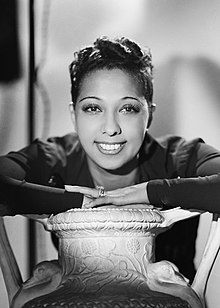
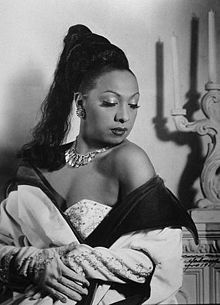
Josephine Baker (born Freda Josephine McDonald, naturalised French Joséphine Baker; 3 June 1906 – 12 April 1975) was an American-born French entertainer, French Resistance agent, and civil rights activist. Her career was centered primarily in Europe, mostly in her adopted France. She was the first Black woman to star in a major motion picture, the 1927 silent film Siren of the Tropics, directed by Mario Nalpas and Henri Étiévant.
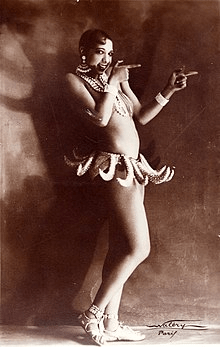
During her early career, Baker was among the most celebrated performers to headline the revues of the Folies Bergère in Paris. Her performance in the revue Un vent de folie in 1927 caused a sensation in the city. Her costume, consisting of only a short skirt of artificial bananas and a beaded necklace, became an iconic image and a symbol both of the Jazz Age and the Roaring Twenties.
Baker was celebrated by artists and intellectuals of the era, who variously dubbed her the “Black Venus”, the “Black Pearl”, the “Bronze Venus”, and the “Creole Goddess”.[citation needed] Born in St. Louis, Missouri, she renounced her U.S. citizenship and became a French national after her marriage to French industrialist Jean Lion in 1937. She raised her children in France.
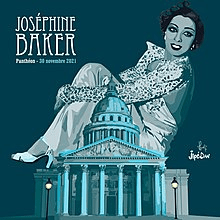
On 30 November 2021, she entered the Panthéon in Paris, the first black woman to receive one of the highest honors in France. As her resting place remains in Monaco a cenotaph was installed in vault 13 of the crypt in the Panthéon.
Early life
Baker, c. 1908
Freda Josephine McDonald was born on June 3, 1906, in St. Louis, Missouri. Her mother Carrie, was adopted in Little Rock, Arkansas, in 1886 by Richard and Elvira McDonald, both of whom were former slaves of African and Native American descent. Baker’s estate and some other sources identify vaudeville drummer Eddie Carson as her natural father, whilst other sources dispute this. Baker’s foster son Jean-Claude Baker wrote a biography, published in 1993, titled Josephine: The Hungry Heart, in which he discusses at length the circumstances surrounding Baker’s birth based on his research, concluding that Baker’s father was white, and that Baker knew that Carson was not her father. Academic Bennetta Jules-Rosette, author of Josephine Baker in art and life : the icon and the image (2007) wrote about the difficulty of establishing the truth of Baker’s early life, given “the factual and counterfactual reworkings of her numerous biographers” and Baker’s own “numerous and often contradictory reworkings of the story, which frequently lacked coherence.”.
Josephine McDonald spent her early life on 212 Targee Street (known by some St. Louis residents as Johnson Street) in the Mill Creek Valley neighborhood of St. Louis, a racially mixed low-income neighborhood near Union Station, consisting mainly of rooming houses, brothels, and apartments without indoor plumbing. She was poorly dressed, hungry as a child, and developed street smarts playing in the railroad yards of Union Station.
Her mother married Arthur Martin, “a kind but perpetually unemployed man”, with whom she had a son and two more daughters. She took in laundry to wash to make ends meet, and at eight years old, Josephine began working as a live-in domestic for white families in St. Louis. One woman abused her, burning Josephine’s hands when the young girl put too much soap in the laundry.
In 1917, when she was 11, a terrified Josephine McDonald witnessed racial violence in East St. Louis, Illinois. In a speech years later, she recalled what she had seen:
“I can still see myself standing on the west bank of the Mississippi looking over into East St. Louis and watching the glow of the burning of Negro homes lighting the sky. We children stood huddled together in bewilderment . . . frightened to death with the screams of the Negro families running across this bridge with nothing but what they had on their backs as their worldly belongings… So with this vision I ran and ran and ran…”
By age 12, she had dropped out of school. At 13, she worked as a waitress at the Old Chauffeur’s Club at 3133 Pine Street. She also lived as a street child in the slums of St. Louis, sleeping in cardboard shelters, scavenging for food in garbage cans, making a living with street-corner dancing. It was at the Old Chauffeur’s Club where Josephine met Willie Wells, and subsequently married him at age 13; however, the marriage lasted less than a year. Following her divorce from Wells, she found work with a street performance group called the Jones Family Band.
In her teen years she struggled to have a healthy relationship with her mother, who did not want her to become an entertainer and scolded her for not tending to her second husband, William Howard Baker, whom she married in 1921 at the age of 15. She left him when her vaudeville troupe was booked into a New York City venue, and divorced in 1925; it was during this time she began to see significant career success, and she continued to use his last name professionally for the rest of her life.[6] Though Baker traveled, she would return with gifts and money for her mother and younger half-sister, but the career opportunities pushed her to make a trip to France
Career
Early career
Baker’s consistent badgering of a show manager in her hometown led to her being recruited for the St. Louis Chorus vaudeville show. At the age of 13, she headed to New York City during the Harlem Renaissance, and performed at the Plantation Club, Florence Mills‘ old stomping ground. After several auditions, she secured a role in the chorus line of a touring production of the groundbreaking and hugely successful Broadway revue Shuffle Along, (1921) that helped bring to the public’s attention Florence Mills, Paul Robeson, and Adelaide Hall.
In Shuffle Along, Josephine was a dancer positioned at the end of a chorus line. Fearing she might be overshadowed by the other dancers, Josephine used her position to introduce a hint of comedy into her routine, thereby making her stand out from the other dancers. Josephine first entered Shuffle Along in one of the U.S. touring companies (not on Broadway) as she was still underage at the time. Once she became of age, she was transferred to the Broadway production where she remained for several months up until the show ended in 1923. The next revue Josephine went into was The Chocolate Dandies, which opened on September 1, 1924. Again, Josephine was cast in the chorus line. The show only ran for 96 performances and closed in November, 1924
Pre War Paris and rise to fame
Baker in her banana costume in 1927
Baker sailed to Paris in 1925, and opened on 2 October in La Revue Nègre at Théâtre des Champs-Élysées. Baker was aged 19 at the time. In a 1974 interview with The Guardian, Baker explained that she obtained her first big break in the bustling city. “No, I didn’t get my first break on Broadway. I was only in the chorus in ‘Shuffle Along’ and ‘Chocolate Dandies’. I became famous first in France in the twenties. I just couldn’t stand America and I was one of the first colored Americans to move to Paris. Oh yes, Bricktop was there as well. Me and her were the only two, and we had a marvelous time. Of course, everyone who was anyone knew Bricky. And they got to know Miss Baker as well.”
In Paris, she became an instant success for her erotic dancing, and for appearing practically nude onstage. After a successful tour of Europe, she broke her contract and returned to France in 1926 to star at the Folies Bergère, setting the standard for her future acts.
Arrival of Baker in The Hague in 1928
Baker performed the “Danse Sauvage” wearing a costume consisting of a skirt made of a string of artificial bananas. Her success coincided (1925) with the Exposition des Arts Décoratifs, which gave birth to the term “Art Deco“, and also with a renewal of interest in non-Western forms of art, including African. Baker represented one aspect of this fashion. In later shows in Paris, she was often accompanied on stage by her pet cheetah “Chiquita,” who was adorned with a diamond collar. The cheetah frequently escaped into the orchestra pit, where it terrorized the musicians, adding another element of excitement to the show.
After a while, Baker was the most successful American entertainer working in France. Ernest Hemingway called her “the most sensational woman anyone ever saw.” The author spent hours talking with her in Paris bars. Picasso drew paintings depicting her alluring beauty. Jean Cocteau became friendly with her and helped vault her to international stardom. Baker endorsed a “Bakerfix” hair gel, bananas, shoes, and cosmetics amongst other products.
In 1929, Baker became the first African-American star to visit Yugoslavia, while on tour in Central Europe via the Orient Express. In Belgrade, she performed at Luxor Balkanska, the most luxurious venue in the city at the time. She included Pirot kilim into her routine, as a nod to the local culture, and she donated some of the show’s proceeds to poor children of Serbia. In Zagreb, she was received by adoring fans at the train station. However, some of her shows were cancelled, due to opposition from the local clergy and morality police.
During her travels in Yugoslavia, Baker was accompanied by “Count” Giuseppe Pepito Abatino. At the start of her career in France, Baker had met Abatino, a Sicilian former stonemason who passed himself off as a count, and who persuaded her to let him manage her. Abatino was not only Baker’s management, but her lover as well. The two could not marry because Baker was still married to her second husband, Willie Baker.
During this period, she released her most successful song, “J’ai deux amours” (1931). The song expresses the sentiment that “I have two loves, my country and Paris.” In a 2007 book, Tim Bergfelder, Sue Harris and Sarah Street claimed that “by the 1930’s, Baker’s assimilation into French popular culture had been completed by her association with the song”. Baker starred in four films which found success only in Europe: the silent filmSiren of the Tropics (1927), Zouzou (1934) and Princesse Tam Tam (1935). She starred in Fausse Alerte in 1940. Bergfelder, Harris and Street wrote that the silent filmSiren of the Tropics “rehearses the ‘primitive-to-Parisienne’ narrative that would become the staple of Baker’s cinema career, and exploited in particular her comic stage persona based on loose-limbed athleticism and artful clumsiness.” The sound filmsZouzou (1934) and Princesse Tam Tam were both Star vehicles for Baker.
Under the management of Abatino, Baker’s stage and public persona, as well as her singing voice, were transformed. In 1934, she took the lead in a revival of Jacques Offenbach‘s opera La créole, which premiered in December of that year for a six-month run at the Théâtre Marigny on the Champs-Élysées of Paris. In preparation for her performances, she went through months of training with a vocal coach. In the words of Shirley Bassey, who has cited Baker as her primary influence, “… she went from a ‘petite danseuse sauvage’ with a decent voice to ‘la grande diva magnifique’ … I swear in all my life I have never seen, and probably never shall see again, such a spectacular singer and performer.”
Despite her popularity in France, Baker never attained the equivalent reputation in America. Her star turn in a 1936 revival of Ziegfeld Follies on Broadway was not commercially successful, and later in the run she was replaced by Gypsy Rose Lee. Time magazine referred to her as a “Negro wench … whose dancing and singing might be topped anywhere outside of Paris”, while other critics said her voice was “too thin” and “dwarf-like” to fill the Winter Garden Theatre. She returned to Europe heartbroken. This contributed to Baker’s becoming a legal citizen of France and giving up her American citizenship.
Baker returned to Paris in 1937, married the French industrialist Jean Lion, and became a French citizen. They were married in the French town of Crèvecœur-le-Grand, in a wedding presided over by the mayor, Jammy Schmidt.
Between 1933 and 1937 Baker was a guest at the start of the Tour de France on four occasions.
World War II
In September 1939, when France declared war on Germany in response to the invasion of Poland, Baker was recruited by the Deuxième Bureau, the French military intelligence agency, as an “honorable correspondent”. Baker worked with Jacques Abtey, the head of French counterintelligence in Paris. She socialised with the Germans at embassies, ministries, night clubs, charming them while secretly gathering information. Her café-society fame enabled her to rub shoulders with those in the know, from high-ranking Japanese officials to Italian and Vichy bureaucrats, reporting to Abtey what she heard. She attended parties and gathered information at the Italian embassy without raising suspicion.
When the Germans invaded France, Baker left Paris and went to the Château des Milandes, her home in the Dordognedépartement in the south of France. She housed people who were eager to help the Free French effort led by Charles de Gaulle and supplied them with visas. As an entertainer, Baker had an excuse for moving around Europe, visiting neutral nations such as Portugal, as well as some in South America. She carried information for transmission to England, about airfields, harbors, and German troop concentrations in the West of France. Notes were written in invisible ink on Baker’s sheet music. As written in Jazz Age Cleopatra, “She specialized in gatherings at embassies and ministries, charming people as she had always done, but at the same time trying to remember interesting items to transmit.”
Later in 1941, she and her entourage went to the French colonies in North Africa. The stated reason was Baker’s health (since she was recovering from another case of pneumonia) but the real reason was to continue helping the Resistance. From a base in Morocco, she made tours of Spain. She pinned notes with the information she gathered inside her underwear (counting on her celebrity to avoid a strip search). She met the Pasha of Marrakech, whose support helped her through a miscarriage (the last of several). After the miscarriage, she developed an infection so severe it required a hysterectomy. The infection spread and she developed peritonitis and then sepsis. After her recovery (which she continued to fall in and out of), she started touring to entertain British, French, and American soldiers in North Africa. The Free French had no organized entertainment network for their troops, so Baker and her entourage managed for the most part on their own. They allowed no civilians and charged no admission.
Baker’s last marriage, to French composer and conductor Jo Bouillon, ended around the time Baker opted to adopt her 11th child.
Post War
Baker in Havana, Cuba, in 1950
Baker in Amsterdam, 1954
In 1949, a reinvented Baker returned in triumph to the Folies Bergère. Bolstered by recognition of her wartime heroism, Baker the performer assumed a new gravitas, unafraid to take on serious music or subject matter. The engagement was a rousing success and reestablished Baker as one of Paris’ pre-eminent entertainers. In 1951 Baker was invited back to the United States for a nightclub engagement in Miami. After winning a public battle over desegregating the club’s audience, Baker followed up her sold-out run at the club with a national tour. Rave reviews and enthusiastic audiences accompanied her everywhere, climaxed by a parade in front of 100,000 people in Harlem in honor of her new title: NAACP‘s “Woman of the Year”.
An incident at the Stork Club in October 1951 interrupted and overturned her plans. Baker criticized the club’s unwritten policy of discouraging Black patrons, then scolded columnist Walter Winchell, an old ally, for not rising to her defense. Winchell responded swiftly with a series of harsh public rebukes, including accusations of Communist sympathies (a serious charge at the time). The ensuing publicity resulted in the termination of Baker’s work visa, forcing her to cancel all her engagements and return to France. It was almost a decade before U.S. officials allowed her back into the country.[55]
In January 1966, Fidel Castro invited Baker to perform at the Teatro Musical de La Habana in Havana, Cuba, at the seventh-anniversary celebrations of his revolution. Her spectacular show in April broke attendance records. In 1968, Baker visited Yugoslavia and made appearances in Belgrade and in Skopje. In her later career, Baker faced financial troubles. She commented, “Nobody wants me, they’ve forgotten me”; but family members encouraged her to continue performing. In 1973 she performed at Carnegie Hall to a standing ovation.
The following year, she appeared in a Royal Variety Performance at the London Palladium, and then at the Monegasque Red Cross Gala, celebrating her 50 years in French show business. Advancing years and exhaustion began to take their toll; she sometimes had trouble remembering lyrics, and her speeches between songs tended to ramble. She still continued to captivate audiences of all ages.
Civil rights activism
Although based in France, Baker supported the Civil Rights Movement during the 1950s. When she arrived in New York with her husband Jo, they were refused reservations at 36 hotels because of racial discrimination. She was so upset by this treatment that she wrote articles about the segregation in the United States. She also began traveling into the South. She gave a talk at Fisk University, a historically black college in Nashville, Tennessee, on “France, North Africa and the Equality of the Races in France.”
She refused to perform for segregated audiences in the United States, although she was offered $10,000 by a Miami club (The club eventually met her demands.). Her insistence on mixed audiences helped to integrate live entertainment shows in Las Vegas, Nevada. After this incident, she began receiving threatening phone calls from people claiming to be from the Ku Klux Klan but said publicly that she was not afraid of them.
In 1951, Baker made charges of racism against Sherman Billingsley‘s Stork Club in Manhattan, where she had been refused service. Actress Grace Kelly, who was at the club at the time, rushed over to Baker, took her by the arm and stormed out with her entire party, vowing never to return (although she returned on 3 January 1956 with Prince Rainier of Monaco). The two women became close friends after the incident.
When Baker was near bankruptcy, Kelly—by then the princess consort—offered her a villa and financial assistance. (During his work on the Stork Club book, author and New York Times reporter Ralph Blumenthal was contacted by Jean-Claude Baker, one of Baker’s sons. He indicated that he had read his mother’s FBI file and, using comparison of the file to the tapes, said he thought the Stork Club incident was overblown.
Baker also worked with the NAACP. Her reputation as a crusader grew to such an extent that the NAACP had Sunday, 20 May 1951 declared “Josephine Baker Day.” She was presented with life membership with the NAACP by Nobel Peace Prize winner Dr. Ralph Bunche. The honor she was paid spurred her to further her crusading efforts with the “Save Willie McGee” rally. McGee was a black man in Mississippi convicted of raping a white woman in 1945 on the basis of dubious evidence, and sentenced to death. Baker attended rallies for McGee and wrote letters to Fielding Wright, the governor of Mississippi, asking him to spare McGee’s life. Despite her efforts, McGee was executed in 1951. As the decorated war hero who was bolstered by the racial equality she experienced in Europe, Baker became increasingly regarded as controversial; some black people even began to shun her, fearing that her outspokenness and racy reputation from her earlier years would hurt the cause.
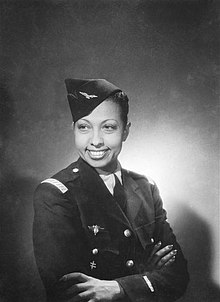
In 1963, she spoke at the March on Washington at the side of Rev. Martin Luther King Jr. Baker was the only official female speaker. While wearing her Free French uniform emblazoned with her medal of the Légion d’honneur, she introduced the “Negro Women for Civil Rights.” Rosa Parks and Daisy Bates were among those she acknowledged, and both gave brief speeches. Not everyone involved wanted Baker present at the March; some thought her time overseas had made her a woman of France, one who was disconnected from the Civil Rights issues going on in America. In her speech, one of the things Baker said:
I have walked into the palaces of kings and queens and into the houses of presidents. And much more. But I could not walk into a hotel in America and get a cup of coffee, and that made me mad. And when I get mad, you know that I open my big mouth. And then look out, ’cause when Josephine opens her mouth, they hear it all over the world …
After King’s assassination, his widow Coretta Scott King approached Baker in the Netherlands to ask if she would take her husband’s place as leader of the Civil Rights Movement. After many days of thinking it over, Baker declined, saying her children were “too young to lose their mother.
Personal life
Relationships
Baker with ten of her adopted children, 1964
Baker’s first marriage was to American Pullman porter Willie Wells when she was only 13 years old. The marriage was reportedly very unhappy and the couple divorced a short time later. Another short-lived marriage followed her marriage to Willie Baker in 1921; she retained Baker’s last name because her career began to take off during that time, and it was the name by which she became best known. While she had four marriages to men, Jean-Claude Baker writes that Josephine was bisexual and he also writes that she had several relationships with women.
Josephine Baker’s signature on her 1937 French citizenship papers in the French archives.
During her time in the Harlem Renaissance arts community, one of Baker’s relationships was with the Blues singer Clara Smith. In 1925, she began an extramarital relationship with the Belgian novelist Georges Simenon In 1937, Baker married Frenchman Jean Lion. She and Lion separated in 1940. She married French composer and conductor Jo Bouillon in 1947, and their union also ended in divorce but it lasted 14 years. Later, She was involved with the artist Robert Brady for a time, but they never married. Speculation exists that Baker was also involved in sexual liaisons, if not relationships, with Ada “Bricktop” Smith, French novelist Colette, and possibly Frida Kahlo.
During her participation in the Civil Rights Movement, Baker began to adopt children, forming a family which she often referred to as “The Rainbow Tribe”. Baker wanted to prove that “children of different ethnicities and religions could still be brothers.” She often took the children with her cross-country, and when they were at Château des Milandes, she arranged tours so visitors could walk the grounds and see how natural and happy the children were in “The Rainbow Tribe”. Her estate featured hotels, a farm, rides, and the children singing and dancing for the audience. She charged an admission fee to visitors who entered and partook in the activities, which included watching the children play. She created dramatic backstories for them, picking them with clear intent in mind: at one point, she wanted and planned to adopt a Jewish baby, but she settled for a French one. She also raised them in different religions in order to further her model for the world, taking two children from Algeria and raising one child as a Muslim and raising the other child as a Catholic. One member of the Tribe, Jean-Claude Baker, said: “She wanted a doll.”
Baker raised two daughters, French-born Marianne and Moroccan-born Stellina, and 10 sons, Korean-born Jeannot (or Janot), Japanese-born Akio, Colombian-born Luis, Finnish-born Jari (now Jarry), French-born Jean-Claude, Noël and Moïse, Algerian-born Brahim, Ivorian-born Koffi, and Venezuelan-born Mara. For some time, Baker lived with her children and an enormous staff in the château in Dordogne, France, with her fourth husband, Jo Bouillon. Bouillon claimed that Baker bore one child, it was stillborn in 1941, an incident that precipitated an emergency hysterectomy.
Baker forced Jarry to leave the château and live with his adoptive father, Jo Bouillon, in Argentina, at the age of 15, after discovering that he was gay. Moïse died of cancer in 1999, and Noël was diagnosed with schizophrenia and is in a psychiatric hospital as of 2009. Jean-Claude Baker committed suicide in 2015
Later years and death
In her later years Baker converted to Catholicism. In 1968, Baker lost her Château owing to unpaid debts; afterwards Princess Grace offered her an apartment in Roquebrune, near Monaco.
Four days later Baker was found lying peacefully in her bed surrounded by newspapers with glowing reviews of her performance. She was in a coma after suffering a cerebral hemorrhage. She was taken to Pitié-Salpêtrière Hospital, where she died, aged 68, on 12 April 1975.
In 2015 she was inducted into the Legacy Walk in Chicago, Illinois. The Piscine Joséphine Baker is a swimming pool along the banks of the Seine in Paris named after her.
Writing in the on-line BBC magazine in late 2014, Darren Royston, historical dance teacher at RADA credited Baker with being the Beyoncé of her day, and bringing the Charleston to Britain. Two of Baker’s sons, Jean-Claude and Jarry (Jari), grew up to go into business together, running the restaurant Chez Josephine on Theatre Row, 42nd Street, New York City. It celebrates Baker’s life and works.
Château des Milandes, a castle near Sarlat in the Dordogne, was Baker’s home where she raised her twelve children. It is open to the public and displays her stage outfits including her banana skirt (of which there are apparently several). It also displays many family photographs and documents as well as her Legion of Honour medal. Most rooms are open for the public to walk through including bedrooms with the cots where her children slept, a huge kitchen, and a dining room where she often entertained large groups. The bathrooms were designed in art deco style but most rooms retained the French chateau style.
Baker continued to influence celebrities more than a century after her birth. In a 2003 interview with USA Today, Angelina Jolie cited Baker as “a model for the multiracial, multinational family she was beginning to create through adoption.” Beyoncé performed Baker’s banana dance at the Fashion Rocks concert at Radio City Music Hall in September 2006.
Writing on the 110th anniversary of her birth, Vogue described how her 1926 “danse sauvage” in her famous banana skirt “brilliantly manipulated the white male imagination” and “radically redefined notions of race and gender through style and performance in a way that continues to echo throughout fashion and music today, from Prada to Beyoncé.”
On 3 June 2017, the 111th anniversary of her birth, Google released an animated Google Doodle, which consists of a slideshow chronicling her life and achievements.
On Thursday 22 November 2018 a documentary entitled Josephine Baker: The Story of an Awakening, directed by Ilana Navaro, premiered at the Beirut Art Film Festival. It contains rarely seen archival footage, including some never before discovered, with music and narration.
In May 2021 an online petition was set up by writer Laurent Kupferman asking that Joséphine Baker be honoured by being reburied at the Panthéon in Paris or being granted Panthéon honours, which would make her only the sixth woman at the mausoleum alongside Simone Veil, Geneviève de Gaulle-Anthonioz, Marie Curie, Germaine Tillion and Sophie Berthelot. In August 2021 the French President, Emmanuel Macron, announced that Baker’s remains would be reburied at the Panthéon in November 2021, following the petition and continued requests from Baker’s family since 2013. Her son Claude Bouillon-Baker, however, told AFP that her body would remain in Monaco and only a plaque would be installed at the Panthéon. It was later announced that a symbolic casket containing soil from various locations that Baker had lived, including St. Louis, Paris, the South of France and Monaco, would be carried by the French Air and Space Force in a parade in Paris before a ceremony at the Panthéon where the casket will be interred. The ceremony took place on Tuesday, 30 November 2021, and Baker thus became the first black woman to be honored in the secular temple to the “great men” of the French Republic.
Judge Jackson was born in Washington, DC and grew up in Miami, Florida. Her parents attended segregated primary schools, then attended historically black colleges and universities. Both started their careers as public school teachers and became leaders and administrators in the Miami-Dade Public School System. When Judge Jackson was in preschool, her father attended law school. In a 2017 lecture, Judge Jackson traced her love of the law back to sitting next to her father in their apartment as he tackled his law school homework—reading cases and preparing for Socratic questioning—while she undertook her preschool homework—coloring books.
Judge Jackson stood out as a high achiever throughout her childhood. She was a speech and debate star who was elected “mayor” of Palmetto Junior High and student body president of Miami Palmetto Senior High School. But like many Black women, Judge Jackson still faced naysayers. When Judge Jackson told her high school guidance counselor she wanted to attend Harvard, the guidance counselor warned that Judge Jackson should not set her “sights so high.”
That did not stop Judge Jackson. She graduated magna cum laude from Harvard University, then attended Harvard Law School, where she graduated cum laude and was an editor of the Harvard Law Review.
Judge Jackson lives with her husband, Patrick, and their two daughters, in Washington, DC.
Judge Jackson was one of President Biden’s first judicial nominees. She was confirmed with bipartisan support to the U.S. Court of Appeals for the D.C. Circuit in 2021.
President Obama nominated Judge Jackson to be a district court judge for the U.S. District Court for the District of Columbia in 2012. She was confirmed with bipartisan support in 2013.
President Obama nominated Judge Jackson to serve as the Vice Chair of the U.S. Sentencing Commission in 2009, and she was confirmed with bipartisan support in 2010. Prior to serving as a judge, Judge Jackson followed in the footsteps of her mentor Justice Breyer by working on the U.S. Sentencing Commission. The Commission, which President Biden fought to create as a member of the U.S. Senate, is bipartisan by design. Her work there focused on reducing unwarranted sentencing disparities and ensuring that federal sentences were just and proportionate.
Judge Jackson represented defendants who did not have the means to pay for a lawyer. She would be the first former federal public defender to serve on the Supreme Court.
Judge Jackson served as Justice Breyer’s law clerk, and learned up close how important it is for a Supreme Court Justice to build consensus and speak to a mainstream understanding of the Constitution.
Because of her diverse and broad public service, Judge Jackson has a unique appreciation of how critical it is for the justice system to be fair and impartial. With multiple law enforcement officials in her family, she also has a personal understanding of the stakes of the legal system. After serving in the U.S. Army and being deployed to Iraq and Egypt, Jackson’s brother served as a police officer in Baltimore and two of her uncles were police officers in Miami.
I’m slowly bringing back this section of the magazine as a test run to see if people still like having this or if I should stop it all together. So please let me know so I can continue to bring you what you like.
First off….WOMEN”S VIEW
When a woman has been hurt and tries to move on she doesn’t want to be reminded that she hasn’t made as much of a impact as she wanted. It’s not that a woman doesn’t want to move on but the reality is that sometimes the wound is greater than she would like to admit to herself but when she does accept the pain the process of recovery begins and for some that process can move pretty quick but there are times when its slow and that pain is still there.
When entering another relationship. A woman’s goal is not to pass that pain to the new person in her life. If anything it’s a test for her to see if she cannot put those emotions on the new person and express them in a positive way that will benefit them both. True we would love to never go through what caused the pain in the first place but that’s not always reality. So knowing how to deal with the situation and having the motivation that when we do have to go through them is what a woman wants to have when that time comes not the drama of being accused of passing negative emotions from one relationship to the next.
And now for……A Brother’s View
Coming soon from a MALE who wants to share their thoughts!!!
Emotions are frequently associated with secondary physical symptoms. The classic examples are anxiety and depression . The physical symptoms have their origin in our stress system. Stress has physical as well as psychological components. Resilience has as much to do with managing the former as the latter. So how does stress manifest itself in the body and why?
AS human beings evolved , survival was the priority . Threat were initially mainly physical , so the body developed lightning -fast reflexes to be able to detect and deal with the dangers inherent in its environment. The whole body had to be able to gear up instantly to face such threats , and evolution created our internal stress system to organise such a response .
Sometimes the threats would go on for longer periods , so we had to be able to keep this system on high alert during such episodes . We also had to switch it off for periods , so we could eat and relax.
In general, a person’s stress system dealt well with these situations during our ancestors’ time . Firstly, they might encounter a threat to their life or that of their family , and would have to stand and fight. Secondly, they might encounter situations where they would clearly be fearful for their life if they hung around, so they would flee. Thirdly , they might be under sustained threat for a longer period- whether that involved looking for food or being under sustained attack from enemies . In all cases, the stress system had to be able to switch on the appropriate response, the main thrust of which was to keep them and their family alive. The central controller had to be the brain. It had the job of deciding when to activate or calm down their responses to such stressors.
Whenever we encounter any form of stress , either acute or more prolonged ,the body initiates a cascade of automatic internal psychological responses.









 HPS Magazine


.png)

_-_panneau.JPG)

