Poetry, Arts, Cooking, Communication, Culture and More!

The Art of Marriage
Happiness in marriage is not something that just happens.
A good marriage must be created.
In the art of marriage the little things don’t just matter
they are the big things….
It’s never being too old to hold hands.
It is remembering to say “I love you” at least once a day
It’s never going to sleep angry
Making the effort to figure things out.
It is at no time taking the other for granted.
The courtship should never end with the honeymoon
Your life together is the greatest trip you will take together
It is having a mutual sense of value and common objectives.
It is standing together united.
It is forming a circle of love that gathers in the whole family.
It is doing things for each other, not in the mindset of having to but loving to
It is speaking words of appreciation and demonstrating gratitude in thoughtful ways.
It is not looking for perfection in each other but knowing that
with your faults you are perfect for each other.
It is cultivating flexibility, patience, understanding and a sense of humor is a MUST.
It is having the capacity to forgive and forget.
It is giving each other the atmosphere in which each can grow.
It is finding room for individual love to grow in unison.
It is a common search for the good and the beautiful.
It is establishing a relationship in which independence is equal, dependence is
mutual and the obligation is reciprocal.
It is not only marrying the right partner, it is being the right partner
It is discovering what marriage can be, at its best
Marriage is love from two becoming one
To Be Yours…
To be your dime
To be your wife
To be your lady
To be your bitch
To be your dick sucking slut on the late night….
Don’t know why nothing would make me more pleased than to bath you & watch you air dry on my knees….loving you down as we please….
I would rub your manhood with coconut oil
Press almond butter into your upper body….
Taste you
Tease you
Nothing more than to please you..
A little hunny on my clit for when you want something sweet for your lips.
69 in between time & time again we bust nuts on each others chin…..
1.2.3.4 hundred lifetimes before
My ancient future lover and I
only stop to begin again…
a.brown

Surround yourself with only people
who are only going to lift you higher
-Oprah Winfrey-

The gratification comes in the doing, not in the results. – James Dean-

The earth is the Mother of all people, and all people should have equal rights upon it.
-Chef Joseph-

Letting life choose the next step to take, Brooke floated down a white marble hallway, while the falling water from a fountain gave the place a harmonious melody.
She didn’t know what was about to happen, or if she was going to find the angel that summoned her. Brooke wandered the gardens, leaving a trail of light behind her white veil. She—like all the angels who live in the city—wore simple white dresses.
There was no one in the garden. Being invited to a place like this was highly unusual in a city full of angels. Brooke began to fear the unknown solitude, worrying about what might happen to her… when she saw Pauline lying over a white blanket on the lawn.
Pauline was an ordinary angel, like every other one in the city, she also wore a white dress.
Brooke broadened her eyes in surprise. “What are you doing there?”
“I was expecting you,” Pauline said. “Come…sit next to me.”
Brooke stepped over the low fence that surrounds the garden and sat on the white blanket.
Pauline looked in her bag. “Look what I have here.”
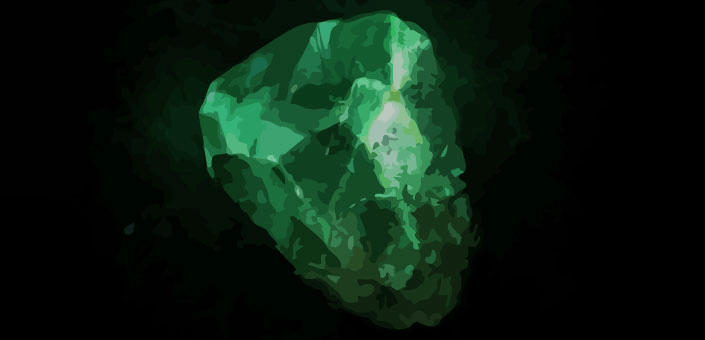
Brooke couldn’t believe the brilliant color of the gem in Pauline’s hand.
“What’s that?”
“It’s a gem I found in hell,” Pauline said sincerely.
“What are you talking about!” Brooke asked, flustered with surprise. “It’s impossible to go to hell.”
“We found a way,” Pauline said.
“We could be banished for this,” Brooke said.
“Don’t worry,” Pauline said. “It’s just a shiny rock. Besides, it’s you who wants to find a way to help humans.”
“Yes, but not like this.”
“We are at war with the forces of evil,” Pauline said. “Doing nothing…equals supporting them.”
“But…going down to hell.”
“We discovered that demons manipulate these gems to increase the influence of temptations,” Pauline said. “We are only giving humans a fair chance.
“I thought you would be capable of anything to help them. That’s what you said.”
“Yes, but I didn’t mean this,” said Brooke.
“It’s the only weapon we have against the forces of hell,” Pauline said. “Do you want to help humans or not?”
“Yes…”
“This is your chance to do it,” Pauline said. “Take the gem.”
Brooke opened her hand and received the gem.
“Come with me,” Pauline said , “I have something to show you.”
The two angels floated towards the large wooden gate at the side of the garden. Then Pauline opened it…Brooke noticed that the interior of the church was no longer like she remembered. “What kind of witchcraft is this?” she asked and dropped the gem from her hand.
Immediately, the interior of the church returned to its original shape. Pauline took the gem from the ground. “Here, trust me.”
When they walked through the door, the illusion of the interior of the church became real. It was the first time Brooke had seen the secret rebel headquarters. “What is this place?”
“Here is where we fight to help humans,” Pauline said.
“Are we in hell?”
“No, hell is far worse,” Pauline said. “We are still in the city of angels. Welcome to Elysium, the secret rebel headquarters. From here we face the forces of evil.”
“But how?”
“Easy, we use the power of these gems,” Pauline said, pulling a gem from her bag. Then she placed it on her chest and a cloud of smoke completely surrounded her.
Brooke took a step back, surprised by the transformation Pauline was undergoing. Little by little the smoke vanished, leaving behind a being that stopped looking like an angel. Her white dress fell to the floor and Pauline’s white skin completely changed color.
Brooke couldn’t believe what she was seeing. The appearance of the angel with whom she entered Elysium was demonic. “Get away from me.”
“I’m still in control,” Pauline said. “We learned to use the gems of hell.”
“But your appearance…”
Pauline took the gem off her chest and immediately returned to its natural state. “Transformations are temporary, they allow us to make better use of our celestial powers. Give it a try.”
“What!” Brooke said. “Do you want me to put this on my chest?”
“Give it a try,” Pauline said. “You can always turn back into an angel.”
Brooke opened her hand to see the red gem glow. I can take it off after trying, she thought. Then she placed the gem on her chest and felt a force penetrate her…creating pain and pleasure.
A cloud of smoke covered her as she felt her skin become rough and her muscles tighten. Brooke felt her body grow slightly, as a surprising force supported her spine. Four arms came out from her sides, she immediately had control over them. Then she noticed that the skin on her hands had hardened and her delicate nails were now dark claws.
At the end of her transformation, Brooke looked up to experience what was happening. Pauline had placed the gem back in the middle of her chest, but she was now beautiful. Brooke managed to appreciate the beauty of the gray skin, the black wings, and the gleam of the green gem on Pauline’s chest.
Brooke looked down and found her red gem shining.
“Try using your angelic powers,” Pauline said.
Brooke paused. I’ll try to use prayer to see what happens, she thought. But instead of floating while a white light shone around her, Brooke noticed a red fire begin to grow between her palms. She immediately pushed it away from her and saw the fire crash against a wall. “Amazing.”
“You’re getting used to it,” Pauline said. “Follow me, let’s put your powers to the test.”
Brooke walked through Elysium, appreciating the beauty she could now admire. The place still looked like the inside of the church, only its walls were black and it was decorated with beautiful gems of different colors. The place was full of weapons and tools, all neatly arranged on shelves.
The angels that Brooke was able to observe were also transformed. All the transformations were unique. Each one was more surprising than the last. What powers will they have? Brooke wondered.
“Brooke, I would like you to meet Dindel,” Pauline said as she stopped.
Dindel’s skin was red and a blue light floated over the palm of one of his hands. “It’s my pleasure,” she said with a bow, and the blue fire died away.
“We’d like to use one of your portals,” Pauline said before Brooke could speak.
“Right away,” Dindel said and a flame began to grow in her hands. Then she dropped the blue fire.
Brooke watched the flame grow.
“Come on,” said Pauline, “don’t be afraid.”
Brooke watched Pauline pass through the flame and disappear. Then she stopped to analyse the situation.
“Move, I can’t keep it open for long,” Dindel said.
Brooke closed her eyes and stepped through the portal. Upon entering the temperature changed dramatically. The heat should have been unbearable for an angel, but for some reason she felt good. After a moment she realized that Pauline held two black swords and was fighting against… Brooke couldn’t understand the creature.
The demon was big and full of muscles. Pauline looked small in comparison, yet the fight seemed to unfairly benefit the transformed angel.
“We have to destroy everything in our way,” Pauline said, before slamming her sword into the creature’s chest. “Don’t worry about them. They are immortal beings.”
Brooke saw the demon explode.
“The only way we can deal with them is by using your angelic powers,” Pauline said.
Brooke saw Pauline run and realizing that she had no other choice decided to follow. The rock cave was lit by torches. They ran until reaching a large room with dozens of demons.
Brooke was surprised and turned to look at Pauline, she winked at her and charged.
I have to use my angelic powers, Brooke thought. Then she used meditation and noticed that her concentration was focused on the demons around her. Balls of red fire glowed between the palms of her six hands. She instinctively slammed her hand against one of the demons and felt the fireball explode on impact.
Brooke continued to hit the demons with the fireball in her hands and the explosion knocked them to the ground. She also created fireballs by using prayer. Her angelic powers translate perfectly. She felt natural hiting and destroying the demons in her path.
Pauline was also using her angelic powers, and before long they were done with demons small and large, and continued through the cave.
“Good job,” Pauline said, running past Brooke. “You can use the rest to defend yourself.”
Brooke noted and they continued to destroy everything in their path.
Finally, after a battle that lasted longer than Brooke expected, they came to a large room with an altar. On top of it there was a large glowing purple gem.
Pauline extended her hand out to the side. “Stay here.”
Brooke looked from side to side and couldn’t find any demons. “Is this what we came for?”
“Hush,” Pauline said, and began to approach the gem.
Brooke stood still, watching Pauline approach the altar.
Pauline took the gem and turned… the place began to tremble. An immense creature appeared beside her. Pauline didn’t have time to react, the gem was snatched from her hand. “This belongs to me,” said the demon.
Brooke saw the demon glow, immediately used rest and was surrounded by a red light that protected her from the flames that erupted from the demon’s body.
Pauline couldn’t cover herself in time. The blow caused her to crash against the cave wall.
Brooke launched a fireball. The demon was struck in the chest. Nothing. Brooke took a step back as she formed another fireball in her hand.
“Your powers are useless against me,” the demon said, pointing at Brooke.
The two angels felt the force of the demon pull their gems off their chests. Brooke felt the unbearable heat of hell burn her bare skin. The pain forced her to fall to the ground. Then, she felt her body begin to fade….
…”Wake up,” Brooke heard from a distance. Eventually she was able to open her eyes. “Don’t worry, you’ll be fine.”
Brooke noticed the transformed angels surrounded her. One of them placed a green gem on her chest and her pain began to fade.
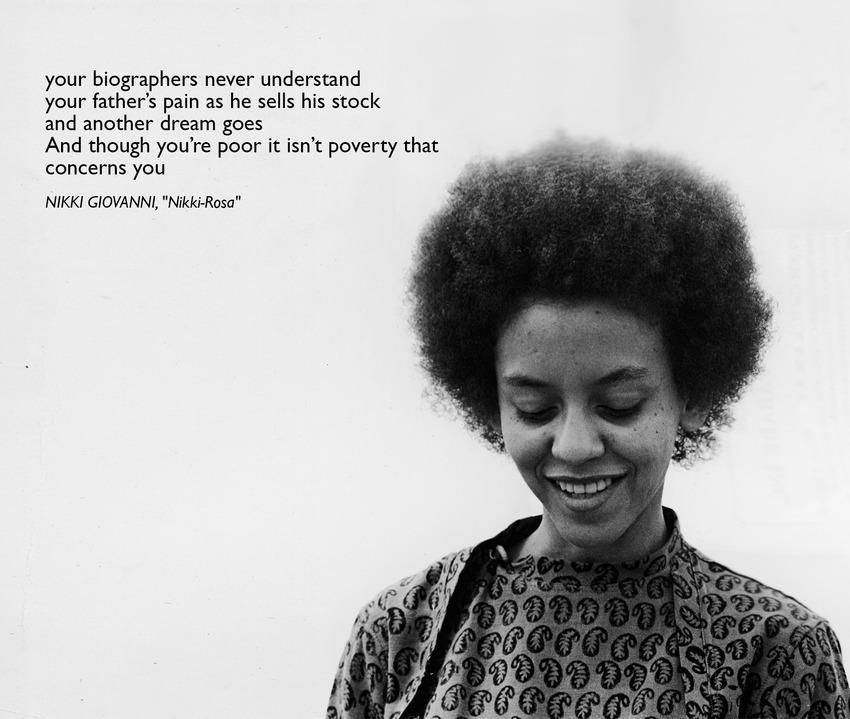
“There’s no life in safety,” said three-time National Association for the Advancement of Colored People (NAACP) Image Award winner Nikki Giovanni who began her own life on June 7, 1943, in Knoxville, Tennessee. She moved with her mother and sister to a small black suburb of Cincinnati, Ohio, although she traveled back to Knoxville during the summers to live with her grandparents.
In 1960, seventeen-year-old Giovanni entered Fisk University in Nashville, Tennessee at the beginning of the student protest movement. She was promptly dismissed from Fisk in her first semester for expressing “attitudes [which] did not fit those of a Fisk woman.” Giovanni returned to Fisk in 1964 and helped restart their chapter of the Student Non-violent Coordinating Committee (SNCC). In 1967, she graduated from the honors program with a bachelor’s degree in history. She then attended the University of Pennsylvania and Columbia College.
Nikki Giovanni was an active member of the Black Arts Movement during the late 1960s. In 1968, she published her first collection of poetry entitled Black Feeling Black Talk. Her second volume was released the following year. Giovanni’s poems encouraged both black solidarity and revolutionary action. In 1969, she gave birth to her only son Thomas Watson Giovanni. The same year the New York Times named Giovanni the “Princess of Black Poetry.” In 1970, she was “Woman of the Year” in Ebony magazine.
Giovanni is best known for her readings and spoken word poetry. Her first album Truth Is On Its Way, released in 1971, was a spoken-word album set to gospel music. It was awarded Best Spoken Word Album by the National Association of Radio and Television Announcers and was a top 100 album in 1971. A second spoken word recording Nikki Giovanni Poetry Collection was nominated for a Grammy in 2003. Giovanni has written 30 books of poetry.
In 1995, Giovanni was diagnosed with lung cancer. She refused to associate with negative outlooks for her future and fired one of her oncologists for setting a date for her death. She underwent surgery and lost a lung but is living, healthy as a cancer survivor.
Ms. Giovanni has also embraced many of the artists of the hip-hop community. She was especially impressed by the late Tupac Shakur and in honor of his life she tattooed “Thug Life” on her arm. Giovanni views hip-hop lyrics as inspiring and reflecting a modern day civil rights movement. She often compares its words to the poetry of the 1960s and the spirituals during slavery. Nikki Giovanni has been on the faculty of Virginia Tech University since 1989.
African American History, People
20th Century (1900-1999), Gender – Women, United States – Illinois, United States – Tennessee, United States – Pennsylvania, United States – Virginia, United States – Ohio, Civil Rights – SNCC, Occupation-Poet



James Mercer Langston Hughes was born February 1, 1901, in Joplin, Missouri. Hughes’s birth year was revised from 1902 to 1901 after new research from 2018 uncovered that he had been born a year earlier. His parents divorced when he was a young child, and his father moved to Mexico. He was raised by his grandmother until he was thirteen, when he moved to Lincoln, Illinois, to live with his mother and her husband, before the family eventually settled in Cleveland, Ohio. It was in Lincoln that Hughes began writing poetry. After graduating from high school, he spent a year in Mexico followed by a year at Columbia University in New York City. During this time, he worked as an assistant cook, launderer, and busboy. He also travelled to Africa and Europe working as a seaman. In November 1924, he moved to Washington, D.C. Hughes’s first book of poetry, The Weary Blues, (Knopf, 1926) was published by Alfred A. Knopf in 1926 with an introduction by Harlem Renaissance arts patron Carl Van Vechten. Criticism of the book from the time varied, with some praising the arrival of a significant new voice in poetry, while others dismissed Hughes’s debut collection. He finished his college education at Lincoln University in Pennsylvania three years later. In 1930 his first novel, Not Without Laughter (Knopf, 1930), won the Harmon gold medal for literature.
Hughes, who claimed Paul Laurence Dunbar, Carl Sandburg, and Walt Whitman as his primary influences, is particularly known for his insightful portrayals of black life in America from the twenties through the sixties. He wrote novels, short stories, plays, and poetry, and is also known for his engagement with the world of jazz and the influence it had on his writing, as in his book-length poem Montage of a Dream Deferred (Holt, 1951). His life and work were enormously important in shaping the artistic contributions of the Harlem Renaissance of the 1920s. Unlike other notable black poets of the period such as Claude McKay, Jean Toomer, and Countee Cullen, Hughes refused to differentiate between his personal experience and the common experience of black America. He wanted to tell the stories of his people in ways that reflected their actual culture, including their love of music, laughter, and language itself alongside their suffering.
The critic Donald B. Gibson noted in the introduction to Modern Black Poets: A Collection of Critical Essays (Prentice Hall, 1973) that Hughes “differed from most of his predecessors among black poets… in that he addressed his poetry to the people, specifically to black people. During the twenties when most American poets were turning inward, writing obscure and esoteric poetry to an ever decreasing audience of readers, Hughes was turning outward, using language and themes, attitudes and ideas familiar to anyone who had the ability simply to read… Until the time of his death, he spread his message humorously—though always seriously—to audiences throughout the country, having read his poetry to more people (possibly) than any other American poet.”
In addition to leaving us a large body of poetic work, Hughes wrote eleven plays and countless works of prose, including the well-known “Simple” books: Simple Speaks His Mind (Simon & Schuster, 1950); Simple Stakes a Claim (Rinehart, 1957); Simple Takes a Wife (Simon & Schuster, 1953); and Simple’s Uncle Sam (Hill and Wang, 1965). He edited the anthologies The Poetry of the Negro and The Book of Negro Folklore, wrote an acclaimed autobiography, The Big Sea (Knopf, 1940), and cowrote the play Mule Bone (HarperCollins, 1991) with Zora Neale Hurston.
Langston Hughes died of complications from prostate cancer on May 22, 1967, in New York City. In his memory, his residence at 20 East 127th Street in Harlem has been given landmark status by the New York City Preservation Commission, and East 127th Street has been renamed “Langston Hughes Place.”
Langston Hughes – 1901-1967
Hold fast to dreams
For if dreams die
Life is a broken-winged bird
That cannot fly.
Hold fast to dreams
For when dreams go
Life is a barren field
Frozen with snow.
 HPS Magazine