Faith Ringgold

Who Is Faith Ringgold?

While working as an art teacher in public schools, Faith Ringgold began a series of paintings called American People, which portrayed the civil rights movement from a female perspective. In the 1970s, she created African-style masks, painted political posters and actively sought the racial integration of the New York art world. During the 1980s, she began a series of quilts that are among her best-known works, and she later embarked on a successful career as a children’s book author and illustrator.

Renaissance

Faith Ringgold was born Faith Will Jones was born on October 8, 1930, in the Harlem neighborhood of New York City. She was the youngest of three children born to Andrew and Willi Jones, who raised their children during the Harlem Renaissance and exposed them to all of its cultural offerings. As she suffered from asthma as a young girl, Ringgold spent a great deal of time at home with her mother, a fashion designer who taught her to sew and work creatively with fabrics.

Throughout her grammar and high school years, Ringgold also developed an interest in art, and by the time she graduated became intent on turning her interest into a career. Enrolling at the City College of New York in 1950, she wound up studying art education when the liberal arts department denied her application. That same year, she married musician Robert Wallace. In 1952, they had two daughters, one born in January and one born in December. Faith and Robert would divorce several years later, when he developed a heroin addiction that would eventually lead to his death.

American People

After receiving her B.S. in Fine Art and Education in 1955, Ringgold spent the latter half of the decade juggling several different roles. While looking after her children, she taught art in the public school system and also enrolled in a graduate studies program at City College. Ringgold began developing her own art, which at this time was fairly conventional. Ringgold received her M.A. in art in 1959 and later toured Europe, visiting many of its finest museums.

The early 1960s would prove to be a pivotal period for Ringgold. She married Burdette Ringgold on May 19, 1962 and also embarked on creating a series of paintings — American People — that today rank among her most important work. Centered around themes from the civil rights movement, paintings such as NeighborsDie and The Flag Is Bleeding all capture the racial tensions of the era. Ringgold’s first solo gallery show in 1967 featured the American People series.

New Directions 

Early into the 1970s, Ringgold’s art took a new direction. She was deeply affected by her visit the Rijksmuseum in Amsterdam and its collection of Tibetan thangka paintings in particular. Upon returning to New York, Ringgold began to incorporate similar elements in her work, painting with acrylic on canvases with fabric borders and creating cloth dolls and soft sculptures, including Wilt, which depicted basketball legend Wilt Chamberlain

After leaving her teaching job in 1973, Ringgold was free to focus on her art more. She began to pursue working in other mediums. She first branched out with a collection of portrait sculptures called The Harlem Series and then she created African-influenced masks that were included in performance pieces. During this period she also made posters in support of the Black Panthers and activist Angela Davis.

Quilts

After attempting unsuccessfully to have her autobiography published, at the turn of the decade Ringgold discovered a new way to tell her story. Once more drawing her inspiration from Tibetan art, and in honor of her mother’s early influence, Ringgold began a series of quilts that are perhaps her best-known work. She assembled the first quilt, Echoes of Harlem in 1980 (a year before her mother passed away) and went on to make numerous others, eventually incorporating text as well. Among her narrative quilts are Who’s Afraid of Aunt Jemima (1983), the Michael Jackson tribute Who’s Bad? (1988) and her most famous offering, Tar Beach (Part 1 from the Woman on the Bridge series (1988), which is now part the Guggenheim Museum’s permanent collection.

Later Life and Career

Meanwhile, Ringgold had become a professor of art at the University of California at San Diego, where she taught until 2002. Displaying yet more talent, beginning in the 1990s, Ringgold embarked on a literary career, publishing the children’s book Tar Beach, which she adapted from her quilt of the same name in 1991. In 1995, she published her memoir, We Flew over the Bridge; she has now written and illustrated more than 15 other children’s books.

In recognition of her contributions as an artist and activist, Ringgold has received countless honors, including a National Endowment for the Arts Award, a Guggenheim Fellowship for painting and an NAACP Image Award. Her work continues to be exhibited in major museums around the world.

AuthorBiography.com Editors

Website Name

The Biography.com website

What is Monkeypox?

Photo by Markus Spiske on Pexels.com

Monkeypox is a rare disease that is caused by infection with monkeypox virus. Monkeypox virus belongs to the Orthopoxvirus genus in the family Poxviridae. The Orthopoxvirus genus also includes variola virus (which causes smallpox), vaccinia virus (used in the smallpox vaccine), and cowpox virus.

Monkeypox was first discovered in 1958 when two outbreaks of a pox-like disease occurred in colonies of monkeys kept for research, hence the name ‘monkeypox.’ The first human case of monkeypox was recorded in 1970 in the Democratic Republic of the Congo (DRC) during a period of intensified effort to eliminate smallpox. Since then, monkeypox has been reported in people in several other central and western African countries: Cameroon, Central African Republic, Cote d’Ivoire, Democratic Republic of the Congo, Gabon, Liberia, Nigeria, Republic of the Congo, and Sierra Leone. The majority of infections are in Democratic Republic of the Congo.

Monkeypox cases in people have occurred outside of Africa linked to international travel or imported animals, including cases in the United States, as well as Israel, Singapore, and the United Kingdom.

The natural reservoir of monkeypox remains unknown. However, African rodents and non-human primates (like monkeys) may harbor the virus and infect people.

Mental Health

What types are there?

There are many different mental health problems. Some of them have similar symptoms, so you may experience the symptoms of more than one mental health problem, or be given several diagnoses at once. Or you might not have any particular diagnosis, but still be finding things very difficult. Everyone’s experience is different and can change at different times.

This page provides a brief description of a few mental health problems, and explains where you can find more information on them. Our A–Z of mental health has information on many more topics not listed here.

Depression

Depression is a feeling of low mood that lasts for a long time and affects your everyday life. It can make you feel hopeless, despairing, guilty, worthless, unmotivated and exhausted. It can affect your self-esteem, sleep, appetite, sex drive and your physical health.

In its mildest form, depression doesn’t stop you leading a normal life, but it makes everything harder to do and seem less worthwhile. At its most severe, depression can make you feel suicidal, and be life-threatening.

Some types occur during or after pregnancy (antenatal and postnatal depression), or may come back each year around the same time (seasonal affective disorder).

To find out more see our pages on:

Anxiety problems

Anxiety is what we feel when we are worried, tense or afraid – particularly about things that are about to happen, or which we think could happen in the future.

Occasional anxiety is a normal human experience. But if your feelings of anxiety are very strong, or last for a long time, they can be overwhelming. You might also experience physical symptoms such as sleep problems and panic attacks.

You might be diagnosed with a particular anxiety disorder, such as generalised anxiety disorder (GAD), social anxiety (social phobia), panic disorder or post-traumatic stress disorder (PTSD). But it’s also possible to experience problems with anxiety without having a specific diagnosis.

The physical effects of anxiety

As part of our #mentalhealthselfie series, Alex vlogs on the powerful physical impact his anxiety had on his body.

Phobias

A phobia is an extreme form of fear or anxiety triggered by a particular situation (such as going outside) or object (such as spiders), even when it’s very unlikely to be dangerous.

A fear becomes a phobia if the fear is out of proportion to the danger, it lasts for more than six months, and has a significant impact on how you live your day-to-day life.

Eating problems

Eating problems are not just about food. They can be about difficult things and painful feelings which you may be finding hard to face or resolve. Lots of people think that if you have an eating problem you will be over- or underweight, and that being a certain weight is always associated with a specific eating problem, but this is a myth. Anyone, regardless of age, gender or weight, can be affected by eating problems.

The most common eating disorder diagnoses are anorexia, bulimia, binge eating disorder, and other specified feeding or eating disorder (OSFED). But it’s also possible to have a very difficult relationship with food and not fit the criteria for any specific diagnosis.

Schizophrenia

Views on schizophrenia have changed over the years. Lots of people question whether it’s really a distinct condition, or actually a few different conditions that overlap. But you may still be given this diagnosis if you experience symptoms such as:

  • psychosis (such as hallucinations or delusions)
  • disorganised thinking and speech
  • feeling disconnected from your feelings
  • difficulty concentrating
  • wanting to avoid people
  • a lack of interest in things
  • not wanting to look after yourself.

Because psychiatric experts disagree about what schizophrenia is, some people argue that this term shouldn’t be used at all. Others think the name of the condition doesn’t matter, and prefer to just focus on helping you manage your symptoms and meeting your individual needs.

Obsessive-compulsive disorder (OCD)

Obsessive-compulsive disorder is a type of anxiety disorder. The term is often misused in daily conversation – for example, you might hear people talk about being ‘a bit OCD’, if they like things to be neat and tidy. But the reality of this disorder is a lot more complex and serious.

OCD has two main parts: obsessions (unwelcome thoughts, images, urges, worries or doubts that repeatedly appear in your mind; and compulsions (repetitive activities that you feel you have to do to reduce the anxiety caused by the obsession).

Personality disorders

Personality disorder is a type of mental health problem where your attitudes, beliefs and behaviours cause you longstanding problems in your life. If you have this diagnosis it doesn’t mean that you’re fundamentally different from other people – but you may regularly experience difficulties with how you think about yourself and others, and find it very difficult to change these unwanted patterns.

There are several different categories and types of personality disorder, but most people who are diagnosed with a particular personality disorder don’t fit any single category very clearly or consistently. Also, the term ‘personality disorder’ can sound very judgemental.

Because of this it is a particularly controversial diagnosis. Some psychiatrists disagree with using it. And many people who are given this label find it more helpful to explain their experiences in other ways.

Bipolar disorder

Bipolar disorder (once called manic depression) mainly affects your mood. With this diagnosis you are likely to have times when you experience: manic or hypomanic episodes (feeling high); depressive episodes (feeling low); and potentially some psychotic symptoms.

Everyone has variations in their mood, but in bipolar disorder these swings can feel very extreme and have a big impact on your life. In between, you might have stable times where you experience fewer symptoms.

What causes mental health problems?

Mental health problems can have a wide range of causes. It’s likely that for many people there is a complicated combination of factors – although different people may be more deeply affected by certain things than others.

For example, the following factors could potentially result in a period of poor mental health:

  • childhood abuse, trauma, or neglect
  • social isolation or loneliness
  • experiencing discrimination and stigma, including racism
  • social disadvantage, poverty or debt
  • bereavement (losing someone close to you)
  • severe or long-term stress
  • having a long-term physical health condition
  • unemployment or losing your job
  • homelessness or poor housing
  • being a long-term carer for someone
  • drug and alcohol misuse
  • domestic violence, bullying or other abuse as an adult
  • significant trauma as an adult, such as military combat, being involved in a serious incident in which you feared for your life, or being the victim of a violent crime
  • physical causes – for example, a head injury or a neurological condition such as epilepsy can have an impact on your behaviour and mood. (It’s important to rule out potential physical causes before seeking further treatment for a mental health problem).

Although lifestyle factors including work, diet, drugs and lack of sleep can all affect your mental health, if you experience a mental health problem there are usually other factors as well.

“My depression seems to flare up during times when I am stressed and isolated from other people.”

Do mental health problems run in families?

Research suggests that some mental health problems may run in families. For example, if you have a parent with schizophrenia, you are more likely to develop schizophrenia yourself. But no one knows if this is because of our genes or because of other factors, such as the environment we grow up in, or the ways of thinking, coping and behaving that we may learn from our parents.

Although the development of some mental health problems may be influenced by our genes, researchers haven’t found any specific genes that definitely cause mental health problems.

And many people who experience a mental health problem don’t have any parents, children or other relatives with the same condition.

Is brain chemistry a factor?

The human brain is extremely complicated. Some research suggests that mental health problems may be linked to a variation in certain brain chemicals (such as serotonin and dopamine), but no one really understands how or why. Arguments that someone’s brain chemistry is the cause of mental health problems are very weak.

But even though there’s no strong evidence to say that any mental health problems are caused by a chemical imbalance in our brains, you might find some people still use brain chemistry to explain them.

Reasons for this might include:

  • Some psychiatric medications work by acting on chemicals in the brain, and there’s lots of evidence to show that medication can be effective in treating some symptoms of mental health problems (although drugs don’t work the same way for everyone).
  • Mental health problems can feel very personal and be hard to understand, so the idea that there could be a distinct physical cause for difficult thoughts, feelings and behaviours might make it feel easier to talk openly about your experiences and ask for help.

It’s important to remember that just because we may not know exactly what causes someone to experience a mental health problem, this doesn’t mean that it is any less serious than any other illness, any less deserving of recognition and treatment, or any easier to recover from.

Does Interior Design Have a Gender Problem?

Yes, it does, and it may not be what you think…

Look around the room at any interior design industry event and you will see a sea of mostly female faces. It certainly appears that the industry skews largely toward women, and that is borne out by statistics. According to Data USA, the percentage of women awarded interior design degrees within the five largest undergraduate programs in the country was 89.7 percent in 2016. The National Center for Education Statistics (NCES) puts the number of female graduates nationwide even higher, reporting 93.6 percent in 2018.

So the question you might ask is “Where are the men?”

In contrast, the speakers, panelists, and awardees at those same industry events trend much more toward being male. For example:

• Over the past 40 years, 65 percentof the Contract Designer of the Year winners have been male.

• Over the past 30 years, 75 percent of the Interior Design Hall of Fame members have been male.

• While ASID and IIDA fellows are a little more than half female, they do not mirror the percentage of women in the profession.

• Forty-three percent of presenters/panel participants at NeoCon 2019 were male. (Interestingly, most panels were largely female, and most single presenters were male. That could be the topic for another essay!)

What about firm leadership? There don’t appear to be any statistics out there right now, so I did some old-fashioned counting, looking at 11 of the largest interior design firms’ websites (after eliminating other disciplines such as architecture, planning, and support).

Thirty-three percent of these large firms’ partners or principals are female; 67 percent are male. The statistics are almost exactly the mirror image of the percentages of women and men in the profession.

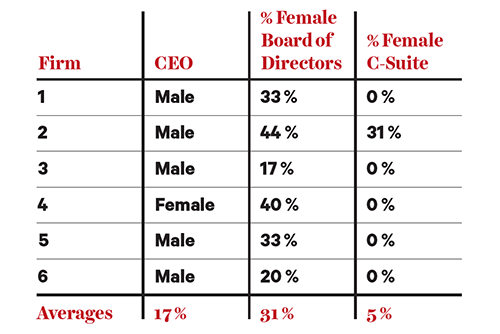
In order to get a snapshot of the makeup of leadership for product and manufacturing companies, I looked at six of the largest furniture companies that are publicly traded (so their leadership information is available online). The numbers are even worse:

Of the six companies, only one had a female CEO, and that firm didn’t have any other women in the C-suite. The percentage of C-suite women at the six companies was 5 percent.

An industry that starts off as approximately 90 percent female ends up with far fewer women as leaders. This differs from architectural practice, which had a much smaller pipeline of women entering the profession and only recently has reached a graduation rate approaching parity at 42 percent female, according to the National Architectural Accrediting Board. As mentioned above, there is a much larger percentage of women starting out in the interior design profession, making the drop-off in percentage of women holding leadership positions even more striking. What happens to all that talent? Do women stall out in midcareer, never advancing beyond midlevel positions? Do they drop out, and if so, why? (The fact that the graduation rate is 90 percent female but the industry as a whole is only 70 percent female seems to say a lot of them leave.) Do they form their own (largely residential) firms? Or do they do something else entirely?

At the moment, there are apparently no quantitative statistics and no qualitative surveys. This is in contrast to the situation in architecture; after a big ruckus and the #MeToo movement, the AIA now collects gender information for its members. It also has sponsored large-scale detailed studies such as the latest Equity by Design survey, which seeks to find out what happens to architecture graduates (male and female) in mid- and late career and why. (Its most recent survey covered 14,000 respondents.)

If in fact women are not making it into leadership positions, understanding the reasons why would help to address the issue and level the playing field.* What can be done?

The first goal would be to establish a baseline of numbers, thus confirming (or refuting) that there is a gender imbalance, one that is clearly not a pipeline issue. The second goal would be to try to parse out what happens to women as they move through the trajectory of their careers. The industry starts out with 90 percent women graduates, dropping down to about 70 percent of practitioners and vendors who actually stay in the field, dropping down again to about 30 percent of actual leaders of firms, and dropping even further to less than 20 percent of leaders of product companies.

Only after we understand through hard data whether there are impediments preventing women from making it to the top of the profession and, if so, what is causing them can there be a meaningful and impactful effort to make sure that there will be fairness and equity for all who enter the profession, regardless of gender.

*For the purpose of simplicity, I have not addressed the obstacles faced by both men and women of color or nonbinary gender here. These are factors that almost certainly would affect career trajectories and should be included in any surveys.

Joan Blumenfeld, Contract magazine’s 2018 Legend, is a design principal at Perkins and Will, a global architecture and interiors firm. Over the past 20 years she has been committed to achieving gender equity across all aspects of the design and construction business, as well as being an active advocate for building better and healthier interiors, buildings, and communities. Her widely published and award-winning work is notable for incorporating socially responsible principles of designing for health and sustainability.

Resource from: Contractdesign.com

35 Crucial Disability Statistics & Facts to Know in 2022

Photo by SHVETS production on Pexels.com

By Aleksandar Hrubenja

Medically Reviewed by Dusan Goljic, PharmD

March 26, 2021

More than one billion people are living with some form of disability. Despite such prevalence, the world is still treating them poorly. Our team urges everyone reading this article to learn more about our students, colleagues, friends, family, and partners with the latest disability statistics. Acquaint yourself with this thoroughly compiled data to pave the way for a more inclusive and accessible future.

10 Most Important Disability Statistics for 2022

  • In developing countries, around 90% of children with disabilities don’t go to school.
  • There are three major risk factors for people with disabilities during the COVID-19 pandemic.
  • Around 15% of the world’s population lives with some form of disability.
  • Native Americans have the highest prevalence of disability—18.1%.
  • 7.1 million students receive special education services, as per children with disabilities statistics.
  • West Virginia has the highest rate of people with disabilities—19.8%.
  • About 30% of children with disabilities are denied enrollment at their local schools.
  • People with hearing disabilities have the highest annual earnings—$48,500.
  • PTSD disability rates show veterans can get a 50% PTSD disability rating.
  • Rhode Island reports the highest percentage of people receiving Social Security Disability benefits.

Disability Statistics Worldwide

The section below covers everything there is to know about disability worldwide—from the number of people with disabilities to risk factors that make them more vulnerable in the ongoing pandemic. For that and much more, keep reading.

1. Around 15% of the world’s population lives with some form of disability.

(WHO)

The percentage of the population on disability translates to an astounding one billion people worldwide. Of them, up to 190 million people over the age of 15 (3.8%) live with a significant disability. Generally, the number of people with disabilities is growing, driven by the surge in chronic health conditions and the increase of aging populations.

2. Disability is much more prevalent among people with lower incomes.

(WHO) (CDC)

Disability statistics reveal that an overwhelming half of people with disabilities cannot afford healthcare. Transportation is yet another reason why many people do not receive much-needed healthcare.

3. Germany, France, and Japan are some of the countries with the best disability benefits.

(The Guardian)

These countries offer some of the best disability benefits, according to disability statistics by country. Those with a disability in Germany who cannot work for more than three hours a day are eligible for a disability pension, provided they have contributed to a social security scheme for a minimum of five years. In France, a caregiver is given around $1,300 per month to assist those who can’t work. In Japan, people receive generous benefits and discounts on public transportation and telecom fees.

4. In developing countries, around 90% of children with disabilities don’t go to school.

(UNESCO)

Child disability statistics show that over 90% of children in developing countries with disabilities do not go to school. Another critical point is that students with disabilities are more likely to become victims of violence.

5. In the US, 21.1% of people living with disabilities smoke, according to statistics on disability.

(CDC)

In the US, almost a quarter of adults with disabilities smoke, compared with 13.3% of adults without disabilities. As smoking puts one at a high risk of smoking-related diseases and death, it is of utmost importance that such a high prevalence of smokers among people with disabilities is addressed.

6. Stroke reduces mobility in more than 50% of stroke survivors aged 65 and over.

(CDC)

According to stroke disability statistics, stroke is one of the leading causes of severe and long-term disability. In a nutshell, it reduces mobility in more than half of the stroke survivors aged 65 and over. Note that, every year, over 795,000 Americans have a stroke.

7. There are three major risk factors for people with disabilities during the COVID-19 pandemic.

(WHO)

Disability statistics uncover the major risk factors. The first one is the risk of getting infected, of course. Then, there is the risk of developing severe symptoms and dying from COVID-19. The third risk factor is having poorer health for the duration of the pandemic or afterward, regardless of whether they had the virus or not.

8. Of all COVID-19 deaths from March to July 2020 in the UK, six in ten were people with disabilities.

(ONS)

According to the UK disability stats, people with disabilities are disproportionately affected by COVID-19, totaling 59% of all deaths March–June 2020. In comparison, the number from the 2011 Census stood at 16%.

Disability Statistics in America

More than 10% of Americans live with a disability, with Native Americans recording the highest disability prevalence. Read on to find out more about the reality of people with disabilities in the US.

9. West Virginia has the highest number of people with disabilities— 19.8%. 

(Statista)

As far as the disability statistics by state are concerned, the three states with the highest number of people with disabilities are West Virginia, Kentucky, and Arkansas. As many as 19.8% of those living in West Virginia are people with disabilities. In comparison, the number stands at 17.8% in Kentucky and 17.5% in Arkansas.

10. As of 2019, around 13.2% of people in the US were living with a disability.

(Annual Report)

According to the 2019 disability statistics annual report, 43,227,000 Americans were living with some form of disability. That translates to 13.2% of the US population, marking a slight increase from 2018 when the number was 13.1%

11. Native Americans have the highest prevalence of disability—18.1%.

(Cornell University)

According to US disability statistics, Native Americans account for 18.1% of all people with disabilities, followed by Blacks at 13.6%, Whites at 10.6%, and Asians at 4.4%. Other races account for 9.5% of all people with disabilities.

12. Ambulatory disability is the most common type of disability in the US, affecting 6.6% of Americans. 

(Statista)

The disability is more common in older people aged 65 and over, with around 22.5% of them having it. At the same time, 5.1% of people aged 18–64 have this disability. It is said to be most common in West Virginia, Alabama, Arkansas, and Kentucky.

13. 32.2 million Americans aged 18 and over have experienced vision loss.

(AFB)

It has been confirmed that approximately 13.7 million men and 18.5 million women have reported vision loss. Note that vision loss refers to both having trouble seeing and being blind, disability facts point out.

14. Almost one million people in the United States have multiple sclerosis.

(National MS Society)

According to multiple sclerosis disability statistics, nearly a million Americans have MS, double that estimated in an earlier study. Experts suggest that an increase in reported cases is due to a better understanding of the disease.

15. More women than men report a disability.

(Cornell University)

Statistics on disability rates reveal that disability affects people of all genders indiscriminately. Nearly 12.5% of men and 12.8% of women have some form of disability—a small gap of 0.3%.

16. Nearly 15.4 million Americans live with a cognitive disability, stats remark.

(ADSC)

Of 40.7 million Americans living with a disability, 15.4 million (37.8%) live with a cognitive disability. The District of Columbia has the highest number of people with cognitive disabilities—30.3%, while the lowest number has been recorded in Maine—11.8%

17. Chronic conditions associated with disability are most prevalent in the Mid-South. 

(American Action Forum)

According to stats on disability, the prevalence of chronic conditions associated with a disability (arthritis, cardiovascular issues, hypertension, etc.) is the highest in the South. Experts also predict that chronic disease will worsen significantly across all age groups.

18. The prevalence of cognitive disability is the highest among middle-aged people—11.9%.

(CDC)

CDC disability statistics affirm that young adults (18–44 years) and middle-aged adults (45–64 years) have the highest prevalence of cognitive disability—10.6% and 11.9%, respectively. That said, prevalences of any disability, independent living, mobility, and hearing disabilities are much higher among older adults aged 65 and over.

19. Tennessee includes people aged 18–74 who are unable to live independently in Phase 1a. 

(KFF)

With the disability rate by state varying significantly, some states include people with disabilities in Phase 1a while others do so in Phase 1c. Read on to find out more.

Oregon is yet another state that prioritizes people with disabilities in its COVID-19 vaccination plan. Namely, people with disabilities who receive services in their homes are included in Phase 1a, given the same priority as health care personnel and long-term care facility residents.

Maryland and Ohio include people with developmental disabilities in Phase 1b. In comparison, Nevada and Washington include people with disabilities in Phase 1c (limited to people with disabilities that prevent them from adopting protective measures in Washington).

Disability Statistics Concerning Education and Employment

Read on to discover how many Americans with disabilities are unemployed and whether they are actively looking for jobs. You will also learn how many students are diagnosed with learning disabilities and why they are more anxious.

20. 2020 marked the increase of the unemployment rates for both persons with and without disabilities.

(BLS)

Disability employment statistics indicate that 17.9% of people with disabilities were employed in 2020, down from 19.3% in 2019. The US Bureau of Labor Statistics reported that the unemployment rates for people with disabilities increased from 2019. Namely, according to the US disability statistics of 2020, the rate increased to 12.6%. In comparison, the unemployment rate for persons without disabilities rose to 7.9% in 2020.

21. In the US, around 2.3 million students are diagnosed with a learning disability.

(NCES)

Of people receiving special education services in 2018–2019, 33% had specific learning disabilities. What’s more, learning disability statistics revealed that around 19% had speech or language impairment, and 15% had other health impairments.

22. Around 7.4% of all unemployed Americans with disabilities were actively looking for work in 2017.

(Cornell University)

At the same time, disability statistics reveal that the employment rate of people with disabilities aged 21–64 was 37.3%. What’s more, around 23.9% of working-age people with disabilities worked full-time for the whole year in 2017.

23. Students receiving special education services are more anxious.

(Assets)

Disability statistics point out that, compared with students without learning disabilities, students with them report greater anxiety, stress, and fear. It has been found that students are most stressed about exams, perceived importance of writing, math skills, and reading, etc.

24. In the US, people with a hearing disability have the highest employment rate.

(Statista)

Namely, the employment rate among people with hearing disabilities is 52%. In comparison, people with vision disabilities have a 44% employment rate, while it is 26% for people with cognitive disabilities.

Disability Discrimination Statistics and Facts

Read on to learn about discrimination Americans with disabilities face. The section below will also reveal how the US law protects people with disabilities. Without further ado, let’s dive right in!

25. As many as 25.9% of Americans with disabilities live in poverty.

(Statista)

According to disability statistics from 2019, over a quarter of people with disabilities live below the poverty line. Namely, 25.9% of people with disabilities lived in poverty, compared with 11.4% of people without disabilities.

26. An employer has to provide reasonable accommodation to an employee with a disability.

(EEOC)

Disability facts point out that US law requires an employer to provide reasonable accommodation to a job applicant or an employee with a disability. Otherwise, it will be considered a form of disability discrimination, and the employer will incur significant expenses and other difficulties.

27. In New Zealand, 30% of children with disabilities are denied enrollment at their local schools.

(IHC)

Those who do get enrolled lack support in the classroom and face bullying, children disability statistics remark. Parents claim that their children with disabilities are unable to attend school full-time because of an overwhelming lack of school resources and teacher aide hours.

28. 33.9% of autistic students are bullied, disability bullying statistics disclose.

(Pacer)

Roughly a third of all students with emotional and behavioral disorders and autistic students are bullied at school. That also includes almost a fifth of all children who have learning disabilities. Researchers have also discovered that students with disabilities worry more about school safety, being harassed or injured than students without disabilities. Following that, many students might look into online therapy sites or look for additional support elsewhere.

Disability Facts and Statistics on Social Benefits

Here, you will find out about the benefits, annual earnings, Social Security Disability Insurance, and health insurance coverage among people with disabilities.

29. In the US, people with hearing disabilities have the highest annual earnings—$48,500.

(Cornell University)

Disability facts suggest that annual income varies among people with disabilities. According to Cornell University, of all people with disabilities, those with hearing disabilities have the highest average yearly income. On average, they make $48,500 a year. In comparison, the annual earnings of people with cognitive disabilities stand at $35,400, on average.

30. Social Security Disability statistics show that $145 billion is spent on SSDI annual benefits.

(CBPP)

That makes up almost 4% of the federal budget. Notably, projections made before the pandemic had estimated that the SSDI trust fund would have to be restocked by 2065.

31. In the US, over 90% of working-age people with disabilities have health insurance.

(Cornell University)

In comparison, 87.6% of working-age people without disabilities are insured. Another finding of Cornell University suggests that people with vision disabilities have the lowest rate of coverage—87.5%, while the highest is marked in people with self-care disabilities—93.2%.

32. Rhode Island reports the highest number of people with a disability receiving SSD.

(Disability Statistics)

Social Security Disability statistics by state remark that Rhode Island (29.4%), Massachusetts (24.7%), Vermont (23.5%), and Maine (23.5%) have the highest numbers of people receiving disability benefits. The lowest rates were found in Utah (13.5%), Colorado (13.2%), and Montana (12.6%).

33. 7.1 million American students receive special education services.

(NCES)

Children with disabilities statistics point to the approximate number of students receiving special education services under the Individuals With Disabilities Education Act. In a nutshell, these services aim to adapt educatinl programs to these students’ needs and requirements.

34. 1.3 million Americans have rheumatoid arthritis, a disease that makes you eligible for SSD benefits.

(DEF)

Rheumatoid arthritis disability statistics break the news that over one million Americans live with this disease. Note that if you have rheumatoid arthritis and it affects your ability to work, you are eligible for SSD benefits.

35. PTSD disability rates show veterans can get a 50% PTSD disability rating.

(Military Benefits)

Even though there isn’t an automatic rating for any condition or an automatic disability rating for all veterans, it is possible to get a 50% PTSD disability rating.

That rating means that the veteran might experience a considerable productivity reduction at work due to speech difficulty, panic attacks, memory problems, or difficulty understanding complicated commands.

Conclusion

People with disabilities are often left unheard and unseen. While learning about disability rates is important, we urge allies reading this stats page to amplify the voices of people with disabilities, make sure they are heard and included. Finally, educate those without disabilities about the topic at hand by engaging in much-needed conversations about inclusivity and accessibility.

Global Warming

Photo by Pixabay on Pexels.com

Global warming usually refers to human-induced warming of the Earth system, whereas climate change can refer to natural or anthropogenic change. The two terms are often used interchangeably.

Causes of Climate Change

  • Heat-trapping Greenhouse Gases And The Earth’s Climate. …
  • Greenhouse Gases. …
  • Reflectivity or Absorption of the Sun’s Energy. …
  • Changes in the Earth’s Orbit and Rotation. …
  • Variations in Solar Activity. …
  • Changes in the Earth’s Reflectivity. …
  • Volcanic Activity.

What are the 4 effects of global warming?

Image result for global warming

Increased heat, drought and insect outbreaks, all linked to climate change, have increased wildfires. Declining water supplies, reduced agricultural yields, health impacts in cities due to heat, and flooding and erosion in coastal areas are additional concerns.

10 Climate Change Impacts That Will Affect Us All

  • Damage to your home. …
  • More expensive home insurance. …
  • Outdoor work could become unbearable. …
  • Higher electric bills and more blackouts. …
  • Rising taxes. …
  • More allergies and other health risks. …
  • Food will be more expensive and variety may suffer. …
  • Water quality could suffer

10 Ways to Stop Global Warming

  1. Change a light. Replacing one regular light bulb with a compact fluorescent light bulb will save 150 pounds of carbon dioxide a year.
  2. Drive less. …
  3. Recycle more. …
  4. Check your tires. …
  5. Use less hot water. …
  6. Avoid products with a lot of packaging. …
  7. Adjust your thermostat. …
  8. Plant a tree.

When did global warming start?

Image result

The instrumental temperature record shows the signal of rising temperatures emerged in the tropical ocean in about the 1950s. Today’s study uses the extra information captured in the proxy record to trace the start of the warming back a full 120 years, to the 1830s

Why do we need to stop global warming?

A warmer climate increases public health challenges like heat aggravated illnesses, increases in vector borne diseases, and decreased access to safe water and food. Cutting short-lived climate pollutants can slow the rate of warming and lower public health risks

Can global warming be stopped?

Yes. While we cannot stop global warming overnight, we can slow the rate and limit the amount of global warming by reducing human emissions of heat-trapping gases and soot (“black carbon”)

Who is causing damage to nature?

What’s causing it? The loss of ecosystems is caused mainly by changes in land and sea use, exploitation, climate change, pollution and the introduction of invasive species. Some things have a direct impact on nature, like the dumping of waste into the ocean. Other causes are indirect.

Chronic effects with Auto Autoimmune Disease During Covid

Photo by Sora Shimazaki on Pexels.com

Autoimmune diseases can affect many types of tissues and nearly any organ in your body. They may cause a variety of symptoms including pain, tiredness (fatigue), rashes, nausea, headaches, dizziness and more.When you have an autoimmune disorder, your immune system does not distinguish between healthy tissue and potentially harmful antigens. As a result, the body sets off a reaction that destroys normal tissues. The exact cause of autoimmune disorders is unknown.

What Are Autoimmune Disorders?

  • Rheumatoid arthritis. …
  • Systemic lupus erythematosus (lupus). …
  • Inflammatory bowel disease (IBD). …
  • Multiple sclerosis (MS). …
  • Type 1 diabetes mellitus. …
  • Guillain-Barre syndrome. …
  • Chronic inflammatory demyelinating polyneuropathy. …
  • Psoriasis.

We’re all hearing that people with underlying conditions and immune deficiencies are more susceptible to COVID-19. It’s natural for people with autoimmune disease to wonder what this means for them. We sat down with two physician-researchers from Benaroya Research Institute at Virginia Mason — President  Jane Buckner, M.D. and Principal Investigator James Lord, M.D., Ph.D. — to get their input on some of the most common questions that people with autoimmune disease are asking about COVID-19:

1. DOES HAVING AN AUTOIMMUNE DISEASE INCREASE MY RISK OF GETTING COVID-19?

There is no clear connection so far between autoimmunity and COVID-19.  Autoimmunity is different from immunodeficiency (in which the immune system is too weak to fight off infections). If anything, autoimmunity makes the immune system relatively over-active, often causing it to attack the body. That doesn’t mean an autoimmune patient is necessarily better at fighting infections. An over-active immune system could help fight off the virus, but it also could cause unneeded inflammation.

2. DO IMMUNOSUPPRESSANTS / PREDNISONE INCREASE MY RISK OF GETTING COVID-19?

In most cases, it is better to stay on your medications to avoid a flare of your autoimmune disease. You should contact your doctor if you have concerns and before you make any changes in your medications.

We do not have a lot of information about immunosuppressants specifically in relation to COVID-19. But we do know that prednisone, in particular, is a major risk factor for many other infections — especially if your total daily dose exceeds 20 milligrams. This is true for all the “systemic steroids” (the ones that get into the blood and spread throughout the body), but not really a concern for steroids that are locally delivered. These local steroids include steroid skin creams (for rashes), steroid inhalers (for asthma), budesonide pills like Entocort or Uceris, and steroid suppositories or enemas for inflammatory bowel disease (IBD). 

Because taking Prednisone or other systemic steroids for months makes your body critically dependent upon them, you cannot rapidly stop them or you will get quite sick. If you have been taking Prednisone for more than a month, you should ask your doctor for specific instructions if you need to taper off the medication rather than try to just go “cold turkey” on your own.  

Other medications, such as methotrexate, azathioprine, mercaptopurine, and a class of drugs known as JAK inhibitors do suppress your body’s ability to fight viruses, and might make viral infections longer and more severe — but the effect is more modest than with steroids.

The new “biologic” drugs (recombinant proteins that require a shot or IV) are much more targeted and show different effects on infection. We know that anti-TNF agents (including infliximab, etanercept, adalimumab, golimumab and certolizumab , which are sold under the brand names Remicade, Inflectra, Renflexis, Enbrel, Humira, Simponi and Cimzia) increase the annual risk of a serious infection by about 1%, including influenza, a virus with similar symptoms to COVID-19. However, the impact of each type of biologic on COVID-19 may differ. In fact, one biologic drug (tocilizumab, which is sold as Actemra) is actually being studied as a treatment for severe cases of COVID-19.  

3. PEOPLE WITH “COMPROMISED IMMUNE SYSTEMS” ARE AT HIGHER RISK FOR COVID-19. WHAT DOES THAT MEAN? DO I HAVE A COMPROMISED IMMUNE SYSTEM?

There are a variety of reasons someone might have a compromised immune system. Here’s what we know.

As stated above, certain drugs used to treat autoimmunity and chronic inflammatory conditions can compromise the immune system. There are also diseases like HIV and inborn immunodeficiencies (common variable immunodeficiency, severe combined immunodeficiency) that can severely compromise the immune system. Conventional cancer chemotherapy and radiation severely impair the immune system, especially if someone recently had a stem cell transplant. Likewise, the anti-rejection drugs used to treat people with solid organ transplants severely compromise the immune system.  

More commonly, old age makes the immune system comparatively weak, but this varies a lot from person to person, so there is not a specific age when risk suddenly shoots up. We just know that older people are more vulnerable to infections in general and COVID-19 specifically.  

Pregnancy is also thought of as an immunosuppressed state. That’s because a mother’s immune system has to be tamped down so it accepts the father’s genes, which are in the baby and might be interpreted as being foreign agents that need to be attacked. However, at this point we do not know if pregnant women are at higher risk for COVID-19. A study done in China showed a good outcome for women infected in their last trimester, but this was a small study and does not address the impact of COVID-19 at earlier stages of pregnancy. As is always the case in pregnancy, we recommend being conservative and taking precautions to avoid contact with infected people.

4. CAN HYDROXYCHLOROQUINE HELP WITH COVID-19? WHAT IF I ALREADY TAKE HYDROXYCHLOROQUINE FOR LUPUS OR RHEUMATOID ARTHRITIS?

Hydroxychloroquine is a medication that rheumatologists prescribe to treat a number ofautoimmune conditions, such as rheumatoid arthritis and systemic lupus erythematosus (lupus). Despite early hope that it would help fight the pandemic, studies now show that hydroxychloroquine is not necessarily effective in treating the new coronavirus. People who are taking this medication for a disease such as lupus or RA should continue using the medication. Learn more about hydroxychloroquine in the time of COVID-19

5. IS THERE ANY DATA ON HOW THE CORONAVIRUS AFFECTS PEOPLE WITH AUTOIMMUNE DISEASE?

Since this is such a new virus, we do not have information on how it impacts people with autoimmune disease. BRI’s team is currently planning research on this and we will know more in the coming weeks and months as physicians and scientists around the world collect data. We are all working toward the goal of understanding how to predict who is at highest risk and how to protect them.

6. I HAVE AN AUTOIMMUNE DISEASE. SHOULD I CANCEL MY DOCTOR’S APPOINTMENTS?

That depends on why you need to see your doctor. Many clinics are offering remote services like telehealth for routine visits. That said, your doctor may want to see you in person, particularly if you have a new or very active health problem.

At this time when hospitals and physicians are busy with the care of COVID-19 patients, it makes sense to contact your clinic in advance to find out if they recommend that you come to your appointment or if they could postpone it or make it virtual.

7. I HAVE AN AUTOIMMUNE DISEASE. IS IT SAFE FOR ME TO LEAVE THE HOUSE?

The answer to this seems to change by the day and it’s important to listen to your local officials. You should retain social distance when you leave your home and to make sure you clean your hands after touching objects that may have been handled by other people. This is important not only for your health but also for the sake of everyone in our society. Our goal is to limit the spread of the infection and we all have a role in doing that.

8. WHAT SUPPLY OF PRESCRIPTION MEDICATION SHOULD I KEEP ON HAND (E.G. IN CASE OF QUARANTINE)? WHAT DO YOU ADVISE FOR PEOPLE WHO RECEIVE INFUSIONS?

The CDC is recommending a 30-day supply of self-administered drugs. We are still advising that people who must get their medication administered by a facility (like IV meds) come in on-schedule for each dose (unless they feel symptoms of COVID-19). Some insurance plans allow home infusions as an alternative to infusions in a facility, but it is unclear if this increases or decreases infection risk, as traveling infusion nurses and their equipment visit many households, some of which may be much higher risk than an infusion center.  

9. WHAT SHOULD MY IMMEDIATE FAMILY DO TO PROTECT ME / SHOULD THEY SELF-QUARANTINE?

Anyone who is  entering and exiting your house on a regular basis must practice good protective hygiene:

  • Wash hands for at least 20 seconds with soap and water when they arrive at your home
  • Stay six feet away from others in public
  • Use a barrier (like an antibacterial wipe) to touch common surfaces like door and sink handle
  • Avoid touching their own faces

Likewise, anyone in your home with a fever and/or other COVID-19 symptoms should be isolated as much as possible.  As shopping in actual stores has largely been replaced with mail-order, it is also not a bad idea to wash hands after retrieving and opening mail. 

8. I HAVE AN AUTOIMMUNE DISEASE. SHOULD I CANCEL MY DOCTOR’S APPOINTMENTS? IS IT SAFE TO GO TO A BLOOD DRAW?

That depends on why you need to see your doctor. Many clinics are offering remote services like telehealth for routine visits. That said, your doctor may want to see you in person, particularly if you have a new or very active health problem.

If you do need to go to an appointment or blood draw in person, we recommend the same sorts of precautions that are being recommended for any outing:

  • Wear a mask and perhaps disposable gloves
  • Wash or sanitize hands (or gloves) frequently
  • Keep your hands away from your face as much as possible 
  • Use elbows and wrists when possible to open doors, push elevator buttons, etc. 
  • If you have a fever or bad cough, stay home — lab work can probably wait until you feel better. 

There are also services that send visiting nurses to your home for a blood draw. If this isn’t convenient or if you don’t feel comfortable, don’t worry — visiting a clinic for a blood draw is just as safe, if not safer, than an outside nurse coming to your home.

9. I’M HESITANT TO CONTACT MY DOCTOR RIGHT NOW BECAUSE THEY’RE SO BUSY WITH COVID-19. IS IT OK TO CONTACT MY DOCTOR IF MY SYMPTOMS CHANGE, EVEN IF THE CHANGE IS MINOR?

Your threshold for contacting your doctor for health care should be no different now than it ever was. In fact, in response to the pandemic, virtual appointments are more accessible than ever. It may actually be unusually easy (and safe) to contact your doctor now.

Despite early concerns that healthcare professionals would be overwhelmed by the pandemic, this did not really happen in the United States outside of New York, and many specialties are now actually quite underutilized. Thus, unless your regular doctor is an infectious disease specialist or works in an intensive care unit, they probably have plenty of time to hear from you and help you. 

10. WHAT SUPPLY OF PRESCRIPTION MEDICATION SHOULD I KEEP ON HAND (E.G. IN CASE OF QUARANTINE)? WHAT DO YOU ADVISE FOR PEOPLE WHO RECEIVE INFUSIONS?

CDC is recommending a 30-day supply of self-administered drugs. We are still advising that people who must get their medication administered by a facility (like IV meds) come in on-schedule for each dose (unless they feel symptoms of COVID-19). Some insurance plans allow home infusions as an alternative to infusions in a facility, but it is unclear if this increases or decreases infection risk, as traveling infusion nurses and their equipment visit many households, some of which may be much higher risk than an infusion center.  

11. I’M GETTING MEDICATION SHIPPED TO ME. HOW DO I SANITIZE THE BOX AND ENSURE MAIL DOESN’T BRING GERMS INTO MY HOME?

First, viruses don’t generally survive for very long outside of the body, so if the mail or its contents have not been in contact with people for many days, there are probably not a lot of viable germs.

The highest risk is likely to be the external packaging, as that will have been in contact with people the most recently — but packages should not be able to aerosolize particles to cause a lung infection. Therefore, if you remove and discard the external packaging of your mail, and then wash your hands, you should be at pretty low risk. If you are really worried, you could expose your mail to a UV light for an hour before handling it or wipe it with bleach or alcohol. 

12. I’M FEELING STRESSED AND HAVING TROUBLE SLEEPING. WHAT CAN I DO?

Practice “good sleep hygiene.” Be very consistent, going to sleep at the same time every night and waking up at the same time every morning, not more than an hour or two after dawn at the latest. Set an alarm if you need it to maintain this consistency, even if you don’t have a schedule that requires it. Some other tips include:

  • Sleep while it’s dark and be awake while it’s light. Consequently, try to avoid napping during the day, even if you are really tired from having gotten so little sleep the night before. Save that precious sleepiness for the evening.
  • Reduce caffeine intake. Combating daytime fatigue with stimulants, like caffeine, will only make it harder to sleep at night. Limit any caffeine consumption to the morning.
  • Train your body that your bed is only for sleeping. Do not lie in bed to read or watch TV. In fact, if you toss and turn in bed trying unsuccessfully to fall asleep (or back to sleep), you should give up after about half an hour, get out of bed, and spend at least 15 minutes doing something else, like reading a book in another room, before going back to bed and trying to fall asleep again.
  • Avoid alcohol. It’s a terrible sleep aid. It usually only makes a person sleepy for the first hour or so after blood alcohol initially rises, and then paradoxically either makes it harder to sleep or makes sleep very shallow and low quality thereafter, resulting in increased fatigue the next day. 

Read more: Tips for Living with Autoimmune Disease During COVID-19: Managing Stress and Building Resilience

13. HOW CAN I KEEP MY IMMUNE SYSTEM AS STRONG AS POSSIBLE?

Most products that claim to “strengthen the immune system” do no such thing (particularly those promoted by unregulated, for-profit vitamin manufacturers), but you can certainly avoid things that would weaken it. Staying up late and getting too little sleep, or having a very erratic sleep schedule, makes the immune system weaker. Try to get to bed and wake up regularly, sleeping at night and being awake in daylight.

If you smoke, quit now. Smoking might weaken the immune system but definitely weakens the lungs, and is a clear risk factor for death in COVID-19. Similarly, marijuana use, especially smoked, is probably not helpful. Other illicit drugs and alcohol may or may not impair immunity, but they definitely impair judgement, and given how careful we now need to be, being impaired may itself be a bigger risk factor for COVID-19 than anything involving the immune system. 

14. HOW CAN I STAY ACTIVE AND HEALTHY WHILE I’M AT HOME? 

Jogging or walking alone has generally not been forbidden, but you certainly should keep your distance from others and stay inside if you are sick or unusually vulnerable. If you have a home with stairs, consider putting things you use regularly on different floor to force you to walk up and down many times a day. Floor exercises (sit-ups, push-ups etc.) are something that require no equipment, just willpower. A lot of exercise videos on streaming platforms have replaced group workouts and can be followed at home.  Track your exercise in a journal to see if you can make improvements. 

If you live in a complex with a shared gym, do NOT use it. Gym equipment surfaces are high risk for contamination.

Probably even more important than exercise is to avoid using food as entertainment. People eat when they’re bored, which means they gain weight. Weight gain has been associated with diabetes, and diabetes is another clear risk factor for severe effects in COVID-19. If you have diet-controlled diabetes or have been told that you have “metabolic syndrome,” you should be particularly vigilant about what you eat while in isolation. 

Part of the challenge is that fresh fruits and vegetables do not last, so our diets may move more towards carbohydrates and preserved or frozen foods, since we’re not going to grocery stores as often. Frozen vegetables, while not as great (or great-tasting) as fresh, are better than no vegetables, so stock up on these if you have the freezer space, and make them a central part of your meals. Avoid snacking between meals. If that’s too hard, try to snack on a plant. Carrots, apples, pickles, and dried fruits keep a long time without freezing, and are convenient to snack on without any prep time. What you do not want to do is open a bag of chips or a tub of ice cream in front of the TV. Before you know it, you will have eaten the whole container.  

Also, be careful with alcohol and other inebriants as a solution to boredom. It surprisingly easy to hurt your liver with alcohol when it is consumed on a daily basis for an extended period of time. If you were a weekend drinker before the pandemic, do not start treating every day as a weekend just because you are no longer going to work in person. 

Finally, maintain your psychological health. Try to stick to old patterns. If you used to set your alarm to go to work, keep doing it — don’t sleep in just because you can. Keep showering and grooming even though nobody new is going to see you. Get dressed every day, maybe even in your usual work clothes. 

If you are telecommuting, do it while sitting in a dedicated work space that won’t hurt your body. Maintain a consistent work schedule, with a specific time for lunch. Work a normal length day, if you can.  If it is allowed and you are well, take a walk, a bike ride or a drive at least once a day.  

Category: 

Living With A Disease

Tags: 

COVID-19CoronavirusNovel Coronavirusautoimmune disease

Burnout in the Medical Field, CNA & Nurses during Covid

Photo by Jonathan Borba on Pexels.com

Both long-stay nursing facilities and short stay post-acute skilled nursing facilities rely on the labor of 1.2 million health care personnel and support workers. Direct care workers such as licensed practical nurses, certified nursing assistants (CNAs), and personal care aides, typically provide most of the hands-on care in nursing homes, including assistance with bathing, dressing, and eating. Recruiting and retaining quality direct care staff has long been a challenge in nursing homes, and these problems have only been amplified by the pandemic. The purpose of this project was to study the impact of the COVID-19 pandemic on nursing homes with respect to these long-standing workforce challenges and to identify new federal, state, and facility-level policies and practices that have been implemented to address these challenges.

We found that nursing homes have grappled with how to retain adequate staffing while rapidly making operational changes to ensure the safety of workers and residents. At the same time, direct care workers are balancing concerns about their own safety, the well-being of the residents they care for, and their financial stability during the pandemic. The pandemic imposed greater demands on nursing home staff, such as new infection-prevention and control measures like screening, testing, and cohorting instituted to minimize transmission and contain the spread of the virus.

To maintain adequate staffing levels, federal and state government agencies, as well as nursing homes, altered their standard policies and practices to mitigate the impact of COVID-19 on the nursing home workforce. Licensing, credentialing, and training requirements were relaxed by federal and state agencies to facilitate the entry of new direct care staff into nursing homes and other health care facilities responding to increased needs. Human resources policies were revised by nursing homes to support workers who may be personally and financially impacted by COVID-19. Wages were increasing by nursing homes, state and local governments through hazard pay or weekly stipends; augmented non-wage benefits such as childcare, housing, transportation assistance, and food supports; and/or provided mental health support to help nursing home staff cope with the anxiety, grief, and fatigue they experience on the job as a result of COVID-19. Several federal initiatives were also designed to address the workforce challenges including: (1) an additional $5 billion in funding through the CARES Act to address critical needs in nursing homes; (2) rapid point-of-care diagnostic testing devices that will be distributed to nursing homes to enhance efforts to keep the virus from entering and spreading throughout nursing homes; and (3) onsite education and support to nursing homes experiencing outbreaks to help reduce transmission of COVID-19 spread among residents and staff.

This report was prepared under contract #HHSP233201500035I between HHS’s ASPE/BHDAP and Mathematica. For additional information about this subject, you can visit the BHDAP home page at https://aspe.hhs.gov/bhdap or contact the ASPE Project Officers, at HHS/ASPE/BHDAP, Room 424E, H.H. Humphrey Building, 200 Independence Avenue, S.W., Washington, D.C., 20201; Marie.Squillace@hhs.govHelen.Lamont@hhs.govIara.Oliveira@hhs.govJudith.Dey@hhs.gov

The Poet Who Redefines Lyrics

By: Courtney L. Smith

The brisk aroma of coffee tantalizes the nostrils of patrons walking through several
tables surrounded by multicolored myriads of shelved books. A woman with butter-cream skin and neatly braided hair sits with perfect posture at an isolated table. Her gaze casually scans the passing patrons, orderly shelves, and varying voices until her search ends with a warm, emanating smile. Shiarnice Taylor a.k.a. Lyric has a Bachelor’s in Criminal Justice/Psychology from Sam Houston State University and her Masters in Psychology from The University of Phoenix. She has been involved in poetry slams in college, and she has her own compact disc available on http://www.lyrictaylor.bandcamp.com called Lessons Learned. She has been enlightening and uplifting microphones for six years in the Bayou City, but the lyrics of her poetry have been
edifying audiences for much longer. She has been leaving her mark upon Houston like a flare in the middle of a dark ocean.

Some of her performances are available for viewing on Youtube.com.
Adolescents and small children witnessed the poet volunteering her voice for an
indefinite number of years in youth rallies. Lyric’s words have grazed the ears of brides and
grooms committing themselves to each other before God and witnesses of friends and families.
Lyric also pays homage to the Creator by visiting churches to exhibit her talent and uplift their congregants, poetically. Establishments and organizations share her insightful voice and profound words throughout their facilities like sunlight piercing a forest’s foliage. She has definitely gotten started at a very early age: “Since I was seven-years old. I started out
performing at weddings, youth events, and stuff like that.”
Extending a helping hand to those in need is nothing new to the spoken-word artist.
Her poetry releases volleys of admonitions to abstain from sexual irresponsibility in one
instance. Another performance will allow her audience to experience stumbling through
inebriation or flinging one’s body onto the concrete several hundred feet below to escape from misery. The audience will experience growing up with paternal neglect in another
demonstration of her talent. Lyric inundates her fans with empathy and sound advice to
ameliorate their lives: “to help people…based on my life and personal experiences…to motivate people.

Everybody has a story, and I feel like my story can help motivate somebody because
everybody might have…maybe not the same story, but their story might be similar. So, I write from personal experience. I also write a lot of controversial stuff, so a lot of stuff that poets don’t normally talk about. I bring out those issues. That is my real focus here: to spark that interest in people…make them think about stuff.”
Golden reflections blind the eyes of those viewing Lyric’s awards from competitions and
simple acknowledgments of talent. Her poetic reverberations have been heard off of the coast of Corpus Christi and allowed her collegiate team to place third in a poetry slam competition. The rafters of churches have resonated from vocal vibrations of her performances, which have earned Lyric their recognition of her talent. She reiterates the previous accounts in her own words: “Yes, I have. I used to slam, collegiately, nationally, and locally when I was at Sam Houston State University.

I believed we placed second in the nation at one point, and then on a
regional level, we did the slam in Corpus Christi: we placed third. I received several personal awards from churches and other organizations and stuff like that. You know those who appreciated me coming out and doing my poetry.”
The future can expect Lyric to ignite approaching books, poetic venues, and videos like
Mount Vesuvius burying Pompeii under a widespread blanket of volcanic ash. This poetic
cataclysm event will begin upon August. Poetic exhortations will accompany the butter cream artist as well: “This year, I plan on doing my first book. It should be released in late August. If not after that, it will be released some time before the end of this year. “
Causing people to confront their psychological demons is nothing Lyric fears. She also
speaks of adhering more closely to God as she expands the depths of her spiritual development and growth.

The young woman also wants people to understand the benefits of having a close
relationship with God through her experiences. Lyric renders her own acknowledgment of
these changes: “I would want people to remember me as that poet who dared to say things
that people would not normally say and spoke about those things in a way that made people want to change, whatever the issue is. I also want people to know me as somebody who is very spiritual, and that is what I am implementing, now, in my poetry: spiritual platform. This is different for me, tapping into a whole different side with the new book dealing with the spiritual aspect of my life. So, I want people to know how important God is to me, and, based on experiences I have been through, what He can do for them.”
Lyric’s endeavors involve preparing her book for release in the future. The artist plans
on exploring a new frontier by utilizing Amazon for marketing, including getting a shelf for it at Barnes and Nobles.

The spoken-word artist conveys she is promoting her album Lessons
Learned: “For right now, the album that I have out, which is my first album and it’s still out. It’s on Bandcamp entitled Lessons Learned. I have copies as well. Also, The Released will probably be published through a company called Strawberry Publications. I plan on selling it on Amazon and maybe some other sites that I find will be good, but I plan on trying to sell it on Amazon and trying to get it in Barnes and Nobles stores as well.”
The poet admits her inspiration is drawn from herself other fellow Houston poets Rain
and Savannah Blue. Lyric also credits Nikki Giovanni with inspiring her with her bold style.
Phenomenon is one person the poet reflects upon for inspiration: “I think I write…everybody…
Ed Mabry says everybody has a style of who they write like, so it’s just picking who you write like. And I think the person that I think of when I am inspired to write was Nicki Giovanni.

I think her arrogance and her boldness in her writing is amazing, and as far as poets that are in surrounding areas that I have seen performed in the Houston scene when I first saw Rain the Poet perform, an amazing artist. I think of one of the members of my slam team at Sam Houston. His name is called Phenomenon (better known as Brandon), Ed Mabry…Amazing, Savannah Blue…and that’s it.”

She admits exploring a new facet of her art is not always easy, but she embarks upon
the new territory of poetic expression without hesitation. Lyric’s decision to expose more of
her private thoughts and experiences is something she hopes her audiences can appreciate and embrace. Lyric acknowledges the change with this: “I say that there is this part of me that is about to be coming out with a new book is, and it’s hard to write geared towards a specific audience. I’ve always been told that if you are going to write a book, write towards a specific audience, so with this being spiritual and it’s being based on a lot of personal experiences that are…that I call naked truths. This is going to be different for me. That’s why it’s becoming so challenging to me as an artist to write geared towards spirituality, geared towards being completely exposed to everybody about who I am and what I have been through. So, I just hope people respect my honesty. That’s all.”
Jason’s Lyric inspires her selection of her stage name. The idea of using Lyric as her
stage name has been initiated partially by her musical background and love for the spoken
word. The perfect expression of combining an affinity for both music and poetry encompasses her ideal representation for herself, poetically. Lyric corroborates the previous with the following: “My stage name…I gave to myself from the movie Jason’s Lyric (one of my favorite movies filmed here in Houston, of course).

I just kept trying to think of a name, and I used to…with my poetry…I used to do this. I don’t do this as often, anymore. I used to sing, and like go off into poetry and then go back and forth. I thought Lyric would be perfect for that because I thought of lyrics to music and how they kind of coincide with poetry, so that is how I got Lyric.”
Strife has inevitably inundated different factions and groups of poetic performers in the
Bayou City. Some of these occurrences have divided the poetic community in ways, which have deterred numerous poetic patrons.

Often, poets wanting to remain neutral have found themselves in awkward or precarious situations regarding how to navigate through some hostile atmospheres caused by these mentalities.

Nevertheless, Lyric mentions this struggle of poets vying for supremacy within the field has created its own set of challenges for her. She conveys this in the following quote: “Greatest challenges have been, in particular…I don’t know
if other scenes have this, but the Houston poetry scene has a very…a lot of forceful people…a lot of people who are always competitive about everything. It’s a competitive spirit in everything that you do. And there is not anybody in particular that…what has been challenging knowing that this is something that I grew up loving to do just for the love of doing it, and to come to this scene…you know, growing up in Houston,

I really did not check out the poetry scenes growing up because I was not a part of that life, but when I got to college, I got a chance to see what it was like, and I really did not realize just how raw people were. How…I call it ‘poetry politics.’ Like political poetry gangsters or something.

It’s crazy. I’ve never seen anything like this before. So, it’s been challenging trying to find who is still doing poetry for the love of just doing it, and really finding out who is really for who and who’s not. And like, I’m not really into all of that: I just want to do poetry. I just want to write. I just want to inspire people.
I don’t care about the politics.”

Poetry

Photo by Suzy Hazelwood on Pexels.com

My Mouth is Listening While My Eyes are Talking

Look me deep in my eyes and tell me what you hear. If you listen carefully to my thunderous, earsplitting stare, you will hear the unmistakable sound of agony that the owner of these eyes is screaming through tears. These eyes are pleading with you to stop with the madness. We ready to go out and mob against Zimmerman and Dunn and then turn right around and use the same gun to assassinate the ones that they missed. Kinda hypocritical don’t you think. Don’t get me wrong
I’m praying for justice to be served for Jordan and Trayvon but not because it was another race that erased their existence. These eyes are screaming for it all to stop. Not just racial violence but also violence against ourselves. My mouth is listening to every excuse and reasons why my people feel it was more tragic in the race cases, but my mouth can only respond with what it heard with the phrase of “Bullshit!! The tragedy is not in who did the killings, but in the fact that two young lives were removed from possibly becoming the men to find the cure for cancer or maybe even being owners of their very own fortune 500 company.” My vocals sometime has a
hard time trying to translate the words of my vision so all I can say is my mouth is listening
while my eyes are talking.
Look me deep in my eyes and tell me what you hear. If you listen carefully to my thunderous, earsplitting stare, you will hear the unmistakable sound of confusion that the owner of these eyes is screaming through raised eyebrows. These eyes are asking “What happened to the respect
some of these ladies have for themselves”? You are on the internet begging for attention through half naked pics and twerking videos, but you get pissed when disrespectful guys call you a hoe.
You gotta be smart enough to know that the image you are portraying is not making men
attracted to your personality. These eyes are screaming from the bottom of their optic nerve for these ladies to take back the respect that they deserve. Your mother gave you a name and it is not
“Bad Bitch!!” Bad bitch is not a compliment. A bad bitch is a female dog that tears up things in your home, and as the owner you have to punish it by whipping its ass. That is the reason why so many of you “bad bitches” end up in domestic situations. My eyes, my eyes are screaming for you take your respect back. There is more to you than what looks good in boy shorts and a wet
tee-shirt. Make him respect you by respecting yourselves first. You are worth more than sexualm satisfaction. My vocals sometime has a hard time trying to translate the words of my vision so
all I can say is my mouth is listening while my eyes are talking.
Look me deep in my eyes and tell me what you hear. If you listen carefully to my tranquil,
serene stare, you will hear the unmistakable sound of hope that is whispering through eyes wide open. These eyes are speaking to the hearts of those that hurt letting them know that a better day is coming. If you listen carefully to the whispers, you would hear the reasons why giving up
should not ever be an option. In your toughest situations, you should teach your mouth close itself because sometime your vocals have a hard time trying to translate the words of your vision. Allow your mouth to listen while your eyes are talking.
P.A.W.C.R.A.M. 02/19/2014

MY BURDEN…..

Sometimes I cannot help but feel that I am alone in this unfriendly world

Trying to survive is like dragging a ball and chain while suffering through serve pain

With tear falling yelling for help but suddenly realizing that no one is going to come

The reality is that I must fight. Fight to the very end because who will fight for me?

There are so many who say they care but

I am homeless and I can see the curiosity within their stares

I want to scream at them to stop looking at me

I’m in bondage now walk away and please leave me be

Unless of course you’re here to help me become free

A simple word of encouragement will do

If that is not too much to ask of you

On a good day I’m glad for another day I’ve made through

On the bad days there are things I cannot say but really wishing someone just knew

Which way do I turn, where can I go

The all too familiar words announced I’m sorry I don’t know

So I turn here, and I turn there

The good life I had to now nothing can compare

I believe God’s word he will not put more on me than I can bear

Written By: Natrona M. Atkins

a.k.a. SymplisaTee “The Poet”