Does PTSD ever go away?

Photo by Mateus Souza on Pexels.com

In the United States alone, an estimated 70% of adults will experience at least one traumatic event in their lifetime. Of those, 20% will develop Post Traumatic Stress Disorder or PTSD. In fact, the U.S. Department of Veteran Affairs reports that about 8 million people suffer from PTSD in any given year. With such a large number of people affected, it’s important to know what Post Traumatic Stress Disorder is, how it’s treated, and if it ever goes away.

Here at Psychological Care & Healing Center we have a dedicated treatment program for those dealing with PTSD. In addition to providing psychological care and support, some of our most important work is helping people understand what Post Traumatic Stress Disorder is and what it is not.

What PTSD Is Not: Debunking the Myths

Due to the popularity of the term “PTSD” in our popular culture, it’s easy to develop misconceptions about issues around post-traumatic stress. Some of the most common myths are:

  • PTSD is not real; it is “all in your head”
  • PTSD is a sign of mental weakness or fragility
  • Everyone with PTSD is violent or will become violent
  • PTSD will go away on its own eventually so medical help is not needed
  • PTSD happens immediately after experiencing trauma
  • People with PTSD are dangerous
  • People with PTSD should be able to move on and “get over it”
  • PTSD is not treatable
  • PTSD is only caused by some form of physical injury
  • PTSD only affects veterans
  • Any life event can be considered “traumatic”

What PTSD Is

In reality, Post Traumatic Stress Disorder is a mental and psychological reaction that occurs after a person experiences a significant and traumatic event. Here is what you need to know about post-traumatic stress:

  • PTSD is a real condition with real symptoms. It is not made up.
  • PTSD is a human response to uncommon experiences, not a sign of weakness.
  • PTSD does not make people “crazy.” It is not characterized by psychosis or violence.
  • PTSD symptoms (i.e. nightmares, anger, flashbacks, insomnia, or mood changes) are reflections of the brain trying to cope with trauma.
  • Symptoms of PTSD do not go away on their own but are responsive to treatment.
  • Symptoms do not always show immediately; sometimes they appear years later.
  • Only about 10% of women and 4% of men develop PTSD.
  • PTSD is not caused solely by physical trauma or injury.
  • PTSD can affect anyone that has experienced trauma, not just veterans.

Treatment for PTSD 

Psychodynamic psychotherapy, cognitive behavioral therapy, sensorimotor therapy and Eye Movement Desensitization & Reprocessing are among the most effective treatments for PTSD.

Psychodynamic Psychotherapy

This in-depth form of talk therapy allows mental health professionals to understand someone’s mental and emotional processes and gauge the health of their relationship with the external world.

This process generally begins by focusing on emotions, thoughts, early life experiences, and beliefs. By recognizing and acknowledging recurring patterns in their lives, patients are able to develop new strategies for managing distress and changing behavior. Ultimately, the goal of psychodynamic therapy is to encourage patients to create healthier coping mechanisms to lessen their hyperarousal symptoms and increase both their self-esteem and their positive perception of the outside world.

Cognitive Behavioral Therapy

Where psychodynamic therapy focuses on a patient’s psychological processes, cognitive behavioral therapy focuses on how trauma affects the patient’s thought patterns and behavior. During CBT, mental health professionals teach individuals with PTSD how to assess and change the negative thoughts they’ve experienced since the traumatic event.  For example, instead of being “stuck” believing negatively charged “automatic thoughts” that have developed as a result of the trauma, patients learn to acknowledge, modify and challenge these beliefs, thoughts and feelings by focusing on the present reality instead.

This process begins by exploring the patient’s current understanding of a traumatic event, including why it happened and how it affects them today. From there, patients and psychologists evaluate the usefulness of these thoughts, finding alternative ways to think about their trauma. Through CBT, patients learn that, although they can’t control every aspect of their lives, they can control how they interpret and deal with their circumstances.

Sensorimotor Therapy

A more holistic approach to healing trauma, sensorimotor therapy works to address how trauma affects individuals somatically, or in their bodies. Often used with patients who have experienced developmental trauma like sexual abuse or violence, this form of therapy focuses on the theory that unresolved trauma can get trapped in the body. Psychologists create a safe environment for patients to “remember” specific physical sensations as they relive traumatic events. In doing so, patients are better able to discuss trauma while remaining mindful of how their body responds to specific triggers.

Eye Movement Desensitization & Reprocessing

In some cases, people with PTSD are unable to fully recall what happened to them. Using back-and-forth movement and sound, EMDR helps individuals remember what took place. Once a “target memory” is identified, the patient explores that memory while also paying attention to movement and sound, helping lessen their anxiety. Afterward, therapists will typically ask the patient to discuss their experience, helping understand if they still associate that memory with a stress response. This process helps patients face suppressed memories with clinical support.

Does PTSD Ever Go Away?

Like most mental health conditions, the intensity and duration of PTSD depend on several different factors, including the type and severity of trauma that a patient experiences, how long that trauma lasted, how the patient’s brain was affected by the trauma, and how receptive the patient is to treatment.

Although the Department of Veteran Affairs reports that 53% of people with PTSD who receive trauma-focused therapy and 42% who receive SSRI and SNRI medications will no longer have PTSD symptoms after 3 months of treatment, lingering effects can and do remain even after treatment.

“The symptoms of PTSD really never go away,” Dr. Sanjay Gupta told CNN. “Here is why: There is a profound psychological and physiological reaction to something traumatic. That traumatic event can’t be completely undone, though it can be diminished in the mind.”

So, does PTSD ever go away? No, but with effective evidence-based treatment, symptoms can be managed well and can remain dormant for years, even decades. But because the trauma that evokes the symptoms will never go away, there is a possibility for those symptoms to be “triggered” again in the future. With that said, living and thriving with PTSD is more than possible.

“After lots of falling down and getting back up again in the process of recovery, I now know that PTSD is not a life sentence,” Jenni Schaefer wrote for the Anxiety and Depression Association of America. “Today, my nightmares are gone, I rarely startle, and incredibly, I have fallen in love with life. The world isn’t out to get me after all, and I feel safe. Finally, I am living in real time and not trapped in the past. While the fact that I experienced trauma will never go away, PTSD itself is fading.”

The PCH

Experiencing trauma does not have to take over your life.

 PTSD treatment program will help. We want to know what happened to you, not what’s wrong with you. Reach out to a member of our staff at 1-888-525-2140 to begin that conversation.

Bones & Adventures


SEBASTIAN ITURRALDE

Fiction blogger—citizen of this beautiful planet, eternal lover of artistic creation and literature. Certain that the creative energy comes from nature.

Abeholder’s slumber was insufficient to calm his delusion of persecution. Huruid had closed the great eye in the middle of his body, while its other eyes, supported by tentacles above his head, continued to look around. Always alert. The curse of a brilliant mind is predicting the future. Huruid knew that at some point things would not go as planned.

Fear haunted him at night. His dreams were full of betrayals, lies, and slander. Over and over he felt a sword stab from behind. He felt the cold teeth of the being under his control hunting him. Time had made Huruid used to these dreams… yet, for some unknown reason, his imagination was getting out of control.

Fear forced him to find shelter inside his dream. While his circular body with one eye in the middle floated in a dark room of the catacombs. Everything around him could be a trap. Huruid could only trust himself. Using his powerful mind, he began to hide behind the only thing he had left. The pain was not important. Nothing mattered as long as he felt safe.

Huruid continued to hide from the terrors that haunted his dreams. Hidden so no one could discover what he was up to. It would surely be easier to control everything if nobody knew.

Unaware of what was happening to his body, Huruid continued to hide from his nightmares. As the tentacles that supported his eleven eyes began to grow thin. Changing their tones until turning completely black. The skin of his face also tried to hide behind his skull.

The power of the eye beam concentrated against his eyelid forced all of his organic matter to gather at a point in the middle of his being. Suddenly an explosion lit the middle of his head. The beholder lost his physical appearance and became a death tyrant: a floating skull with a green light shining behind his eye socket, and eleven small green lights floating above his head.

Huruid woke up in a world where he no longer felt safe. His ghostly eyes could see past the lies and deceit. Death began to pour out of his being and the decay grew around him, covering the floor, walls, and ceiling of the dark room. Life had become his enemy. The death tyrant had to find a way to protect himself from those who could harm him.

Huruid emerged from his lair. The catacombs of a castle. Most people in the kingdom were being actively manipulated by him, Huruid has to find a way to go unnoticed. His new self knew that manipulating others was no longer enough.

Coming out of hiding, he met a group of peasants. They all screamed and ran from the hideous floating skull. It was too late for them.

Huruid used his eye ray to strike them from behind. This was the first time he had done something like this. Years of hiding in catacombs and doing everything in his power to manipulate were no longer sufficient. The death tyrant had to ensure that his enemies were not simply manipulated. Huruid had to control them.

The people fell with the impact of the death ray. Their bones began to rise from their bodies. It was time for Huruid to gather an army of the undead to protect him from the living.

The dead rose. Little by little, Huruid and a couple of dozens of skeletons found their way toward the castles. Everyone on their path joined the cause. Creating a fortress for the protection of a new being who is now known as Markus was crucial.

Although Markus had a lot of work ahead of him. He had to take care of everyone before the alarm went off. He and his army of undeath arrived at the gates of the wall that surrounds the castle, Markus orders the skeletons to attack. The first line of defense was ready, the following soldiers of the kingdom managed to activate the alarm and the bells of the castle rang loudly.

Markus took control of the fallen soldiers on his path to the main gate of the castle. Ready to take the place he deserved. Sure that his undead army will suffice.

The castle gates opened. Standing in a defiant pose was Yorgh, the knight of light responsible for protecting the king. “What do you think you’re doing?”

Markus looked at the knight and was not impressed—another candidate for his army. He then fired a death ray in the knight’s direction. For an instant, everything went black.

Yorgh parried the attack with his shield. The impact left a black stain in the middle of the shiny metal. “Light, grant me your strength,” the knight said as he held the copy of the holy scripture in his hand.

The undead army felt the shock of light after seeing the knight light up. Markus noted the gleam of the sword and watched the knight walk the steps down the castle entrance.

“You have made a terrible mistake,” Yorgh said and a ray of light sprouted from his body. The undead army fell flat to the ground.

Yorgh had to protect the castle… the impact of the death ray on his shield worsened the pain left by the previous strike. Yorgh jumped to the side. Evading the beam became easier when the castle is no longer behind him.

“Stop, stop, stop,” Markus said, as he continued to fire death rays in the knight of light’s direction.

Yorgh threw his shield to the ground. “Looks like I won’t need this anymore.” He then grabbed his sword with both hands and ran towards the huge floating skull.

Markus floated backward to avoid being cut in half by the glowing sword. I need to get out of here. His army of undead was the only possibility. Not knowing what he was doing, Markus focused his eye beam on a pile of bones.

Yorgh was shocked to see the skeletons merge into one abominable creature. He had to jump to the side to avoid being hit. The bone golem attacked irrationally. Yorgh held his sword with both hands and in one precise swing destroyed the creature.

The bones crumbled on the ground. When Yorgh turned the floating skull was gone.

Markus fled as fast as he could… he had to find a way to protect himself from the living.

How Can I Learn To Let Things Go And Move On?

Photo by Brett Jordan on Pexels.com

Caitlin Harper

How you go about learning to let things go is going to depend on who you are, what the thing is that you’re wanting to process or move on from, or who the person is that you’re trying to move on from, but here are some tips to get you started that can work for almost anyone.

Letting go and moving on from past experiences, relationships, events, and memories isn’t easy. Our brains are wired to ruminate on negative thoughts and experiences rather than positive ones. From an evolutionary perspective, this way of thinking allows us to avoid danger and respond to crises quickly. But once the danger has passed, how can we move on?

Some people struggle to let go of painful memories or relationships or to move on from past experiences because they believe that whatever has happened to them is part of their identity. But ruminating on the past won’t change it and holding onto pain won’t help relieve that pain.

How you go about learning to let things go is going to depend on who you are, what the thing is that you’re wanting to process or move on from, or who the person is that you’re trying to move on from, but here are some tips to get you started that can work for almost anyone.

First, set some expectations around how much time you might want or need to feel the pain, grief, or discomfort before you graduate to acceptance and moving on

You might ask yourself, how could I possibly know how much time I’ll need when I haven’t even started processing yet? Well, how much time would be ideal for you? If you’re plagued by a bad memory that you’d like to let go, maybe an hour of really processing it is enough to help you do so. If you’re working through a breakup, maybe you can see yourself taking a month to rest, reflect, and be with yourself before you’d consider yourself to have moved on. If you’re dealing with the loss of a loved one, maybe you’d like to feel some sense of comfort by the next holiday you would have spent together or on the anniversary of their passing. If you’re dealing with past trauma, how long you might want or need to sit with it can vary.

Thinking about how much time you want to sit with these feelings might also make you realize just how meaningful (or not!) something is to you. Maybe you’ll realize that something was holding more weight in your mind or heart that you want to afford it, or maybe you’ll realize that something or someone was even more meaningful to you than you thought, and you’ll actually need some more time to process and better ways to cope as you do.

There’s no one set timeframe for everyone and every situation; it’s really up to you. But you won’t know what’s right for you until you start to think about it!

Figure out how you are going to process and reflect upon what you would like to move on from

Whether it’s through journaling, talking to a friend or family member, or working with a therapist or coach, it’s important to process the thing or person you want to let go before you’re actually able to do so. If you decide to start processing on your own through some form of journaling, you can write by hand or on your computer or phone or use a voice recorder and talk to yourself out loud. Studies have shown that people who journal about significant events report more satisfaction with their lives and better mental health over those that did not, but whatever way works best for you is the right way. Here are some prompts to consider:

What happened that you want to move on from?

Was there an event, a person, a memory, or something else? Do a brain dump and freewrite or talk about what exactly happened that you want to move on from. Get everything out on paper or in your conversation. You can do it in more than one session if that feels right. Notice how you feel before and after you get everything out of your head and onto the page or into the air. Then read what you wrote, listen to what you said, or ask whoever you’re talking to what they’re hearing in what you’re saying. Start to see if any patterns emerge or if any additional feelings come up and make a note of those as well.

What have you learned from the thing or person you want to let go and how have you changed?

You might not know the answer to this, and that’s okay. Just see where your mind takes you. How were things before the event or relationship that you want to move on from and how are things now? If some time has already passed, have there been any changes in you since whatever you’re trying to move on from happened and how do you feel about those changes? What impact does his event or person still have on you?

Just because you want to move on doesn’t mean you need to leave everything behind. Also think about whether there is anything that you want to hold onto or carry with you. This can include lessons learned or aspects of yourself that have grown and become stronger.

What are the actual things you want to let go of?

Actually taking the time to name what you want to let go of can really help you process. Are they emotions, opinions or particular ways that you feel about a situation or person, things that you’ve done or ways you’ve made other people feel, or the way your environment has changed or evolved around you?

What might it look like or feel like to let this thing or person go?

Visualize what it will look, feel, or sound like for you when you have moved on. What will you present like? What will your relationships be like? What will your work or personal life be like? Because this is a visualization exercise, really start to flesh out what this looks like for you. It can be in any form that works; a narrative, bullet points, word clouds, even illustrations.

If you’re talking out loud to yourself or someone else or recording what you’re saying, you can describe what an ideal day looks like for you once you have moved on or the emotions you can see yourself feeling once you have let this thing or person go.

The more your visualization begins to take shape, the more you’ll start to feel like you’ll be able to really embody this transformation.

Plan what actions you are going to take to start moving on

First, figure out the differences between your visualization and where you are now, and think about what steps you can take to bridge the gap. What actions would get you from where you are now to where you would be if you moved on? Are there some small actions you can take to get started with your process of letting go? What would you want to do today, this week, this month, or this year to get from where you are now to where you are in your visualization?

Also think about what kinds of support you’ll need to do so. What kinds of relationships would best support you? Are there friends or family you can lean into or would rather distance from? Would working with a therapist or coach help you process? Are there other professional services you can access? Maybe there are changes in your daily life, habits, or communication that you’d like to start working on as well.

Taking the time to process before you let things go and move on is important

Really articulating what happened, what you learned and how you changed, what you actually want to let go, and what it will look like for you when you do will help you gather the tools you need to put your plan to let go into action.

Processing things or people that you want to move on from is hard! It takes courage to face memories, thoughts, and emotions that might be painful or difficult, but sitting with the discomfort and taking the time to process and create a strong plan to move forward can be the most supportive way for you to let go. And if you need more guidance, match with a therapist who will be with you every step of the way.

How to Become Friends Again With Someone Who Betrayed You

Photo by Karolina Grabowska on Pexels.com

Building trust in a person is hard enough, but when they break that trust, it can feel almost impossible to remain friends. Betrayal is one of the deepest emotional pains that you can feel. Psychologically, betrayal can be a very traumatic event and can lead to shock, grief, damaged self-esteem, self-doubt, and anger. However, you might find yourself in a situation where you want to remain friends with the person who betrayed you. Although it’s hard and it takes time, if you forgive them, work to rebuild the friendship, and take the right steps to set boundaries, becoming friends again with someone who betrayed you is possible.

1

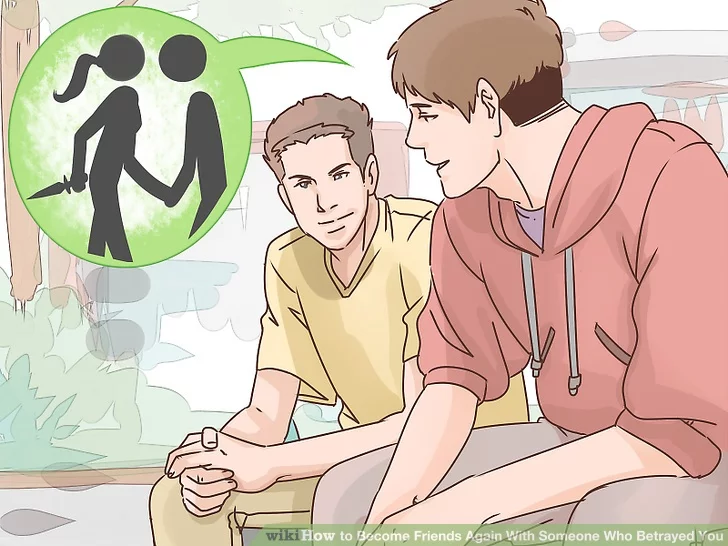
Talk to your friend about the betrayal. The first thing you need to do with your friend is clear the air about the betrayal and what caused it. During a conflict, communication is important because people will often assume and misinterpret other people’s actions. Determine if your friend understood your feelings and figure out if they feel remorseful for their actions. Communicate your feeling to them and explain why you felt betrayed.

  • You can say something like, “I felt betrayed and felt like you didn’t care about my feelings or well-being. It really put me in a negative space and made me feel like I didn’t want to be your friend anymore.”
  • Avoid shaming or humiliating the person during the conversation. It creates a negative environment.
  • Try to separate complaints about their personality with the act of betrayal that they committed. There may be things that you don’t like about them, but you want to concentrate on the act of betrayal first.
  • The primary goal of talking to them is to come clean about how you feel and understand what their perspective is.

2

Evaluate the betrayal. Sometimes an act of betrayal can be so severe that it’s impossible for you to forgive someone. If you aren’t willing to forgive someone, or the person feels no remorse for their actions, then true forgiveness may be unobtainable. However, it’s also important to evaluate the situation fairly, look at all sides, and be truthful to yourself. Perceived acts of betrayal may not be intentional, and could be a result of a lack of communication.

  • Talking to a close friend or family member may help you evaluate the betrayal.
  • Put yourself in their shoes and determine if you would have done the same things or would have felt inclined to do the same things.

3

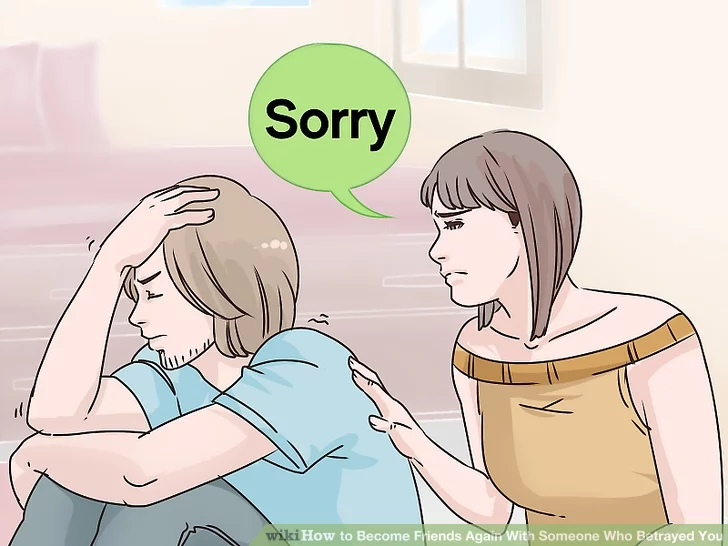
Accept their apology. When you accept a person’s apology, it isn’t condoning their act of betrayal. Instead, it’s understanding that your friend made a mistake. Accepting the apology does not mean that you instantly can forgive the person either. Forgiveness is a long process that can take years to achieve. The first step in forgiving them is accepting their apology.

  • You can say something like, “I don’t agree what you did, but I can see how you would make that mistake. I accept your apology, but it might take a while for me to get over it.”
  • It’s important to get what you want to say off your chest before hearing out the friend who betrayed you.

4

Don’t obsess over the betrayal. The psychological toll that betrayal can have on the mind can be immense and can include a morbid preoccupation over the circumstances.Obsessing over the betrayal even after you’ve talked to your friend is an unhealthy habit. Try redirecting your energy to something positive, constructive, or physical, like art, taking a class, or working out at the gym. It’s normal and okay to feel upset, but you don’t want it to damage your quality of life or overall happiness.

  • If you have a hard time shifting to something positive, then try taking a moment to evaluate your thoughts. For example, you might find yourself thinking, “She betrayed me before, so it will happen again.”
  • If this happens, ask yourself if this is the most likely outcome. Are there other possible outcomes? If so, what are they?
  • Then, use this information to help you revise the thought. For example, you might revise your thoughts to something like, “I know that my friend feels really bad about what happened, and that she will do her best not to hurt me again.”

5

Try to show empathy for your friend. Showing empathy is the process of trying to understand someone else’s actions from their perspective. It is the process of putting yourself into someone else’s shoes to get a better understanding of why they say and do the things that they do.

  • Don’t automatically assume the worst, like it was your friend’s intention to hurt your feelings or that they acted in a vindictive manner. After talking to them, think about their motivations and what caused them to commit the act of betrayal. It may still not be the right thing to do, but at least you can try to understand why they did it.
  • For example, if your friend went behind your back and told someone a secret about you, try to think about why she might have done that. For example, might she have been concerned about you? Or, is it possible that she was coerced into sharing the secret and gave in because she wanted to feel liked and accepted by the person or people she told?

6

Remind yourself of what you gained through the betrayal. Sometimes we need bad experiences to put our relationships in perspective. Regardless of how badly it hurt you, there’s a good chance that the betrayal taught you something. Think about how the experience made you grow as a person and realize that the betrayal may have unintentionally had positive impact.

  • For some people, this is a reminder that they should speak up and stand up for themselves more often, and for others, it may be a sign to communicate boundaries to their friends effectively.

1

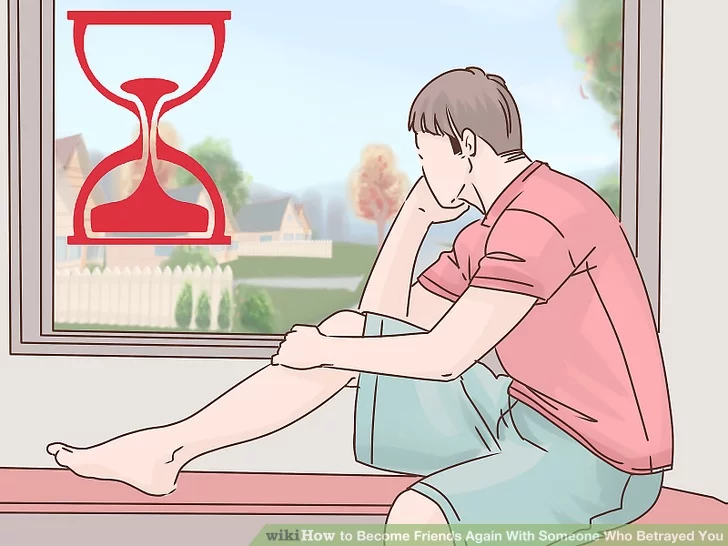
Give yourself time to regain trust. Trusting someone again after a betrayal takes time and continued effort. Your friend will have to continually show that they can be trusted and you will have to continually acknowledge the trustworthy things that your friend does and allow yourself time to heal from the past betrayal.

  • Think about what the person did to betray you and why it upset you so much. What did they do? Why did it hurt you so much? Try writing down what happened and why it was so upsetting to you. This will give you a chance to identify your feelings and examining them more closely.
  • Look at what your friend has done so far the show they are sorry. Has your friend apologized? Did it seem sincere? Have they done other things to show they are truly sorry? If so, then it will be easier to regain trust in the person, although the healing process will still take time. If not, then it might not be easy to trust the person. You might need to get a sincere apology before you will really start to trust the person again.
  • Try to be patient. It can take time to feel like you can trust someone again after a betrayal. Don’t feel like you have to rush to get the relationship back to where it was before the betrayal. Just allow it to progress at a natural pace.

2

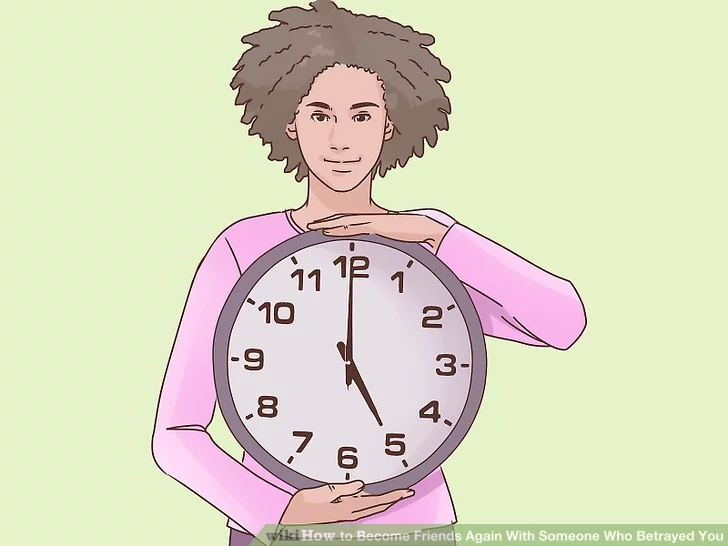
Allow some time to pass before spending time together. If you have managed to forgive your friend, hanging out with them immediately after the betrayal is sometimes not the best idea. Allow time – a few days, a few weeks – for both of you to think about your actions. Time will also let your friend take reflect on what they did and better understand your perspective.

  • If you don’t allow any time to pass, there’s a chance that your feelings have not settled, and the same argument can arise again.
  • Hang out with your other friends more often.

3

Apologize if you did anything to hurt them. Sometimes betrayal isn’t simple and situations can get complex. If you did anything to hurt your friend or you lashed out after they betrayed you, you should apologize for your actions as well.

  • You can say something like, “I reacted badly because my feelings were hurt. I’m sorry for yelling at you and calling you names.”
  • Apologizing to them may also make them more open to talking to you and taking responsibility for their actions.

4

Reach out and ask them to hang out. Even though you were the one who was betrayed, you may need to reach out to your friend first. They may think that you dislike them, or don’t want to see them anymore. Being the one to initiate spending time together will show them that you’re dedicated to the relationship.

  • Only ask to hang out after you’ve fully forgiven the person.

5

Have fun with them. While it’s important to talk about the betrayal and your feelings, concentrating on the event or situation can take away the fun from your friendship. Remember to do things that you both enjoy, and try to remember what made you friends in the first place by revisiting fun events or doing fun activities with them.

  • This can be going to a movie that you both want to see, participating in a sport, going to a museum you both like, or playing a video game.

1

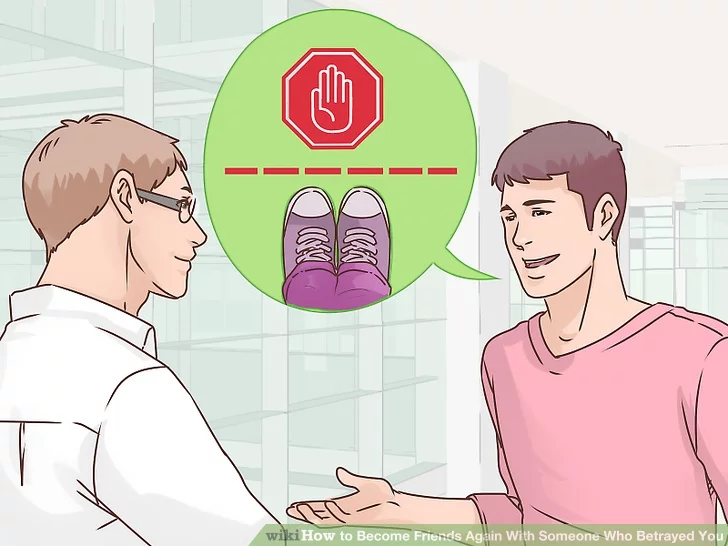
Set clear boundaries and let them know your feelings. After you’ve repaired your relationship and forgiven your friend, it’s important to let them know that their behavior is not acceptable and won’t be tolerated in the future. The first time they betrayed you could be blamed on ignorance or a misunderstanding. However if you explicitly tell them your feelings, and they cross the line again, you know that you did everything you could.

  • When you speak to the person about your boundaries and feelings, make sure to be assertive. Internalize how you feel and how you want to be treated, then communicate it in the most assertive way you can, without being angry or mean.
  • Be open and honest with them. Don’t hold things back to preserve their feelings.
  • You can say something like, “I’ve forgiven you for what you did, but you can’t do it again. It hurts my feelings, makes me feel betrayed, and is just not what I want in a friend.”

2

Talk about your frustrations with another friend or family member. The act of talking to a friend about your frustrations can make you feel like you have someone who understands and is there for you. This can reduce your stress and help you work out your feelings before a problem arises. They may also may be an excellent source for advice.

3

Consider letting your friend go if they keep betraying you. If this is a repeating pattern in your friendship, it may be time to let your friend go. If you both have inherently different personalities or moral values, then betrayal can happen again and again. An important factor to repairing a relationship that’s been ruined by betrayal is an understanding that the behavior was wrong in the first place. If they can’t see why you are upset or don’t care, then you may have to detach yourself from them.

  • If you have mutual friends, you can be cordial during social situations, but you don’t have to be close friends.
  • Determine if they are likely to betray you again and how you would feel if they did so.

4

Don’t carry the baggage to new friendships. Pain from a bad friendship can make you act differently in future friendships. Instead of punishing new friends for things that trigger bad memories of betrayal, have open and honest conversations with them about how you’ve been betrayed in the past. Get to know their intentions and motivations before assuming anything, and treat each person as an individual.

  • All people are different and just because one friend betrayed you does not mean that other friends will.

How to Learn to Let Go of What You Can’t Control

Photo by Andrew Personal Training on Pexels.com

Charles A. Francis

Author, meditation teacher, and director of the Mindfulness Meditation Institute

A friend of mine once told me, “Almost everything in my life that I’ve had to let go of has scratch marks on it.” His point was that he found it very difficult to let go of things he couldn’t control. I’m sure many of you can relate to that.

Most of us don’t want to let go of things we like. So we hang on until they’re forcibly taken away, and even then, we still hold on mentally and emotionally. What we may not realize is that holding on can wreak havoc in our lives.

Holding on to things we can’t control can cause us a great deal of stress and unhappiness. It also keeps us stuck in the past, and keeps us from growing and living our lives freely. If we want to be happy and free, then we need to learn to let go.

In this article, we’re going to examine what letting go really means, why it’s so hard, and how your life will improve by letting go of things you can’t control. Then, I’ll share with you some tips to help you learn to let go with greater ease, so you can live a happier and more fulfilling life.

What Does Letting Go Really Mean?

We often hear that we need to let go of something we can’t control when it seems to be causing us problems. But, what does letting go really mean? To understand this, we need to understand why we get attached to things in the first place.

Attachment is mental and emotional fixation on something we think we need or want. We get attached to things like people, views, outcomes, or material possessions. The reason we get attached to them is that we’re afraid we’ll lose them, and therefore, we’ll be unhappy, or we may even think we won’t survive.

Many of us confuse sensual pleasure, or emotional gratification, with happiness. They are not the same. True happiness comes from freedom from suffering, not sensual pleasure. Yet our society teaches us that if we achieve or acquire things that bring us pleasure, then we’ll be happy.

The problem with this approach to finding happiness is that our emotions are temporary by nature. What happens when the novelty of a new car wears off is that our satisfaction diminishes.

Until we learn how to find freedom from our suffering, we will continue to get attached to things that bring us sensual pleasure or emotional gratification.

So, letting go means to release our fixation on these things. Now, that doesn’t necessarily mean we’ll lose them. It just means we have enough faith that we’ll get the things we need to survive in this world, and maybe even be happy.

Why Is Letting Go so Hard?

There are various reasons why letting go is so hard. One of them is that we romanticize holding on. We romanticize it in our literature, music, art, and films. There is something romantic about holding on to someone we love. We want to feel the love for that person forever.

Fear makes it hard to let go. We’re afraid of what will happen to us if we lose something that we depend on for our survival, or happiness. So, we hold on as best as we can.

Holding on is also a habit. Our behaviors are so deeply ingrained in us that we just hold on to things without even realizing it. In addition, we’re afraid to look at ourselves because we may not like what we see.

Another reason letting go is so hard is that our self-identity is associated with the things we have. A nice family, house, car, and other material possessions project an image of who we are, hopefully a successful image. Our self-identity is also associated with our views, especially political views.

Some of us are addicted to drama. We enjoy dwelling in our emotions. We certainly like positive emotions. But even negative emotions can get us attention, which also brings us pleasure. These emotions can also be part of our identity. [1]

The Illusion of Control

Intertwined in our attachment to things is the illusion of control. We often believe that if we get all the material things and circumstances just right, then we’ll be happy. So, we try to manipulate people and circumstances in order to get them the way we want.

The problem with this way of thinking is that everything is impermanent. Nothing ever stays the same. We get attached to certain things we like, and expect them to remain that way. This will always lead to disappointment.

In reality, the only thing we have control over is ourselves. But we act as if we have control over other people, and not ourselves.

The Benefits of Learning to Let Go

So, why should we learn to let go? There are a variety of reasons. Among them are freedom, better relationships, and continued personal growth.

Freedom

Letting go leads to freedom. When we learn to let go, we can be free of the sources of our pain and suffering that are holding us back.

We often hang on to things that are no longer serving us, such as unhealthy relationships. Maybe at one time we were benefiting from a relationship, but often when people grow, they grow apart. That’s when it’s time to move one.

Better Relationships

A healthy relationship is one where both partners have the freedom to be who they are. Those who hold on to their partners too tightly don’t allow them be free. They smother them and try to mold them into their ideal partner.

When we let go of our partners, it doesn’t mean they’ll leave us. We just allow them to be who they want to be. Then it is up to us to love them for who they are.

When you learn to let go, you’ll attract healthier people in your life. That’s because healthy people don’t want to be around someone who will smother them.

Continued Personal Growth

If we hold on to something, we can’t move forward. We cannot grow emotionally if we hold on to something we think brings us happiness. If you keep holding on to things around you, then you will remain stuck in the past because things are always changing.

As you learn to let go, your self-esteem and self-confidence will grow. When you realize that you won’t die from letting go of things you thought you needed, you will be able to pursue things that are healthier for you.

5 Tips for Learning How to Let Go

Learning to let go is not as difficult as you might think. But it does take some courage and determination. Here are a few tips to help you.

1. Stop Blaming Others

We often blame others for our misfortunes. In such cases, we feel we’re the victim of others’ injustices. While this may indeed be the case, we cannot waste our lives waiting for other people to repair the harm they did to us. They may be unwilling, or even unable.

It is up to us to take responsibility for our happiness. Don’t wait for others to fix you. Don’t wait for them to act before you start living your life.

2. Make a Decision to Let Go

I once heard someone say how easy it was for him to quit smoking once he made the decision. We often say we want to change something in our life, but make a half-hearted effort.

If you really want to make a change in your life, then you have to get serious about it, and that starts with making a decision to do it. [2]

It would help if you put that decision in writing. Write a statement like, “I have decided to let go of ________. I realize that holding on to this is preventing me from growing and being happy.” You can expand on this by listing more of the benefits you’ll receive, and how you look forward to a new chapter in your life.

Once you’ve written your decision statement, print it and post it some place where you’ll see it every day. Also, copy it by hand in a notebook regularly, such as once a day until you are certain you won’t go back. This will ingrain it in your subconscious mind, and the new behavior will begin to manifest itself naturally.

3. Trust That You’ll Be Okay

One of the reasons we hold on to things is that we think we need them to survive. Remember, letting go is the release of our mental and emotional fixation on something. It is not a physical letting go. Sometimes, we hold on to things that are already physically gone.

If something is physically gone, and you’re reading this, it means you haven’t died. So, letting go isn’t going to kill you. In fact, you’ll be able to truly live your life free of that emotional attachment.

Trust that you’ll be okay. If you have to, lean on a friend. Your experience isn’t unique. Chances are that many other people have gone through the same experience, and they’ve survived. You don’t have to go through a detachment by yourself. You are not alone. [3]

4. Learn the Lesson and Move On

Life is a series of experiences that are meant to teach us important lessons. When we refuse to let go of something, it is because we refuse to see what life is trying to teach us. As a result, we feel stuck.

When you’re having trouble letting go of something, ask yourself, “what can I learn from this experience?” The answer may not be revealed to you immediately. But when it is, you’ll be able to let go, and move on with your life.

5. Meditate

Meditation can make just about any situation better. In this case, it can help us calm our emotions, gain clarity, and give us the inner strength to let go. It can help us stay calm and positive when things in our life get out of control.

When we meditate, we give our mind a break from all the sensory stimulation in our lives. Too much sensory stimulation leads to an agitated mind, which leads to overwhelming emotions. So, by calming our thoughts through meditation, we reduce the thoughts that trigger our painful emotions.

When we calm our mind, everything naturally becomes clearer. The fewer unnecessary thoughts we have in our mind, the easier it is to process more purposeful thoughts. It’s like being stuck in a traffic jam vs. being on a road free of traffic. When our mind is calm, it is much easier to gain clarity on issues of importance to us.

As we calm our emotions and gain clarity, we develop great inner strength. This enables us to gain wisdom, self-esteem, and self-confidence. And this inner strength helps us let go of unhealthy things in our lives.

So, give meditation a try. You don’t have to do it perfectly, or for long periods of time. All you have to do is sit quietly for a few minutes following your breathing. This gives your mind a rest, and allows your thoughts to settle down naturally.

Here’s a simple guide for beginners: Meditation for Beginners: How to Meditate Deeply and Quickly

Final Thoughts

I know from personal experience that letting go can be really hard, and even scary. But, in the 50+ years that I’ve been on this earth, I’ve had to let go of many things I thought I needed to survive, yet I’m still alive. In fact, I’m quite happy.

I’ve learned to let go, and so can you. It gets easier with time and experience. Once you realize how liberating it can be to let go of things, and have a few successes under your belt, you’ll be able to let go before something causes you great harm.

In time, you’ll be able to move beyond just letting go, and not get attached to things in the first place. When this happens, then you’ll know the true meaning of freedom.

Oversleeping: The Effects & Health Risks of Sleeping Too Much

Photo by Marcus Aurelius on Pexels.com

Medically reviewed by

Michele Roberge, RPSGT, R.T. 

By Rosie Osmun Certified Sleep Coach

We often hear about the real dangers of getting too little sleep, but on the other end of the spectrum, sleeping too much also appears to have some risks. Sleep…

We often hear about the real dangers of getting too little sleep, but on the other end of the spectrum, sleeping too much also appears to have some risks.

Sleep is a rapidly growing field of research, and we are learning more all the time about how rest affects the body and mind. It’s known that sleep is a time when the body repairs and restores itself, and getting too little rest can lead to a whole host of health problems.

So, more sleep must be better right? Not so fast, say some researchers.

More evidence is showing that spending an excessive amount of time in bed is also linked with health hazards. In some ways, oversleeping itself appears to directly influence certain risk factors, and in other cases, it may be a symptom of other medical conditions.

Read on to learn about the effects of oversleeping, what to look out for and how to work towards getting healthy, quality slumber.

Are You Sleeping Too Much?

First, let’s address what oversleeping means. The gold standard of normal has long been considered eight hours, and it’s a good median benchmark. Recent reviews of current research from the experts at the National Sleep Foundation broaden the spectrum a little. They say that somewhere in the range of seven to nine hours is normal and healthy for most adults between 18 and 64 years of age.

Some say closer to seven hours could be even better, such as Arizona State University professor Shawn Youngstedt, who told the Wall Street Journal, “The lowest mortality and morbidity is with seven hours.” Other researchers have also linked seven hours of rest with things like longevity and better brain health.

The “right” amount of sleep proves somewhat individual as some people will feel great on seven hours and others may need a little longer. However, in most studies and for most experts, over nine hours is considered an excessive or long amount of sleep for adults.

If you sleep in a little sometimes on the weekends, it’s likely no big deal. If you regularly sleep more than nine hours each night or don’t feel well-rested on less than that, then it may be worth taking a closer look.

“If someone is sleeping too much, more than 9 hours each night, the quality of sleep should be evaluated. If the quality of your sleep is poor, it could result in more time in bed.  Your body needs deep restorative sleep, and if that is not happening during the recommended 8 hours, your body will instinctively try to prolong the sleep period to obtain the quality of sleep it needs,” says Michele Roberge. Michele currently leads a hospital-based sleep disorder center where she specializes in treating patients with sleep apnea.

She adds, “Look at what could be causing the poor sleep quality—environmental factors (lights, noises, an uncomfortable bed, etc.), medications, comorbid conditions (depression, chronic pain, etc.), or sleep disorders (sleep apnea, narcolepsy, bruxism, PLMD, etc.).”

“There are so many potential contributing factors, it is best to speak to a sleep specialist who can get a general overview of the sleep habits, sleep environment, and medical history that could be playing a role in the excessive sleep,” suggests Michele. 

The Health Impact of Oversleeping

Seeking to find the sleep “sweet spot” for optimal health, researchers have been busy recently looking at how different habits connect with physical and mental well-being. Several trends have emerged linking oversleeping with higher rates of mortality and disease as well as things like depression.

Research Links Longer Sleep Habits with:

  • Cognitive impairment
  • Depression
  • Increased inflammation
  • Increased pain
  • Impaired fertility
  • Higher risk of obesity
  • Higher risk of diabetes
  • Higher risk of heart disease
  • Higher risk of stroke
  • Higher all-cause mortality

Impaired Brain Functioning and Mental Health

Sleep plays an important role in the brain, as the brain clears out waste byproducts, balances neurotransmitters and processes memories at rest. At both short and long extremes, rest may have an effect on mood and mental health.

Cognition
Using data from the Lumosity brain-training platform, researchers found that cognitive performance on three different games all peaked when people sleptaround seven hours, worsening with more or less rest. Other studies have also foundmemory impairments anddecreased cognitive function with longer sleep.

Degenerative Diseases
Other research indicates that getting too little or too much sleep may be tied to increased Alzheimer’s disease risk factors and a largeSpanish study found that long sleepers may be at increased risk of developing dementia.

Depression and Mental Health
Oversleeping is considered a potential symptom of depression. While many people with depression report insomnia, about 15% tend to oversleep.

People with long sleep durations are also more likely to havepersistent depression or anxiety symptoms compared to normal sleepers. A recent twin study also found that sleeping too little or too much seemed to increase the genetic heritability of depressive symptoms compared to normal sleepers.

Astudy of older adults also found that those who slept more than 10 hours reported worse overall mental health over the past month compared to normal sleepers.

Some research shows that irregularities in the body’s sleep clock may play a role in depressive symptoms, and returning sleep to a healthy pattern is often a focus of treatment.

Increased Inflammation Factors

Chronic inflammation in the body is tied with an increased risk of everything from diabetes to heart disease to Alzheimer’s disease. Certain lifestyle factors like smoking, being obese, and prolonged infections can contribute to inflammation, and getting too little or too much sleep may also play a role.

Inflammation in the body is measured by levels of cytokines (also called C-reactive proteins, or CRP). One study compared CRP levels and sleep durations in a large group of adults, finding that male and female long sleepers had elevated levels.

Some differences were seen among races in the study though, suggesting sleep duration may not be one-size-fits-all. Elevated CRP was seen in:

  • Whites sleeping less than five and more than nine hours.
  • Hispanics/Latinos sleeping for more than nine hours.
  • African-Americans sleeping less than five and eight hours.
  • Asians sleeping for more than nine hours. Interestingly, Asians sleeping five to six hours had the lowest levels, a pattern mimicked in anotherTaiwanese study.

Two previous studies also found links between inflammation and longer sleep.One showed that female long sleepers had 44% higher CRP levels compared to women sleeping seven hours.Another found that CRP levels increased by 8% for each additional hour of sleep beyond the norm (7-8 hours), adjusting for factors like body mass, age and sleep apnea.

Increased Pain

While many times it can seem intuitive to rest more when we’re in pain, research shows that in some cases too much sleep can exacerbate symptoms.

Back pain can worsen from too little activity or spending too much time in bed. Sleeping in an un-ergonomic position or using an old or unsupportive mattress can also worsen back pain. Combined with staying still for a long period of time, these factors mean many people awake with worse back pain especially when spending longer amounts of time in bed. That’s why we recommend those with existing aches and pains to invest in the best mattress for back pain— like a bed built to promote healthy spinal alignment can mitigate discomfort.

Oversleeping is also linked with higher rates of headaches. Referred to as a‘weekend headache,’ sleeping in may trigger migraines and tension headaches. The cause isn’t necessarily sleep itself, though, as some researchers link it withcaffeine withdrawal or increased stress.

Impaired Fertility

study of Korean women undergoing in vitro fertilization therapy found that women who slept seven to eight hours had the best chances of conceiving. The moderate sleepers had the highest pregnancy rates (53%) compared to those sleeping six hours or less (46%) and those sleeping nine to eleven hours (43%). Study authors suggest sleep outside the normal range could be affecting hormones and circadian cycles, impairing fertility.

Impaired Glucose Tolerance

Glucose tolerance refers to the body’s ability to process sugars, and impaired glucose tolerance is associated with insulin resistance and is a risk factor for type 2 diabetes and heart disease.

ACanadian study looked at lifestyle habits of 276 people over six years, finding that people with long and short sleep durations were more likely to develop impaired glucose tolerance and diabetes during the timespan compared to normal sleepers (20% versus 7%). Arecent review of diabetes and sleep studies found consistent relationships between increased risks of type 2 diabetes and both short and long sleep as well.

Increased Weight Gain

Using the same data as the previous six-year Canadian study,researchers also found links between weight gain and sleep. Short and long sleepers both gained more weight than normal sleepers over the six-year period (1.98 kg and 1.58 kg) and were more likely to experience a significant weight gain. People sleeping over nine hours were 21% more likely than normal sleepers to become obese during the study.

Other studies generally only support trends of higher body weight for short sleepers, but it could be that associated factors like diabetes risk contribute to weight gain for long sleepers.

Higher Heart Disease Risk

Using information from the large National Health and Nutrition Examination Survey (NAHNES), researchers linked both short and long sleep with a higher risk of coronary heart disease and stroke. The study found that people sleeping more than eight hours per night were twice as likely to haveangina chest pain caused by reduced blood flow) and 10% more likely to have coronary heart disease.

Analysis of the data from theNurses’ Health Study, which involved over 71,000 middle-aged women, also found connections between sleep length and heart health. Compared to normal eight-hour sleepers, women sleeping nine to 11 hours per night were 38% more likely to have coronary heart disease.

Higher Stroke Risk

A recent study from the University of Cambridge researchers looked at data from around 9700 Europeans over a period of 11 years. People who slept over eight hours were 46% more likely to have had a stroke during the study period after adjusting for comorbid factors. People whose sleep duration had increased during the study had a four times higher risk of stroke than consistent sleepers, suggesting that longer sleep could be an important symptom or warning sign of stroke risk.Data from older NHANES surveys also found a significant relationship was found between long sleep and stroke risk. People who slept more than eight hours had a 50% higher risk of stroke than people who slept six to eight hours. People who slept over eight hours and who also had daytime drowsiness had a 90% higher stroke risk compared to normal sleepers.

Higher All-Cause Mortality Risk

In addition to (and perhaps as a result of) all of the other associated health issues like obesity, heart disease, and stroke, longer-than-normal sleeping is also linked with ahigher risk of death in general.

In data from thesecond Nurses’ Health Study, researchers sought to see what types of habits of lifestyle factors showed the strongest relationships between long sleep and increased mortality risk. It’s suggested that several things might contribute to the higher risk of death, but based on their statistical analysis, the strongest influential factors were identified as depression and low socioeconomic status. In the Nurses’ Study data, long sleep was also associated with numerous other conditions from obesity to multiple sclerosis to asthma to depression and antidepressant use.

To further get an idea of why people who sleep longer tend to have higher rates of death in long-term studies, clinical psychologist and sleep specialist Dr. Michael Grandner led a literature review that identifies a few potential causes:

  • Sleep fragmentation: More time in bed is linked with more frequent wakings after sleep and reduced sleep efficiency (more time spent awake in bed).
  • Fatigue: Fatigue and lethargy can cause longer sleep, and sleeping longer can make people feel more lethargic.
  • Immune function: Longer sleep can influence the expression of cytokines.
  • Photoperiodic abnormalities: Spending a long time in the darker rooms could affect the circadian cycle.
  • Lack of challenge: Spending a lot of time in bed may give less time for beneficial challenges (such as exercise).
  • Underlying disease: Obstructive sleep apnea, depression, coronary disease, and generally failing health.

The Chicken and Egg Dilemma

Looking at the information on the effects of oversleeping, the question of “which came first” is a fairly prominent one for researchers. Does oversleeping itself harm health, or do certain illnesses cause oversleeping?

Whether or not long sleep is the cause or the effect is often not immediately discernible with the data that look at large groups of people and self-reported habits, however. Some studies indicate getting too much sleep or being overly sedentary may trigger certain problems, while other times the desire for more rest it could a byproduct of co-occurring processes.

Some researchers also highlight that the healthiest people may just need less rest while unhealthy people tend to need more due to known or undiagnosed problems. One way to test the idea of cause and effect for some of the shorter term conditions are controlled studies in which normal sleepers rest for longer hours and changes are observed.

Areview of controlled studies on extended sleep finds that when adults sleep longer than normal, they tend to report increased fatigue, irritability and lethargy — possibly triggering the desire to sleep more and perpetuating a cycle. Also reported are lower mood, slower reaction time, poorer math performance and more fragmented sleep, which has several health implications as well.

Other research of young adults showed that spending an additional two hours in bed each night over three weeks resulted in participants feeling more depressed, reporting more soreness and back pain, and they also showed elevated inflammation markers.

Setting the Stage for Healthier Sleep

The field of sleep science is still looking into the cause and effect relationship between oversleeping and health, but some habits and steps that promote better quality sleep and healthy sleep duration are known.

While a small percentage of people naturally sleep longer, for many long sleepers (especially whose sleep needs have changed), there are certain conditions, behaviors and environmental factors that can increase sleep need or affect sleep quality (making you feel less rested on a normal amount).

To get an idea of how to avoid oversleeping and get healthier Zzz’s, we reached out to a few sleep experts for their words of wisdom. Here’s what they had to say:

Dr. Robert Rosenberg

Too much sleep on a regular basis can increase the risk of diabetes, heart disease, stroke, and death according to several studies done over the years. Too much is defined as greater than nine hours.

The most common cause is not getting enough sleep the night before, or cumulatively during the week. This is followed by sleep disorders such as sleep apnea, idiopathic hypersomnolence, as well as depression.

Preventing oversleeping:

  1. Get enough sleep, seven to nine hours a night.
  2. Do not oversleep on weekends this throws your circadian rhythms off and makes falling asleep even more difficult when the work week comes along.
  3. Expose yourself to bright sunlight upon awakening. Consider leaving the drapes or blinds open at night. That morning sunlight will help you to wake up.
  4. Consider getting a dawn sunlight emitting alarm clock. Many of my patients are using them. You can set the dawn light to start filling your room with light 15 to 30 minutes before the alarm goes off.
  5. Avoid excessive naps especially after 4 PM. These may make it more difficult to fall asleep and result in oversleeping. The same goes for excessive caffeine and blue light exposure close to bedtime.

There are myriad reasons to avoid oversleeping from loss of your job to missing out on mornings with your family. However, if you continue to have this problem and struggle to wake up make sure there is not an underlying sleep disorder at fault.

Dr. Robert Rosenberg is a sleep medicine specialist and author of Sleep Soundly Every Night, Feel Fantastic Every Day: A Doctor’s Solution to Solving Your Sleep Problems.

Nancy H. Rothstein

If you oversleep frequently, you need to ask yourself WHY. It’s time to take a close look at your sleep and sleep habits. Start keeping a log of what you are doing in the hour before you go to bed.

If you are on tech devices or watching TV, it’s time to set your smartphone down an hour before bed and TURN OFF TECHNOLOGY. Your busy mind and body need to gear down in preparation for bedtime, not to mention the negative impact of blue light from the devices on your natural sleep/wake cycle. Find relaxing and calming things to do, such as reading a book or magazine. But NOT on a tech device! Drinking caffeine in the hours before bed can also impact your sleep quality.

Bottom line is that if you are oversleeping regularly your body is SPEAKING TO YOU. Are you listening? Our body clock, also known as circadian rhythm, functions best when we have a consistent sleep and wake time. Sounds possible but how do you enact this?

Preventing oversleeping:

  • Select your optimal number of sleep hours to function at your best.
  • Then, determine your WAKE TIME, likely based on your work schedule or family demands.
  • GET UP at the SAME TIME EVERY DAY, including weekends.
  • Put your alarm clock across the room. When it rings, GET UP. NO snooze button.
  • Go to bed at the SAME TIME EVERY NIGHT, within about 1/2 hour range.
  • COMMIT to this for at least 2 weeks, with a goal of 4, then reevaluate your sleep and wake times.

If you do improve your sleep habits and after a few weeks are still oversleeping, it’s time to see your physician to assess whether you may have a sleep disorder needing diagnosis and treatment. Sleep is a necessity, both in quality and quantity.

Nancy H. Rothstein, MBA, is The Sleep Ambassador and Director of CIRCADIAN Corporate Sleep Programs.

Dr.  Nerina Ramlakhan

Oversleeping usually isn’t about needing more sleep – it’s usually about being exhausted because of some other physical, mental, emotional, or spiritual deficit.

Preventing oversleeping:

  1. Set an alarm or two.
  2. Get to bed before midnight – the 90min sleep phase before midnight is very rejuvenating and will help to prevent morning fatigue.
  3. Eat breakfast within 30 minutes of rising. People who eat breakfast are more likely to wake with energy and habitually eating breakfast increases metabolism (and promotes better sleep at night).
  4. Drift off to sleep thinking of something – even small – that you’re looking forward to the next day.
  5. Withdraw consciously from technology to enable your sleep to hit deeper levels so you wake up more refreshed.
  6. Deal with emotional gremlins which might be causing you to escape into sleep and pull the duvet over your head.
  7. Address the true sources of your fatigue – do you need to exercise more? Eat more healthily? Get a new job? Leave that toxic relationship?
  8. Live a meaningful and purposeful life – know what you care about and do it. People who have a purpose tend to wake up with energy.

Dr. Nerina Ramlakhan is a physiologist, sleep and stress management expert who helps everyone from stressed-out mums to Premiership footballers and MPs improve the quality of their sleep and energy levels. Nerina runs sleep and wellness programmes at The Nightingale Hospital and is the author of Tired but Wired.

Sleeping Well: The Most Important Things You Can Do

Based on our experts’ advice and current opinions on healthy sleep hygiene practices, here are the key things you can do to promote good sleep habits and ensure your body gets the ideal amount of rest.

Eat Healthily

Research links eating a balanced diet with a wide variety of nutrients and adequate calories, carbohydrates and fats with normal sleep durations. Inone large study of diet and lifestyle habits using NHANES data, long sleepers tended to eat less variety of foods and fewer carbohydrates and calories overall. Their diets were also lower than normal sleepers’ on a few nutrients:

  • Theobromine – found in chocolate and to a lesser extent in guarana.
  • Dodecanoic acid – found in coconuts, coconut oil, and palm kernel oil.
  • Choline – found in shrimp, fish, eggs, turkey, soy and some dark leafy greens.
  • Selenium – found in brazil nuts, fish, shrimp, turkey, chicken, beef and some whole grains.
  • Lycopene – found in guava, watermelon, cooked tomatoes, red cabbage, and red peppers.
  • Phosphorus – found in pumpkin seeds, sunflower seeds, eggs, fish, brazil nuts, lean meats, tofu, and lentils.

Try to include a diverse range of fruits, vegetables, lean proteins, nuts, and grains so your body receives the minerals, vitamins, and nutrients it needs to function.

Things like watermelon, tomatoes, carrots, leafy greens, walnuts, almonds, chicken, wild salmon, and whole grains like oats, wheat, millet and amaranth all supply sleep-supporting nutrients. Pure water intake is also important — people who had better sleep drank plenty of plain water throughout the day.

But, don’t eat too muchtoo close to bedtime, as heavy, fatty or spicy midnight snacks could backfire and keep you up or affect sleep quality. It’s best to balance intake throughout the day and perhaps have a healthy dinner that includes acarbohydrate. Reach for lighter but satiating things like crackers and natural peanut butter, a banana, a low-sugar yogurt or a piece of toast if you do need a nibble close to bedtime.

Get Exercise

Engaging in regular activity and moderate exercise helps promote higher quality sleep and healthy sleep duration. While studies on exercise and sleep largely focus on reducing insomnia, it can help long sleepers, too. Getting higher quality of sleep and waking less during the night can help you feel more rested and energized during the day.

Get Consistent Sunlight

Our bodies’ circadian clocks guide the release of hormones and neurotransmitters that tell us when to be awake and when to sleep. It takes its cues from things like behavior patterns, temperature, environment, and particularly, light.

Exposing yourself to direct sunlight early in the morning supports circadian rhythms (and Vitamin D production, which may play a role insleep hormone melatonin). Sip your morning coffee outside, take an early walk, or park further from your office to catch some rays. Working near a well-lit window can also be helpful. If you have a difficult schedule or live in a climate where getting morning sunlight isn’t possible,light therapy may be beneficial.

Stick to a Regular Bedtime and Wake Time

Another important way to support your body’s internal clock is to make your bedtime and wake timemore consistent. As explained by Dr. Rosenburg above, irregular hours can throw off rest, making it harder to fall asleep on nights after sleeping in and leading you to be tired the next day.

When bedtimes and wake times are regular, your body’s systems learn when it’s time to initiate drowsiness and when it’s time to be awake.

Time Caffeine Right

We all know caffeine close to bed is a sleep no-no, but drinking coffee and tea even in the afternoon can have an impact on rest quality. Being wired at night can ruin your sleep, leaving you tired and prone to oversleeping the next day.

It can take up to 12 hours for the effects to completely dissipate, so try limiting caffeine to the first few hours you’re awake or at least before lunchtime.

Set Your Bedroom Up For Success

Pay close attention to your sleep space to make sure lights, sounds and temperatures are optimal for rest.

  • Darkness. Darkness supports melatonin release, while bright lights from TVs, computers, and smartphones keep you up later. Start dimming lights in the hour before bed and switch off electronics at least 30 minutes before you turn in. If you live in a well-lit area, blackout drapes or an eye mask may be a good partner.
  • Calm noises. Disruptive sounds can make it hard to fall asleep and can affect sleep during the night. If you prefer complete quiet, earplugs or noise-canceling headphones can help. If you prefer background noise, try sound conditioner/white noise machines or apps that play white and nature sounds
  • Comfort. Your mattress can play a role in sleep, especially when it comes to pain and tossing and turning. Age is important — the average bed is meant to last around eight years, so if your’s is older, it may be lacking support and comfort. Finding the best mattress with the right firmness and comfort level for your sleep position also plays a role. If you’re feeling aching on waking or not sleeping well, take a closer look at your bed. If you’re a side sleeper, get the best mattress for side sleepers for comfort and support.
  • TemperatureCooler temperatures support better sleep. Set your thermostat in the 62 to 70 range, and opt for breathable sheets, blankets, and pajamas. Materials like cotton and wool help support a balanced body temperature and keep you comfortable throughout the night.

If you’re practicing good sleep hygiene habits and you find you still need an excessive amount of rest, or if your sleep need has changed without an obvious cause, consult your doctor. Increased sleep needs can be a symptom of things like hypothyroidism, heart problems, depression (even low-level), and sleep apnea. Your doctor can assess your symptoms and determine the best way to approach improving rest.

As with many other aspects of health, moderation tends to be key when it comes to sleep. Much is said about the dangers of too little sleep, but it seems it is possible to have too much of a good thing. Regularly sleeping in excess of nine hours is linked with lower mental and physical health — making it important to strive for a “normal” amount of sleep and to be aware of changes in your body’s sleep need that may signal other concerns.

Do you tend to oversleep or sleep longer than normal? How do you notice activity level, foods, or things you do before bed affecting your sleep need?

This article is for informational purposes and should not replace advice from your doctor or other medical professional.

About the author

Rosie Osmun regularly contributes to the Amerisleep blog writing about topics including, reducing back pain while sleeping, the best dinners for better sleep, and improving productivity to make the most of your mornings. She finds the science of sleep fascinating and loves researching and writing about beds. Rosie is also passionate about traveling, languages, and history.

6 Reasons Healthcare Is So Expensive in the U.S.

Photo by Pixabay on Pexels.com

By: Reviewed by: Michael J Boyle Fact checked by: VikkI Velasouez 

The pressure on our sprawling healthcare system in the U.S. has never been greater. Massive federal cash influxes have sought to shore up hospitals sagging under the weight of the testing and treatment burden and the related temporary cessation of elective surgery and regular medical care.

Long before this crisis, the U.S. led other industrialized nations in high spending on healthcare and getting a low bang for the buck in terms of health outcomes and the percentage of the population served.

As of 2020, life expectancy in the U.S., for example, is 77 years, while it ranges from 80.7 to 83.9 in 10 other high-income countries. And only 91.4% of the population in the U.S. has health insurance, compared to 99% to 100% of the population in the other industrialized countries examined.123

KEY TAKEAWAYS

  • Recent events have increased pressure on our highly complex and expensive healthcare system, making it more urgent to lower costs.
  • One reason for high costs is administrative waste. Providers face a huge array of usage and billing requirements from multiple payers, which makes it necessary to hire costly administrative help for billing and reimbursements.
  • Americans pay almost four times as much for pharmaceutical drugs as citizens of other developed countries.
  • Hospitals, doctors, and nurses all charge more in the U.S. than in other countries, with hospital costs increasing much faster than professional salaries.
  • In other countries, prices for drugs and healthcare are at least partially controlled by the government. In the U.S. prices depend on market forces.

Costly Healthcare Hurts Everyone

The high cost of healthcare affects everyone, sick or well. It has depressed individual spending power for the past few decades. Salaries for American workers have risen, but net pay has stayed the same because of increasing charges for health insurance.4 Today, tightening up on overspending is urgent to help stretch medical and hospital resources to deal with the pressure on the overall system.

Here are six underlying reasons for the high cost of healthcare in the U.S.

1. Multiple Systems Create Waste

“Administrative” costs are frequently cited as a cause for excess medical spending. The U.S. spends about 8% of its health care dollar on administrative costs, compared to 1% to 3% in the 10 other countries the JAMA study looked at.3

The U.S. healthcare system is extremely complex, with separate rules, funding, enrollment dates, and out-of-pocket costs for employer-based insurance, private insurance from healthcare.govMedicaid, and Medicare, in all its many pieces. In each of these sectors, consumers must choose among several tiers of coverage, high deductible plans, managed care plans (HMOs and PPOs), and fee-for-service systems. These plans may or may not include pharmaceutical drug insurance which has its own tiers of coverage, deductibles, and copays or coinsurance.

For providers, this means dealing with myriad regulations about usage, coding, and billing. And, in fact, these activities make up the largest share of administrative costs.5

2. Drug Costs Are Rising

On average, Americans shell out almost twice as much for pharmaceutical drugs as citizens of other industrialized countries pay. High drug prices are the single biggest area of overspending in the U.S. compared to Europe, where drug prices are government regulated, often based on the clinical benefit of the medication.

With little regulation of drug prices, the U.S. spends an average of $1,443 per person, compared to $749, on average, spent by the other prosperous countries studied. Drug prices in the U.S. are 256% of those in comparison countries. In the U.S. private insurers can negotiate drug prices with manufacturers, often through the services of pharmacy benefit managers. However, Medicare, which pays for a hefty percentage of the national drug costs, is not permitted to negotiate prices with manufacturers.637

3. Doctors (and Nurses) Are Paid More

The average U.S. family doctor earns $214,370 a year as of 2020, and specialists make $316,000—way above the average in other industrialized countries. American nurses make considerably more than elsewhere, too. The average salary for a U.S. nurse is about $74,250, compared to $58,041 in Switzerland and $60,253 in the Netherlands.8910

U.S. managed care plans (HMOs and PPOs) may succeed in lowering healthcare costs by requiring prior authorization for seeing a high-priced specialist. The use of a nurse practitioner instead of a family doctor can also save money.

$11,170

The cost of a hospital birth in the U.S., which is over $7,000 more than the cost in the Netherlands.11

4. Hospitals Are Profit Centers

Hospital care accounts for 31% of the nation’s healthcare costs.12 Between 2007 and 2014, prices for inpatient and outpatient hospital care rose much faster than physician prices, according to a 2019 study in Health Affairs.13 Hospital expenditures grew 6.4% in 2020 to $1.27 trillion.14

U.S. prices for surgical procedures in hospitals greatly exceed those of other countries. A typical angioplasty to open a blocked blood vessel, for example, costs $6,390 in the Netherlands, $7,370 in Switzerland, and $32,230 in the U.S. Similarly, a heart bypass operation in the U.S. costs $78,100 compared to $32,010 in Switzerland.11

Today, many hospitals are on the brink financially. What’s more, the cessation of elective surgery and severely declining provider visits because of the coronavirus lockdown account for a big part of the decline in the overall economy.15

5. U.S. Healthcare Practices Defensive Medicine

Both physicians and hospitals have an interest in preventing lawsuits, so “just in case” tests and scans may be ordered. And these tests can be costly. While a CT scan costs just $97 in Canada and $500 in Australia, the average cost is $896 in the U.S. 

A typical MRI scan costs $1,420 in the U.S., but around $450 in Britain. Researchers have concluded that it’s not the sheer number of tests and procedures but their high price that explains why it’s so expensive to be sick in the U.S.1110

6. U.S. Prices Vary Wildly

Because of the complexity of the system and the lack of any set prices for medical services, providers are free to charge what the market will bear. The amount paid for the same healthcare service can vary significantly depending on the payer (i.e. private insurance or government programs, such as Medicare or Medicaid) and geographical area.

The Bottom Line

Most other developed countries control costs, in part, by having the government play a stronger role in negotiating prices for healthcare. Their healthcare systems don’t require the high administrative costs that drive up pricing in the U.S.

As the global overseers of their country’s systems, these governments have the ability to negotiate lower drug, medical equipment, and hospital costs. They can influence the treatments used and patients’ ability to go to specialists or seek more expensive treatments. Consumers may have fewer choices, but costs are controlled.

In the U.S., a lack of political support has prevented the government from taking a larger role in controlling healthcare costs. The Affordable Care Act focused on ensuring access to healthcare but maintained the status quo to encourage competition among insurers and healthcare providers.

Now that the costs related to the healthcare crisis of 2020 and 2021 threaten to swamp both the healthcare system and government budgets, the time for change may be at hand. In the meantime, it’s important for each person to do their research so that they can find the best health insurance company to suit their needs.

There Is A Clear Line Between Oversharing And Being Authentic — Here’s How To Avoid Crossing It

Photo by George Milton on Pexels.com

As a psychotherapist, I’m often asked questions like, “Should I tell my co-workers I’m going through a divorce?” or “Should I tell my boss I was diagnosed with depression?”

A few decades ago, personal information like that was usually kept private. But today’s world is different.

Fortunately, we’ve become aware that you can’t compartmentalize your life. Problems at home affect your work. And your childhood influences who you are as an adult.

But, thanks to the invention of reality TV and social media, the line between private and public has become a bit blurred. Sharing your personal problems has become a lot more socially acceptable.

But in the past few years, many self-help books, blog posts and TED talks have centered on the idea that we should be authentic. While it’s refreshing to see that we’re valuing honesty and credibility over arrogance and perfection, the idea that you should own your story has led to some confusion. If I post my personal problems on Facebook does that make me authentic?

What It Means To Be Authentic

Authenticity is  about being brave enough to be yourself and genuine enough to live according to your values. To be an authentic person, what you say you and what you do must line up with what you believe.

Somewhere along the lines, several aspects of authenticity seem to have become twisted. Some people have adopted the idea that “being honest” and “owning your story” means sharing your deepest darkest secrets with the world.

Using social media like a personal diary and treating acquaintances as if they were a therapist, however, can have serious consequences.

You might put yourself in physical danger by revealing too much to the wrong person. You could alienate people who feel uncomfortable by the amount of personal information you share. And recounting your problems to people who don’t have your best interest in mind may lead them to take advantage of you.

The Difference Between Being Authentic And Oversharing

The difference between being authentic and oversharing stems from your intentions. In her book Daring Greatly, Brene Brown summed up the difference by saying, “Using vulnerability is the not the same thing as being vulnerable; it’s the opposite—it’s armor.”

Here are some reasons people cross the line (sometimes unintentionally) from being authentic into being an over-sharer:

• A misguided attempt to gain sympathy. If you share your mistakes in an effort to help others learn, you are being authentic. If, however, you share your hardships to gain pity, you’re oversharing.

• An attempt to fast-track the relationship. Authentic people build relationships first. Over-sharers blurt out personal information in an attempt to gain a sense of intimacy, without building trust.

• Your story still owns you. When pain is raw, it can feel like the whole world sees there’s something ‘wrong’ with you. For many people, that’s anxiety provoking. Over-shares relieve their anxiety by revealing their pain. Authentic people, however, tolerate that anxiety and carefully consider whether it’s good idea to share.

To Share Or Not To Share

Before you share information with other people, think about why you’re doing it. Are you telling your neighbor about your financial issues because you want to gain sympathy? Or, are you sharing it because she’s a trusted friend?

Are you telling your co-worker about your health problems because you want her to understand how it will affect your performance? Or, are you trying to reveal private information because you want him to think of you as a confidante?

Obviously, there are times when sharing comes out of necessity. Perhaps you need to tell your boss you’re pregnant so you can gain time off for doctor’s appointments. Or, maybe you’re going through a divorce and you don’t have childcare in the evenings and your inability to work late will affect your team.

But before you share your personal problems, think about your reasons and consider the potential consequences. Remember, you can still be an authentic person and maintain your sense of privacy

Amy Morin

Former Contributor

Psychotherapist and international bestselling mental strength autho

TRAGEDY IN SAN ANTONIO

U.S. charges driver and 3 others in deaths of 53 migrants found in tractor-trailer

It was the single deadliest migrant smuggling case in U.S. history, according to a Homeland Security official. Citizens of Mexico, Guatemala, Honduras and El Salvador were among the victims.

Federal authorities announced on Wednesday that they had charged four men with human smuggling in the deaths of 53 migrants from Mexico and Central America who were found in a sweltering tractor-trailer in Southwest San Antonio on Monday, a gruesome discovery that has generated outrage in the United States and at least four other nations.

The driver of the tractor-trailer, Homero Zamorano Jr., 45, was arrested Wednesday and charged with involvement in alien smuggling resulting in death. If convicted, he could face life in prison or even the death penalty.

Zamorano, who is from Brownsville but now lives in Pasadena, a Houston suburb, abandoned the 18-wheeler on a semi rural road near Interstate Highway 35 and tried to flee, officials said. He was “observed hiding in the brush after attempting to abscond,” according to the U.S. attorney for the Western District of Texas.

A video taken at a federal immigration checkpoint near Laredo had recorded the driver of the truck as wearing a black striped shirt and a hat — Zamorano was wearing the same clothes when he was arrested by San Antonio police.

Reached by phone on Wednesday evening, Zamorano’s brother-in-law said he had no idea how Homero — who goes by Homer — was involved in the crime and had no interest in finding out.

“His life is really separate from ours,” the brother-in-law told The Texas Tribune. “I have no idea how he got involved in that. He would get lost for years and would come around occasionally. He basically raised himself.”

Zamorano’s sister, Tomasita Medina, told the Los Angeles Times that Zamorano was the oldest of three siblings who were raised in Brownsville but later lived in East Texas, South Florida and ultimately the Houston area, where Zamorano worked as a handyman, used drugs and got in trouble with the law. “He’s always had an issue, a problem with drugs,” she told the Times. “He’s always in and out of our lives because of that.”

Federal prosecutors have also charged three other men in connection with the crime: Christian Martinez, 28, who was arrested on Tuesday in Palestine, in East Texas, and two Mexican citizens, Juan Claudio D’Luna-Mendez, 23, and Juan Francisco D’Luna-Bilbao, 48, who were detained on Monday in San Antonio.

Federal officials said that 48 migrants died at the scene — including 22 people from Mexico, seven from Guatemala, and two from Honduras. Officials were still scrambling to identify the nationalities of 17 other people who died at the scene, they said. In addition to those 48, 16 other undocumented migrants were taken to hospitals, where 5 of them died.

Francisco Garduño Yañez, the head of Mexico’s national migration agency, gave slightly different numbers at a news conference on Wednesday. He said that 67 migrants were inside the trailer; federal prosecutors in San Antonio put the number at 64. Garduño said the victims included 27 Mexicans, 14 Hondurans, seven Guatemalans and two Salvadorans.

The gruesome crime and its sheer scale — 64 migrants huddled in a big rig, without water or air conditioning, in heat that reached 100 degrees on Monday — has staggered even veteran law enforcement officials who work along the U.S.-Mexico border.

No other smuggling attempt in the United States had ever resulted in so many deaths, according to Craig Larrabee, acting special agent in charge of Homeland Security Investigations in San Antonio.

Court documents revealed several connections among the four men charged. Martinez was arrested after the authorities executed a search warrant on Zamorano’s cellphone and discovered that the two men had been in communication over the smuggling. Martinez was charged in Tyler, in East Texas, with one count of conspiracy to transport illegal aliens resulting in death. He will be taken to San Antonio for further proceedings, prosecutors said.

The two Mexican citizens who were arrested, D’Luna-Mendez and D’Luna-Bilbao, were detained in traffic stops as they drove away from a San Antonio residence linked to the registration for the tractor-trailer. A handgun was found in D’Luna-Bilboa’s truck, and other firearms were found at the residence. The two men, who had overstayed tourist visas and were in the country illegally, were charged with one count of possession of a weapon by an alien illegally in the U.S., a crime that carries up to 10 years in prison.

Authorities in at least four countries in addition to the U.S. worked Wednesday to identify the victims begin the grim process of bringing their citizens’ bodies home.

Of the 53 dead, 40 were male and 13 were female, according to the Bexar County medical examiner’s office, which said it had “potential identifications” of 37 victims.

The deaths far exceeded the toll in two previous migrant smuggling tragedies. In 2017, 39 people were found in a tractor-trailer in a Walmart parking lot in San Antonio. Eight died in the truck, and two later at a hospital. The driver was sentenced to life in prison without parole. In 2003, 19 men, women and children died after being trapped for hours in a suffocating trailer that the driver abandoned in Victoria; the driver is now serving a 34-year prison sentence.

A law enforcement source told the San Antonio Express-News that Zamorano “was very high on meth when he was arrested nearby and had to be taken to the hospital.” Garduño, the Mexican migration chief, said the driver initially tried to pretend he was one of the migrants.

Mexico’s government has mobilized to investigate the deaths and assist the victims’ families. Its federal migration agency announced Tuesday that it would pay to bring the bodies of its citizens back to their homes and cover funeral costs for the families. The country’s attorney general also announced that it has sent a team to investigate the deaths in cooperation with U.S. authorities.

The Mexican Embassy in the U.S. said it was coordinating with consular officials from Guatemala and Honduras to help the survivors and the victims’ families and aid U.S. officials with the criminal investigation. The countries also will form an “action group” to try to dismantle human smuggling organizations, the embassy said.

Meanwhile, details about the migrants’ harrowing journey inside the trailer have begun to surface from public officials and interviews with the survivors and their families.

U.S. Rep. Henry Cuellar, D-Laredo, told The Associated Press that the tractor-trailer passed through a Border Patrol checkpoint outside of Laredo on I-35, but he didn’t know if the migrants were in the trailer when it went through the checkpoint.

At a Wednesday press conference, Gov. Greg Abbott said the tractor-trailer was not inspected at the checkpoint “because the Border Patrol does not have the resources to be able to inspect all of the trucks.” Abbott announced that the state will add new checkpoints near the border to inspect trucks coming from Mexico to try to spot those smuggling people.

Law enforcement officials said the smugglers covered the migrants with steak seasoning to disguise their smell. Border Patrol agents routinely use dogs to check vehicles passing through checkpoints near the border.

Bexar County Judge Nelson Wolff told The Washington Post that authorities believe the driver left the truck on the isolated road after it had mechanical problems. A worker from a nearby business found the migrants after hearing cries for help and called police.

Among the 11 survivors was José Luis Vásquez, a 31-year-old from a village in the southern Mexico state of Oaxaca, who had recently left the Mexican Army and was heading to the U.S. in search of a better life, Vásquez’s uncle told Reuters. Other media reports said his name is José Luis Vásquez Guzmán.

Vásquez was traveling with a cousin — whose fate remains unclear — and last contacted his family on June 19, more than a week before the tragedy, to tell them he had crossed the border and was in a safe house somewhere in Texas, Reuters reported.

Mexican officials said he was recovering in a San Antonio hospital.

In Guatemala, a woman named Esmeralda told the Prensa Libre newspaper that her sister was among the survivors. The newspaper didn’t name the woman who survived, but Esmeralda — whose full name wasn’t published — said her sister’s last WhatsApp message before the tragedy said that she was about to leave Laredo and her phone was going to be taken away, so she would call as soon as she could.

The next message she received about her sister was from one of the smugglers, she told the newspaper. The man told her that her sister was among the people inside the trailer discovered in San Antonio. After fearing that her sister was among the dead, Esmeralda finally got a call from her sister, who said she escaped and was OK, the newspaper reported, adding that Esmeralda didn’t know her sister’s condition.

BY DAVE HARMON AND URIEL J. GARCÍA Sewell Chan and Patrick Svitek contributed to this story.

Redefining Notions of Beauty in Today’s Society

Redefining Notions of Beauty in Today’s Society | NOW! JAKARTA

Photo by George Milton on Pexels.com

Beauty is a word which has a powerful impact on both men and women. We live in an era where consumerism and commercialism define what is beautiful and how you should be. Both men and women find themselves trapped, and are conditioned to make them eager to fit in the riddle of “the ideal standards of beautiful men or women” – a social construct, a bias manufactured by the social norms of today’s society.

When we connect body and identity, we argue that cultural imperialism has a significant impact on our notion of beauty, especially in Asia where consumerism and commercialism are relatively high.

Social constructs highly influence Asian men and women within the interpersonal relations in the patriarchal system.

Women are subject to what society defines as beautiful: small waists, long legs, narrow hips, long shining hair, white flawless skin and slim body. As for men, they are judged by  muscle, tone, shape, hairy or hairless chests and any other masculine characteristics that determine beauty today. So, it is noticeable that the body size of men and women portrayed in mass media has steadily been declining in size. This, in effect, represents the new beauty trend in society.

That being said, body image of men and women is inevitably referred to as thin-ideal media. The term ‘thin-ideal media’ highlights the idea that being thin is good and desirable, even if it damages one’s health. For these reasons, eating disorders are often related to ideal body stereotype internalisation. Researchers later found that anorexic and bulimia are a result of that drive to be thin, which arises from being dissatisfied with one’s looks.

On the other hand, the ideal concept of beauty in today’s society has been counter-attacked by those who are against the thin-ideal concept of beauty – the ones who find beauty in curves. However the criticism has gone way too far to eating disorders and obesity.

According to health researchers Schwartz and Brownell the link between weight and body image is complex. They argue that body image might be affected by obesity through psychological distress, thus giving an impact on the quality of life.

Binge eating is apparently common among people with eating disorders and people who are obese. People with anorexia and bulimia have binge eating disorder then purge by vomiting using laxatives or other means. Study reveals that binge eating that is not followed by purging may affect to weight gain.

Obesity, from a psychological point of view, is seen as one of the most stigmatising phenomena. Bias against obese individuals, according to Puhl and Heuer in a 2009 report stated that it is socially acceptable yet pervasive influence on our culture intimately related to injurious results including mental health and physical complications, such as poor cardiovascular health and overall health-related disease.

For these reasons, being obsessed with thin-ideal concept of beauty or with beauty in curves can be profound, as both are at significant health risks, and cuts life expectancy. Through this, beauty standards have a chance at being redefined.


Asyariefah R.A.

Born into a nature-loving family, Asyariefah enjoys the outdoors. Now! Jakarta provides her favourite collection of narratives with a sense of helping establish her identity. Some of her key areas of expertise include human interest, arts & culture, travel and features