




Poetry, Arts, Cooking, Communication, Culture and More!

Sheet Pan Sweet and Sour Chicken

Prep: 30 mins
Cook: 25 mins
Total: 55 mins
Servings: 4
2 (8 ounce) cans pineapple tidbits in juice
1 red bell pepper, seeded and cut into 1-inch pieces
1 green bell pepper, seeded and cut into 1-inch pieces
1 carrot, peeled and sliced diagonally
3 tablespoons avocado oil
salt and ground black pepper to taste
water as needed
2 tablespoons cornstarch
½ cup light brown sugar
⅓ cup rice vinegar
3 tablespoons ketchup
1 tablespoon chile-garlic sauce
1 tablespoon ginger-garlic paste
⅛ teaspoon ground white pepper
1/2 red onion, cut in 1-inch pieces
1 1/2 pounds skinless, boneless chicken breast, cut in 1-inch pieces
Instructions Checklist
Step 1 Preheat the oven to 425 degrees F (220 degrees C).
Step 2 Drain pineapple tidbits and place juice into a 1-cup liquid measuring cup. Place drained pineapple in a large mixing bowl; set aside.
Step 3 Add bell peppers, carrot, and onion to the pineapple tidbits. Pour 2 tablespoons avocado oil over top and sprinkle with salt and pepper. Stir until coated with oil and seasoning, then spread in a single layer on a sheet pan. Place chicken into the same bowl, drizzle with remaining 1 tablespoon oil, and season with salt and pepper. Toss to coat and nestle chicken pieces on the sheet pan between the pineapple and vegetable pieces.
Step 4 Bake in the preheated oven until vegetables are tender and chicken is cooked through, about 25 minutes.
Step 5 Meanwhile, add enough water to the reserved pineapple juice to make 1 cup liquid. Transfer 3 tablespoons of the liquid to a small bowl and add cornstarch. Stir with a fork or whisk until smooth.
Step 6 Pour remaining liquid into a saucepan with brown sugar, rice vinegar, ketchup, soy sauce, chile-garlic sauce, ginger-garlic paste, and white pepper. Bring to a boil, stirring occasionally, over medium-high heat. Slowly add cornstarch mixture, whisking briskly. Return to a boil and allow to thicken, whisking constantly, about 1 minute.
Step 7 Drizzle chicken, pineapple, and vegetables with sauce to serve
Recipe by: allrecipes.com
Easy, Chewy Flourless Peanut Butter Cookies

Prep: 10 mins
Cook: 10 mins
Total: 20 mins
Servings: 12
Yield: 12 to 16 cookies
Ingredients:
1 cup of peanut butter
½ cup white sugar
⅓ cup packed brown sugar
1 egg
1 teaspoon vanilla extract
½ teaspoon baking soda
½ cup semisweet chocolate chips (Optional)
Step 1: Preheat oven to 350 degrees F (175 degrees C).
Step 2: Beat peanut butter, white sugar, and brown sugar together in a large bowl with an electric mixer until smooth. Stir egg, vanilla extract, and baking soda into peanut butter mixture; stir in chocolate chips.
Step 3: Drop mixture by small rounded spoonfuls onto a baking sheet about 2 inches apart.
Step 4: Bake in the preheated oven until cookies are flattened and golden, about 8 minutes.

WASHINGTON, D.C. — The vast majority of U.S. adults believe in God, but the 81% who do so is down six percentage points from 2017 and is the lowest in Gallup’s trend. Between 1944 and 2011, more than 90% of Americans believed in God.
Gallup’s May 2-22 Values and Beliefs poll finds 17% of Americans saying they do not believe in God.
Gallup first asked this question in 1944, repeating it again in 1947 and twice each in the 1950s and 1960s. In those latter four surveys, a consistent 98% said they believed in God. When Gallup asked the question nearly five decades later, in 2011, 92% of Americans said they believed in God.
A subsequent survey in 2013 found belief in God dipping below 90% to 87%, roughly where it stood in three subsequent updates between 2014 and 2017 before this year’s drop to 81%.
Gallup has also in recent years asked other questions aimed at measuring belief in God or a higher power. All find the vast majority of Americans saying they believe; when given the option, 5% to 10% have said they were “unsure.”
Belief in God has fallen the most in recent years among young adults and people on the left of the political spectrum (liberals and Democrats). These groups show drops of 10 or more percentage points comparing the 2022 figures to an average of the 2013-2017 polls.
Most other key subgroups have experienced at least a modest decline, although conservatives and married adults have had essentially no change.
The groups with the largest declines are also the groups that are currently least likely to believe in God, including liberals (62%), young adults (68%) and Democrats (72%). Belief in God is highest among political conservatives (94%) and Republicans (92%), reflecting that religiosity is a major determinant of political divisions in the U.S.
Figures are the percentage in each group who say they believe in God
| 2013-2017 | 2022 | Change | |
|---|---|---|---|
| % | % | pct. pts. | |
| Total | 878787 | 818181 | −6 |
| Gender | |||
| Men | 838383 | 808080 | −3 |
| Women | 909090 | 838383 | −7 |
| Race/Ethnicity | |||
| Non-Hispanic White people | 858585 | 797979 | −6 |
| People of color | 929292 | 888888 | −4 |
| Age | |||
| 18-29 years old | 787878 | 686868 | −10 |
| 30-49 years old | 868686 | 818181 | −5 |
| 50-64 years old | 939393 | 888888 | −5 |
| 65+ years old | 909090 | 878787 | −3 |
| Education | |||
| College graduate | 838383 | 787878 | −5 |
| Non-college graduate | 898989 | 848484 | −5 |
| Marital status | |||
| Married | 898989 | 888888 | −1 |
| Not married | 858585 | 777777 | −8 |
| Parental status | |||
| Children under 18 | 888888 | 848484 | −4 |
| No children under 18 | 868686 | 818181 | −5 |
| Party identification | |||
| Republican | 959595 | 929292 | −3 |
| Independent | 848484 | 818181 | −3 |
| Democrat | 848484 | 727272 | −12 |
| Ideological identification | |||
| Conservative | 959595 | 949494 | −1 |
| Moderate | 888888 | 868686 | −2 |
| Liberal | 737373 | 626262 | −11 |
| Region | |||
| East | 828282 | 787878 | −4 |
| Midwest | 878787 | 797979 | −8 |
| South | 939393 | 868686 | −7 |
| West | 828282 | 808080 | −2 |
| Place of residence | |||
| City resident | 868686 | 828282 | −4 |
| Suburban resident | 868686 | 808080 | −6 |
| Town/Rural resident | 898989 | 828282 | −7 |
2013 to 2017 data are based on an average of 2013, 2014 and 2017 surveys.
A follow-up question in the survey probed further into what Americans’ belief in God entails. Specifically, the question asked whether God hears prayers and whether God intervenes when people pray.
About half of those who believe in God — equal to 42% of all Americans — say God hears prayers and can intervene on a person’s behalf. Meanwhile, 28% of all Americans say God hears prayers but cannot intervene, while 11% think God does neither.
Nearly three-quarters of the most religious Americans, defined as those who attend religious services every week, say they believe God hears prayers and can intervene, as do slightly more than half of conservatives and Republicans, as well as 25% of liberals and 32% of Democrats.
Thirty percent of young adults believe God hears prayers and can intervene.
Do you believe in God?
Which comes closest to your view about God — God hears your prayers, God hears your prayers and can intervene on your behalf, or God does neither of these?
| Hears prayers and intervenes | Hears prayers only | Does neither | Do not believe in God | |
|---|---|---|---|---|
| % | % | % | % | |
| Religious service attendance | ||||
| Weekly | 74 | 23 | 2 | 1 |
| Nearly weekly/Monthly | 50 | 36 | 10 | 3 |
| Seldom/Never | 28 | 27 | 15 | 28 |
| Party identification | ||||
| Republican | 54 | 31 | 7 | 7 |
| Independent | 39 | 30 | 12 | 18 |
| Democrat | 32 | 25 | 15 | 26 |
| Ideological identification | ||||
| Conservative | 56 | 30 | 8 | 5 |
| Moderate | 40 | 33 | 12 | 13 |
| Liberal | 25 | 21 | 16 | 35 |
| Age | ||||
| 18-29 years old | 30 | 29 | 9 | 32 |
| 30-49 years old | 40 | 27 | 14 | 17 |
| 50-64 years old | 50 | 29 | 10 | 9 |
| 65+ years old | 44 | 31 | 11 | 12 |
MAY 2-22, 2022 Get the data
Fewer Americans today than five years ago believe in God, and the percentage is down even more from the 1950s and 1960s when almost all Americans did. Still, the vast majority of Americans believe in God, whether that means they believe a higher power hears prayers and can intervene or not. And while belief in God has declined in recent years, Gallup has documented steeper drops in church attendance, church membership and confidence in organized religion, suggesting that the practice of religious faith may be changing more than basic faith in God.
By Micah HartmannOctober 12, 2018

The answer is simple: yes, slavery does still exist in America today. In fact, the estimated number of people living in conditions of modern slavery in the United States right now is 403,000.
But where?
Why?
I don’t see it!
You will. You just have to know where to look: in your child’s school, working on your roof, in your favorite restaurant, in your grandmother’s nursing home, or along the supply chain of that beautiful outfit you just bought at the mall. Slavery exists all over America — and it’s often hiding in plain sight.
Currently, slavery is recognized in essentially the same way it has been throughout history. Kevin Bales (co-founder of Free the Slaves) defines a slave as someone who is “forced to work without pay under threat of violence and unable to walk away.”
We often use another term in place of slavery: human trafficking. The UN defines human trafficking as “the recruitment, transportation, transfer, harbouring or receipt of people through force, fraud or deception, with the aim of exploiting them for profit.”
When many of us think of slavery in the United States, we think back to the Transatlantic Slave Trade—a dark time for our nation and much of the world. From 1526–1867, approximately 12.5 million slaves were forced onto ships in Africa and taken primarily to the Americas.
Historically, individuals forced into slavery were highly valuable to slaveholders. Capturing individuals and sending them to the U.S. was challenging and costly.
Today, however, the supply and demand for slaves are high, but the cost is low. For modern traffickers, it’s relatively easy to ensnare individuals and force them into slavery. They are viewed as disposable. In 1850, an average slave cost about $40,000 (adjusted for inflation). Worldwide, the average price for a slave today is only $90.
More people are enslaved around the world today than ever before in recorded history. But identifying slavery isn’t nearly as simple as it was when it was legal and occurring openly. In fact, it can be difficult or even impossible to identify modern-day slavery due to its concealed or “underground” nature. With the rapidly expanding market for cybersex trafficking and online exploitation of children, the problem has been compounded.
The hidden nature of human trafficking makes it easy for people to falsely assume that it isn’t happening in the United States. As the Trafficking in Persons Report states, “Traffickers constantly adapt their tactics to evade detection and operate in zones of impunity.”
Modern-day slavery involves one person or a group of people controlling and exploiting others for profit. Victims are often deceived through false promises, unfair debts, or desperation to support themselves and their families.
While any type of person can be enslaved, certain groups are often targeted due to their vulnerabilities. When someone is unfamiliar with their surroundings, part of a marginalized community, or desperate for work, love, and shelter, they are more easily taken advantage of. Many of these individuals have a history of abuse, addiction, and trauma. Communities in the U.S. that are particularly at risk for being trapped in modern-day slavery include kids in foster care, people of color, LGBTQ+ individuals, and migrants. Perpetrators understand the vulnerabilities of these groups all too well.
1
Migrants may be targeted due to their lack of familiarity with their surroundings or insecure immigration status. Some of these individuals work in jobs that are hidden from public view and unregulated by government. Many can’t speak English fluently, have lower education levels, and are unfamiliar with U.S. employment protections. Any of these circumstances can generate vulnerability.
2
Many children and adults who belong to this community experience family rejection, emotional or physical abuse, homelessness, or abandonment. Studies have shown that many LGBTQ+ individuals also experience discrimination in the justice system, healthcare, and education. This social isolation makes LGBTQ+ people prime targets for human traffickers.
3
Children and teenagers who live outside of a supportive home environment or have a history of abuse are greatly at risk of being targeted and exploited through modern-day slavery. Youth who have run away from home, are experiencing homelessness, or are part of the child welfare system are particularly vulnerable.
4
Other vulnerable individuals include girls living in states with no minimum age required for marriage, which can lead to forced marriage. Due to stigma, males who have been abused and exploited can be at high risk since they are often overlooked and have no resources. Anyone who has experienced trauma or violence of any kind in the past may be at an elevated risk of human trafficking. Ethnic minorities and indigenous persons are also disproportionately affected.
1
In domestic work
In agriculture and farm work
In traveling sales crews
In restaurant and food services
In health and beauty services
Within detention facilities
2
In hotels/motels
Online
In bars and commercial-front brothels
In residential areas
On the street
In escort or delivery services
3
In states with no minimum age requirement for marriage
In states that allow minors to marry under certain circumstances
The National Human Trafficking Hotline reported 8,542 cases of trafficking in the United States in 2017 alone. This included multiple cases in every state. That number is also far lower than the reality, due to underreporting.
We urge you to continue pressing into this problem occurring all around you. Further education is a vital next step in combating modern-day slavery in America.
Keep investigating. Notice the woman who seems like an outcast, the man who cleans your family’s hotel room, and the child who shows unusual behavior at school. For as long as modern-day slavery exists in America, ordinary heroes will be needed to fight back.
As Martin Luther King, Jr. once said, “Darkness cannot drive out darkness; only light can do that.”
So let’s shine some light on the shadows. Only then can we effectively fight modern-day slavery here in our U.S. neighborhoods, schools, businesses, and communities.

Something is shifting, morphing, and evolving in your life. These alchemical changes might be subtle or shocking, sudden or progressive … but whatever the case, something is transforming below the surface. You are like the caterpillar dissolving in its cocoon.
Perhaps life is heading in a surprising direction. New doors may be opening to you, out of the blue. Synchronicities may increase. And what haunted you before is beginning to fade away. You just aren’t the same person you used to be – and this can feel disorienting yet titillating!
What is Spiritual Transformation?
Spiritual transformation is what happens when we evolve on the level of the Soul. Like a lotus flower (which is symbolic of inner alchemy), we emerge from the muddy waters of the ego into a more divinely expanded version of ourselves. Spiritual transformation can happen slowly throughout time or in an unexpected, fast, or intense way.
To help illustrate spiritual transformation in a more nuanced way, here are a few common experiences of spiritual transformation that people have:
Of course, there are endless possibilities when it comes to spiritual transformation. Can you relate to any of the above examples? (If you have your own unique story to share, feel free to write it in the comments below.)
While spiritual awakening and spiritual transformation sound similar and are certainly connected, these two experiences are different. Let me explain why, just to clear up any confusion:
Spiritual awakening is an umbrella term that refers to the spiritual path as a whole. Spiritual transformation, on the other hand, is what happens within the spiritual journey.
Another way of distinguishing these two terms is by seeing spiritual awakening as a force of change that happens at the very beginning of the spiritual journey. And spiritual transformation is what happens near the end of the spiritual journey.
Keep in mind, though, that the spiritual journey is cyclical – so we may undergo a transformation and then begin a new era of awakening which will eventually lead to another transformation. The cycle is an ever-expanding mandala.
In essence, spiritual transformation is about returning closer and closer to the Centre of our being. It is a culmination point where all of our effort, all of our inner work, all of our spiritual journeying begins to ‘pay off.’ However, the rewards we receive are not always what we expect – they are what we need rather than what we want. (Of course, it’s entirely possible to get what we both want and need.)
As a cyclical process, spiritual transformation is bound to happen to all of us walking the spiritual path not just once, but many times over – each time helping us to embody deeper layers of our True Nature.
Here are some key signs of spiritual transformation. How many can you identify in your own life?
You begin noticing thought patterns, habits, beliefs, and other limiting ways of being crumble – they don’t have the same hold on you as they once did. This dissolution or death and rebirth can cause you to feel many different feelings. Some people feel relief and gratitude, while others feel nervous and on-edge. Whatever the case, just know that it’s part of the natural flux of spiritual transformation.
You might be presented with new and unexpected opportunities for growth. In particular, synchronicities (or meaningful coincidences) will increase, and you’ll feel like you’re living ‘in the flow.’ Whatever you do seems to yield important results and there’s no longer what feels like an ‘invisible barrier’ preventing you from progressing.
You feel more comfortable letting Life take over the driving seat for a while, trusting in its wisdom. Letting go, letting be, and surrendering to Spirit becomes more second-nature to you. In the past, you would have struggled and resisted a lot, but now, you feel more at peace with ‘handing over the reins.’
As you undergo the process of spiritual transformation, the attachment to your ego becomes more transparent. You cease being stuck in limited and rigid ways of being. There’s a freshness and lightness within your mind and heart that makes it easier to be fluid and adaptable. Because your ego lessens, you react less to other people and events that would usually rile you up.
This doesn’t always happen, but it’s common to witness people moving on and leaving your life during spiritual transformation. Some say this is because you’re no longer “vibrationally matched” to them – or in more down-to-earth terms, you’ve each learned your lessons from the other and it’s time to get gone. You might feel a sense of relief or alternatively a sense of grief for the departure of those once close to you. Whatever the case, let yourself feel these emotions and know that it’s a necessary part of the cycle of life.
It’s common to receive an influx of deep understanding about your life and the universe during spiritual transformation. These epiphanies are often referred to as ‘cosmic downloads’ – it’s as if your head opens and you’re absorbing all there is to know about the Great Mystery. What was once hidden or obscured now becomes clear, and the puzzle pieces of your life begin to fit together.
Perhaps one of the less enjoyable aspects of spiritual transformation is what I call energetic purging and detoxification. This purification is usually manifested in our bodies and can sometimes become quite disruptive. Another name for this experience is undergoing a kundalini awakening where the primal life force energy rises within us, and with it, clears out old ‘energetic blockages.’
Most of us live our lives in a state of near-constant anxiety. Even if we’re not consciously aware of this fear, it’s always lurking at a deeper subconscious level. During spiritual transformation, some (and in very rare cases, all) of this looming anxiety dissolves. What we’re left with is more trust in the unfathomable wisdom of Life or the Divine. We understand that everything is working for us, not against us. This enhanced trust leads to feelings of greater inner security as we come to see that nothing can truly touch our Essence.
Finally, we come to one of the most (if not the most) beautiful aspects of spiritual transformation: love. Our connection with our heart increases and sometimes expands to feelings of compassion for all beings. The hatred and resentment we once felt towards certain people bursts and is replaced with understanding, love, and oftentimes grief for their pain. We experience what is known as Christ Consciousness (or Oneness) where we embrace and simultaneously mourn all beings. Of course, it’s common to experience varying degrees of this heartfulness ranging from more a heart-centered understanding to complete unconditional cosmic love. What’s most important is not how much we experience, but how deeply it impacts us and transforms our old patterns.
In the end, spiritual transformation is not really something we can control: it is a gift from Life. It’s an organic result of turning inwards, healing our wounds, and seeking freedom. It’s also not something that lasts forever. We may experience a long or short period of transformation, but that will eventually fade away and be replaced with something new. Such is the nature of existence. 🙂
by Aletheia

Every successful, romantic relationship is built from a strong foundation of trust, communication, and respect. Most importantly, each partner recognizes that they are their own person within the relationship — they are not overly reliant on each other. They share a strong emotional connection while still respecting each other’s boundaries.
This is known as an interdependent relationship — and it’s important not to confuse it with a codependent relationship! Here, we’ll take a look at the difference between the two and how to build a healthy, interdependent relationship with your partner.
In short, interdependence allows partners to create emotional intimacy while still respecting and appreciating each other as individuals. You’re not trying to change each other! You appreciate your partner for who they are, and they never feel the need to compromise their beliefs or values to make the relationship work.
In a healthy, interdependent relationship, you and your partner are able to turn to each other for anything. You appreciate your life together, but also realize the importance of having relationships outside of your own (with family, friends, hobbies, etc.). You do not rely on each other for feelings of self-worth.
Here are some of the biggest characteristics of interdependent relationships:
At the end of the day, an interdependent relationship allows you to grow and be confident in who you are as a person while knowing your partner appreciates and respects it.
Learn more about the importance of interdependence with Relish, our award-winning relationship coaching app! Get personalized lessons, quizzes, games, and more. Download today and start your 7-day free trial.
The opposite of interdependence is codependence, which is incredibly unhealthy for romantic relationships. In codependent relationships, partners are unable to grow as individuals, and there’s no sense of autonomy. They rely too heavily on each other for their own feelings of self-worth. Those who are codependent on each other usually lack self-esteem and instead look to their partner to make them feel needed and worthy. They don’t usually spend time apart outside of the relationship, and friends, family, and personal interests are typically pushed to the side.
The main characteristics of a codependent relationship include:
In a codependent relationship, one person is often the emotional and psychological support (or “caretaker”) while their partner has their every need attended to. Both partners typically enable each other — one likes feeling needed and the other likes being taken care of. Since both partners need a secure sense of self to thrive in the relationship, codependency is considered extremely unhealthy.
So, what are some of the most effective ways to build interdependence in your relationship? Here are seven tips:
Sometimes, people get into romantic relationships simply to avoid feeling alone or worthless. Ultimately, you should not need someone else to provide the validation you’re looking for — you should find it in yourself!
To maintain a healthy sense of self in your romantic relationships, you need to do some major self-reflection. What matters most to you? What are some of your core values and beliefs? Which hobbies or interests will you continue to pursue, even when you’re in an intimate relationship?
Before committing to someone else, you need to commit to (and be happy with) who you are as an individual. If you’re not, you may end up depending on your partner in an unhealthy way, which leads to codependence.
It’s perfectly natural to want to spend the majority of your time with a romantic partner, it’s so important to maintain relationships with friends and family. Remember, they were there long before your partner, and they’ll be there if you don’t work out!
If you cut out friends and family while dating someone (whether intentionally or not), you’ll quickly fall into a codependent relationship. You can’t rely on your partner alone to fulfill all of your needs, and you need the support system that comes from friends and family. Not to mention, they provide an outside perspective on your relationship and can provide honest, objective advice when you need it.
In every healthy, interdependent relationship, both partners continue to prioritize interests and hobbies outside of the relationship. You and your partner support each other’s goals, rather than hold each other back.
One of the biggest aspects of interdependence is not allowing yourself to lose who you are — and that includes keeping your career on track, trying new hobbies, or pursuing personal interests. You can’t truly maintain a sense of self if you aren’t spending some of your time doing things that are
When you have a healthy level of self-awareness, you understand the importance of saying “no” — and meaning it. Saying no helps you create relationship boundaries, which are an essential part of any healthy relationship.
Boundaries may sound a little negative, but they are actually a good thing! They help you better understand each other and your individual needs. This actually helps boost your bond and bring the two of you closer. Without boundaries, you start treading into people-pleasing territory, which can lead to an unhealthy, codependent relationship.
A relationship based on interdependence allows each of you to open up and show your vulnerable side without worrying about being judged or criticized. The reason? You’re comfortable and happy with who you are, and your partner is too.
In an interdependent relationship, you can turn to one another for intimacy, support, and affection without the fear of losing yourself or being controlled.
Vulnerability isn’t always easy to practice, but Relish can provide steps to help you get there. Download our relationship coaching app and see how we can help you and your partner be more open and honest with each other! Your first week is free.
Much like saying “no” in your relationship, it’s also important to speak up for your beliefs, values, and opinions. There are so many things your partner loves about you, and we’re willing to bet that having a mind of your own is one of them!
When you stop standing up for yourself in a romantic relationship, you stop being true to who you are. As much as you and your partner might have in common, it’s normal (and healthy) to have your differences. The key is to embrace and appreciate them!
Scheduling regular check-ins with your partner creates time for you to discuss any worries, concerns, or boundaries. (This is where some vulnerability comes into play!) Interdependence means you can lean on each other for support and be honest when the relationship is in need of a little improvement.
In an interdependent relationship, you’re able to make individual life decisions without fear of the relationship ending. You have a strong sense of self that is not dependent on your partner’s affection. Each of you understands how critical it is to stay true to yourselves, and more than anything, you love each other for it!
By Caitlin Killoren on Dec 20, 2021
With a degree in Psychology and over a decade of experience, Caitlin has made improving people’s relationships both her career and her passion. Her work has been featured in publications like Bustle, Well + Good, and Goalcast, and she currently resides in Austin, Texas with her husband and giant fluffy dog, Remy.
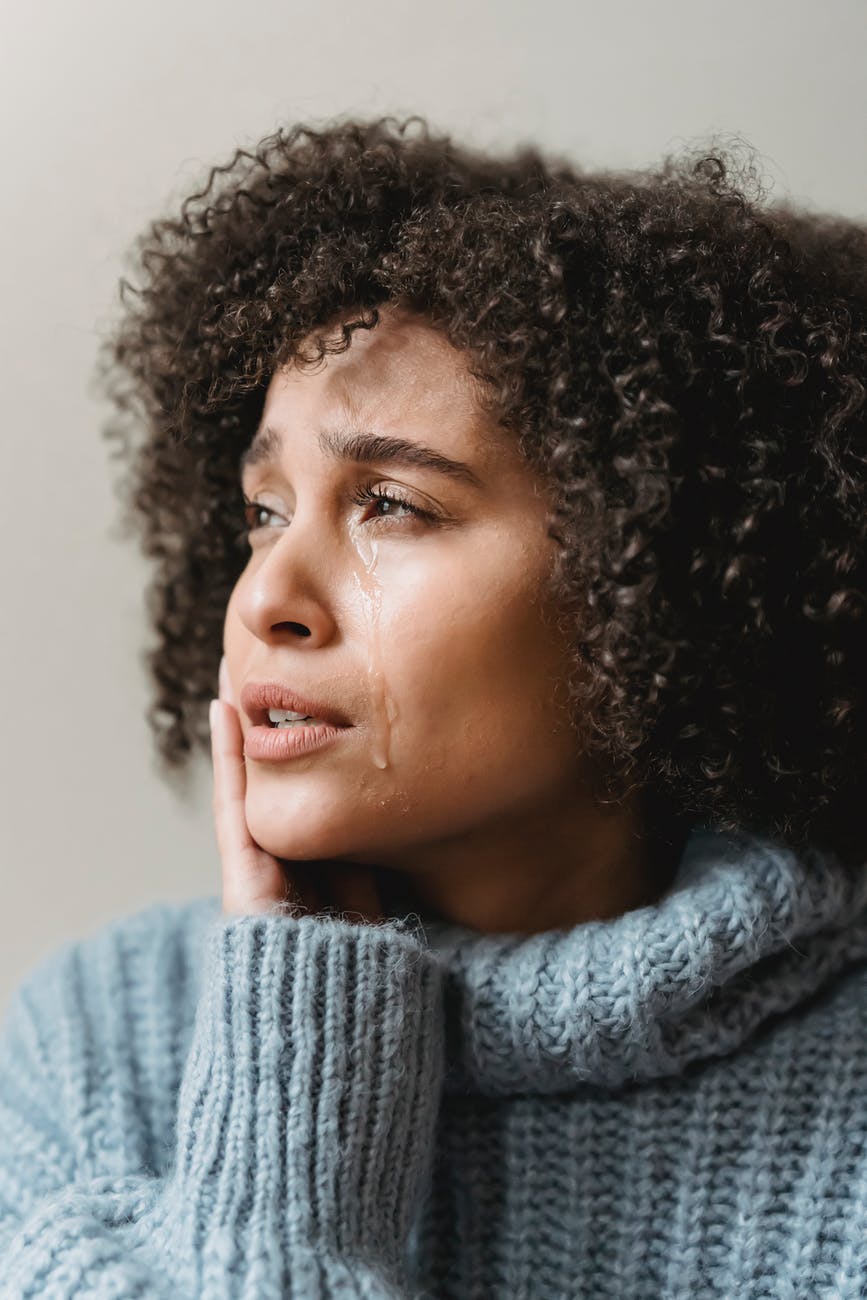
Faith is an expression of hope for something better. More than a wish, it is closer to a belief, but not quite. A belief is rooted in the mind. Faith is based in the heart.
We act in faith when there is no guarantee, no certainty. No one knows what kind of life an infant will have, yet people continue to have children. No one can know how life with our mates will turn out, yet we continue to have faith our relationships will last a lifetime.
Faith speaks the language of the heart. It is an expression of hope that goes beyond the conscious mind.
All that we hold precious rests upon a faith in people, their potential not yet fulfilled. The evidence of history points us in a different direction—the world is full of ugliness, brutality, and injustices. Yet there is also tenderness, kindness, and concern and that takes the bigger part of our hearts.
Without faith in ourselves, we would hold ourselves cheap, and without faith in others, we could never live as free people. This is the water that quenches parched souls.
Here is a famous parable: Once a traveler came across an old woman who was stooped over what appeared to be thin sticks. He asked the woman what she was doing.
“I am planting orange trees,” she explained.
The traveler thought this was a waste of her time.
“Why do you bother?” he asked. “You are an old woman. These saplings will take years before they will be old enough to bear fruit. You will be long gone by then.”
“True enough,” she answered. “But I don’t plant these trees for myself but for those who will come after me, just as those before me planted the trees that bear the fruit that I eat today.”

Arthur Dobrin, DSW, is Professor Emeritus of University Studies, Hofstra University and Leader Emeritus, Ethical Humanist Society of Long Island. He is the author of more than 25 books, including The Lost Art of Happiness and Teaching Right from Wrong.
Despite all the researching, debating, talking, and planning for the upcoming school year, no one can predict how it will all play out. There are too many variables, unprecedented variables that make the return to school so challenging. Simply put, this is an uncertain, scary time for educators, parents, and students. On a larger scale, it’s also an uncertain, scary time for the rest of us, which is why remaining informed, optimistic, and flexible is important. “Optimism is the faith that leads to achievement,” said Helen Keller, a woman very familiar with insurmountable odds—as well as uncertain, scary times. “Nothing,” she continued, “can be done without hope.”
Don’t worry. We’re not going to get too saccharine on you. What we are going to do, true to the title of this blog, is talk about the power of hope, a subject often relegated to motivational speakers and wishful thinkers, or yearbook quotes and greeting cards. However, a June 2020 Psychology Today article by Dr. David B. Feldman argues that hope isn’t the same thing as wishful thinking. “It’s not even the same as glass-half-full thinking,” he says. “Hope is applicable even when the glass is only a third full or has nothing in it at all. That’s because real hope isn’t about living in a fantasy world; it’s about living in this one. It doesn’t deny suffering and pain.” He asserts it’s because hope isn’t a delusion, but rather something people very much grounded in the real world, who understand and accept that life can be tough, unfair, and chaotic, use to stay on course and create better realities for themselves. Hope isn’t abstract. It’s very much concrete.
Hope is “a way of thinking that pushes us to action.” Research finds that when people have hope, they’re more likely to make their goals a reality. When people have a clear belief, a clear hope, about what’s possible, they’re more likely to take the action needed on that goal to bring it to fruition. People with hope are people who are able to envision and pursue a future different than their current reality. They’re able to set clear goals, develop multiple strategies to attain those goals, and stay motivated to reach those goals even when they experience setbacks.
Studies also show that people with high levels of hope throughout their lives have better physical health, better health behaviors, better social supports, and live longer—it also can lead to fewer chronic health problems, less depression, and less anxiety. Those with consistently high levels of hope are more productive at work, handle stress better, and tolerate pain and adversity better than their less hopeful peers, keeping in mind once again that hope doesn’t mean a blind optimism. The Merriam Webster Dictionary defines hope simply as “to expect with confidence.” Hope makes students better problem solvers and students with hope for their future, who can confidently expect their goals to become realit, are less likely to drop out .
What might be the most eye-opening revelations regarding the concreteness of hope, is how experts are finding that there may not be a better way to predict student success than how hopeful they are. In an article from The Atlantic entitled “The Role of Adult Mentorship in Children Dealing With Trauma” the National Institute of Child Health and Human Development’s Dr. Valerie Maholmes said that there’s no more important predictor of success than hope, especially in children who come from environments where all circumstantial evidence points to the contrary. She said that children who are able to adapt and overcome adversity tend to have a higher sense of self efficacy, which feeds their senses of competency, and leads to a feeling of control over their environment and destination. To hear it from Dr. Maholmes, hope is one big trickle-down effect.
In discussing the results of Gallup’s 2018 Survey of K-12 School District Superintendents, Gallup Senior Editor Dr. Jeffrey Jones says that by and large the superintendents surveyed said students’ engagement and hope are actually the best indicators of future success. The survey found that students who are engaged—those involved and enthusiastic about school—are more likely to be hopeful for the future and have better academic performance than their disengaged peers; in fact, 9 out of 10 K-12 superintendents said hope for the future is a very important measurement of school effectiveness (versus just 1-10 who said standardized tests are very important). Earlier Gallup surveys indicate that students stay engaged (which in turn keeps them in school) when they’re able to connect what they’re learning to their futures and thinking about their futures is what gives students that assumption that a positive outcome can happen—it’s all interconnected.
The takeaway then, for educators, mentors, family members, and anyone else helping prepare the next generation of workers for career and life success is to work your best to instill a sense of hope in that next generation, especially in these very uncertain times. It’s not something that comes naturally to everyone, but is something that can be cultivated and worked on, and something we’re going to be focusing on the entire month of August as we gear up to what might be the most challenging school year students and educators have faced in some time.
By VirtualJobShadow.com







 HPS Magazine