Hurricane Ian

Photo by Pixabay on Pexels.com

Florida faces grim reality: Hurricane Ian is deadliest storm in state since 1935

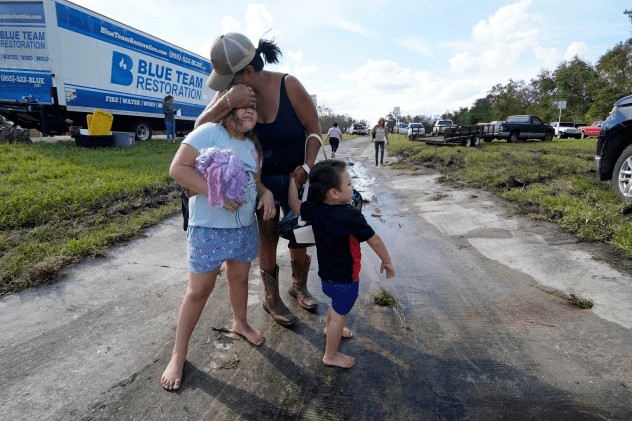
The hardest-hit areas have been described as resembling “a war zone” and Ian’s death toll has climbed above 100 as rescue crews go door-to-door to search for survivors and help in recovery.

By Allison Finch, AccuWeather staff writer

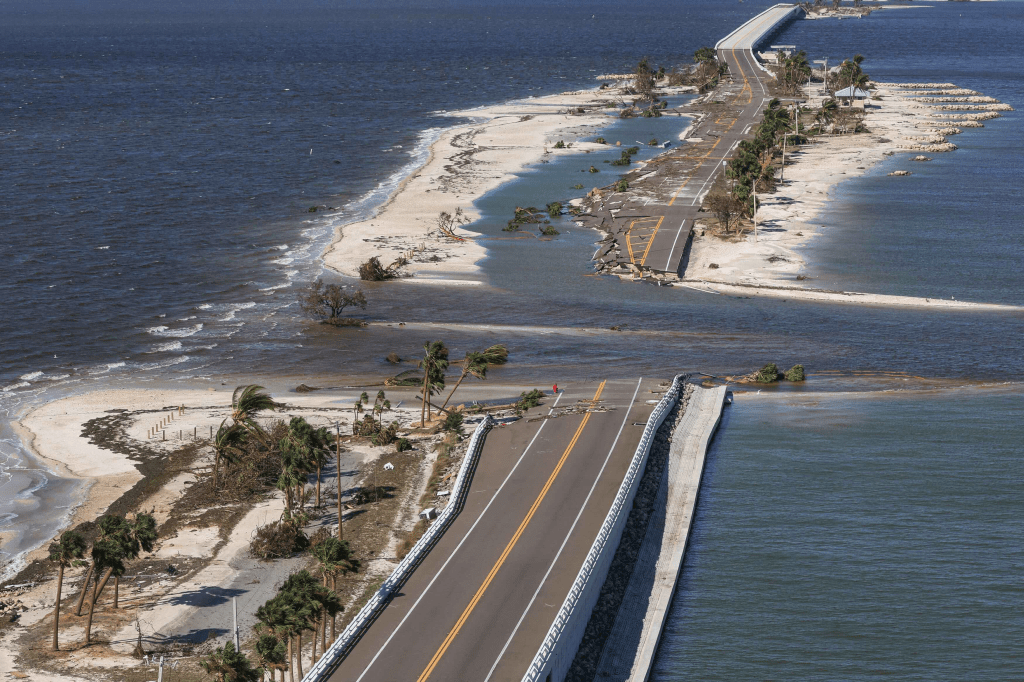
Nearly a week after Hurricane Ian obliterated communities in Florida, the death toll continues to rise as rescue crews go door-to-door in some of the hardest-hit communities. While hundreds of thousands remained without power on Tuesday and roadways were still flooded, construction on a makeshift bridge broke ground to help those stranded on Pine Island, one of several barrier islands that suffered the full force of Ian’s wrath.

The death toll climbed on Tuesday after growing to 100 on Monday, with at least 110 confirmed U.S. fatalities blamed on Ian. At least 105 of those deaths occurred in Florida, CNN Newsource reported, as well as five in North Carolina, according to the governor there. In Florida, Lee County was the largest source of the casualties, with 55 deaths reported by county officials. The Associated Press also reported three fatalities in Cuba, where Ian struck before hitting the U.S.

Most of the deaths from the hurricane were a result of drowning, but some have been blamed on harsh consequences in the aftermath of the storm, such as an elderly couple who died after power to their oxygen machines shut off.

“Although the death toll from Ian is fluid and historical numbers are inexact, Ian is likely the deadliest tropical system for the state of Florida since the 1935 Labor Day Hurricane, which killed over 400 people,” AccuWeather Senior Weather Editor Jesse Ferrell said.

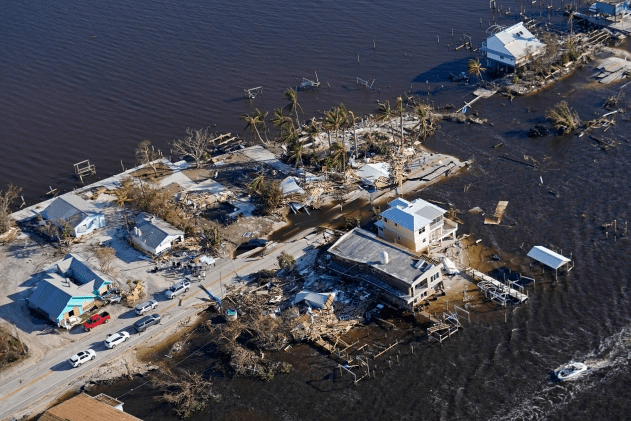
New photos and videos emerging from the epicenter of where Hurricane Ian made landfall show the sheer power the storm packed. Homes are barely recognizable on Captiva Island, a barrier island in Lee County right near where Ian made its first United States landfall as a Category 4 storm.

Footage captured by storm chaser Brandon Clement shows debris, fallen trees and power lines scattered around the island. Inside homes, watermark stains tell a harrowing tale about just how high the storm surge rose. Furniture can be seen scattered about, and the floors are covered in a mixture of sand and mud.

Despite nearly a week having passed since Hurricane Ian brought torrential rainfall and catastrophic storm surge to Florida, river levels continued to rise Monday, and homes and streets in many places were still inundated.

“The sandy soil in Florida can absorb light to moderate amounts of rain rather quickly, but when you get rainfall of 1-2 feet, even that can be overwhelmed,” AccuWeather Senior Meteorologist Alex Sosnowski explained. “It can take a long time for that to drain off.”

Officials warn the floodwaters will make for a dangerous situation as rescue and recovery efforts continue.

“We see so many more injuries and sometimes more fatalities after the storm,” Deanne Criswell, administrator of the Federal Emergency Management Agency told Fox News SundayThe Associated Press reported. “Standing water brings with it all kinds of hazards — it has debris, it could have power lines.”

Officials said thousands of people had been rescued in the days since the storm left its vicious mark. The federal response to the ongoing search-and-rescue process could be one of the biggest ever.

“We pre-positioned the largest amount of search-and-rescue assets that I think we’ve ever put in place before,” Criswell said during her appearance on Fox News Sunday.

President Joe Biden is expected to travel to Florida Wednesday to visit areas that were ravaged by Ian. On Monday, Biden visited Puerto Rico, which is still recovering from Hurricane Fiona’s powerful strike two weeks ago.

Lee County officials have come under scrutiny about whether they provided residents with ample warning to evacuate. According to the Orlando Sentinel, officials along much of the coastline ordered residents to evacuate Monday, but Lee County officials “pondered” the decision, waiting to see how the forecast evolved overnight. By Tuesday, Lee County officials issued the evacuation notice.

According to Lee County’s evacuation strategy plan, the delay is an apparent violation and may have contributed to fatal consequences as the death toll continues to rise, the Orlando Sentinel reported.

Over the weekend, Florida Gov. Ron DeSantis defended the state’s early preparations for Hurricane Ian as questions arose on whether or not hard-hit areas, like Lee County, received enough advance warning to evacuate, Politico reported.

“When we went to bed Monday night, people were saying this is a direct hit on Tampa Bay — worst-case scenario for the state,” DeSantis told reporters as he defended the Lee County officials who issued the evacuation notice on Tuesday instead of Monday. Lee County includes Sanibel Island, Pine Island, Fort Myers Beach and Fort Myers — some of the worst-hit places.

Imagery from Clement revealed that many houses on barrier islands in Lee County did not stand a chance from the powerful winds and storm surge Ian delivered. A blue house, along with a few other homes on Captiva Island, remained standing as surrounding buildings were brought down to their foundation. Debris could be seen scattered in all directions.

On Monday, Lee County Sheriff Carmine Marceno stated that search-and-rescue teams have rescued 800 people thus far. Marceno said it is unknown how many people are still missing, and that rescue efforts are continuing, including the deployment of 100 National Guard members to Pine Island.

DeSantis’ office on Monday stated that as of 7 a.m. EDT Monday, more than 1,900 rescues had been made in the state, with more than 1,000 search-and-rescue team members deployed.

The sudden surge of water during the storm’s landfall forced many residents who didn’t evacuate to seek shelter on roofs or in attics. Fort Myers residents described the water pushing through their doors and walls.

“Within 30 minutes it was up to my door and within an hour it was pushing through my door,” Jeannel Thyl, a Fort Myers resident, told AFP.

Before and after satellite imagery from Maxar showed just how devastating the hurricane was to the state. Neighborhoods have disappeared and coastlines were left changed. Flooded roadways and crumbled bridges left many people stranded with limited cellphone coverage and no water, electricity or internet.

DeSantis said at a press conference on Sunday that construction of a temporary passageway for Pine Island will begin this week, the AP reported.

“It’s not going to be a full bridge,” the governor said. “You’re going to have to go over it probably at 5 miles an hour or something, but it’ll at least let people get in and off the island with their vehicles.”

On Tuesday, DeSantis directed the Florida Department of Transportation (FDOT) to send more than 130 trucks to construct a temporary bridge to Pine Island “by the end of the week.”

Florida first lady Casey DeSantis stated that the Florida Disaster Fund had raised nearly $35 million within the first five days of the fund website’s activation. State figureheads have been making donations to the fund, such as Tampa Bay Buccaneers superstar Tom Brady, who called upon the “rest of the NFL family in our state” to also help recovery causes. Another donation, a $280 life-savings haul from the piggy bank of 7-year-old Dominic D’Andrea, gained popularity on social media Tuesday.

Florida officials said on Monday that some schools in the southwestern part of the state could open as soon as this week, once power and water are restored. However, it could be much longer before schools in the hardest-hit locations welcome students back. As of Monday, 46 districts were open in the state as a whole, with DeSantis’ office stating that “many more” would be opening later in the week.

As of early Wednesday morning, around 320,000 customers were without power in Florida, a sharp drop from a peak of 2.6 million outages Thursday morning, according to PowerOutage.US. On Monday, officials in Lee County said that the power outage in Fort Myers Beach could last at least a month. Lee County still had over 180,000 customers without power as of Tuesday evening, with neighboring Charlotte County at around 62,000 outages, nearly a 50% restoration of outages from Tuesday morning’s figure of 120,000.

“It’s horrible. As they say, it’s like a war zone. Everything that you used to know is gone,” Alice Barrett, a Fort Myers Beach resident, told AccuWeather National Reporter Bill Wadell. “I mean, there’s very few buildings that are standing. It’s hard to imagine. From this beautiful place that you love — it’s all gone. It’s just hard.”

The shocking scenes of destruction hint at how sweeping and long-lasting the impact across Florida will be felt. The economic fallout caused by the storm will be immense, AccuWeather Founder and CEO Dr. Joel N. Myers said — on par with some of the worst hurricane damage in U.S. history. According to Myers, the total losses caused by Hurricane Ian will amount to between $180 billion and $210 billion in the U.S.

“Ian will go down as one of the most damaging and impactful storms in U.S. history, along with 2017’s Hurricane Harvey, which caused $190 billion in total damage and economic loss,” Myers said.

“The economic impact of this storm should not be underestimated,” Myers added. “At $200 billion, that amounts to 1 percent of our national GDP, which is a significant hit on the economy and the entire country and could even be the difference between growth and recession, causing the Federal Reserve to keep from raising interest rates further for the remainder of the year.”

When Ian made landfall last Wednesday in southwestern Florida, it unleashed relentless wind gusts across the peninsula. The highest official reported wind gust was 128 mph, recorded by a WeatherFlow station in Grove City. However, locally higher wind speeds that weren’t officially observed may have also occurred.

Rainfall across the state was staggering, too. In just 24 hours, automated rain gauges reported as much as 31.52 inches of rain near Ponce Inlet, a coastal community northeast of Orlando. Rainfall totals combined with the ferocious storm surge wreaked havoc on barrier islands and areas close to the coast.

In addition to the flooding rainfall and relentless wind Ian brought to the Sunshine State, a cluster of tornadoes touched down over South Florida from Sept. 27 to Sept. 28 — the day before and day of landfall. According to the Storm Prediction Center (SPC), there were 11 confirmed tornadoes across the southern third of the state. Of those, the strongest tornado surveyed by the NWS office in Miami was an EF2 near Kings Point, just south of West Palm Beach.

Meditating for Chronic Pain Management

Photo by Oluremi Adebayo on Pexels.com

When your chronic pain persists after you’ve tried conventional treatments, it may be worth a look at meditation. Even if you’re skeptical, you may find a type of meditation that helps you.

The scientific studies on whether meditation works to lower chronic pain have had mixed results. The wide variety of studies and methods makes them hard to compare.

But the bottom line is that some studies show meditation lessens chronic pain and stress for some people. Studies also show that meditation can work for beginners.

Read on to find out more about the scientific evidence on chronic pain and meditation and how to incorporate different meditation techniques.

What is meditation?

Meditation is an ancient practice with roots in Buddhism and other Eastern religions. It starts with focusing your attention on the present moment and not judging your thoughts in the process.

Meditation retrains the brain

Meditation uses different brain pathways to deal with pain from those used by other pain treatments. Over time, meditation can change your brain structure to better deal with pain.

Here’s what some studies reported:

  • 2018 study of meditation, mindfulness, and the brain suggested that in the long term, meditation can change the structure of your brain. The resulting change in cortical thickness in some brain areas makes you less pain-sensitive.
  • The neural mechanisms meditation uses to modify pain are different from those used by other techniques. For example, a 2012 studyTrusted Source determined that meditation promoted cognitive disengagement and an increased sensory processing of the actual pain.
  • Meditation also induces the body’s own opioid system. A very small, randomized, double-blind study from 2016 used the opioid blocker naloxone or a placebo and studied pain reduction with meditation. The group with the placebo experienced significantly less pain than the group that had the opioid blocker.

Research is ongoing to look at the exact physiological mechanisms involved with meditation.

A note about the terms “mindfulness” and “meditation”

The terms mindfulness and meditation are often used interchangeably or in combination.

In general, mindfulness is the practice of being aware of the present at any time in daily activities. Meditation refers to being mindful of your inner processes.

Does meditation help chronic pain?

Yes, for some people. Here are what some studies found:

  • A small controlled study in 2012 Trusted Source found that people who practiced mindfulness were able to reduce pain by 22 percent. They were also able to reduce anticipatory anxiety by 29 percent.
  • 2014 meta-analysis of mindfulness and pain found “insufficient evidence” that mindfulness reduced pain intensity. But the same study found that it eased depression and anxiety in people with chronic pain. The study recommended that healthcare professionals integrate meditation into their pain treatment programs.
  • 2017 review of nonpharmacological treatments reported that mindfulness-based stress reduction was able to improve lower back pain in a trial of 350 adults by more than 30 percent. The results were found to last a year after treatment.
  • 2017 study Trusted Source of 864 people with lower back pain found that meditation was associated with short-term improvement of pain intensity and physical functioning.
  • 2018 white paper on nonpharmacological pain care concluded that nonpharmacological treatments are underused. The paper noted that mindfulness practices show positive effects for people with chronic pain from headache, fibromyalgia, and irritable bowel syndrome.
  • 2018 review Trusted Source of mindfulness and the brain reported that experienced meditators were less sensitive to pain than a control population, as measured by MRI brain scans.
  • 2019 study Trusted Source of mindfulness and pain concluded that mindfulness was associated with lower pain sensitivity, including in people who had no prior experience with meditation.

Every individual is different, so what works to relieve pain for you may not work for other people.

Chronic pain defined

Chronic pain is pain that you have for 3 months or more. The pain may start with an injury or a disease. In some cases, the cause may not be precisely known.

Why meditation for pain management?

In recent years, the research on meditation and chronic pain has greatly expanded. Studies are looking at what works for different types of chronic pain, such as back pain or chronic diseases.

There are many types of meditation techniques and many tools to help you get started. Here are a few examples:

  • books
  • meditation apps
  • podcasts
  • online videos
  • classes
  • personal instructors

Some people use more than one type of meditation, and many guides to getting started are free.

Unlike other methods of pain relief, when you meditate, you focus toward the pain, instead of away from it, in order to find relief. In other words, you’re not working to block or ignore it but to reduce the pain by working with it.

Types of meditation to start with

When you’re ready to try meditation, you’ll find many types to choose from. Look for something you’ll feel comfortable doing. Free guided recordings are available so that you can try them out.

Here are some possibilities.

Mindful meditation

Mindful meditation can help you manage stress, pain, and anxiety.

You can do this by yourself or with an instructor to guide you. Basically, you quietly concentrate on your thoughts without passing judgment on them.

It’s one of the most popular types of meditation. It’s also been the most studied type of meditation over the years.

A variety of apps can help you mindfully meditate via your phone or another device. You can find a guide to meditation apps here.

The Mindfulness Awareness Research Center at the University of California, Los Angeles (UCLA) has a free 19-minute audio session and transcript to guide your meditation.

Visualization meditation

Guided imagery or visualization meditation combines visualizing something positive while you meditate. The aim is to focus your thoughts, calm you down, and reduce stress and pain.

Headspace has an app that can guide you through this.

Breathwork meditation

Breathwork meditation involves using a type of breathing exercise to change your breathing pattern and relax your mind. It’s sometimes used with mindfulness meditation to help you focus.

Many types of breathwork techniques are available. The Mindfulness Awareness Research Center at UCLA has a free 5-minute guided audio recording to take you through this.

Body scanning

In body scanning meditation, you mentally focus on your body from top to bottom. The aim is to notice everything about your body, relaxing each part of your body as you scan.

You can practice this scanning meditation sitting or lying down. The Mindfulness Awareness Research Center at UCLA has a free 3-minute audio recording for guidance. There’s also a script you can use.

The University of California at San Diego (UCSD) Center for Mindfulness has many guided recordings for body scanning meditation available here.

The Mind Illuminated

This approach is based on a popular book, “The Mind Illuminated: A Complete Meditation Guide Integrating Buddhist Wisdom and Brain Science for Greater Mindfulness.” It was published in 2015 and written by John Yates, a meditation teacher, to guide people through stages of meditation.

Yates is also a neuroscientist. He uses brain science along with ancient teachings to give beginners and experienced meditators a how-to manual to master meditation.

The takeaway

Scientific studies on the effectiveness of meditating to relieve chronic pain show mixed results. One problem is that it’s hard to compare studies involving particular sources of pain and different types of meditation.

But evidence exists that meditation does help some people with pain. How? Research shows that meditation uses neural pathways that make the brain less sensitive to pain and increases use of the brain’s own pain-reducing opioids.

If you have chronic pain, meditation is worth looking at. Many guides to meditation are available free, so it’s easy to try.

Fast stats on meditation and chronic pain

  • Chronic pain affects more than 100 million Americans, costing more than $635 billion a year, according to a 2017 study.
  • About 20 percent to 30 percent of adults in the higher-income countries suffer from chronic pain, according to a 2014 meta-analysis.
  • The number of adults using meditation in the United States tripled between 2012 and 2017Trusted Source, increasing from 4.1 percent to 14.2 percent, according to the U.S. National Health Interview Survey (NHIS).
  • The 2012 NHIS of 34,525 Americans found that 63.6 percent of the people who used meditation reported that it helped them a great deal.

12 Science-Based Benefits of Meditation

Meditation is the habitual process of training your mind to focus and redirect your thoughts.

The popularity of meditation is increasing as more people discover its many health benefits.

You can use it to increase awareness of yourself and your surroundings. Many people think of it as a way to reduce stress and develop concentration.

People also use the practice to develop other beneficial habits and feelings, such as a positive mood and outlook, self-discipline, healthy sleep patterns, and even increased pain tolerance.

This article reviews 12 health benefits of meditation.

1. Reduces stress

Stress reduction is one of the most common reasons people try meditation.

One review concluded that meditation lives up to its reputation for stress reduction.

Normally, mental and physical stress cause increased levels of the stress hormone cortisol. This produces many of the harmful effects of stress, such as the release of inflammatory chemicals called cytokines.

These effects can disrupt sleep, promote depression and anxiety, increase blood pressure, and contribute to fatigue and cloudy thinking.

In an 8-week study, a meditation style called “mindfulness meditation” reduced the inflammation response caused by stress.

Furthermore, research has shown that meditation may also improve symptoms of stress-related conditions, including irritable bowel syndrome, post-traumatic stress disorder, and fibromyalgia.

SUMMARY

Many styles of meditation can help reduce stress. Meditation can likewise reduce symptoms in people with stress-triggered medical conditions.

2. Controls anxiety

Meditation can reduce stress levels, which translates to less anxiety.

A meta-analysis including nearly 1,300 adults found that meditation may decrease anxiety. Notably, this effect was strongest in those with the highest levels of anxiety.

Also, one study found that 8 weeks of mindfulness meditation helped reduce anxiety symptoms in people with generalized anxiety disorder, along with increasing positive self-statements and improving stress reactivity and coping.

Another study in 47 people with chronic pain found that completing an 8-week meditation program led to noticeable improvements in depression, anxiety, and pain over 1 year.

What’s more, some research suggests that a variety of mindfulness and meditation exercises may reduce anxiety levels.

For example, yoga has been shown to help people reduce anxiety. This is likely due to benefits from both meditative practice and physical activity.

Meditation may also help control job-related anxiety. One study found that employees who used a mindfulness meditation app for 8 weeks experienced improved feelings of well-being and decreased distress and job strain, compared with those in a control group.

SUMMARY

Habitual meditation can help reduce anxiety and improve stress reactivity and coping skills.

3. Promotes emotional health

Some forms of meditation can lead to improved self-image and a more positive outlook on life.

For example, one review of treatments given to more than 3,500 adults found that mindfulness meditation improved symptoms of depression.

Similarly, a review of 18 studies showed that people receiving meditation therapies experienced reduced symptoms of depression, compared with those in a control group.

Another study found that people who completed a meditation exercise experienced fewer negative thoughts in response to viewing negative images, compared with those in a control group.

Furthermore, inflammatory chemicals called cytokines, which are released in response to stress, can affect mood, leading to depression. A review of several studies suggests meditation may also reduce depression by decreasing levels of these inflammatory chemicals.

SUMMARY

Some forms of meditation can improve depression and reduce negative thoughts. It may also decrease levels of inflammatory cytokines, which could contribute to depression.

4. Enhances self-awareness

Some forms of meditation may help you develop a stronger understanding of yourself, helping you grow into your best self.

For example, self-inquiry meditation explicitly aims to help you develop a greater understanding of yourself and how you relate to those around you.

Other forms teach you to recognize thoughts that may be harmful or self-defeating. The idea is that as you gain greater awareness of your thought habits, you can steer them toward more constructive patterns.

One review of 27 studies showed that practicing tai chi may be associated with improved self-efficacy, which is a term used to describe a person’s belief in their own capacity or ability to overcome challenges.

In another study, 153 adults who used a mindfulness meditation app for 2 weeks experienced reduced feelings of loneliness and increased social contact compared with those in a control group.

Additionally, experience in meditation may cultivate more creative problem-solving skills.

SUMMARY

Self-inquiry and related styles of meditation can help you “know yourself.” This can be a starting point for making other positive changes.

5. Lengthens attention span

Focused-attention meditation is like weight lifting for your attention span. It helps increase the strength and endurance of your attention.

For example, one study found that people who listened to a meditation tape experienced improved attention and accuracy while completing a task, compared with those in a control group.

A similar study showed that people who regularly practiced meditation performed better on a visual task and had a greater attention span than those without any meditation experience.

Moreover, one review concluded that meditation may even reverse patterns in the brain that contribute to mind-wandering, worrying, and poor attention.

Even meditating for a short period each day may benefit you. One study found that meditating for just 13 minutes daily enhanced attention and memory after 8 weeks.

SUMMARY

Several types of meditation may build your ability to redirect and maintain attention.

6. May reduce age-related memory loss

Improvements in attention and clarity of thinking may help keep your mind young.

Kirtan Kriya is a method of meditation that combines a mantra or chant with repetitive motion of the fingers to focus your thoughts. Studies in people with age-related memory loss have shown it improves performance on neuropsychological tests.

Furthermore, a review found preliminary evidence that multiple meditation styles can increase attention, memory, and mental quickness in older volunteers.

In addition to fighting normal age-related memory loss, meditation can at least partially improve memory in patients with dementia. It can likewise help control stress and improve coping in those caring for family members with dementia.

SUMMARY

The improved focus you can gain through regular meditation may boost your memory and mental clarity. These benefits can help fight age-related memory loss and dementia.

7. Can generate kindness

Some types of meditation may particularly increase positive feelings and actions toward yourself and others.

Metta, a type of meditation also known as loving-kindness meditation, begins with developing kind thoughts and feelings toward yourself.

Through practice, people learn to extend this kindness and forgiveness externally, first to friends, then acquaintances, and ultimately enemies.

A meta-analysis of 22 studies on this form of meditation demonstrated its ability to increase peoples’ compassion toward themselves and others.

One study in 100 adults randomly assigned to a program that included loving-kindness meditation found that these benefits were dose-dependent.

In other words, the more time people spent in weekly metta meditation practice, the more positive feelings they experienced.

Another study in 50 college students showed that practicing metta meditation 3 times per week improved positive emotions, interpersonal interactions, and understanding of others after 4 weeks.

These benefits also appear to accumulate over time with the practice of loving-kindness meditation.

SUMMARY

Metta, or loving-kindness meditation, is a practice of developing positive feelings, first toward yourself and then toward others. Metta increases positivity, empathy, and compassionate behavior toward others.

8. May help fight addictions

The mental discipline you can develop through meditation may help you break dependencies by increasing your self-control and awareness of triggers for addictive behaviors.

Research has shown that meditation may help people learn to redirect their attention, manage their emotions and impulses, and increase their understanding of the causes behind their.

One study in 60 people receiving treatment for alcohol use disorder found that practicing transcendental meditation was associated with lower levels of stress, psychological distress, alcohol cravings, and alcohol use after 3 months.

Meditation may also help you control food cravings. A review of 14 studies found mindfulness meditation helped participants reduce emotional and binge eating.

SUMMARY

Meditation develops mental awareness and can help you manage triggers for unwanted impulses. This can help you recover from addiction, manage unhealthy eating, and redirect other unwanted habits.

9. Improves sleep

Nearly half of the population will struggle with insomnia at some point.

One study compared mindfulness-based meditation programs and found that people who meditated stayed asleep longer and had improved insomnia severity, compared with those who had an unmedicated control condition.

Becoming skilled in meditation may help you control or redirect the racing or runaway thoughts that often lead to insomnia.

Additionally, it can help relax your body, releasing tension and placing you in a peaceful state in which you’re more likely to fall asleep.

SUMMARY

A variety of meditation techniques can help you relax and control runaway thoughts that can interfere with sleep. This can shorten the time it takes to fall asleep and increase sleep quality.

10. Helps control pain

Your perception of pain is connected to your state of mind, and it can be elevated in stressful conditions.

Some research suggests that incorporating meditation into your routine could be beneficial for controlling pain.

For example, one review of 38 studies concluded that mindfulness meditation could reduce pain, improve quality of life, and decrease symptoms of depression in people with chronic pain.

A large meta-analysis of studies enrolling nearly 3,500 participants concluded that meditation was associated with decreased pain.

Meditators and non-meditators experienced the same causes of pain, but meditators showed a greater ability to cope with pain and even experienced a reduced sensation of pain.

SUMMARY

Meditation can diminish the perception of pain in the brain. This may help treat chronic pain when used to supplement medical care or physical therapy.

11. Can decrease blood pressure

Meditation can also improve physical health by reducing strain on the heart.

Over time, high blood pressure makes the heart work harder to pump blood, which can lead to poor heart function.

High blood pressure also contributes to atherosclerosis, or a narrowing of the arteries, which can lead to heart attack and stroke.

A meta-analysis of 12 studies enrolling nearly 1000 participants found that meditation helped reduce blood pressure. This was more effective among older volunteers and those who had higher blood pressure prior to the study.

One review concluded that several types of meditation produced similar improvements in blood pressure.

In part, meditation appears to control blood pressure by relaxing the nerve signals that coordinate heart function, blood vessel tension, and the “fight-or-flight” response that increases alertness in stressful situations.

SUMMARY

Blood pressure decreases not only during meditation but also over time in individuals who meditate regularly. This can reduce strain on the heart and arteries, helping prevent heart disease.

12. Accessible anywhere

People practice many different forms of meditation, most of which don’t require specialized equipment or space. You can practice with just a few minutes daily.

If you want to start meditating, try choosing a form of meditation based on what you want to get out of it.

There are two major styles of meditation:

  • Focused-attention meditation. This style concentrates attention on a single object, thought, sound, or visualization. It emphasizes ridding your mind of distractions. Meditation may focus on breathing, a mantra, or calming sound.
  • Open-monitoring meditation. This style encourages broadened awareness of all aspects of your environment, train of thought, and sense of self. It may include becoming aware of suppressed thoughts, feelings, or impulses.

To find out which styles you like best, check out the variety of free, guided meditation exercises offered by the University of California Los Angeles. It’s an excellent way to try different styles and find one that suits you.

If your regular work and home environments do not allow for consistent, quiet alone time, consider participating in a class. This can also improve your chances of success by providing a supportive community.

Alternatively, consider setting your alarm a few minutes early to take advantage of quiet time in the morning. This may help you develop a consistent habit and allow you to start the day positively.

SUMMARY

If you’re interested in incorporating meditation into your routine, try a few different styles and consider guided exercises to get started with one that suits you.

The bottom line

Meditation is something everyone can do to improve their mental and emotional health.

You can do it anywhere, without special equipment or memberships.

Alternatively, meditation courses and support groups are widely available.

There’s a great variety of styles too, each with different strengths and benefits.

Trying out a style of meditation suited to your goals is a great way to improve your quality of life, even if you only have a few minutes to do it each day.

The ‘male menopause’

Photo by cottonbro on Pexels.com

Some men develop depression, loss of sex drive, erectile dysfunction, and other physical and emotional symptoms when they reach their late 40s to early 50s.

Other symptoms common in men this age are:

  • mood swings and irritability
  • loss of muscle mass and reduced ability to exercise
  • fat redistribution, such as developing a large belly or “man boobs” (gynaecomastia)
  • a general lack of enthusiasm or energy
  • difficulty sleeping (insomnia) or increased tiredness
  • poor concentration and short-term memory

These symptoms can interfere with everyday life and happiness, so it’s important to find the underlying cause and work out what can be done to resolve it.

Is there such a thing as a ‘male menopause’?

The “male menopause” (sometimes called the andropause) is an unhelpful term sometimes used in the media.

This label is misleading because it suggests the symptoms are the result of a sudden drop in testosterone in middle age, similar to what occurs in the female menopause. This is not true.

Although testosterone levels fall as men age, the decline is steady at less than 2% a year from around the age of 30 to 40, and this is unlikely to cause any problems in itself.

A testosterone deficiency that develops later in life, also known as late-onset hypogonadism, can sometimes be responsible for these symptoms, but in many cases the symptoms are nothing to do with hormones.

Personal or lifestyle issues 

Lifestyle factors or psychological problems are often responsible for many of these symptoms.

For example, erectile dysfunctionloss of libido and mood swings may be the result of either:

There are also physical causes of erectile dysfunction, such as changes in the blood vessels, which may happen alongside any psychological cause.

Find out more about the causes of erectile dysfunction

Psychological problems are typically brought on by work or relationship issues, divorce, money problems or worrying about ageing parents.

A “midlife crisis” can also be responsible. This can happen when men think they have reached life’s halfway stage.

Anxieties over what they have accomplished so far, either in their job or personal life, can lead to a period of depression.

Find out more about the male midlife crisis

Other possible causes of the “male menopause” include:

  • lack of sleep
  • a poor diet
  • lack of exercise
  • drinking too much alcohol
  • smoking
  • low self-esteem

Late-onset hypogonadism 

In some cases, where lifestyle or psychological problems do not seem to be responsible, the symptoms of the “male menopause” may be the result of hypogonadism, where the testes produce few or no hormones.

Hypogonadism is sometimes present from birth, which can cause symptoms like delayed puberty and small testes.

Hypogonadism can also occasionally develop later in life, particularly in men who are obese or have type 2 diabetes.

This is known as late-onset hypogonadism and can cause the “male menopause” symptoms.

But this is an uncommon and specific medical condition that’s not a normal part of ageing.

A diagnosis of late-onset hypogonadism can usually be made based on your symptoms and the results of blood tests used to measure your testosterone levels.

What to do

If you’re experiencing any of these symptoms, see your GP. They’ll ask about your work and personal life to see if your symptoms may be caused by a mental health issue, such as stress or anxiety.

If stress or anxiety are affecting you, you may benefit from medication or a talking therapy, such as cognitive behavioural therapy (CBT).

Exercise and relaxation can also help. 

Read about:

Do I need hormone replacement therapy (HRT)?

Your GP may also order a blood test to measure your testosterone levels.

If the results suggest you have a testosterone deficiency, you may be referred to an endocrinologist, a specialist in hormone problems.

If the specialist confirms this diagnosis, you may be offered testosterone replacement to correct the hormone deficiency, which should relieve your symptoms.

This treatment may be either:

  • tablets
  • patches
  • gels
  • implants
  • injections

By: NHS

NOAA predicts above-normal 2022 Atlantic Hurricane Season

Ongoing La Niña, above-average Atlantic temperatures set the stage for busy season ahead

Photo by Lachlan Ross on Pexels.com

Forecasters at NOAA’s Climate Prediction Center, a division of the National Weather Service, are predicting above-average hurricane activity this year — which would make it the seventh consecutive above-average hurricane season. NOAA’s outlook for the 2022 Atlantic hurricane season, which extends from June 1 to November 30, predicts a 65% chance of an above-normal season, a 25% chance of a near-normal season and a 10% chance of a below-normal season.

For the 2022 hurricane season, NOAA is forecasting a likely range of 14 to 21 named storms (winds of 39 mph or higher), of which 6 to 10 could become hurricanes (winds of 74 mph or higher), including 3 to 6 major hurricanes (category 3, 4 or 5; with winds of 111 mph or higher). NOAA provides these ranges with a 70% confidence.

“Early preparation and understanding your risk is key to being hurricane resilient and climate-ready,” said Secretary of Commerce Gina M. Raimondo. “Throughout the hurricane season, NOAA experts will work around-the-clock to provide early and accurate forecasts and warnings that communities in the path of storms can depend on to stay informed.” 

The increased activity anticipated this hurricane season is attributed to several climate factors, including the ongoing La Niña that is likely to persist throughout the hurricane season, warmer-than-average sea surface temperatures in the Atlantic Ocean and Caribbean Sea, weaker tropical Atlantic trade winds and an enhanced west African monsoon. An enhanced west African monsoon supports stronger African Easterly Waves, which seed many of the strongest and longest lived hurricanes during most seasons. The way in which climate change impacts the strength and frequency of tropical cyclones is a continuous area of study for NOAA scientists.

As we reflect on another potentially busy hurricane season, past storms — such as Superstorm Sandy, which devastated the New York metro area ten years ago — remind us that the impact of one storm can be felt for years,” said NOAA Administrator Rick Spinrad, Ph.D. “Since Sandy, NOAA’s forecasting accuracy has continued to improve, allowing us to better predict the impacts of major hurricanes to lives and livelihoods.”

Additionally, NOAA has enhanced the following products and services this hurricane season:

“Hurricane Ida spanned nine states, demonstrating that anyone can be in the direct path of a hurricane and in danger from the remnants of a storm system,” said FEMA Administrator Deanne Criswell. “It’s important for everyone to understand their risk and take proactive steps to get ready now by visiting Ready.gov and Listo.gov for preparedness tips, and by downloading the FEMA App to make sure you are receiving emergency alerts in real-time.”

NOAA’s outlook is for overall seasonal activity and is not a landfall forecast. In addition to the Atlantic seasonal outlook, NOAA has also issued seasonal hurricane outlooks for the eastern Pacific and central Pacific hurricane basins. NOAA’s Climate Prediction Center will update the 2022 Atlantic seasonal outlook in early August, just prior to the historical peak of the season. 

Media contact

Jasmine Blackwell, Jasmine Blackwell,

Dangers of Self Diagnoses

By: Dr. Todd Thatcher

Photo by Kampus Production on Pexels.com

Considering there are at least 10,000 diseases in the world, symptoms of one condition will often overlap the symptoms associated with dozens of other conditions. Although the internet is an excellent tool, it can often be more harmful than good — especially when it comes to your physical and mental health.

There are currently more than 200 recognized forms of mental illness, ranging from depression to anxiety disorders and schizophrenia to PTSD, and when you turn to the internet for answers, you may head down a path that worsens your symptoms and overall quality of life.

The message here is do not diagnose yourself on the internet. Here’s why.

What Is Self-Diagnosis?

Self diagnosis is the process of diagnosing or identifying a medical condition in yourself. Majority of the time, people google a symptom or medical sign and try to figure out if they have a condition, this is self diagnosing. Oftentimes a self diagnosis is wrong and can lead people astray, for that reason, self diagnosing is highly frowned upon.

Self-Diagnosis- Why You Shouldn’t Do It

Not only is self-diagnosing bad, but it can also be dangerous. If you jump to conclusions about the condition you’re suffering from, you may begin wrongful treatment. When individuals self-diagnosis psychological syndromes, they can miss a medical disease that contributes to their symptoms. With self diagnosis you also run the risk of being completely wrong about an illness you have, especially if the symptoms you are experiencing are common. 

In some cases self diagnosis can be life-threatening. For example, a brain tumor can cause changes in personality, as well as depression or psychosis — or if you self-diagnosis a panic disorder, you may miss the diagnosis of heart or thyroid issues. Another example is if you are experiencing common symptoms like a headache, your search results for potential causes can range from a brain tumor to simple dehydration. Self diagnosis is bad and is a dangerous practice, if you are experiencing any worrying symptoms contact a doctor instead of being misled by the internet.

There are also many instances when you miss something that you yourself do not see. For example, you may feel as though you’re crippled by anxiety, leading you to believe you have an anxiety disorder. While this may be the case, an anxiety disorder often covers up a major depressive disorder. As many as two-thirds of people who seek treatment for anxiety also have depression.

The available research on self diagnosis s telling and concerning. A study from the Pew Research Center found that only around half of people that look online for information tell their doctors about what they discovered. In many of these cases, individuals believe what they uncover from search engines, often acting without consulting an outside source.

The reason self diagnosis is bad because of the way the internet is designed in terms of keywords and algorithms. Search engines often provide information on some of the most serious ailments, showcasing these ailments first. For example, a study conducted by Microsoft found that when searching for the symptom headache, “brain tumor” showcased the same probability as the diagnosis “caffeine withdrawal.” This study was the first of its kind to examine the term “cyberchondria” — which initially emerged in 2000. This term refers to the practice of leaping to conclusions while someone researches health-related matters online.

Can You Self-Diagnose Mental Illness?

Although it’s great to be aware of your mental health and actively seek answers, you should not attempt to self diagnose a mental illness. Reaching a diagnosis can be a complex process, especially when you exhibit symptoms associated with numerous mental illnesses. This is particularly dangerous when you’re in denial about select symptoms.

In other cases, you may think you have multiple conditions that can be explained by one illness. For example, if you exhibit depression and have issues with inattention and lack of sleep, you may think you have major depressionADHD, and a sleep disorder. However, depression can cause all three of the above symptoms. This means that you may make matters worse by worrying more than you need to or attempting to treat conditions you may not have.

When you wrongfully self-diagnose your symptoms, you may attempt to cure your condition through your diet, over-the-counter medications, or other methods, potentially complicating your true condition. If you address a specific symptom while ignoring the underlying source of your symptoms, your initial mental illness may worsen.

Bottom line: It’s important to take your health seriously and actively seek answers when something seems abnormal. There are plenty of great resources online. However, there is also a lot of misleading content. When self-diagnosing leads to self-treatment, you may not only worsen your current condition but also complicate treatment later on. If you do seek answers online and feel as though you have uncovered a potential diagnosis, speak to a professional to confirm your findings. Taking this step could make all the difference in terms of your wellness, quality of life, and future.

Why You Should See a Professional for Mental Health Diagnoses

To properly heal from any medical condition, whether it be mental, physical, or both, a formal diagnosis is the first step. A professional diagnosis will provide you with the roadmap needed to succeed as you progress toward optimal wellness. A professional mental health facility, such as Highland Springs, can help you create a treatment plan that truly addresses your needs.

At the end of the day, your diagnosis is one of the most important aspects of your recovery plan. Understanding your diagnosis means understanding the cause of what ails you. Getting this step right is imperative. However, reaching a true diagnosis is a process — especially when you’re living with more than one condition. When you work with a mental health professional, you will build the best team possible. The mental health professional will offer the knowledge and training required to reach a more definitive diagnosis, while you will provide all the details required to reach that diagnosis.

The idea here is for you to take an active role in your treatment. This means you’ll need to communicate clearly and exchange information as best you can. When you seek assistance, remain mindful of what your concerns are, how your symptoms impact your daily life, and what conclusions you have reached based on both your research and experience. At this point, a mental health professional can then explore various possibilities.

Once a diagnosis is made, you will receive individualized treatment. That is why, at Highland Springs, we offer a team of therapists that specializes in a variety of fields. This ensures that we meet all of our patients’ unique needs.

Dr. Todd Thatcher

Dr. Thatcher, DO, CMRO, works with the Valley Behavioral Health’s Director of Nursing providing supervision and oversight of medical operations for over 70 medical staff members and medical issues in over 70 clinics and facilities in Utah, Boise Idaho, and Phoenix Arizona.

His major medical initiatives include telehealth, integrated care, medication-assisted treatment, and substance abuse services, forensics services, and seamless integration of jail/prison/mental health court & drug court/probation/parole services with behavioral health and substance abuse treatment, ValleyLab blood and urine drug testing, data analytics to drive better outcomes & computerized automation of standardized measurement tools, and Brainsway Deep Transcranial Magnetic Stimulation clinic.

Is it safe to trick-or-treat this Halloween?

Photo by Matheus Bertelli on Pexels.com

By: Author Rachel Zeichman

A pediatrician shares importance guidance around how to have a safe Halloween as the COVID pandemic continues.

Since most kids are back in school, it’s easy to feel like things are back to normal – but they’re not.

With school back in session, more transmission of COVID is happening among kids, especially in social settings.

Halloween is a good example of this.

“We are seeing an uptick in cases locally,” warned Kristen Padilla, D.O., pediatrician at C.S. Mott Children’s Hospital. “Anyone can look at the Michigan COVID data and see we’re in our fourth peak since the pandemic started.”

Vaccines are close to rolling out for kids ages 5-11, but we’re not there yet. This is a good reminder that kids are not yet protected, and are the most vulnerable, in terms of contracting COVID-19. Parents and kids still need to be careful, and aware of the added concern of them transmitting COVID to those at higher risk of getting severely ill, like grandparents or people with underlying health conditions.

Rest assured, though, Padilla says you can still enjoy Halloween this year, but with safety measures top of mind.

Top 3 tips for a COVID-safe Halloween

1. If you’re unvaccinated, celebrate Halloween events outdoors

“While we’re not quite back to normal, trick-or-treating can happen this year – with the right precautions,” said Padilla. “I’d recommend anyone unvaccinated to keep events outdoors and still wear a mask, especially in groups with other kids gathering together on doorsteps.”

While Halloween alternatives to trick-or-treating were suggested in 2020, going door-to-door in 2021 can be done safely.

“We know to contract the virus you need sustained close contact with a COVID-positive individual,” said Padilla. “Stopping at someone’s door briefly while masked and outdoors should be safe.”

Defined by the Centers for Disease Control, sustained close contact is being less than 6 feet of an individual infected with COVID for at least 15 minutes or more over a 24-hour period.

Candy wrappers are also less of a concern this year since COVID doesn’t live on surfaces like was once previously thought.

Kristen Padilla

“While we’re not quite back to normal, trick-or-treating can happen this year – with the right precautions.”

Kristen Padilla, D.O.

Know that it’s still recommended to avoid higher risk activities, though, such as crowded indoor Halloween parties.

“For parents with kids in school, they should think like a school. If you start to do things outside what’s recommended, like being unmasked indoors, it may lead to transmission and your child can be out of school for up to 10 days,” said Padilla. “We want to keep kids healthy and in school.”

2. If you or your child has an underlying medical condition, be extra cautious

If your child has a complex medical condition and isn’t vaccinated, that’s all the reason to be more careful. Your child is at higher risk of severe illness from COVID.

“These families should take extreme caution,” said Padilla. “They may opt to do more of the Halloween alternatives that were recommended from last year or, if trick-or-treating, only going to houses with tables set up outside.”

3. Even if you’re vaccinated, still use the multi-layered prevention approach

The delta variant is very contagious, and you can still catch it even if you’re vaccinated. Vaccination is one layer among many in a multi-pronged prevention strategy, explains Padilla. It’s important to continue wearing masks, keeping distance from others and washing your hands to be the safest from catching COVID.

If your child is over the age of 12 and fully vaccinated (having received their second dose within the last two weeks), they could expand their Halloween activities to indoor settings such as an indoor gathering or a haunted house, but it’s still advised to do so masked and to follow the steps above.

Bottom line: Each family will still have their own individual risk tolerance to take into consideration. So go out there and have yourselves a howlin’ good time this Halloween – just remember wearing masks and staying outdoors is safest for your spooky celebrations. And don’t forget to keep normal Halloween safety tips in mind as well.

Cooking Broke

Photo by cottonbro on Pexels.com

Chicken Carbonara

PREP TIME10 mins

COOK TIME20 mins

TOTAL TIME30 mins

SERVINGS2 servings

Chicken carbonara does not reheat well. To avoid leftovers, I scaled this recipe to make 2 servings. To serve more, like 4 to 6 servings, double all the ingredients, except the eggs—use 2 whole eggs plus 2 egg yolks.

Ingredients

  • 1 tablespoon plus 1 teaspoon salt, divided
  • 2 large eggs, at room temperature
  • 1/2 cup freshly grated Parmesan or Pecorino cheese, plus more for serving
  • 1 1/2 teaspoons freshly ground black pepper, divided
  • 2 tablespoons olive oil
  • 5 ounces (150g) cubed bacon, guanciale, or pancetta
  • 2 cloves garlic, thinly sliced
  • 1 boneless, skinless chicken breast (about 1 pound), trimmed of excess fat and cut into 1/2-inch pieces
  • 1/2 pound dry spaghetti

Method

  1. Get the water boiling:Set a large pot of water (about 3 quarts) with 1 tablespoon salt over high heat to boil. Move onto the next steps while you wait for the water to come up to a boil.
  2. Prepare the egg mixture:In a small bowl, whisk together the eggs, 1/2 cup Parmesan, and 1 teaspoon black pepper. Set it aside.Egg mixture for chicken carbonara
  3. Brown the bacon and chicken:Set a large frying pan over medium heat. Once hot, add 1 tablespoon olive oil and the bacon. Cook, stirring often, until the bacon is crispy and browned, about 8 minutes. Add the garlic and cook for an additional 2 minutes, stirring often. Transfer the bacon and garlic into a medium bowl, leaving behind about 2 tablespoons of bacon grease in the pan. Not enough grease? Add the remaining 1 tablespoon olive oil.Set the pan over medium heat and add the chicken. Season it with the remaining 1 teaspoon salt and 1/2 teaspoon black pepper. Cook the chicken until golden brown all around and cooked through, 6 to 8 minutes. Transfer the chicken into the bowl with the bacon and garlic. Turn off the heat and don’t wash the pan. You’ll toss the carbonara in it.
    Brown bacon for chicken carbonaraBrown chicken for chicken carbonara
  4. Meanwhile, cook the spaghetti:As soon as the water comes to a boil, add the spaghetti. Cook it until al dente; for me, that’s usually 2 minutes less than the time stated on the package. When the spaghetti is cooked, scoop out 1 cup of the cooking water and set it aside. Then, drain the pasta into a colander set in the sink.Boil spaghetti for chicken carbonara
  5. Toss the carbonara:Immediately transfer the drained spaghetti, while still hot, into the frying pan. Whisk in 2 tablespoons of the hot cooking water into the egg mixture. Then pour the egg mixture over the pasta. Use tongs to toss and coat. Add more hot cooking water, as needed, to create a glossy, creamy, and smooth sauce that coats the spaghetti. You may end up using the entire cup!Cook spaghetti for chicken carbonaraAdd egg mix to spaghetti for chicken carbonara
  6. Serve:Add chicken and bacon and toss to combine. Serve warm, garnished with freshly grated Parmesan, if desired.Did you love this recipe? Give us some stars below!Chicken carbonara in potChicken carbonara

Why Moms Lose Their Identity and How To Get It Back

Photo by David Iloba on Pexels.com

Many women a mother arrive on my blog because they googled “I’ve lost my identity after being a mom.” It can happen, here are some of the major causes of a stay-at-home-mom identity crisis.  


I was riding along in the car the other day listening to the radio when a song came on from high school.

A song I knew every word to. 

I didn’t particularly love this song, but it got me thinking. You know… I used to like music.

I used to know the names of up and coming bands. I bought CDs before they were cool and I loved listening to music.

In that moment it became clear to me that, along with music, I’ve let go of many other habits and things I used to enjoy. I eat out less. I travel less. I see my friends less.

I’ve seen two movies in the theater in the past year, and both have been cartoons.

It isn’t that I don’t love being a mother. I really really do. But I’m still living in the transition from who I used to be, to who I am now.

So many parts about my life have changed, and I’m struggling to catch up with myself.

You remember the days…

You watched what you wanted to watch. You ate when you wanted to eat and at the temperature you wanted to eat it.

You slept when you felt tired and stayed up if you didn’t. You know… you were in control of your own life.

Though you’re still in control of your own life now, things are different. Your desires, motivations, and spontaneous urges don’t factor into your decision making as much as they used to.

Now, you consider your children’s needs equal to or above your own in the day to day.

This is good and fine and right.

But it’s still a shock to the system.

It still takes getting used to.

Reasons moms lose their identity

I want to mention here (before you send me hate mail) that these things in themselves are not bad.

They are morally neutral.

It isn’t that you’re wrong if you do them, just that their effects can have an unanticipated effect on you.

1. Moms lose their identity because their lives revolve around their kids

This is perplexing because – hello – when we have kids our days do revolve around them.

However, there’s a difference in your daily routine revolving around the kids and the entire meaning of your life revolving around them. You can still be on duty 24/7 and be involved in other things.

Adult bible studies, girls nights, charity work, or service projects with your kids will take you from your four walls home bubble to a more well-rounded perspective.

I struggle with this as a mom to many young ones who also writes about raising young ones.

I have to seek out other things or I get tunnel vision.

2. Moms lose their identity because they stop caring about how they look

I used to take pleasure choosing an outfit, doing my hair, and accessorizing each morning.

I liked it.

Now I’m lucky if I bother to cover my hair in a cap and find matching exercise tops and bottoms. Some days I do, some days I don’t.

This is a non-issue for me because I know it’ll change with time, however…

It does cause me to feel that I’m not the “woman” I used to be. I don’t look as put together or attractive as I once did. I look at women with one or two children or all in school and think…

Wow… her nails match her outfit…” I’m not crying on my pillow about it, but it does make a difference.

3. Moms lose their identity because they have to slow down (even though they feel more busy)

This is a big one for many women.

They are used to be so involved in many things that becoming a mother can be difficult. I did a survey once and the #1 challenge mothers mentioned was loneliness.

They felt isolated, alone, and bored at home when their babies were small.

Having children can be a big change for your personality and temperament. This life change can make you feel like a different person.

Perhaps you aren’t the life of the party or don’t see your friends very often.

While this in itself might not bother you, it will still affect how you see yourself.

4. Moms lose their identity because their identity revolved around their job.

Some girls dreamed of becoming a mom since childhood. These moms may find the transition to motherhood easier. Others find it more difficult.

Moms who have given up a fulfilling career to come home may have symptoms akin to shock.

Even if it’s your choice to stay at home (and you don’t regret it), it’s a big change to lose the validation and satisfaction of a job well done.

Especially a job with measurable results. The job may not feel as important, and it definitely doesn’t pay as well.

But be encouraged, as the wise lady at my corner store says,”Motherhood is unpaid, yet still highly rewarding.”

5. Moms lose their identity because they’ve lost freedom they once had.

This was a big one for me.

As an only child (birth order does matters) who had traveled extensively, not being able to do “whatever I wanted when I wanted” has been an ongoing struggle.

I have been happy to make choices that benefit my entire family, but it has changed the way my life looks in every way. Very little going out, staying up late, or socializing.

Of course, I can still do these things with kids, but life has shifted and it’s been disconcerting.

6. Moms lose their identity because they don’t get enough sleep. 

Prioritizing sleep is a must.

If a mother and baby are sleep-deprived and overtired, moods become erratic. Emotions remain just under the surface. While the newborn period may be tough to survive,  after that things should get easier.

You can encourage your babies to sleep longer and you can even take power naps yourself. Even if you have to hire help or trade babysitting to take a long nap, it is worth it.

In fact, the number one thing that decreases stress is rest.

Yes, we’ll probably all sleep with one ear open forever now that we have others to watch over, but that doesn’t mean we need to turn into Mombies.

How moms can find their identity again

This isn’t hard or fast, but here are some general ways you can try to stay connected to who you are, not just your role.

  • Find new ways to connect with friends | Instead of regular nights out or coffee dates, have playdates or monthly book clubs. Instead of restaurants and movies try the park or a local playground.
  • Have a hobby | Here are 60+ hobbies good for the sahm lifestyle, but try to find a hobby you used to love and make time for it. Even if it’s something more active like hiking, try to fit it in even once a quarter. You may think it’s impossible, but if you work hard to make it happen, it will.
  • Stop comparing | This is the “secret” to being content in each season. Even so, it’s hard not to look back and forward when times are tough. By focusing on the things that are fleeting now (chubby baby thighs) you’ll be less likely to be jealous of old times.
  • Get help | Whether you need to hire someone, trade babysitting, beg family members, or just go to playgroups with helpers… do what you need to do. If you are a weary and overwhelmed mom, the effects will build up.
  • Take care of yourself | Put the baby or toddler in the crib and take a shower. If you loved clothes, get dressed up. If you liked having nice hair, do your hair. Don’t neglect the things that used to bring you pride and pleasure, even if no one sees them but the baby, you’ll feel better.

You will never have a life like you did pre-motherhood, and that’s okay.

But you can slowly start to find yourself again.

Your identity isn’t lost, it’s just buried under diapers and onesies. 

Cancel culture killing comedy? What a joke

Photo by Monica Silvestre on Pexels.com

Is cancel culture destroying comedy? A lot of comedians seem to think so. John Cleese has fretted that “wokeness” will “stifle creativity”. Chris Rock attributed all the “unfunny TV shows” he sees to the fact that “everybody’s scared to make a move”. Shappi Khorsandi wrote: “The fear of being ‘cancelled’ is real and it will be the death of standup comedy as we know it.”

When Dawn French was asked on Times Radio if she felt cancel culture was “imaginatively restrictive”, she said: “One hundred per cent yes,” before expressing concern about how a comic couldn’t do “edgy” material these days “because you’d just have so many haters on your back”. Ricky Gervais – also on Times Radio – said the BBC had become “more and more careful” and nowadays “would worry about some of the jokes” in The Office. Inbetweeners star James Buckley has said fear of causing offence was “killing comedy … there seems to be a joke police”.

In June, Jennifer Saunders’s comments on the matter made headlines in the likes of Mail Online (“Jennifer Saunders says Absolutely Fabulous wouldn’t be commissioned today in Britain’s ‘woke’ culture”). The closest Saunders had come to saying that was the vague assertion that people “talk themselves out of stuff now because everything is sensitive”. But in the past, she has been more direct. “People are so politically correct now,” she told PA Media in 2017. “You can’t even get away [with doing] a politically incorrect character, because that is seen as being politically incorrect.”

It’s starting to sound like a chorus – and the idea that so-called cancel culture is killing comedy is in danger of becoming received wisdom (being “cancelled” encompasses everything from criticism by a handful of social media users to being fired from your job and shunned by society). Actual examples of it happening, however, are thin on the ground – as are coherent arguments. “Apparently, comedians are scared to say anything for fear of cancellation,” wrote the standup Robin Ince recently. “I don’t know who these comedians are and I don’t know what they are too scared to say.”

The anxiety may be a nebulous one, but it clearly exists. It makes a certain amount of sense: comedy is a pressure valve, a brief, blissful release from everyday challenges and existential dread. It relies on shock, subversion and a little bit of transgression to fulfil an important social function. How could it do so if it were only permitted to parrot the views approved by a mysterious, vocal minority – the “haters”, the “joke police” – on Twitter? It couldn’t. That wouldn’t be comedy at all.

The good news is: it isn’t. If all the aforementioned comedians know that cancel culture is stifling comedy because they are effectively censoring themselves, they can stop now. In the vast majority of cases, people who make jokes that are considered offensive in the broadest possible terms face zero repercussions – in fact, they tend to thrive. Jimmy Carr was still making jokes about dwarfism, lesbians and Gypsies in his 2019 tour show. How has society punished him? By giving him a series of increasingly prominent TV gigs (most recently as a judge on the BBC’s Saturday night show I Can See Your Voice). Dave Chappelle faced criticism for material about trans people, Chinese people, and child abuse in his 2019 standup show, Sticks & Stones. Was he shunned? No, he was awarded the Grammy for best comedy album. Did Bill Burr face disgrace after his SNL monologue was deemed misogynistic and homophobic online? No, he is currently working on the fifth series of his Netflix animation F Is For Family and has a series of high-profile film roles in the pipeline.

Widespread online criticism of a joke deemed offensive almost never leads to any actual consequences. Very occasionally, in very extreme cases, there is some pushback. In July, the standup Andrew Lawrence was dropped by his agent and had gigs cancelled after tweeting racist remarks (it would be a stretch to call them jokes) about the footballers who missed penalties at the Euro 2020 final. Last year, the comedian Sarah Silverman claimed she was dropped from a film after an old sketch in which she wore blackface resurfaced online. But that seems an unusual repercussion: Jimmy Kimmel, Jimmy Fallon and Tina Fey have all apologised for the use of blackface in their work with no impact on their careers. Last year, Channel 4 removed Bo’ Selecta! from its streaming service for its use of blackface – but its creator Leigh Francis’s long-running gameshow Celebrity Juice (which has itself been called misogynistic) still returned in April. Around the same time, Little Britain was removed from iPlayer for its use of blackface and yellowface. In light of a public reckoning in the press, the careers of creators Matt Lucas and David Walliams have gone from strength to strength – the pair even reprised controversial Little Britain characters including Vicky Pollard and Lou and Andy for the BBC’s pandemic charity show The Big Night In.

Widespread criticism of a joke almost never leads to actual consequences

When you get down to it, the argument that cancel culture is killing comedy dissolves into nothingness. Last month, the Scotsman’s comedy critic Kate Copstick fronted a Radio 4 documentary called Taboo, premised on her fear of “a deepening quicksand of prescription in which the art and the craft of comedy is arguably sinking”. After 30 minutes of discussion with a roster of comedians – a conversation that never came remotely close to identifying any of the technicalities of that argument – she was forced to conclude: “There is no great woke conspiracy to cancel comedians.”

Advertisement

Meanwhile, during a debate on ITV’s Good Morning Britain about wokeism in comedy, co-host Adil Ray (who said on the show that his sitcom Citizen Khan wouldn’t be made today … then revealed he was in talks to revive it) struggled to sum up why Ab Fab would no longer be looked upon favourably. It wasn’t to do with it featuring anything “homophobic or racist”, he said, but because it relied on “stereotypes … portraying women in a negative way”. The Telegraph attributed it to a combination of smoking, bad parenting and fat-shaming.

In fact, portraying women as deeply flawed, deeply ridiculous and sometimes just horrible fuels much modern TV comedy. Poor parenting – and reluctant mothering – is another rich comic seam that is being increasingly exploited. If the “wokeism is killing comedy” crew are motivated by a genuine devotion to great comedy, then they can relax, because it is in rude health when it comes to risk-taking, boundary-pushing content.

Mainstream comedy has never been so scatalogically gross-out or sexually explicit, or tackled taboos with such gusto. Like gags about masturbation? Try I Hate Suzie or Fleabag. Into comedy that returns continually to the topic of incestuous paedophilia? Try Julia Davis’s hit podcast Dear Joan and Jericha. Want jokes that revolve around parenting a disabled child? There She Goes. A sitcom about a person with a disability? Jerk. Gender identity? Feel Good. Racism? Dreaming Whilst Black. If you want to see straight white men merrily busting taboos, you’ve got South Park, Curb Your Enthusiasm or It’s Always Sunny in Philadelphia.

Scaremongering about progressive politics leading to the destruction of comedy is nothing new. Howard Jacobson was protesting against “this latest insistence on correct attitudes to social and sexual matters in jokes” in his 1997 book Seriously Funny. In 1995, The Independent was writing about the “tired, boring, repetitive, unfunny PC rubbish known as alternative comedy”, while the Daily Mail claimed that Ben Elton’s audience only wanted “cliched, progressive, political correctness dressed up as daring satire”.

In fact, as Gervais has pointed out, the opposite is true: “PC culture isn’t killing comedy. It’s driving it. As it always did,” he tweeted in 2019. This is true in a straightforward sense – the alternative comedy scene in which French and Saunders made their name was a leftwing rebellion against the sexist and racist tropes that characterised 70s standup – as well as a more layered one. Increased social sensitivity means increased social tension – and increased opportunities to relieve that tension with comedy, which is why Larry David wearing a Maga cap in the last series of Curb Your Enthusiasm was so funny. People trying to negotiate political correctness badly while simultaneously using it cynically to advance their own position might sound like a modern malady, but it’s actually what connects David Brent with Rick from The Young Ones.

The concept of cancel culture destroying comedy makes most sense if viewed as part of a much broader political campaign against progressive politics. “The argument that comedy at the BBC has been taken over by the leftwing was fabricated systematically by the Telegraph,” said Stewart Lee in an interview this year, commenting on the largely unfounded media speculation that the incoming BBC director general, Tim Davie, wanted to wage a war on “woke” comedy. In that context actual comedy is merely a stooge, its robustness entirely irrelevant, and rushing to its defence is simply a clever trick, a way to co-opt something precious to British people from all political persuasions.

For the comedians themselves, their outlook is understandable on a human level: being sensitive to other people’s feelings all the time can be hard and stressful, and getting criticised on social media for offending people is never much fun. But social media criticism is rarely a tool of oppression – it’s an occupational hazard in many professions, and it doesn’t destroy them. The idea that cancel culture is killing comedy is a nonsense slogan – an absurdist joke in itself.