Are you lonely or bored? Recognize the difference between the two feelings.

By Connie Mason Michaelis Special to the Capital-Journal

Photo by mikoto.raw Photographer on Pexels.com

There is much written these days about the effect of loneliness on the senior population. Loneliness is now considered a significant health risk as we age, and one study revealed being lonely had the same health risk as smoking cigarettes!

There is no medical test to diagnosis it, and many folks would be embarrassed to admit that they felt lonely even if they were asked. Still, it is a fact that loneliness is an epidemic among older people today.

What is the difference between loneliness and boredom? I remember when the kids were young, they would occasionally say they were bored. It always came with a whiney entitled voice and body language that collapsed on the sofa.

It would irritate the heck out of me. I’d say, “If you’re bored, then I’ve got some ideas for you, like clean your room, read a book, take out the trash.”

I had plenty of cures for boredom; boredom was like a sin in our family! But boredom is a real emotion and, to me, it says, “I have no sense of purpose or enthusiasm.”

A person can be engaged in a profitable business and making an excellent living but be bored with their work. Someone can have a beautiful home, good health and family with all the accoutrements of life and still be bored. An artist could be talented and find significant success and still find themselves bored.

A retiree might be golfing, fishing, and have an active social life, but be bored. What is that feeling, and are older people more susceptible to it?

While loneliness entails a lack of involvement, boredom is a lack of purpose and can happen to anyone at any time. But the likelihood of boredom may escalate at an older age.

The activities that filled a person’s life at an earlier time are gone, and the resulting sense of self-realization can diminish.

In its simplest form, loneliness is having purpose — thoughts, interests and passions but no one to share them with. In contrast, boredom is having people with whom to share but lacking in the sense of satisfaction, gratification and productivity.

Although the outward appearance might be the same, the antidotes would be different. Do you suffer from either of these? Next week we’ll explore the cures.

Find Connie’s book, “Daily Cures: Wisdom for Healthy Aging,” at http://www.justnowoldenough.com.

Parenting a Child With Down Syndrome

Written by WebMD Editorial Contributors

Photo by Kampus Production on Pexels.com

When your child has Down syndrome, one of the most useful things you can do is learn as much about it as you can. You might search online for programs and resources to help your child.

Along the way, maybe you talk with other parents whose kids have Down syndrome so you can learn tips and find out what to expect. And, as your child grows, you can work with doctors, therapists, teachers, and other specialists.

Beyond these big-picture tasks, it can also help to know what you can do day to day. Not only to support your child, but to take care of yourself, too.

How to Support Yourself

Every family has their joys, stresses, and challenges, but when you have a child with Down syndrome, things look a little different. Besides juggling school, music lessons, sports, and jobs, you typically have a lot of extra visits with doctors and therapists in the mix.

That makes it even more important to accept help when it’s offered and to pay attention to your own needs. Here are a few ideas:

  • Build a support system. Invite your friends and family to take part in caregiving. They can let you have a little time to yourself to walk, read a book, or just zone out for a while. A break, even a small one, can help you be a better parent and partner.
  • Talk about your challenges. People want to help, but don’t always know how. A simple, “It’s hard to get a healthy dinner on the table with all these appointments,” opens a door and gives them ideas of what they can do.
  • Keep a list of things you need. And don’t be afraid to use it. Next time someone says, “Just let me know how I can help,” you’ll be ready.
  • Find time for friends. Even if it’s just a small moment after the kids go to bed, friends can help you laugh and recharge after a long week.
  • Go easy on yourself. Everyone needs a break. You might also think about seeing a therapist. They can help you work through your feelings and give you tools to handle everyday stresses.
  • Take care of your healthExercise and eat well, even when you feel burnt out. Try to make a plan and stick to it as best you can.

Everyday Tips

Like most children, kids with Down syndrome tend to do well with routine. They also respond better to positive support than discipline. Keep both of those things in mind as you try the following tips.

Do all the run-of-the-mill kid things:

  • Give your child chores around the house. Just break them up into small steps and be patient.
  • Have your child play with other kids who do and don’t have Down syndrome.
  • Keep your expectations high as your child tries and learns new things.
  • Make time to play, read, have fun, and go out together.
  • Support your child in doing day-to-day tasks on their own.

For everyday tasks:

  • Create a daily routine and stick to it as best you can. For example, the morning might be “get up / eat breakfast / brush teeth / get dressed.”
  • Help your child change from one activity to the next with very clear signals. For younger kids, seeing a picture or singing a song can help.
  • Use pictures to make a daily schedule your child can see.

To help your child with school, you might:

  • Avoid saying “That’s wrong” to correct mistakes. Instead, say, “Try it again.” Offer help if it’s needed.
  • As you work with doctors, therapists, and teachers, focus on your child’s needs rather than on the condition.
  • Look at what your child is learning at school and see if you can work those lessons into your home life.

When you talk to your child, keep it simple — the fewer steps, the better. For example, try “Please put your pajamas on,” instead of “OK, it’s time for bed. Let’s get your teeth brushed, face washed, pajamas on, and pick out some books.”

Have your child repeat directions back to you so you know you’ve been understood. Name and talk about things your child seems to get excited about.

Give Your Child Some Control

It’s important for all kids to feel like they have some control over their lives. It’s even more important for kids with Down syndrome, and it’s one way to help them live a fulfilling life. For example, you can:

  • Let your child make choices when it makes sense to. This can be as simple as letting them choose what clothes to wear.
  • Allow them to take reasonable risks. This is a challenge every parent faces. You need to protect your children, but also let them see what they can handle.
  • Support them in solving problems, like how to deal with an issue with friends or approach a problem at school. You don’t have to fix it for them, but help them do it themselves.

Navigating race and injustice in America’s middle class

Jennifer M. Silva and Tiffany N. Ford

Photo by cottonbro on Pexels.com

he United States of America is a race-plural nation – the American middle class is no different. If we define the middle class as those in the middle 60 percent of the household income distribution, with annual household incomes between $40,000 and $154,000, then 59 percent of the middle class is white, 12 percent of the group is Black, 18 percent is Hispanic, and 6 percent is Asian.

Given the racial make-up of this group, this current period of civil unrest, and the looming presidential election, it is more important than ever for those of us concerned with the well-being of the American middle class to understand the attitudes of different racial groups within the middle class. In a Brookings study begun in late 2019, in which we conducted focus groups and personal interviews with a broad range of middle-class Americans, we were able to have real discussions about race, racism, identity, and injustice. To promote comfort and honesty, we stratified our focus groups by race and gender, which allowed different middle-class race-gender groups to talk openly about their experiences in their workplaces, with their families, communities, and in their everyday lives. Below, we present what members of the American middle class had to say about racial injustice, both in the months leading up to the first identified case and in the early days of the COVID-19 pandemic. 

Navigating Injustice  

Summer 2020 witnessed national uprisings against racism and police brutality, with deeply rooted tensions concerning power, identity, injustice, and belonging that erupted into protests, riots, and lethal violence. These tensions were already brewing in our conversations about identity and respect in our focus groups in the fall of 2019.  For the Black and Hispanic people in the focus groups, experiences of disrespect and discrimination in the workplace were prevalent. Black women described how they had to restrain their emotions and opinions out of fear of retaliation or conflict, while also working harder to be given a fair chance. As Patricia, a Black woman who works in IT, describes: “I got to work harder. I have to work hard. I have to bust my kneecaps and ankles, just for somebody to give me a chance. I have to not respond the way someone would expect for me to respond so that they can respect me. Nobody respects women, and especially a Black woman.”    

Black and Hispanic individuals attested to racism in their everyday lives, whether stereotyping by their co-workers, discrimination in higher education, or racial profiling in the criminal justice system.

Black and Hispanic individuals attested to racism in their everyday lives, whether stereotyping by their co-workers, discrimination in higher education, or racial profiling in the criminal justice system. Justin, a Hispanic man in a Las Vegas, Nevada, focus group, shared his experience, “I’ve never had a positive association or positive experience with a cop pulling me over.  I got to a point where being Hispanic and being behind the wheel at night, it was almost a no-go for me.”  In Prince George’s County, Maryland, Black men described being “trolled for speeding” when they ventured into suburban areas and getting “pulled over because you ‘fit the description’” when they were wearing dreads, driving a nice car, or simply having a laundry bag in their backseat. One man said soberly, “In most of our movies, the person dies. A lot of these movies conditioned us to not prepare for a long life, not prepare for marriage. We figure we get to twenty-one, man, I’m blessed.”  

“I’ve never had a positive association or positive experience with a cop pulling me over.”

In Houston, Texas, Black men referred to the “injustice system,” documenting their fears of their children “getting railroaded for something petty” while wealthy people “get a slap on the wrist, two to three years’ probation for something petty,  while they just violated my child and mess them up for life.” One man tied crime to economic inequality and racism, explaining, “Just because I can’t get a job, the bills don’t stop coming. I can’t get a job. My child’s stomach’s not going to stop rumbling.” Another man chimed in, “It’s more profitable to keep us locked up and to keep this system rolling because you’re rented out as free labor, you’re rented out for for-profit prisons, and there is a quota the police and system has to make to keep those facilities rented.  My biggest thing is to keep my children out of their facilities.”[1]  Men and women in the Black and Hispanic focus groups attempted to acknowledge and fight against injustice,  but also tried to protect themselves from exhaustion and despair.  As a Black woman in Wichita, Kansas, noted, “I can switch it off real quick if I see stuff, like even with the police officers killing a lot of Black men, and women too, I can tune in and tune out.  I don’t want to see that, I don’t want to watch that, because all it does is bring my spirit down. So, I’m an optimist on life in general, and just knowing that the future is going to be as bright as you make it, it’s up to us to make our future bright.”   

Brian, a 57-year-old Black man from Detroit, Michigan, moved to Texas when the automobile factories were closing, leaving behind “a post-apocalyptic world.” In Houston, he moved into the technology field, performing computer upgrades and technical assistance on government contracts.  Brian has not had steady benefits such as health insurance or retirement contributions as a contract worker, yet has invested substantially in his own career advancement, most recently in a $7,500 online course on data security. Since COVID-19 hit, he has been “trying to get two certifications, maybe three, between now and Labor Day weekend, because right now it’s just very hard to get a job because the work source is gone. The unemployment office, they’re closed. You can’t go online because the website just keeps crashing if you get on there.”  He has been getting some help from SNAP.  Brian reflects, “I think that if you want the American Dream, if you’re a minority, you have to work so much harder. I mean, you can get it, but you’ve just got to work a lot harder. There have been times when I’ve been down here where I think that race played a part in me getting the job, because when you’re the only Black person and everybody else is white, you kind of figure you’re probably the token guy that they kind of had to hire, to keep the government off of them. I’ve had a couple of jobs like that. I think there’s just a lot more opportunities, if I were lighter-skinned or white.” He continues: “I mean, plus what’s going on in Detroit right now. I mean, they’ve got the highest COVID cases in the country, and like I said. Detroit is 80% Black, so, like I said. That’s one reason why I’m glad I’m not there.”  

Nostalgia and Resentment  

For some of the white people we spoke with, we heard anger toward perceived “quota-filling” hiring practices or attacks from the “left.” Some white participants resented being put into a racial category at all, while others feared they were on their way to becoming a “minority” in America. Leslie, a white woman from Las Vegas, described her experiences: “The culture has definitely shifted. Because in the [19]80’s, I think being a white working American woman, a lot of people strived for that, and now we are definitely the minority. I feel like we’re the minority and [we’re] discriminated against, especially in the workplace.” Other white people believed that race had become too politicized in recent years, fueling unnecessary conflict between Americans of different racial groups. Jake, a white pastor from Pennsylvania, put it, “There’s this bizarre focus on race. And granted there are racists, there’s always been racists, there’s always going to be racists. But it seemed like the country went from this, we’re all in this together mentality, to we’ve literally been carved out. They’ve carved us out into groups now.  I don’t understand why we’re now white people. It just feels like we were people. When I was in New York, we were people. Some of my best friends were the people I worked with who were all different shades of different stuff.”  

9 Reasons Why It’s Never Too Early for Christmas Decorations

Photo by cottonbro on Pexels.com

Did you know that Christmas decorations may make you happier? Start hanging your Christmas lights today!

By: Emily VanSchmus

Do you wait to put up holiday decorations until after Thanksgiving? Or maybe you don’t put up the tree until the week before Christmas? Our philosophy on holiday decorating has always been “the sooner the better,” meaning we start decorating for Christmas long before the Thanksgiving menu has been planned. If you have doubts about this timing, you might reconsider this year: Scientists actually say that decorating for the holidays can make you happier. And since we spent last Christmas sheltered in place during the pandemic, we could all use a little extra holiday cheer this year. So why not start as early as possible?

We’ve got plenty of Christmas decoration ideas to get you started—all of which make you happy, help you connect with the neighbors, and bring some (literal) light to the winter gloom. And if you’re planning to do any Christmas DIY projects, why not get a head start in the summer months? Plus, Christmas music is always acceptable, no matter what the season! So bust out the ornaments, throw a batch of Christmas cookies in the oven, and start decorating.

1. It Could Make You Happier

It turns out that “holiday spirit” isn’t just spiked eggnog (although we won’t judge if you bust that out now, too). People often associate Christmas decorations with feelings of nostalgia and excitement from childhood, several psychotherapists have explained. Even if this feeling is mixed with sadness, such as when someone has lost a loved one, decorating may help connect to positive memories of that friend or family member.

2. It’ll Make Your Neighbors Like You

A recent scientific study found that people who are shown photos of houses rated the residents of a home adorned with Christmas decorations as more friendly and sociable versus houses sans decor. The decorated houses were seen as more “open” or accessible, regardless of whether their inhabitants actually interacted much with their neighbors. This makes a lot of sense; if everyone in the neighborhood decorates and you join in, it fosters a sense of community. So, go on, display your Christmas wreaths with pride—and maybe surprise the family next door with some early holiday cookies!

3. Christmas Desserts

Did someone say cookies? OK, so maybe they aren’t technically decor, but we think early holiday baking is a good reason to dust off that Santa-shaped cookie jar ($40, Bed Bath & Beyond). Besides, colorful treats are decorations in their own right. Desserts are one of the best parts of the holiday season, and there’s no reason why you can’t enjoy them any day of the year. Mix up one or more of these sweet delicacies to get you in the holiday mood.

Not sure where to start? Try making one of these tasty treats:

4. It’s Getting Cold (and Dark)

As the weather inches closer to freezing in the early winter months, there’s really no reason not to get out your coziest Christmas decor. You’ve already broken out the warm scarves and sweaters, so go ahead and pull out the plaid blankets, evergreen-scented candles, and string lights. We also think that the coziness of twinkling lights and hot chocolate next to a crackling fire lined with stockings is the perfect way to beat the winter blues.

5. To Show Off Your DIYs

Go ahead and show off your holiday DIY projects—or get started on them! You’ve got tons of Christmas decoration ideas saved, but you don’t want to be scrambling to glue and paint things the night before your guests come over. Make a wreath now, decorate ornaments for the annual exchange, and prep a Christmas card display before all the holiday mail starts coming in. We bet you won’t be able to resist hanging up your newly made decorations.

6. To Enjoy Them Longer

Let’s face it—putting up Christmas decorations is fun, but it can also be a lot of work. Lugging all of the ornaments and boxes out of the basement or attic is kind of a bummer if you know you’ll have to do it all over again to put them away a few weeks later. Why not leave more time to sit back and appreciate your efforts? You could even mix it up with a new Christmas color scheme for your home this year.

7. To Sing a New Tune

We know people have mixed feelings about this one, but hear us out. There’s no better time to play Christmas music than while decorating, and many artists release new holiday songs around this time. Besides, you’ve been listening to the same Top 40 hits all year. This is Christmas music’s time to shine. Crank up these still-new holiday albums and tune into the Hallmark Radio station as you wait for this year’s new Christmas albums to be released.

8. To Spend More Time with Family

With all the holiday parties and shopping, the season can turn into one big blur. Set aside time for Christmas decorating early so you can relax and truly enjoy this moment with your family before all the craziness starts. Pick a hands-on activity you can work on together, such as a festive gingerbread house or easy DIY ornaments for kids.

9. You’ll Have More Time for Holiday Traditions

Since there are so many Christmas traditions to take part in, they tend to all pile up at once, which can make the season more stressful than enjoyable. But by getting your decorations hung early, you’ll have one less thing to fit in between cookie exchanges, holiday shopping, and of course, wrapping all those gifts. Plus, if neatly wrapping boxes in paper and bows isn’t your strong suit, use the extra time to learn to wrap gifts like a pro.

American Racial and Ethnic Politics in the 21st Century: A cautious look ahead

Jennifer L. Hochschild

Photo by Angela Roma on Pexels.com

The course of American racial and ethnic politics over the next few decades will depend not only on dynamics within the African-American community, but also on relations between African Americans and other racial or ethnic groups. Both are hard to predict. The key question within the black community involves the unfolding relationship between material success and attachment to the American polity. The imponderable in ethnic relations is how the increasing complexity of ethnic and racial coalitions and of ethnicity-related policy issues will affect African-American political behavior. What makes prediction so difficult is not that there are no clear patterns in both areas. There are. But the current patterns are highly politically charged and therefore highly volatile and contingent on a lot of people s choices.

MATERIAL SUCCESS AND POLITICAL ATTACHMENT

Today the United States has a thriving, if somewhat tenuous, black middle class. By conventional measures of income, education, or occupation at least a third of African Americans can be described as middle class, as compared with about half of whites. That is an astonishing–probably historically unprecedented–change from the early 1960s, when blacks enjoyed the “perverse equality” of almost uniform poverty in which even the best-off blacks could seldom pass on their status to their children. Conversely, the depth of poverty among the poorest blacks is matched only by the length of its duration. Thus, today there is greater disparity between the top fifth and the bottom fifth of African Americans, with regard to income, education, victimization by violence, occupational status, and participation in electoral politics, than between the top and bottom fifths of white Americans.

An observer from Mars might suppose that the black middle class would be highly gratified by its recent and dramatic rise in status and that persistently poor blacks would be frustrated and embittered by their unchanging or even worsening fate. But today’s middle-class African Americans express a “rage,” to quote one popular writer, that has, paradoxically, grown along with their material holdings. In the 1950s and 1960s, African Americans who were well-off frequently saw less racial discrimination, both generally and in their own lives, than did those who were poor. Poor and poorly educated blacks were more likely than affluent or well-educated blacks to agree that “whites want to keep blacks down” rather than to help them or simply to leave them alone. But by the 1980s blacks with low status were perceiving less white hostility than were their higher-status counterparts.

Recent evidence confirms affluent African Americans’ greater mistrust of white society. More college-educated blacks than black high school dropouts believe that it is true or might be true that “the government deliberately investigates black elected officials in order to discredit them,” that “the government deliberately makes sure that drugs are easily available in poor black neighborhoods in order to harm black people,” and that “the virus which causes AIDS was deliberately created in a laboratory in order to infect black people.” In a 1995 Washington Post survey, when asked whether “discrimination is the major reason for the economic and social ills blacks face,” 84 percent of middle-class blacks, as against 66 percent of working-class and poor blacks, agreed.

Ironically, today most poor and working-class African Americans remain committed to what Gunnar Myrdal called “the great national suggestion” of the American Creed. That is a change; in the 1960s, more well-off than poor blacks agreed that “things are getting better…for Negroes in this country.” But, defying logic and history, since the 1980s poor African Americans have been much more optimistic about the eventual success of the next generation of their race than have wealthy African Americans. They are more likely to agree that motivation and hard work produce success, and they are often touchingly gratified by their own or their children s progress.

Assume for the moment that these two patterns, of “succeeding more and enjoying it less” for affluent African Americans, and “remaining under the spell of the great national suggestion” for poor African Americans, persist and grow even stronger. That suggests several questions for political actors.

It is virtually unprecedented for a newly successful group of Americans to grow more and more alienated from the mainstream polity as it attains more and more material success. One exception, David Mayhew notes, is South Carolina’s plantation owners in the 1840s and 1850s. That frustrated group led a secessionist movement; what might embittered and resource-rich African Americans do? At this point the analogy breaks down: the secessionists’ actions had no justification, whereas middle-class blacks have excellent reason to be intensely frustrated with the persistent, if subtle, racial barriers they constantly meet. If more and more successful African Americans become more and more convinced of what Orlando Patterson calls “the homeostatic…principle of the…system of racial domination”–racism is squelched in one place, only to arise with renewed force in another–racial interactions in the political arena will be fraught with tension and antagonism over the next few decades.

In that case, ironically, it may be working-class blacks’ continued faith in the great national suggestion that lends stability to Americans’ racial encounters. If most poor and working-class African Americans continue to care more about education, jobs, safe communities, and decent homes than about racial discrimination and antagonism per se, they may provide a counterbalance in the social arena to the political and cultural rage of the black middle class.

But if these patterns should be reversed–thus returning us to the patterns of the 1960s–quite different political implications and questions would follow. For example, it is possible that the United States is approaching a benign “tipping point,” when enough blacks occupy prominent positions that whites no longer resist their success and blacks feel that American society sometimes accommodates them instead of always the reverse. That point is closer than it ever has been in our history, simply because never before have there been enough successful blacks for whites to have to accommodate them. In that case, the wealth disparities between the races will decline as black executives accumulate capital. The need for affirmative action will decline as black students SAT scores come to resemble those of whites with similar incomes. The need for majority-minority electoral districts will decline as whites discover that a black representative could represent them.

But what of the other half of a reversion to the pattern of 1960s beliefs, when poor blacks mistrusted whites and well-off blacks, and saw little reason to believe that conventional political institutions were on their side? If that view were to return in full force, among people now characterized by widespread ownership of fiirearms and isolation in communities with terrible schools and few job opportunities, there could indeed be a fire next time.

One can envision, of course, two other patterns–both wealthy and poor African Americans lose all faith, or both wealthy and poor African Americans regain their faith that the American creed can be put into practice. The corresponding political implications are not hard to discern. My point is that the current circumstances of African Americans are unusual and probably not stable. Political engagement and policy choices over the next few decades will determine whether affluent African Americans come to feel that their nation will allow them to enjoy the full social and psychological benefits of their material success, as well as whether poor African Americans give up on a nation that has turned its back on them. Racial politics today are too complicated to allow any trend, whether toward or away from equality and comity, to predominate. Political leaders’ choices, and citizens’ responses, are up for grabs.

ETHNIC COALITIONS AND ANTAGONISMS

America is once again a nation of immigrants, as a long series of recent newspaper stories and policy analyses remind us. Since 1990 the Los Angeles metropolitan region has gained almost a million residents, the New York region almost 400,000, and the Chicago region 360,000–almost all from immigration or births to recent immigrants. Most of the nation’s fastest-growing cities are in the West and Southwest, and their growth is attributable to immigration. More than half of the residents of New York City are immigrants or children of immigrants. How will these demographic changes affect racial politics?

Projections show that the proportion of Americans who are neither white nor black will continue to increase, dramatically so in some regions. By 2030, whites will become a smaller proportion of the total population of the nation as a whole, and their absolute numbers will begin to decrease. The black population, now just over 13 percent, will grow, but slowly. The number of Latinos, however, will more than double, from 24 million in 1990 to almost 60 million in 2030 (absent a complete change in immigration laws). The proportion of Asians will also double.

A few states will be especially transformed. By 2030 Florida’s population is projected to double; by then its white population, now about seven times as large as either the black or Latino population, will be only three or four times as large. And today, of 30 million Californians, 56 percent are white, 26 percent Latino, 10 percent Asian, and 7 percent black. By 2020, when California’s population could grow by as much as 20 million (10 million of them new immigrants), only 35 percent of its residents are projected to be white; 40 percent will be Latino, 17 percent Asian, and 8 percent black.

These demographic changes may have less dramatic effects on U.S. racial politics than one might expect. For example, the proportion of voters who are white is much higher than the proportion of the population that is white in states such as California and Florida, and that disproportion is likely to continue for some decades. Second, some cities, states, and even whole regions will remain largely unaffected by demographic change. Thus racial and ethnic politics below the national level will be quite variable, and even in the national government racial and ethnic politics will be diluted and constrained compared with the politics in states particularly affected by immigration. Third, most Latino and Asian immigrants are eager to learn English, to become Americans, and to be less insulated in ethnic communities, so their basic political framework may not differ much from that of native-born Americans.

Finally, there are no clear racial or ethnic differences on many political and policy issues; the fault lines lie elsewhere. For example, in the 1995 Washington Post survey mentioned earlier, whites, blacks, Latinos, and Asians showed similar levels of support for congressional action to limit tax breaks for business (under 40 percent), balance the budget (over 75 percent), reform Medicare (about 55 percent), and cut personal income taxes (about 50 percent). Somewhat more variation existed in support for reforming the welfare system (around 75 percent support) and limiting affirmative action (around a third). The only issue that seriously divided survey participants was increased limits on abortion: 24 percent support among Asian Americans, 50 percent support among Latinos, and 35 percent and 32 percent support among whites and blacks respectively. Other surveys show similar levels of inter-ethnic support for proposals to reduce crime, balance the federal budget, or improve public schooling.

But when political disputes and policy choices are posed, as they frequently are, along lines that allow for competition among racial or ethnic groups, the picture looks quite different. African Americans are overwhelmingly likely (82 percent) to describe their own group as the one that “faces the most discrimination in America today.” Three in five Asian Americans agree that blacks face the most discrimination, as do half of whites. But Latinos split evenly (42 percent to 40 percent) over whether to award African Americans or themselves this dubious honor. The same pattern appears in more specific questions about discrimination. Blacks are consistently more likely to see bias against their own race than against others in treatment by police, portrayals in the media, the criminal justice system, promotion to management positions, and the ability to get mortgages and credit loans. Latinos are split between blacks and their own group on all these questions, whereas whites see roughly as much discrimination against all three of the nonwhite groups and Asians vary across the issues.

Perhaps the most telling indicator of the coming complexity in racial and ethnic politics is a 1994 National Conference survey asking representatives of the four major ethnic groups which other groups share the most and the least in common with their own group. According to the survey, whites feel most in common with blacks, who feel little in common with whites. Blacks feel most in common with Latinos, who feel least in common with them. Latinos feel most in common with whites, who feel little in common with them. Asian Americans feel most in common with whites, who feel least in common with them. Each group is running after another that is fleeing from it. If these results hold up in political activity, then American racial and ethnic politics in the 21st century are going to be interesting, to say the least.

Attitudes toward particular policy issues show even more clearly the instability of racial and ethnic coalitions. Latinos support strong forms of affirmative action more than do whites and Asians, but sometimes less than do blacks. In a 1995 survey, whites were much more likely to agree strongly than were blacks, Asians, and Latinos that Congress should “limit affirmative action.” But the converse belief–that Congress should not limit affirmative action–received considerable support only from African Americans. Across a variety of surveys, blacks are always the most likely to support affirmative action for blacks; blacks and Latinos concur frequently on weaker though still majority support for affirmative action for Latinos, and all groups concur in lack of strong support for affirmative action for Asians. Exit polls on California”s Proposition 209 banning affirmative action found that 60 percent of white voters, 43 percent of Asian voters, and just over one-quarter of black and Latino voters supported the ban.

What might seem a potential coalition between blacks and Latinos is likely to break down, however–as might the antagonism between blacks and whites–if the issue shifts from affirmative action to immigration policy. The data are too sparse to be certain of any conclusion, especially for Asian Americans, but Latinos and probably Asians are more supportive of policies to encourage immigration and offer aid to immigrants than are African Americans and whites. A recent national poll by the Princeton Survey Research Associates suggests why African Americans and whites resemble each other and differ from Latinos in their preferences for immigration policy: without exception they perceive the effects of immigration–on such things as crime, employment, culture, politics, and the quality of schools–to be less favorable than do Latinos.

TAKING ADVANTAGE OF THE POSSIBILITIES

We can only guess at this point about how the complicated politics of racial and ethnic competition and coalition-building will connect with the equally complicated politics of middle-class black alienation and poor black marginality. These are quintessentially political questions; the economic and demographic trajectories merely set the conditions for an array of political possibilities ranging from assimilation to a racial and ethnic cold war. I conclude only with the proposal that there is more room for racial and ethnic comity than we sometimes realize because most political issues cut across group lines–but achieving that comity will require the highly unlikely combination of strong leadership and sensitive negotiation.

NEGATIVE RACIAL STEREOTYPES AND THEIR EFFECT ON ATTITUDES TOWARD AFRICAN-AMERICANS

Photo by nappy on Pexels.com

Stereotypes:
Negative Racial Stereotypes and Their Effect on Attitudes Toward African-Americans

by Laura Green
Virginia Commonwealth University

As human beings, we naturally evaluate everything we come in contact with. We especially try to gain insight and direction from our evaluations of other people. Stereotypes are “cognitive structures that contain the perceiver’s knowledge, beliefs, and expectations about human groups” (Peffley et al., 1997, p. 31). These cognitive constructs are often created out of a kernel of truth and then distorted beyond reality (Hoffmann, 1986). Racial stereotypes are constructed beliefs that all members of the same race share given characteristics. These attributed characteristics are usually negative (Jewell, 1993).

This paper will identify seven historical racial stereotypes of African-Americans and demonstrate that many of these distorted images still exist in society today. Additionally, strategies for intervention and the implications of this exploration into racial stereotypes will be presented.

DESCRIPTION OF THE PROBLEM

The racial stereotypes of early American history had a significant role in shaping attitudes toward African-Americans during that time. Images of the Sambo, Jim Crow, the Savage, Mammy, Aunt Jemimah, Sapphire, and Jezebelle may not be as powerful today, yet they are still alive.

Sambo

One of the most enduring stereotypes in American history is that of the Sambo (Boskin, 1986). This pervasive image of a simple-minded, docile black man dates back at least as far as the colonization of America. The Sambo stereotype flourished during the reign of slavery in the United States. In fact, the notion of the “happy slave” is the core of the Sambo caricature. White slave owners molded African-American males, as a whole, into this image of a jolly, overgrown child who was happy to serve his master. However, the Sambo was seen as naturally lazy and therefore reliant upon his master for direction. In this way, the institution of slavery was justified. Bishop Wipple’s Southern Diary, 1834-1844, is evidence of this justification of slavery, “They seem a happy race of beings and if you did not know it you would never imagine that they were slaves” (Boskin, 1989, p. 42). However, it was not only slave owners who adopted the Sambo stereotype (Boskin, 1989). Although Sambo was born out of a defense for slavery, it extended far beyond these bounds. It is essential to realize the vast scope of this stereotype. It was transmitted through music titles and lyrics, folk sayings, literature, children’s stories and games, postcards, restaurant names and menus, and thousands of artifacts (Goings, 1994). White women, men and children across the country embraced the image of the fat, wide-eyed, grinning black man. It was perpetuated over and over, shaping enduring attitudes toward African-Americans for centuries. In fact, “a stereotype may be so consistently and authoritatively transmitted in each generation from parent to child that it seems almost a biological fact” (Boskin, 1986, p. 12).

Jim Crow

The stereotyping of African-Americans was brought to the theatrical stage with the advent of the blackface minstrel (Engle, 1978). Beginning in the early 19th century, white performers darkened their faces with burnt cork, painted grotesquely exaggerated white mouths over their own, donned woolly black wigs and took the stage to entertain society. The character they created was Jim Crow. This “city dandy” was the northern counterpart to the southern “plantation darky,” the Sambo (Engle, 1978 p. 3).

Performer T.D. Rice is the acknowledged “originator” of the American blackface minstrelsy. His inspiration for the famous minstrel dance-and-comedy routine was an old, crippled, black man dressed in rags, whom he saw dancing in the street (Engle, 1978). During that time, a law prohibited African-Americans from dancing because it was said to be “crossing your feet against the lord” (Hoffmann, 1986, video). As an accommodation to this law, African-Americans developed a shuffling dance in which their feet never left the ground. The physically impaired man Rice saw dancing in this way became the prototype for early minstrelsy (Engle 1978). In 1830, when “Daddy” Rice performed this same dance, “…the effect was electric…” (Bean et al., 1996, p. 7). White actors throughout the north began performing “the Jim Crow” to enormous crowds, as noted by a New York newspaper. “Entering the theater, we found it crammed from pit to dome…” (Engle, 1978, p. xiv). This popularity continued, and at the height of the minstrel era, the decades preceding and following the Civil War, there were at least 30 full-time blackface minstrel companies performing across the nation (Engle, 1978).

The “foppish” black caricature, Jim Crow, became the image of the black man in the mind of the white western world (Engle, 1978). This image was even more powerful in the north and west because many people never had come into contact with African-American individuals. It has been argued that “[t]he image of the minstrel clown has been the most persistent and influential image of blacks in American history” (Engle, 1978, p. xiv). Words from the folk song “Jim Crow,” published by E. Riley in 1830, further demonstrate the transmission of this stereotype of African-Americans to society: “I’m a full blooded niggar, ob de real ole stock, and wid my head and shoulder I can split a horse block. Weel about and turn about and do jis so, eb’ry time I wheel about I jump Jim Crow” (Bean et al., 1997, p. 11).

The method of representing African-Americans as “shuffling and drawling, cracking and dancing, wisecracking and high stepping” buffoons evolved over time (Engle, 1978, p. xiv). Self-effacing African-American actors began to play these parts both on the stage and in movies. Bert Williams was a popular African-American artist who performed this stereotype for white society. The response was also wildly enthusiastic as 26 million Americans went to the movies to see Al Jolson in the “Jazz Singer” (Boskin 1986).

The Savage

Movies were, and still are, a powerful medium for the transmission of stereotypes. Early silent movies such as “The Wooing and Wedding of a Coon” in 1904, “The Slave” in 1905, “The Sambo Series” 1909-1911 and “The Nigger” in 1915 offered existing stereotypes through a fascinating new medium (Boskin, 1986). The premiere of “Birth of a Nation” during the reconstruction period in 1915 marked the change in emphasis from the happy Sambo and the pretentious and inept Jim Crow stereotypes to that of the Savage. In this D.W. Griffith film, the Ku Klux Klan tames the terrifying, savage African-American through lynching. Following emancipation, the image of the threatening brute from the “Dark Continent” was revitalized. Acts of racial violence were justified and encouraged through the emphasis on this stereotype of the Savage. The urgent message to whites was, we must put blacks in their place or else (Boskin, 1986).

Old themes about African-Americans began to well up in the face of the perceived threat. Beliefs that blacks were “mentally inferior, physically and culturally unevolved, and apelike in appearance” (Plous & Williams, 1995, p. 795) were supported by prominent white figures like Abraham Lincoln, Andrew Johnson, and Thomas Jefferson. Theodore Roosevelt publicly stated that “As a race and in the mass [the Negroes] are altogether inferior to whites” (Plous & Williams, 1995, p. 796). The ninth edition of the Encyclopedia Britannica published in 1884 stated authoritatively that “…the African race occupied the lowest position of the evolutionary scale, thus affording the best material for the comparative study of the highest anthropoids and the human species” (Plous & Williams, 1995, p. 795). This idea of African-Americans as apelike savages was exceptionally pervasive. For example, in 1906, the New York Zoological Park featured an exhibit with an African-American man and a chimpanzee. Several years later, the Ringling Brothers Circus exhibited “the monkey man,” a black man was caged with a female chimpanzee that had been trained to wash clothes and hang them on a line (Plous & Williams, 1995).

Scientific studies were conducted to establish the proper place of the African-American in society. Scientists conducted tests and measurements and concluded that blacks were savages for the following reasons: “(a) The abnormal length of the arm…; (b) weight of brain… [Negro’s] 35 ounces, gorilla 20 ounces, average European 45 ounces; (c) short flat snub nose; (d) thick protruding lips; (e) exceedingly thick cranium; (f) short, black hair, eccentricity elliptical or almost flat in sections, and distinctly woolly; and (g) thick epidermis” (Plous & Williams, 1995, p. 796). In addition to these presumed anatomical differences, African-Americans were thought to be far less sensitive to pain than whites. For example, black women were thought to experience little pain with childbirth and “…bear cutting with nearly…as much impunity as dogs and rabbits” (Plous & Williams, 1995, p. 796). These stereotypes of the animal-like savage were used to rationalize the harsh treatment of slaves during slavery as well as the murder, torture and oppression of African-Americans following emancipation. However, it can be argued that this stereotype still exists today.

There were four stereotypes for female African-Americans, the Mammy, Aunt Jemimah, Sapphire, and Jezebelle. The most enduring of these is the Mammy. Although this stereotype originated in the South, it eventually permeated every region. As with the Sambo, the Mammy stereotype arose as a justification of slavery.

The Mammy

The Mammy was a large, independent woman with pitch-black skin and shining white teeth (Jewell, 1993). She wore a drab calico dress and head scarf and lived to serve her master and mistress. The Mammy understood the value of the white lifestyle. The stereotype suggests that she raised the “massa’s” children and loved them dearly, even more than her own. Her tendency to give advice to her mistress was seen as harmless and humorous. Although she treated whites with respect, the Mammy was a tyrant in her own family. She dominated her children and husband, the Sambo, with her temper. This image of the Mammy as the controller of the African-American male, was used as further evidence of his inferiority to whites (Jewell, 1993).

Because Mammy was masculine in her looks and temperament, she was not seen as a sexual being or threat to white women (Jewell, 1993). This obese, matronly figure with her ample bosom and behind was the antithesis of the European standard of beauty. Because she was non-threatening to whites, Mammy was considered “…as American as apple pie” (Jewell, 1993, p. 41).

The Mammy stereotype was presented to the public in literature and movies. Possibly the most outstanding example is the Mammy role played by Hattie McDaniel in “Gone with the Wind” (Goings, 1994). The book, published in 1936 by Margaret Mitchell, helped to keep the mythical past of African-Americans in the old South alive. The large number of people whose attitudes were shaped by this portrayal is demonstrated through its phenomenal sales record. The Bible is the only book that rivals “Gone with the Wind” in total sales. Additionally, the movie version remains one of the biggest box-office successes in history. Mitchell’s characters simultaneously won the hearts of Americans and fixed stereotypes of African-Americans in their minds (Goings, 1994).

Aunt Jemimah

The stereotype of Aunt Jemimah evolved out of the Mammy image (Jewell, 1993). She differs from Mammy in that her duties were restricted to cooking. It was through Aunt Jemimah that the association of the African-American woman with domestic work, especially cooking, became fixed in the minds of society. As a result, hundreds of Aunt Jemimah collectibles found their way into the American kitchens. These black collectibles included grocery list holders, salt and pepper shakers, spoon holders, stovetop sets, flour scoops, spatulas, mixing bowls, match holders, teapots, hot-pad holders, and much more (Goings, 1994). Perhaps Aunt Jemimah’s most famous image is in the pancake advertisement campaign. In St. Joseph, Mo., in 1889, Chris Rutt chose “Aunt Jemimah” as the name for his new self-rising pancake mix, because “it just naturally made me think of good cooking.” Obviously, others agreed because the campaign was an instant success. Rutt sold his company to Davis Milling Co., which chose Nancy Green as the Aunt Jemimah products spokesperson. This character developed a loyal following of both blacks and whites. To these people, Aunt Jemimah had become reality. Her face still can be found on the pancake boxes today. Although her image has changed slightly, the stereotype lives on (Goings, 1994).

Sapphire

Sapphire was a stereotype solidified through the hit show “Amos ‘n’ Andy” (Jewell, 1993). This profoundly popular series began on the radio in 1926 and developed into a television series, ending in the 1950s (Boskin, 1986). This cartoon show depicted the Sapphire character as a bossy, headstrong woman who was engaged in an ongoing verbal battle with her husband, Kingfish (Jewell, 1993). Sapphire possessed the emotional makeup of the Mammy and Aunt Jemimah combined. Her fierce independence and cantankerous nature placed her in the role of matriarch. She dominated her foolish husband by emasculating him with verbal put-downs. This stereotype was immensely humorous to white Americans. Her outrageous “…hand on the hip, finger-pointing style…” helped carry this show through 4,000 episodes before it was terminated due to its negative racial content (Jewell, 1993, p. 45).

Jezebelle

The final female stereotype is Jezebelle, the harlot. This image of the “bad Black girl” represented the undeniable sexual side of African-American women (Jewell, 1993). The traditional Jezebelle was a light-skinned, slender Mulatto girl with long straight hair and small features. She more closely resembled the European ideal for beauty than any pre-existing images. Where as the Mammy, Aunt Jemimah and Sapphire were decidedly asexual images, this stereotype was immensely attractive to white males. The creation of the hyper-sexual seductress Jezebelle served to absolve white males of responsibility in the sexual abuse and rape of African-American women. Black women in such cases were said to be “askin’ for it” (Goings, 1994, p. 67).

Stereotypes today

Although much has changed since the days of Sambo, Jim Crow, the Savage, Mammy, Aunt Jemimah, Sapphire and Jezebelle, it can be argued convincingly that similar stereotypes of African-Americans exist in 1998. Author Joseph Boskin states that “…there should be little doubt that aspects of Sambo live on in the White mind and show through the crevices of American culture in subtle and sophisticated ways” (Boskin, 1986, p. 15). However, the predominant modern stereotypes are the violent, brutish African-American male and the dominant, lazy African-American female – the Welfare Mother (Peffley Hurwitz & Sniderman, 1997). Recent research has shown that whites are likely to hold these stereotypes especially with respect to issues of crime and welfare. As political and legislative decisions still are controlled by white males, these negative biases are often expressed through policy formation. There is an obvious trend in this society to discriminate against and deny access to social institutions to African-Americans (Jewell, 1993). A 1997 study conducted by Peffley et al indicated that whites who hold negative stereotypes of African-Americans judge them more harshly than they do other whites when making hypothetical decisions about violent crimes and welfare benefits.

Plous & Williams (1995) were interested in measuring the extent to which whites still hold the racial stereotypes formed in the days of “American Slavery”; however, they noted a lack of current data on this subject. National public opinion surveys do not measure racial stereotypes, yet these authors found some research that indicated that there has been a steady decline in the belief that whites are more intelligent than blacks. Plous & Williams suspected there was reason to doubt this conclusion and conducted their own survey on the current existence of stereotypes. Findings revealed that 58.9 percent of black and white subjects endorsed at least one stereotypical difference in inborn ability. Additionally, whites are 10 times more likely to be seen as superior in artistic ability and abstract thinking ability; and African-Americans were 10 times more likely to be seen as superior in athletic ability and rhythmic ability. Further, 49 percent of subjects endorsed stereotypical differences in physical characteristics such as blacks experience less physical pain that whites and have thicker skulls and skin. Interestingly, African-Americans and those subjects without a high school degree were more likely than others to endorse racial stereotypes (Plous & Williams, 1995). This finding shows how individuals internalize negative self-stereotypes.

Some recent incidents indicating the continued existence of racial stereotypes were noted in the news (Plous & Williams, 1995). In 1991 the Los Angeles police officers who beat African-American Rodney King referred to a domestic dispute among African-Americans as “right out of ‘Gorillas in the Mist'” (Plous & Williams, 1995, p. 812). Similarly, in 1992, the director of Alcohol, Drug Abuse, and Mental Health Administration resigned after “likening inner-city youths to monkeys in the jungle” (Plous & Williams, 1995, p. 812 ).

Conclusion and Implications

It is important to gauge accurately the level and nature of prejudice and stereotyping of African-Americans in contemporary society if one is to intervene effectively in these areas (Plous & Williams, 1995). However, in order to do this, society as a whole must come to terms with the fact that stereotypes and oppression still exist today. We have made enormous progress since the days of slavery and the stereotypes that supported it. Yet it seems that many people are unaware of the remaining stereotypes, negative attitudes, and oppression of African-Americans. Because stereotypes are so often accepted as the truth, defining the problem is a crucial step of intervention.

It is also important to explore how stereotypes are formed and dispelled in order to intervene in the problem. Many people develop expectations based on their beliefs and are inclined to ignore or reject information that is inconsistent with these beliefs. These individuals look for information that supports stereotypes. Therefore, encouraging people to recognize information that is consistent with stereotypes may be helpful in dispelling damaging stereotypes within society.

It is, then, essential to provide people with information that challenges stereotypes. Because the media’s portrayal of African-Americans has been and still is conducive to the formation of stereotypes, interventions in this area are a good place to start. Currently, African-Americans are over-represented as sports figures (Peffley et al, 1997). Reevaluation of the content of television commercials, magazine advertisements, movies, plays, cultural events, museum exhibits, and other media reveals where African-American representation needs to be increased. There is nothing wrong with the image of the African-American athlete. However, it is the portrayal of this image at the exclusion of other positive images that leads to stereotyping (Hoffmann, 1986).

Finally, educating people about damaging, inaccurate stereotypes is recommended. Small focus groups involving individuals of different races could be organized through agencies, schools, universities or churches. Discussion of racial stereotypes and attitudes in a safe format would allow people to explore and possibly discard stereotypes. Individuals can reassess their own prejudices and biases and effect a change within themselves. Through a non-judgmental process of exploration, the possibility that people who believe and perpetuate stereotypes do so not out of hate but as a means of protecting themselves can be considered. They may do so out of ignorance, habit or fear rather than maliciousness. By suspending our disbelief and seeing each person as an individual rather than through the eyes of a preconceived stereotype, we can begin this change on the individual level. As a result, resolution on the community and societal levels can occur.

REFERENCES

Anderson, M. L., & Collins, P. H. (1995). Race, class, and gender: an anthology. 2nd. ed. Belmont, CA: Wadsworth Publishing Co.

Beane, A., Hatch, J., & McNamara, B. (1996). Inside the minstrel mask: Readings in nineteenth century blackface minstrelsy. Hanover, NH: Wesleyan University Press.

Boskin, J. (1986). Sambo: The rise and demise of an American jester. New York: Oxford University Press.

Cassuto, L. (1997). The inhuman race: The racial grotesque in American literature and culture. New York: Columbia University Press.

Cheang, S.L. (1989). Color schemes: America’s washload in four cycles. New York: The Kitchen.

Day, P.J. (1997). A new history of social welfare. 2nd Ed.. Englewood Cliffs, NJ: Prentice Hall.

Engle, G. D. (1978). This grotesque essence: Plays from the American minstrel stage. Baton Rouge: Louisiana State University.

Goings, K. W. (1994). Mammy and uncle Mose: Black collectibles and American stereotyping. Bloomington: Indiana University Press.

Halloran, J. D. (1967). Attitude formation and change. Westport, Conn.: Greenwood Press.

Haverly, J. (1969). American humorists series: Negro minstrels, a complete guide. New Jersey: Literature House.

Hurwitz, J., Peffley, M., & Sniderman, P. (1997). Racial stereotypes and whites’ political views of blacks in the context of welfare and crime. American Journal of Political Science. 41, 30-60.

Jewell, S.K. (1993). From mammy to miss America and beyond: Cultural images and the shaping of US policy. New York: Routledge.

Mueller, D. J. (1986). Measuring social attitudes: A handbook for researchers and practitioners. New York: Teachers College Press.

Pieterse, J. N. (1992). White on black: images of Africa and blacks in western popular culture. New Haven, Conn.: Yale University Press.

McGraw Hill. (1967). Scales for the measurement of attitudes.

Plous, S. and Williams, T. (1995). Racial stereotypes from the days of American slavery: a continuing legacy. Journal of Applied Social Psychology. 25, 795-817.

Roorbach, O. (1968). American humorists series: Minstrel gags and end men’s handbook. 1968. New Jersey: Literature House.

Smith, J. D. (1993). Anti-abolition tracts and anti-black stereotypes: General statements of the Negro problem. Vol 1. New York: Garland Publishing.

Smith, J.D. (1993). The “benefits” of slavery: The proslavery argument, part II. Vol 4. New York; Garland Publishing.

Townsend, C. (1969). American humorists series: Negro minstrels. New Jersey: Literature House.

Witke, C. (1968). Tambo and Bones: A history of the American minstrel stage. 2nd. ed. New York: Greenwood Press.


Is Sensitivity Affecting Comedy?

Photo by Gratisography on Pexels.com

Comedian Nimesh Patel didn’t think the joke was all that edgy. Sure, it was about being African American and gay, but he’d written it long before that fateful November performance and never had a problem with how it landed. So, when no one in the audience at Columbia University laughed during one recent appearance, he figured the line had just fallen flat.

But soon, the crowd made it clear that not only was the joke not funny — it was offensive. With time still left in his routine, student organizers reclaimed the stage. Patel had been booted off — for the content of his joke.

Patel, a former “Saturday Night Live” writer, quickly became a trending topic in the debate over whether comedians were crossing a line in offensive material — or whether audiences had become too sensitive, rendering them unable to take a joke.

“There’s a group of people that think everyone’s too sensitive,” Patel said in a recent interview, “and a group of people that think things are fine, and I think both sides can point to isolated incidents that indicate their side is correct.”

To establish a deeper understanding about the relationship between sensitivity and comedy, Patel and four other established individuals in the comedy world shared their take on the changing climate.

Is comedy offensive if it offends everyone?

For seven seasons “Veep,” the HBO political satire, showcased the highly dysfunctional nature of Washington, D.C. and the incompetent staff behind sailor-mouthed Vice President (and, spoiler, President) Selina Meyer (Julia Louis-Dreyfus).

“I think the key to our lack of offending people is, while we are incredibly offensive, we never designate party,” Executive Producer and Showrunner David Mandel explained. “If you watch the show, we never mention whether Selina is a Republican or a Democrat, we kind of cherry pick issues from both sides.”

The show, which premiered in the midst of the 2012 presidential election between incumbent Pres. Obama and then-former Gov. Mitt Romney, doesn’t care about offending people, Mandel says. “That’s the honest answer.”

Does timeliness impact the humor of stand-up sets?

Los Angeles Comedy Union owner Enss Mitchell has a different take on the idea of sensitivity, especially when it comes to joking about timely subjects.

“I try not to be a person who does censor, but let’s say an event just happened,” Mitchell explained. “I opened this club the night, or the day after, the towers fell. I didn’t want people joking about that because at that moment, the moment was bigger than you telling a joke.”

But Mitchell, who determines the line-up of comedians performing on his club’s stage believes, “Comedians are the people that are supposed to say the things that society can’t say.”

How does comedic sensitivity play in the heartland?

Before a recent show at a church in a suburb of Milwaukee, Wis., Chonda Pierce, a popular born-again Christian comedian who prides herself on being “the country comic,” explained her take on comedy today.

Pierce thinks the country as a whole has gotten too sensitive, and she believes comedians should be able to joke about whatever they’d like. But audiences also have a choice – and can vote with their feet and their wallets. When another comedian made a joke about Jesus’ sexuality, Pierce chose to walk out. Even still, she says she supports “his ability and his right [to make the joke], but I don’t have to listen to it.”

Has social media changed comedy?

“Everyone is afraid to be offended or to offend anyone else,” actress and comedian Lyric Lewis explained.

Lewis, who is currently the only African American woman in the Groundlings, the famed Los Angeles comedy troupe, added that she’s noticed when performing that “the climate has changed now that people don’t know what they can laugh at, people don’t know if it’s OK to enjoy a joke.”

Social media, Lewis believes, has also played a key role in amplifying perceptions about the audience’s alleged sensitivity in comedy. “People, I don’t know if they’re necessarily more sensitive now, but I think it’s a snowball effect,” Lewis added. “Now it’s like, ‘that was wack,’ and 500,000 other people can feed that machine.”

So, what happens next?

Comedy’s roots run deep — its origins date back to 4th century BC in ancient Greece, to be exact. In the centuries since, comedy has constantly evolved and grown with the times, moving from days of court jesters to radio to television to everything in between.

“We push people to think deeper than what they would, to laugh at something they would be uncomfortable about,” Pierce concluded.

Mandel agrees: we “shine a ridiculous spotlight on something, that I actually like to think, if we can laugh at it more, we can start to beat it down.”

There have been simultaneous changes in culture and respect. What was once considered funny, in some respects, is now often considered offensive, particularly when it comes to groups with long histories of being the targets of discrimination.  

As the conversation about growing sensitivity in comedy continues, two things remains certain: comedy will continue to serve a purpose in society, and our standards will change with the times. In the meantime, comedians with different styles and audiences may find common ground on advice for those who are offended: simply not laughing.

BY JOSH ROBIN – CHIEF NATIONAL POLITICAL REPORTER NATIONWIDE

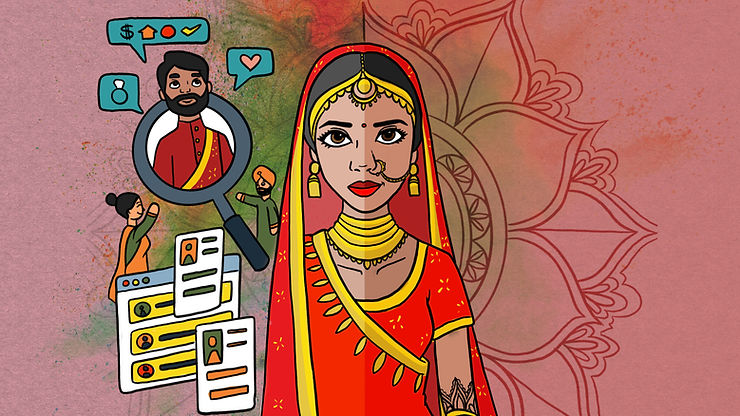
Arranged Marriage vs. Forced Marriage: What’s the Difference?

BY: Meredith Haberfield

Photo by Niraj Maharjan on Pexels.com

Many people, including myself, have been taught to believe that arranged marriages are sad and loveless relationships. However, this stereotype of arranged marriage is being dispelled by many women who have been sharing their stories about their own arranged marriages and how they came to be. In the past, arranged marriages were more formal and had less room for negotiation, but modern arranged marriages are more flexible, with parents and other family members not as involved as they once were in the process.

Arranged marriages are defined as a marital union planned by the families, typically parents, of the couple. Forced marriages, on the other hand, are when one or both parties do not give full and free consent to the situation. A marriage can also become a forced marriage if one or both of the parties are forced into staying in the marriage. According to the U.S. State Department, a forced marriage is human rights abuse, and the International Labor Union recognizes forced marriages as modern day slavery. Forced marriages can look like arranged marriages and often the two can be indistinguishable. Although it might be said that either party can decide not to get married, it can be strongly discouraged and those involved can be coerced or even threatened into a situation they do not want to agree to.

A surprising number of marriages today are arranged, although we rarely know or speak about them. It is estimated that over 50 percent of marriages around the world are arranged, and approximately 20 million arranged marriages exist today. Those who enter an arranged marriage also have a much lower divorce rate than those who enter a marriage without their parent’s involvement. The divorce rate for arranged marriages is 4 percent, while the divorce rate in the United States is around 40 to 50 percent. In India, where it is estimated that the percentages of arranged marriages is 90 percent, the divorce rate is only 1 percent. It is difficult to know whether these numbers indicate that arranged marriages work, or if the type of people to enter arranged marriages are less likely to file for a divorce.

Dating apps are one factor that has made arranged marriages less family involved and given the potential pursuer more options and the availability to become aware of more people. Oftentimes, in modern arranged marriages, the couple does not meet for the first time at the altar, although in some cases that still does occur. Young people nowadays have the ability to say no to an arranged marriage if they do not approve of who their parents have found for them, which is another more recent change.

In some places, such as Niger and India, the marriage age for young girls is extremely low, at only 15 years old. These are mostly forced marriages, where the girl is taken out of school left with no other options. This has led to a concerning amount of child births in these countries. Places consider arranged marriages a tradition, but when they turn out to actually be forced marriages, it is simply abuse. There are organizations such as Unchained At Last, who help those who are or have been in a forced marriage. Unchained has seen many young girls who have been in forced marriages and therefore forced motherhood most of the time. The rape, abuse, domestic servitude, loss of reproductive, financial, and human rights is frightening, especially knowing that this still goes on in the present-day. Unchained helps those who feel hopeless in their situation because they will be shunned or have acts of violence committed against them if they try to resist a forced marriage. Men are included in this abuse as well, although it is more unlikely for them to face the same repercussions as women. Men also have certain rights in some religions that women do not have, such as the right to file for divorce.

Arranged marriages have a negative connotation to them in the Western world, but when you take a deeper look, it is really forced marriages that contain the issues spoken about. This goes to show that what you see in movies or on TV is not always the case, and that to really learn what something is like, research and experience, whether it be first or second- hand is useful. Hopefully in the near future, we will be able to see a world without forced marriages or domestic violence, but for now, we must simply work and speak out against it.

DEFLATING NEOSPORIN

Photo by Pavel Danilyuk on Pexels.com

Dermatologist Dr. Anne Marie Tremaine Explains Why You Should Choose Something Else

What do you reach for to treat an open cut or a wound? Thanks to Johnson & Johnson’s successful marketing, many people say Neosporin. While I do want you to use a product to keep the wound moist, you need to know why it shouldn’t be Neosporin.  

Neosporin was created in the 1950s. However, it was not approved for use by the FDA until 1971. It is an over-the-counter topical antibiotic containing neomycin sulfate, polymyxin B, and bacitracin. So why do we dermatologists in Naples, FL—and around the country—despise this product? It’s the neomycin!

Neomycin frequently causes allergic reactions of the skin called contact dermatitis. It can cause the skin to become red, scaly, and itchy. The more Neosporin you use, the worse the skin reaction gets.   Neomycin is such a common allergen that it was named Allergen of the Year in 2010. The goal of this award is to bring awareness to commonly used products that are under-recognized as common allergens. Polymyxin B and bacitracin can cause contact dermatitis as well.

It’s also important to understand that Neosporin does not speed up wound healing compared to petrolatum. In 1996, the Journal of the American Medical Association published a study comparing antibiotic ointment with plain petrolatum jelly. There was no statistically significant difference in the rate of infection between the groups. The only differences seen between the two groups was that a small number of patients in the antibiotic group developed allergic reactions. Meanwhile, no allergic reactions were reported in the petrolatum group.

In reality, the most important component of antibiotic ointments is the petrolatum. Therefore, please skip the over-the-counter antibiotics. Instead, just use the petrolatum ointment.

To find out more, contact Skin Wellness Physicians by calling (239) 732-0044 or send a message online.

Dr. Anne Marie Tremaine

Moving forward after Death

Photo by Mateus Souza on Pexels.com

As I posted not long ago I recently had a major loss in my life. (you can check my memorial page for more info) She was someone I was inspired to be like and she was so much younger than me but lived life like she was wise beyond her years. She was my little sister and I can honestly say that her passing definitely has changed me. I know she wouldn’t want her passing to affect the website so I make sure it’s updated. As I make sure that her projects won’t end because she’s gone either.

See we always had our hands in each other’s lives in some fashion but definitely in our projects. I can say I’m still on autopilot. Just going with the flow. Contemplating talking to my doctor about depression and what method would work for me. Just another aspect I have to deal with along with everything that life likes to bring to you. I’ve posted little segments of my life on here and I would say you can go through the pages to find them but beware there are over 300 pages so unless you REALLY REALLY want to find them

I would say just trust me its in here lol. I think our comic relief helped us get through our health journey. For example her idea to help me get over my fear of water was to take me to the movies to watch the poseidon film. Or to sign me up for open mics and slam competitions and forget to mention it to me as they call me to the stage!!! As funny as those moments were our best ones were when we were away from the stage. So losing this bond that lasted over 20 years is still hard to swallow after a month has passed.

What keeps me going is hearing her voice in text messages we sent each other throughout the years. I know I have a long way to go to deal with her passing because this is just the beginning. And going through nights without my alerts going off that she is texting me with health questions or funny moments she had throughout her day is still strange to go through…..The silence is so loud. Sometimes too loud.

I have so much of her scattered around my home from her artwork to her poetry to birthday surprises and inspirational moments throughout her books and cd’s. How to move forward after death, I have to say by taking one step at a time. It’s difficult and painful and the sadness is like no other but it is something you can get through. Just know you’re not alone and you have a support group through your friends and family.

Even professional help is supported, and it’s nothing to be ashamed of. After this pandemic I think everyone needs some type of professional help to help them re-adjust to live outside our homes again. I will keep you updated on my recovery and hopefully I can turn off the autopilot and be ok with my new normal.

Thanks for reading.

Deidre Gibbs