Comic Strips
Poetry, Arts, Cooking, Communication, Culture and More!

Edward P. McCabe argued that Black people could not only belong in the new American territorities, but actually be in charge. Illustration by Meilan Solly / Photos via Newspapers.com, Wikimedia Commons under public domain and Kansas State Historical Society
After the Civil War, even as Reconstruction was failing across the United States, Black Americans in the South faced a choice: Should I leave, or should I stay? Edward P. McCabe—who had clerked on Wall Street and for a prominent Chicago businessman, then rose to prominence as Kansas’ state auditor, the first Black person elected to a statewide office in the American West—wanted to help them make their choice.
McCabe’s compatriots, like activist and businessman Benjamin Singleton, began advertising in large posters and newspaper advertisements that read, “Ho for Kansas!” Their plan was to escape the South while also establishing Black townsin Kansas. Newspapers across the country presented the options for Black people in the former Confederacy: “Ku Klux or Kansas.” The latter—with its origins as a free state and its sons including John Brown and other abolitionists—offered a semblance of a promised land.
In previous decades, some free Black people had left—or been pushed to leave—the U.S. Many of these pushes were supported by white leaders who are today sometimes rightfully valorized and memorialized: politicians like President Abraham Lincoln, ministers, philanthropists and other wealthy leaders whose names are now emblazoned on schools, charitable foundations and libraries.
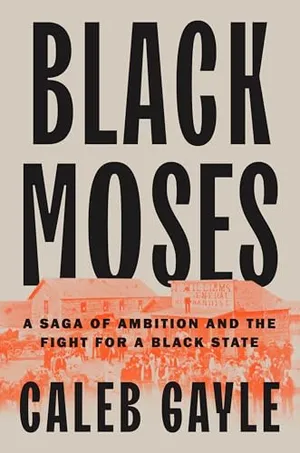
The remarkable story of Edward McCabe, a Black man who tried to establish a Black state within the United StatesBuy Now
At the Hampton Roads Conference in February 1865, Lincoln sat across from representatives of the Confederacy, including its vice president, Alexander Stephens, to begin peace talks to end the Civil War. According to a still-contentious account from Union General Benjamin F. Butler, Lincoln wondered aloud:
But what shall we do with the Negroes after they are free? I can hardly believe that the South and North can live in peace, unless we can get rid of the Negroes. Certainly they cannot if we don’t get rid of the Negroes whom we have armed and disciplined and who have fought with us, to the amount, I believe, of some 150,000 men. … What, then, are our difficulties in sending all the Blacks away?
During Reconstruction, the federal government emphasized reconciliation with the South over repairing the damage done intentionally or allowed passively to Black citizens. Some Black people did, in fact, leave the U.S. for Canada, the Caribbean and the relatively new West African nation of Liberia. As the sun set on the Reconstruction era, casting shadows of despair across the South, what hope remained for Black citizens was met with violence and intimidation.
Around the same time that Edward P. McCabe sought to turn Oklahoma into an all-Black state, African American businessman William Henry Ellis mounted multiple unsuccessful efforts to establish a Black colony in Mexico.
Beginning in the late 1870s and accelerating into the 1890s, states passed laws like Mississippi’s 1890 Constitutional Convention mandates, which imposed poll taxes and literacy tests, and Louisiana’s 1898 grandfather clause, which exempted white men whose ancestors had registered to vote before 1867 from meeting the new voting requirements—all under the banner of restoring “order.” These laws not only codified racial segregation and voter suppression but also defended those who inflicted harm and valorized those who enforced fear, laying the groundwork for the Jim Crow regime that would dominate Southern life for decades.
A different answer to Lincoln’s question would come a half-century later. Between 1910 and 1970, Black people chose to leave the South in the greatest internal migration in American history, abandoning the region’s racist violence for the doubtful safety of the North. Most call this the Great Migration: a signal that there was a mass movement of Black people toward finding their own opportunity. But the term is misleading.
Because, for a brief moment, Black people went west, in what by rights should be called the original Great Migration—a movement from the 1870s to the 1900s of freedpeople who pushed beyond the old North and the old South. Some called them Exodusters. They were Black people who, like the Israelites in the Bible, had urgently hatched plans to pick up all they had and move west, as historian Nell Irvin Painter writes in Exodusters: Black Migration to Kansas After Reconstruction. First, following Singleton’s posters, these settlers populated Kansas. Then, they fanned out across the Old West, into the places we now call Oklahoma, Nebraska, Colorado and New Mexico.
/https://tf-cmsv2-smithsonianmag-media.s3.amazonaws.com/filer_public/42/46/42461d4d-83c9-4c6f-9538-32d59d059b48/boat.jpg)
They dreamed of a state that would be governed by Black people, inhabited by Black people. For a brief moment, no matter how elusive, between 1889 and 1907, the state known today as Oklahoma might have been such a place, home to thousands of Black people building all‑Black towns and schools, seeking political office, and even breaking ground on universities and hospitals. We see remnants of these dreams in towns like Boley, with its still-extant Boley Rodeo, the first Black rodeo in the country. Or in cities like Tulsa, where we see in its northern neighborhoods the outlines of what was once Black Wall Street, a hub of some 191 commercial establishments, along with churches, schools and more, all meant to serve Black people, circulating dollars within those communities without a touch of white approval. And they came because of the magnetism and ambition of one man.
McCabe had become famous well beyond Southern and Black newspapers because he shared a stirring message: that Black people could not only belong in the new territories, but actually be in charge. And he set his sights on what is now Oklahoma. At the time, that region was a patchwork: Oklahoma Territory in the west had been opened to white settlement after the land runs of 1889, while Indian Territory in the east remained under the nominal control of the Five Tribes. McCabe’s vision centered on frontier towns at the seam of the two territories, in what he hoped would soon be united as the new state of Oklahoma.
This dream of turning Oklahoma into an American promised land for Black people was destined to collide with others’ plans for the place—and in drastic fashion.
/https://tf-cmsv2-smithsonianmag-media.s3.amazonaws.com/filer_public/6e/32/6e3213ca-31b3-42d5-bcc5-132472eeda2e/e_p_mccabe.png)
At the time that McCabe was moving to occupy Oklahoma for Black people, the Cherokee, Choctaw, Chickasaw, Seminole and Muscogee Creek Nations—which had been banished to this part of the country under a law signed by President Andrew Jackson decades before—were pitching separate Indian statehood for the same territory, calling it Sequoyah. While there were already Black people in Indian Territory, they, unlike McCabe, had a hereditary claim over parts of this land as members of some of these Native nations. Indian Territory also became an attractive landing zone for white elites who saw the opportunity to make a buck, a buck that seemed endless as oil and gas were discovered there and literally sprang from the ground.
In 1890, McCabe met with President Benjamin Harrison to lobby for an all‑Black state. “Some of us have names borrowed from masters, some of us have the blood of those who owned us as cattle, but disowned us as sons and daughters,” McCabe, who had been born free in 1850, told the president. “But in a new country, on new lands, with a climate suited to our race, we desire to show you that we are men and women capable of self‑government.” Harrison was apparently unmoved, and McCabe couldn’t return to Oklahoma Territory waving a flag of secured statehood for Black people. Instead, he left with the hope that if he could convince enough Black voters to make Oklahoma Territory home, he might be able to turn Oklahoma into an unofficial Black state.
Report after report told of the trainloads of aspiring Black settlers leaving neighboring states during this period, in segregated cars without amenities. They were demeaned on their ride to the land McCabe promised them, as there was “a penalty for a Black person to ride in a ‘white’ compartment, and a like penalty for a white person to ride in a ‘Black’ compartment,” as the Kansas-based Atchison Globe reported. For “educated colored people of the South,” according to one “prominent local” Black man quoted by the Kansas City Times, the entire ride was found to be “very much humiliated because of this caste law, and it would be a class of sensitive people with money and brains who would go to the new country.” But demeaning, humiliating and dehumanizing train car journeys could not stop these hopeful migrants from seeking a new kind of freedom in the newly opened territories.
/https://tf-cmsv2-smithsonianmag-media.s3.amazonaws.com/filer_public/b8/c2/b8c2a7fa-1648-41b4-bd53-3e882b38c8c1/ok_it_map_1905.png)
Many leading newspapers across the South and even in Oklahoma Territory denigrated the aspirations of McCabe and the many Black people who sought to make their home as settlers. To do so, they gave McCabe’s dreams and the dreams of those he led—dreams of making Oklahoma an all‑Black state—a two‑word name: “n—— talk.”
The newspapers couldn’t understand the language McCabe used, expressing aims like “their own laws”; the ability to govern themselves “unmolested by the selfish greed of the white man”; and “a Negro city, a Negro county, a Negro state.” But their incomprehension was not because the words were complex. They couldn’t understand them when they were uttered by a Black man because this Black man, and the people he led, used these words to imagine something beyond the limited notion of freedom from slavery.
What McCabe wanted was not the lack of slavery or the absence of oppression, but rather citizenship in a state that he ran, where he took his counsel from Black people. He wanted abundance. The mere appearance that McCabe’s mission could be misconstrued as another person trying to claim land on the day of a second land run in 1891 made him a dangerous target.
/https://tf-cmsv2-smithsonianmag-media.s3.amazonaws.com/filer_public/e9/0d/e90da07e-6c74-441e-8a95-11f270c6501f/lossy-page1-2953px-land_rush_okla_oklahoma_lccn2014682281tif.jpg)
On September 22, 1891, McCabe was shot by unnamed white cowboys. They approached him as he rode between Guthrie, the capital of Oklahoma Territory, and Langston, the de facto Black capital, confronting him in broad daylight. When McCabe refused their demands to turn back from his path, the cowboys raised their guns, took aim and fired, knocking him from his horse, though not killing him. Sealing his fate just outside the Black utopia he had been shaping would serve him right, the gunmen may have thought. After all, McCabe had been offering the kind of radical Black hope that others dismissed as dangerous talk that needed to be extinguished. They fired their shots to put an end to that talk.
The shooters did not realize that what they scorned was not a loudmouthed irritant so much as it was a creed—the framework for the creation of a new world. They did not realize that this so‑called talk was the speaking into existence of another life, one that felt just beyond the bounds of the believable, achievable to the cowboys who had claimed the prairies and nearly within reach for the Black people who came to settle and govern this land.
That dream fully collapsed when Oklahoma achieved statehood in 1907. Amid fears that a segregation clause would jeopardize admission, the new state’s Constitution omitted explicit Jim Crow provisions. But in its first days, the new Oklahoma legislature pushed through Senate Bill One (also known as the coach law), mandating segregated railroad cars and waiting rooms and immediately enshrining de jure segregation, not only in transportation but soon thereafter in schools. The legislature also banned miscegenation and imposed voting restrictions. The promise of a Black‑governed commonwealth gave way to disenfranchisement and racial terror, as Jim Crow laws erased many political and legal gains those Black settlers had made—even as some of those all-Black towns persist today as living legacies of the original vision.
/https://tf-cmsv2-smithsonianmag-media.s3.amazonaws.com/filer_public/6f/0e/6f0e5632-9031-43f9-abf7-6cf1fc29788b/boley_town_council_circa_1907.jpg)
McCabe’s dream reaches far back, long before he and his thousands of followers declared Oklahoma as theirs. It is the story of a people cast out of enslavement and into the wilderness, where they found creative ways to build lives of abundance for themselves, lives on their own terms. They cared not simply about being free but about dictating the terms of expressing that freedom. That their world would be built by their volition, that no decision‑making table would exclude them, but instead demand their presence. This is the story of those who dared to do more than dream about a promised land—they built one. That it failed makes its brief existence no less real nor less valuable today.
The tale of McCabe and his followers is a story about ambition—about the wherewithal to dream, to hope against hope. It’s the story of being forced to leave in order to start again, only to lose it all, and a fight for a century to recover nuggets of truth among the wreckage. It’s the story of dreams, big ones, and what comes after we wake up. It is the story of trying, why we cannot stop trying, and why being able to try is worth remembering at all. Most of all, this story shows that even the most American of promises was never available to all Americans. McCabe’s story shows that even striking out west—as Horace Greeley once instructed—does not offer salvation.
From Black Moses: A Saga of Ambition and the Fight for a Black State by Caleb Gayle, published by Riverhead Books, an imprint of Penguin Publishing Group, a division of Penguin Random House LLC. Copyright © 2025 by Caleb Gayle.
/https://tf-cmsv2-smithsonianmag-media.s3.amazonaws.com/accounts/headshot/caleb2.png)
Caleb Gayle – Author, Black Moses: A Saga of Ambition and the Fight for a Black State




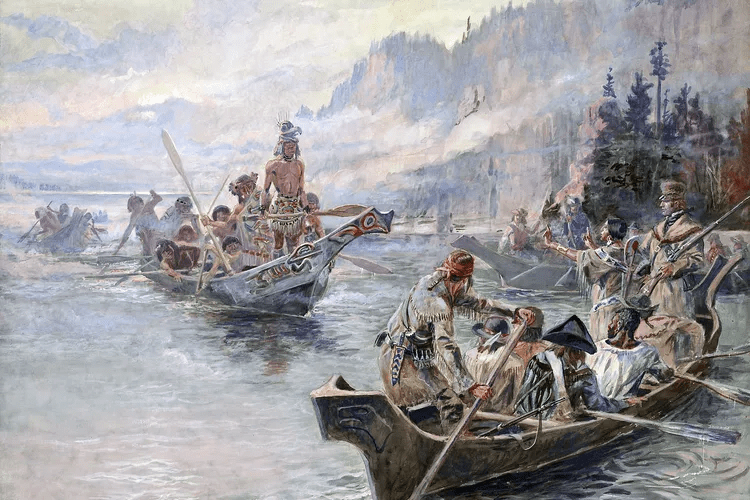
Esteban, York and James Beckwourth charted the American frontier between the 16th and 19th centuries
Every summer, millions of Americans flock to the United States’ 63 national parks. Federally protected wilderness areas offer people the chance to explore a wide variety of terrain, from the vibrant canyons of the Southwest to the imposing mountains of the West Coast. Today, these public lands often represent an escape for Americans, 81 percent of whom live in cities. Some may agree with the naturalist John Muir, who believed that “wildness is a necessity” and national parks are “fountains of life.” When Americans walk through dense forests or descend into gloomy caverns, they might recall explorers of the past who trekked across the country decades before Congress established Yellowstone as the U.S.’s first national park in 1872. Names like Daniel Boone, Davy Crockett and Kit Carson loom large in the popular imagination. But their stories are not the only ones.
For too long, the public and scholars alike have overlooked American adventurers from diverse backgrounds whose discoveries shaped the nation’s history. The time has come to fully recover their stories and acknowledge their important contributions. Doing so will not only correct the historical record but also support contemporary efforts to welcome people of color in national parks. According to National Park Service (NPS) data, 77 percent of park visitors are white, while just 23 percent are racial minorities. (People of color make up around 44 percent of the U.S.’s population.)
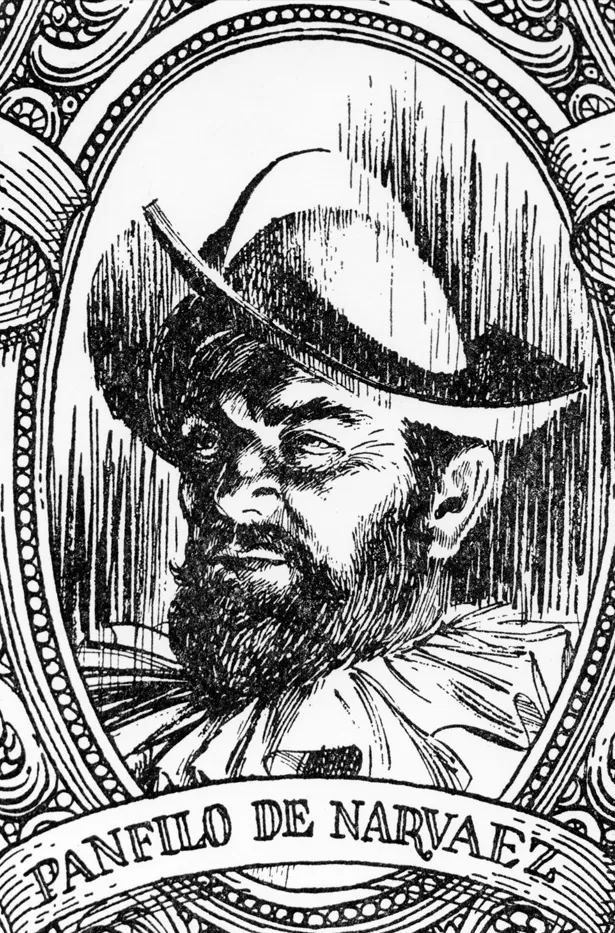
From the earliest days of European settlement, when an estimated 5 million to 15 million Indigenous people populated the lands that would one day form the U.S., people of color have been at the forefront of exploration. In 1527, an enslaved African man named Esteban reached North America as part of a Spanish expedition led by the conquistador Pánfilo de Narváez. After stopping on the islands of Hispaniola and Cuba, Narváez and his men landed in present-day Florida to search for gold. They soon became enfeebled by disease, and many perished. Native Americans drove those who survived, including Esteban, to the coast, where they set sail for the Gulf of Mexico.
During the years that followed, Esteban explored present-day Texas, Arizona, New Mexico and northwestern Mexico. He learned several Indigenous languages and even served as an interpreter. Esteban was, in the words of biographer Dennis Herrick, “the first person from the Old World of Europe, Africa and Asia to travel across the North American continent and also explore the American Southwest in the 1500s.” Although the circumstances of his death remain mysterious, he most likely perished in the Zuni village of Hawikku in New Mexico in 1539.

Over the next two centuries, Spain, France, the Netherlands and Great Britain competed to colonize North America. European settlers seeking economic opportunity arrived by the thousands. Displacing Native Americans from their homelands, they established farms or plantations, built towns, and raised families. Slave traders also forced enslaved Africans onto ships bound for North America, where slaveholders compelled them to work the land. Settlers carried viral diseases like smallpox and measles that decimated Indigenous populations. By the time the U.S. declared its independence from Great Britain in 1776, just four million Native Americans remained.
Two decades after the Revolutionary War ended in 1783, much remained unknown about the continent’s Western interior. By 1800, around five million Americans lived in the country, but most were concentrated on the East Coast.
On May 21, 1804, 45 men led by Meriwether Lewis and William Clark departed from St. Charles, Missouri, on a two-year journey across North America. Hoping to find a water route to the Pacific Ocean, the Corps of Discovery also sought to gather information about the geogra phy, climate, wildlife and Indigenous peoples of the continent. The group’s mission was funded by Congress and supported by President Thomas Jefferson, who had just facilitated the acquisition of Louisiana Territory in 1803.
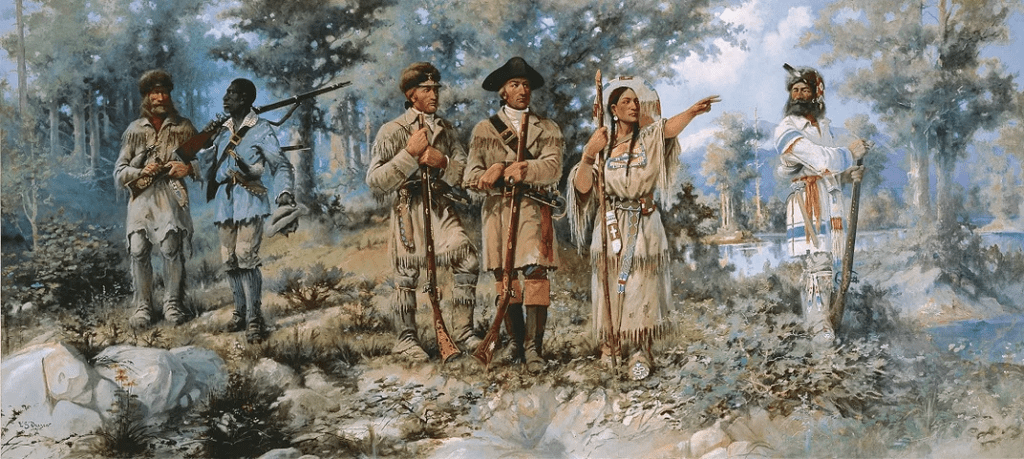
York stands second from left in this 1912 painting of the Corps of Discovery by Edgar S. Paxson. Public domain via Wikimedia Commons
York, an African American man enslaved by Clark, played an integral role as the only Black member of the corps. An experienced frontiersman, York knew how to forage for edible plants and hunt wild game. Although most enslaved African Americans were forbidden to possess guns at the time, York wielded a firearm throughout his journey. He killed bison and geese, providing sustenance for the entire group.
York also provided medical aid to those suffering from illness. Stricken with what was likely a gastrointestinal infection, Sergeant Charles Floyd became incapacitated just months into the journey. It was York, principally, who tried to revive him, Clark wrote in his journal. When Sacagawea, the Shoshone woman who played a critical role as an interpreter and navigator for the corps, fell ill at Fort Mandan, York gave her stewed fruit and tea at regular intervals.
After reaching the Pacific Ocean in November 1805, the corps prepared to establish a winter camp. When deciding where to build the fort, the group held a vote. It is striking that, in an era when African Americans and women were legally denied the franchise, York cast his ballot alongside the other members of corps, including Sacagawea. This moment may have been the earliest occurrence of an African American person and a woman voting in U.S. history.
The corps returned safely to Missouri in 1806. The expedition’s members confirmed that no simple water route across the country existed and retrieved information about at least 178 plants and 122 animals new to science. York was a changed man following his experiences on the frontier. He asked Clark to emancipate him, but the enslaver initially refused. York probably gained his freedom at some point between 1811 and 1815.
Another Black explorer, James Beckwourth, found freedom and opportunity on the Western frontier in the mid-19th century. Born into slavery in Virginia but liberated by his white father, Beckwourth wound up in St. Louis at the height of the fur trade. It was a time when trappers explored the Rocky Mountains in search of lucrative beaver, otter and fox pelts. As a young man, Beckwourth keenly felt the pull of the West. As he later said in his autobiography, he found himself “possessed with a strong desire to see the celebrated Rocky Mountains, and the great Western wilderness so much talked about.”
Two hundred years ago, in the autumn of 1824, Beckwourth set off on a fur trading expedition headed by the frontiersman William Ashley. In the Rocky Mountains, Beckwourth gained critical hunting and navigational skills that enabled him to survive in the wilderness. As time passed, he became a veritable mountain man. In the words of historian Elinor Wilson, Beckwourth and other mountaineers were “pathfinders”; their geographic knowledge of the Rocky Mountains would later aid the Corps of Topographical Engineers and the U.S. Army.

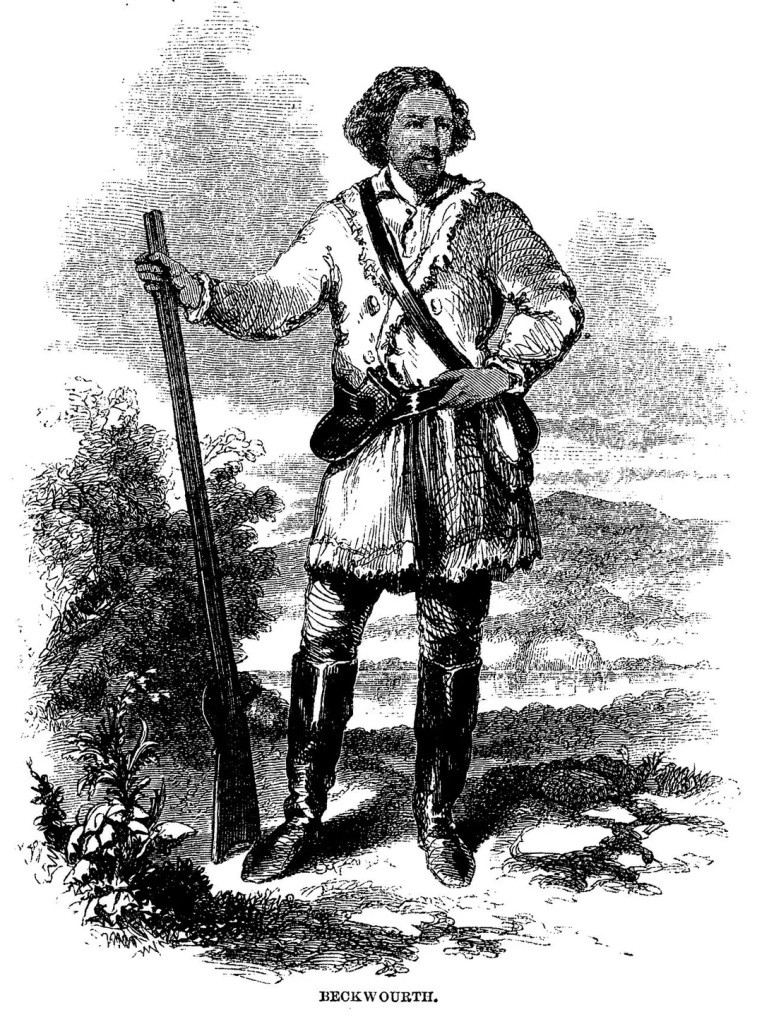
During the years that followed, Beckwourth stayed at the vanguard of exploration. Traveling through Colorado, Kansas and New Mexico, he evinced an entrepreneurial spirit as a trapper and a trader. He made scores of friends, including Sacagawea’s son, Jean Baptiste Charbonneau, and also some enemies due to his mercurial behavior.
Beckwourth had a knack for being in the right place at the right time. When the California Gold Rush began in 1848, forty-niners flocked to the future state from around the world. In 1849, Beckwourth hitched a ride on the California, the first steamship bound for San Francisco from New York, when it stopped for wood in Monterey. Although he never struck it rich as a prospector in the Mother Lode Country, Beckwourth made a profit selling goods to other miners.
While looking for gold, Beckwourth also found an unknown pass in the Sierra Nevada. He raised funds to construct, and worked to complete, a road suitable for migrants who subsequently crossed over it and headed west toward California’s American Valley. Today, a historical marker stands at Beckwourth Pass, acknowledging the explorer’s discovery of the lowest pass through these mountains.
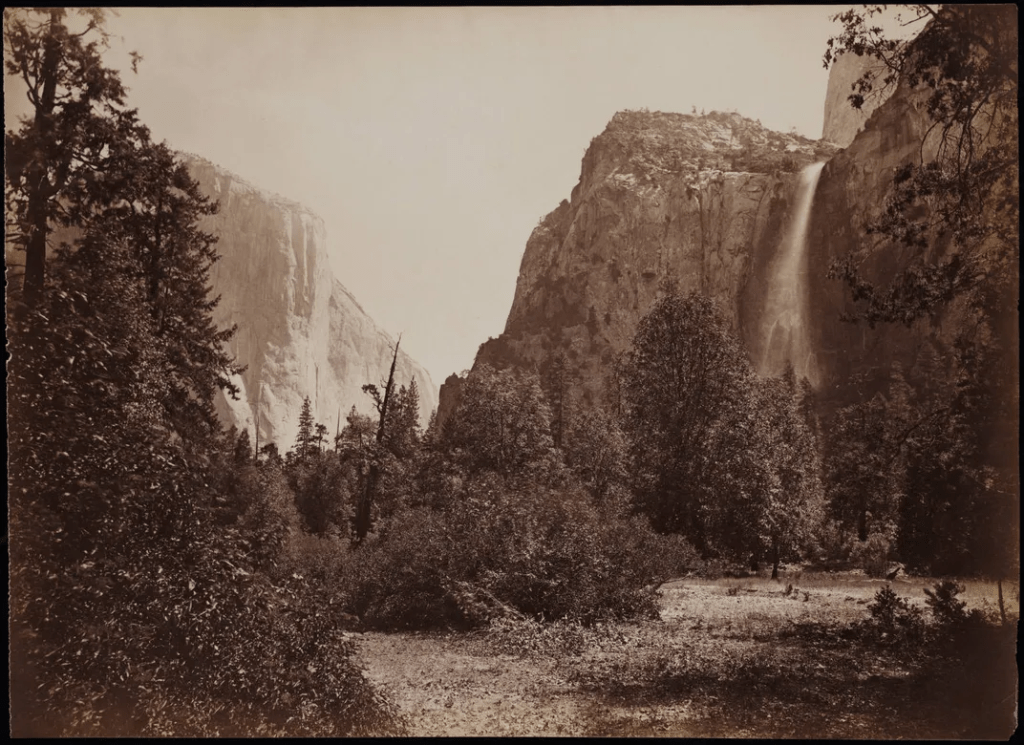
A circa 1880 photo of what is now Yosemite National Park Public domain via Wikimedia Commons
Esteban, Beckwourth and York are just three of many African Americans who explored America in its nascent years. Their findings contributed to the opening of the frontier. White migrants from the east, formerly enslaved people and impoverished immigrants seeking upward mobility all headed west throughout the 1800s. Tragically, increased settlement also led to the violent displacement of Indigenous people, the further spread of deadly illnesses among Native American populations and environmental destruction.
The rise of the conservation movement in the second half of the 19th century led to the creation of America’s system of national parks, many of which were built on Indigenous homelands. Congress passed legislation establishing Yosemite National Park in 1890 and Mount Rainier National Park in 1899, with dozens more to follow. But during the Jim Crow era, African Americans were often refused entry to public spaces within parks or were discriminated against while there. The Interior Department officially desegregated national parks in 1945, but discriminatory practices continued into the civil rights era.
Today, endeavors to make wilderness areas more inclusive are ongoing. In June 2020, the NPS announced its commitment to “lead change and work against racism.” The nonprofit Outdoor Afro “reconnects Black people” to nature through “education, recreation and conservation,” while Black Girls Hike seeks to “inspire others who look like us to be comfortable outdoors,” as a Virginia branch of the organization notes on its website.
The NPS has also taken important steps toward co-managing federal lands with tribal nations. As Charles Sams III, the first tribally enrolled person to serve as the NPS’s director, said in a 2022 statement, the agency is “strengthening the role of tribal communities in federal land management, honoring tribal sovereignty and supporting the priorities of tribal nations.” Today, four national parks have co-management arrangements. In March, the NPS signed a memorandum of understanding giving the Yurok Tribe guardianship of the redwood groves at ‘O Rew in California.
The story of U.S. exploration is a complicated one, with moments of discovery and displacement alongside destruction and preservation. Learning lessons from the past, however, can help our country build a better future where Americans of all backgrounds are able to protect and enjoy its treasured landscapes.
Amanda Bellows – Author, The Explorers: A New History of America in Ten Expeditions
/https://tf-cmsv2-smithsonianmag-media.s3.amazonaws.com/accounts/headshot/amanda.png)


 HPS Magazine