Joseph McNeil, Member of ‘Greensboro Four’ Who Protested Segregation at Lunch Counters, Dies at 83

Black man sitting up and looking to the right
Joseph McNeil speaks about the Woolworth’s sit-in in a 2023 interview. Alejandra Villa Loarca / Newsday RM via Getty Images

McNeil and three other Black freshmen held a famous sit-in at Woolworth’s in 1960, which inspired peaceful protests across the country

Sarah Kuta

Sarah Kuta – Daily Correspondent

Joseph McNeil, one of the “Greensboro Four” who sparked nationwide demonstrations over segregated lunch counters in 1960, has died at age 83. The cause of death was Parkinson’s disease, per the New York Times’ Bernard Mokam.

To honor McNeil, North Carolina Governor Josh Stein ordered all state facilities to lower their United States and North Carolina flags to half-staff on September 13, the day funeral services will be held in Wilmington.

“Joseph A. McNeil’s legacy is a testament to the power of courage and conviction,” says Joseph McNeil Jr., one of McNeil’s children, in a statement shared with WGHP’s Emily Mikkelsen. “His impact on the civil rights movement and his service to the nation will never be forgotten.

McNeil was born in Wilmington in March 1942. After graduating from an all-Black high school, McNeil enrolled at the Agricultural and Technical College of North Carolina (now North Carolina A&T State University) in the fall of 1959.

During his first semester on campus, McNeil started talking with a handful of his fellow dorm-mates about taking a stand against segregation. McNeil’s desire to take action was further solidified when, while returning to campus after the holiday break, he faced discrimination at a bus station in Richmond, Virginia.

With support and funding from a handful of older Greensboro residents, McNeil and three classmates—Franklin McCain, Ezell Blair Jr. (who later changed his name to Jibreel Khazan) and David Richmond—decided to take action.

On February 1, 1960, the four men sat down at the whites-only lunch counter at Woolworth’s in Greensboro. They tried to order coffee, but the waitress refused to serve them because they were Black. She called over the manager, who asked the four students to leave. But they stayed put.

Quick fact: What became of Woolworth’s

The restored Greensboro location of Woolworth’s was named a National Historic Landmark in late 2024.

They remained seated even after a police officer showed up, and as white customers yelled racial slurs at them. Eventually, the manager closed the store early and the four men went home.

They returned to the lunch counter over the next few days, bringing more and more classmates with them. By February 5, the peaceful sit-in had ballooned to hundreds of students, including white women from the Woman’s College of the University of North Carolina (now the University of North Carolina at Greensboro).

All along the East Coast, protesters began picketing at various Woolworth’s locations, demanding that the five-and-dime chain store allow Black patrons to sit at the lunch counter and be served. By the end of March, the demonstrations had spread to 54 cities and included thousands of students, per the Times.

In May, the city of Nashville integrated its lunch counters. In late July, about six months after the first sit-in, the Greensboro Woolworth’s quietly desegregated its lunch counter. Four Black employees were the first to be served, according to History.com.

McNeil graduated with a degree in engineering physics in 1963. He went on to serve in the U.S. Air Force, working as a navigator on an aerial refueling plane during the Vietnam War.

He met and married Ina Brown while he was stationed in South Dakota. McNeil held numerous jobs over the course of his career, including as an investment banker, according to the Associated Press’ Gary D. Robertson. He also joined the Air Force Reserve, retiring in 2000 with the rank of major general.

Woolworth’s Greensboro location closed in 1993, but a section of the lunch counter was saved and is now on permanent display at the Smithsonian’s National Museum of American History. In 2010, the Smithsonian awarded the members of the Greensboro Four with the James Smithson Bicentennial Medal, which recognizes individuals who have made “distinguished contributions to the advancement of areas of interest to the Smithsonian.”

In a 2017 interview for the Smithsonian display, McNeil said the experience taught him the value of persistence and optimism. “I walked away with an attitude that if our country is screwed up, don’t give up,” he said, as reported by Smithsonian magazine’s Christopher Wilson in 2020. “Unscrew it, but don’t give up.”

Khazan is now the only surviving member of the Greensboro Four. Richmond died in 1990, followed by McCain in 2014.

McNeil and the other members of the Greensboro Four “inspired a nation with their courageous, peaceful protest, powerfully embodying the idea that young people could change the world,” says James R. Martin II, chancellor of North Carolina A&T State University, in a statement. “His leadership and the example of the A&T Four continue to inspire our students today.”

Back in the 19th Century, Your Election Ballot Could Double as a Work of Art

ballots_web.jpg
A selection of ballots from the 1860s shows a variety of the persuasive flourishes then in vogue. Lincoln Financial Foundation Collection, courtesy of the Allen County Public Library

During and after the Civil War, inventive illustrations allowed Democrats and Republicans to turn American ballots into powerful propaganda

Jonathan W. White – Author, A House Built by Slaves: African American Visitors to the Lincoln White House

In the mid-19thcentury, election ballots were created by political parties, not the government. Local Republican and Democratic operatives designed and printed their own ballots, also called tickets, which typically listed each party’s candidates for state, local and federal office. At the polls, voters procured ballots from party workers and, after walking through a crowd, dropped their votes into a ballot box, typically a glass bowl. With no secrecy in how one voted, violence and intimidation became common, particularly in urban precincts.

a ship battle at sea illustrated on a voting ballot
For the presidential election of 1864, the Grant Club of San Francisco produced this ballot dramatizing the Battle of Cherbourg, where the Union sank the CSS Alabama
  Lincoln Financial Foundation Collection, courtesy of the Allen County Public Library
the front and back of a voting ballot
The front of this 1864 Ohio ballot, right, features patriotic slogans and symbols—plus, on the back, left, lyrics from the popular song “The Battle Cry of Freedom.”  Lincoln Financial Foundation Collection, courtesy of the Allen County Public Library

To capture the attention of voters on Election Day, local party organizations often turned their ballots into miniature works of art, using patriotic and partisan symbols to appeal to voters. Such artwork also had practical uses: Illiterate or non-English-speaking voters might be drawn to a ballot that seemed to represent their political views. In many cases, voters did not even bother to read the names on the ballots, enabling some unscrupulous politicos to use their opponents’ symbols to trick inattentive voters. One semi-literate voter admitted in 1863, “I cannot say exactly whether I read the ticket or not; mostly I get the ticket from a man, knowing his politics, and knowing that he feels as I feel myself.”

When President Abraham Lincoln ran for re-election in 1864, Republicans throughout the nation printed ballots with pro-war and pro-Union symbols, slogans and song lyrics. In one of the most beautiful and detailed examples, the Grant Club of San Francisco, a Republican organization with a thousand members, printed ballots depicting the 1864 Battle of Cherbourg, an important naval engagement between the Union and the Confederacy, in which the USS Kearsarge defeated the CSS Alabama off the northwestern coast of France. When members of the Grant Club marched to Bay Area polls on November 8 for that year’s presidential election, they proudly carried the Lincoln tickets they’d designed and printed.

Ballots often featured portraits of a party’s most popular candidates. Lincoln would continue to appear on Republican tickets well into the postwar years, inspiring Northern Civil War veterans to vote as they had shot—against Southern Democrats—even once the guns had fallen silent. 

a vintage voting ballot
Amid the Civil War, Democrats in the Union sought to counter charges of disloyalty, as we see in the patriotic symbols on this 1864 Massachusetts ballot, which includes a line from General George B. McClellan’s letter accepting the Democratic nomination: “The Union must be preserved at all hazards.”
  Lincoln Financial Foundation Collection, courtesy of the Allen County Public Library
three political figures illustrated on a voting ballot
An 1868 Republican ticket for William U. Saunders, a Black Civil War veteran who ran for Congress in Florida, featuring Lincoln, Grant and Speaker of the House Schuyler Colfax. Lincoln Financial Foundation Collection, courtesy of the Allen County Public Library

Back in the 19th Century, Your Election Ballot Could Double as a Work of Art

During and after the Civil War, inventive illustrations allowed Democrats and Republicans to turn American ballots into powerful propaganda

Jonathan W. White – Author, A House Built by Slaves: African American Visitors to the Lincoln White House

Get our newsletter!

ballots_web.jpg
A selection of ballots from the 1860s shows a variety of the persuasive flourishes then in vogue. Lincoln Financial Foundation Collection, courtesy of the Allen County Public Library

In the mid-19thcentury, election ballots were created by political parties, not the government. Local Republican and Democratic operatives designed and printed their own ballots, also called tickets, which typically listed each party’s candidates for state, local and federal office. At the polls, voters procured ballots from party workers and, after walking through a crowd, dropped their votes into a ballot box, typically a glass bowl. With no secrecy in how one voted, violence and intimidation became common, particularly in urban precincts.

https://imasdk.googleapis.com/js/core/bridge3.726.0_en.html#deid=%22%22&eventfe_experiment_ids=%5B%5D&fid=%22goog_1954839401%22&genotype_experiment_data=%7B%22experimentStateProto%22%3A%22%5B%5B%5B45713128%2Cnull%2Cnull%2C%5B%5D%5D%2C%5B803064088%2Cnull%2Cnull%2C%5B1%5D%5D%2C%5B45681221%2Cnull%2Cnull%2C%5B1%5D%5D%2C%5Bnull%2C749060184%2Cnull%2C%5Bnull%2C100%5D%5D%2C%5B45722344%2Cnull%2Cnull%2C%5B%5D%5D%2C%5B45706017%2Cnull%2Cnull%2C%5B%5D%5D%2C%5B45668885%2Cnull%2Cnull%2C%5B%5D%5D%2C%5B45685340%2Cnull%2Cnull%2C%5B%5D%5D%2C%5B45663239%2Cnull%2Cnull%2C%5B%5D%5D%2C%5B45715032%2Cnull%2Cnull%2C%5B1%5D%5D%2C%5B45661356%2Cnull%2Cnull%2C%5B%5D%5D%2C%5B45676441%2Cnull%2Cnull%2C%5B%5D%5D%2C%5B45675307%2Cnull%2Cnull%2C%5B1%5D%5D%2C%5B45675308%2Cnull%2Cnull%2C%5B1%5D%5D%2C%5Bnull%2C45645574%2Cnull%2C%5B%5D%5D%2C%5B45688859%2Cnull%2Cnull%2C%5B%5D%5D%2C%5B45656766%2Cnull%2Cnull%2C%5B%5D%5D%2C%5B45710689%2Cnull%2Cnull%2C%5B%5D%5D%2C%5B45710688%2Cnull%2Cnull%2C%5B%5D%5D%2C%5B45685601%2Cnull%2Cnull%2C%5B%5D%5D%2C%5Bnull%2C45685602%2Cnull%2C%5Bnull%2C500%5D%5D%2C%5B775241416%2Cnull%2Cnull%2C%5B%5D%5D%2C%5B781107959%2Cnull%2Cnull%2C%5B%5D%5D%2C%5B781107958%2Cnull%2Cnull%2C%5B%5D%5D%2C%5B792614055%2Cnull%2Cnull%2C%5B%5D%5D%2C%5B781107957%2Cnull%2Cnull%2C%5B%5D%5D%2C%5B45658982%2Cnull%2Cnull%2C%5B%5D%5D%2C%5B45725657%2Cnull%2Cnull%2C%5B%5D%5D%5D%2C%5B%5B16%2C%5B%5B1%2C%5B%5B31089630%5D%2C%5B31089631%2C%5B%5B45668885%2Cnull%2Cnull%2C%5B1%5D%5D%5D%5D%5D%5D%2C%5B1000%2C%5B%5B95332046%5D%5D%5D%2C%5Bnull%2C%5B%5B95332047%5D%5D%5D%2C%5B10%2C%5B%5B95333808%5D%2C%5B95333809%2C%5B%5B635466687%2Cnull%2Cnull%2C%5B1%5D%5D%5D%5D%5D%5D%2C%5B10%2C%5B%5B95338769%2C%5B%5Bnull%2C45645574%2Cnull%2C%5Bnull%2C1%5D%5D%5D%5D%2C%5B95338770%2C%5B%5Bnull%2C45645574%2Cnull%2C%5Bnull%2C2%5D%5D%5D%5D%5D%5D%2C%5B10%2C%5B%5B95345206%5D%2C%5B95345207%2C%5B%5B45661356%2Cnull%2Cnull%2C%5B1%5D%5D%5D%5D%5D%5D%2C%5Bnull%2C%5B%5B95351425%5D%2C%5B95351426%2C%5B%5B45676441%2Cnull%2Cnull%2C%5B1%5D%5D%5D%5D%5D%5D%2C%5B10%2C%5B%5B95356068%5D%2C%5B95356069%2C%5B%5B45685601%2Cnull%2Cnull%2C%5B%5D%5D%2C%5Bnull%2C45685602%2Cnull%2C%5B%5D%5D%5D%5D%2C%5B95356070%2C%5B%5B45685601%2Cnull%2Cnull%2C%5B1%5D%5D%2C%5Bnull%2C45685602%2Cnull%2C%5B%5D%5D%5D%5D%2C%5B95356071%2C%5B%5B45685601%2Cnull%2Cnull%2C%5B1%5D%5D%2C%5Bnull%2C45685602%2Cnull%2C%5Bnull%2C100%5D%5D%5D%5D%5D%5D%2C%5B100%2C%5B%5B95365753%2C%5B%5B45710689%2Cnull%2Cnull%2C%5B1%5D%5D%5D%5D%2C%5B95365754%2C%5B%5B45710688%2Cnull%2Cnull%2C%5B1%5D%5D%5D%5D%5D%5D%2C%5Bnull%2C%5B%5B95370402%5D%2C%5B95370403%2C%5B%5B45722344%2Cnull%2Cnull%2C%5B1%5D%5D%5D%5D%5D%5D%2C%5B10%2C%5B%5B95372277%5D%2C%5B95372278%2C%5B%5Bnull%2C745150931%2Cnull%2C%5Bnull%2C1%5D%5D%5D%5D%5D%5D%2C%5B1%2C%5B%5B95373378%2C%5B%5B792614055%2Cnull%2Cnull%2C%5B1%5D%5D%5D%5D%2C%5B95373379%2C%5B%5B781107959%2Cnull%2Cnull%2C%5B1%5D%5D%2C%5B792614055%2Cnull%2Cnull%2C%5B1%5D%5D%2C%5B781107957%2Cnull%2Cnull%2C%5B1%5D%5D%5D%5D%5D%5D%2C%5B10%2C%5B%5B95375243%5D%2C%5B95375244%5D%5D%5D%2C%5B50%2C%5B%5B95375505%5D%2C%5B95375506%2C%5B%5Bnull%2C749060184%2Cnull%2C%5B%5D%5D%5D%5D%5D%5D%2C%5B100%2C%5B%5B95375625%5D%2C%5B95375626%2C%5B%5B45706017%2Cnull%2Cnull%2C%5B1%5D%5D%5D%5D%5D%5D%5D%5D%5D%2Cnull%2Cnull%2C%5Bnull%2C1000%2C1%2C1000%5D%5D%22%7D&imalib_experiments=%5B95322027%2C95331589%2C95332046%5D&is_eap_loader=false&managed_js_experiment_id=0&pvsid=3975063315702463&top_accessible_page_url=%22https%3A%2F%2Fwww.smithsonianmag.com%2Fhistory%2Fback-in-19th-century-your-election-ballot-could-double-work-art-180985220%2F%22

a ship battle at sea illustrated on a voting ballot
For the presidential election of 1864, the Grant Club of San Francisco produced this ballot dramatizing the Battle of Cherbourg, where the Union sank the CSS Alabama
  Lincoln Financial Foundation Collection, courtesy of the Allen County Public Library
the front and back of a voting ballot
The front of this 1864 Ohio ballot, right, features patriotic slogans and symbols—plus, on the back, left, lyrics from the popular song “The Battle Cry of Freedom.”  Lincoln Financial Foundation Collection, courtesy of the Allen County Public Library

To capture the attention of voters on Election Day, local party organizations often turned their ballots into miniature works of art, using patriotic and partisan symbols to appeal to voters. Such artwork also had practical uses: Illiterate or non-English-speaking voters might be drawn to a ballot that seemed to represent their political views. In many cases, voters did not even bother to read the names on the ballots, enabling some unscrupulous politicos to use their opponents’ symbols to trick inattentive voters. One semi-literate voter admitted in 1863, “I cannot say exactly whether I read the ticket or not; mostly I get the ticket from a man, knowing his politics, and knowing that he feels as I feel myself.”

When President Abraham Lincoln ran for re-election in 1864, Republicans throughout the nation printed ballots with pro-war and pro-Union symbols, slogans and song lyrics. In one of the most beautiful and detailed examples, the Grant Club of San Francisco, a Republican organization with a thousand members, printed ballots depicting the 1864 Battle of Cherbourg, an important naval engagement between the Union and the Confederacy, in which the USS Kearsarge defeated the CSS Alabama off the northwestern coast of France. When members of the Grant Club marched to Bay Area polls on November 8 for that year’s presidential election, they proudly carried the Lincoln tickets they’d designed and printed.Report This Ad

Ballots often featured portraits of a party’s most popular candidates. Lincoln would continue to appear on Republican tickets well into the postwar years, inspiring Northern Civil War veterans to vote as they had shot—against Southern Democrats—even once the guns had fallen silent. 

a vintage voting ballot
Amid the Civil War, Democrats in the Union sought to counter charges of disloyalty, as we see in the patriotic symbols on this 1864 Massachusetts ballot, which includes a line from General George B. McClellan’s letter accepting the Democratic nomination: “The Union must be preserved at all hazards.”
  Lincoln Financial Foundation Collection, courtesy of the Allen County Public Library
three political figures illustrated on a voting ballot
An 1868 Republican ticket for William U. Saunders, a Black Civil War veteran who ran for Congress in Florida, featuring Lincoln, Grant and Speaker of the House Schuyler Colfax. Lincoln Financial Foundation Collection, courtesy of the Allen County Public Library

Imagining a Different History for Africa Through Art

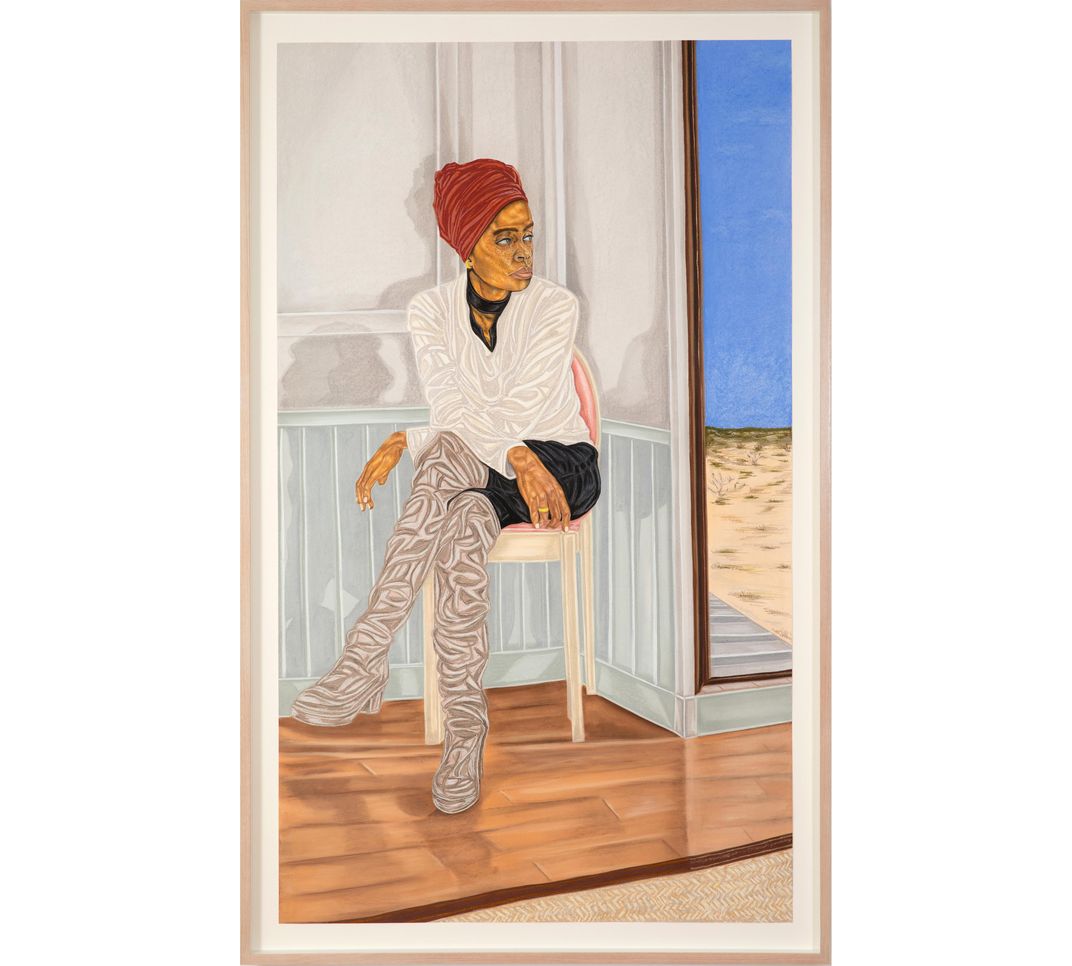
The Marchioness
The Marchioness (2016) depicts a member of the fictional UmuEze Amara family, “one of the oldest noble clans in Nigeria.” © Toyin Ojih Odutola

Toyin Ojih Odutola conjures a world that might have been

Amy Crawford

Amy Crawford – Contributing Writer

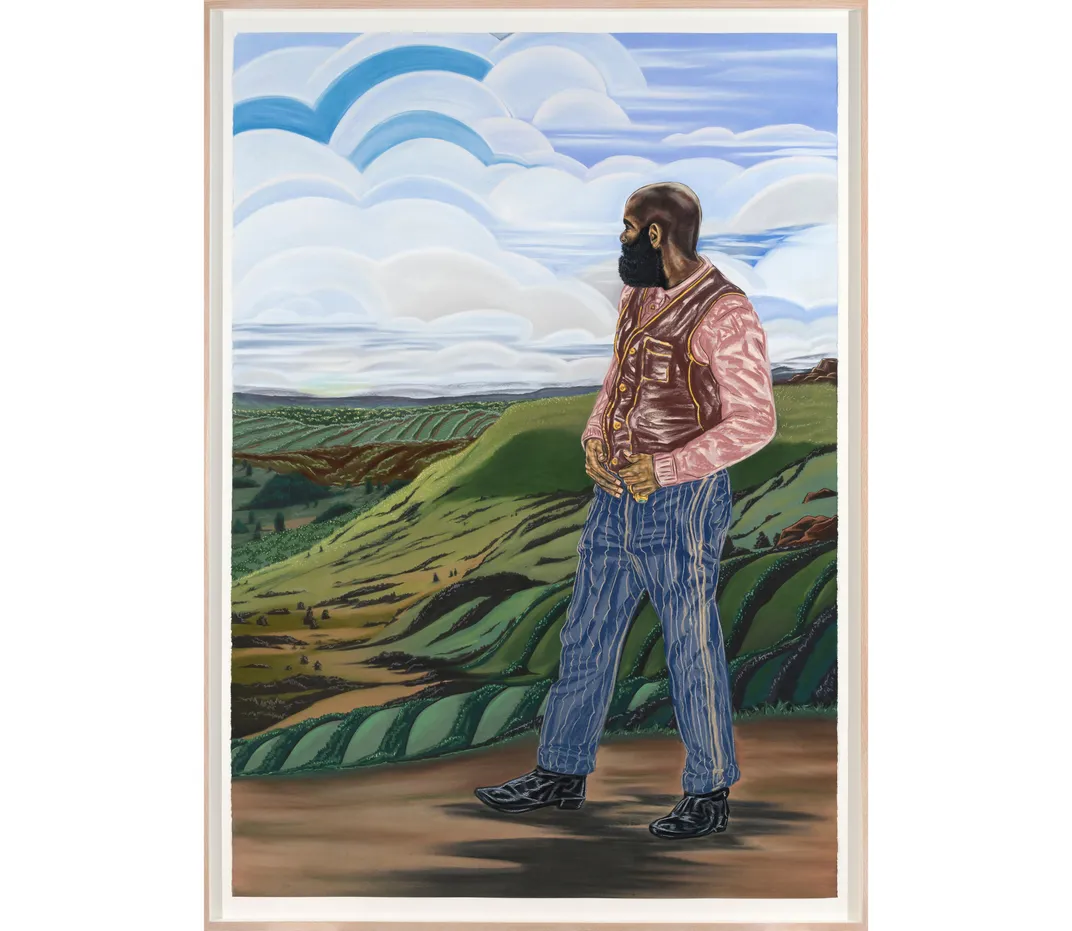
Acclaimed for her life-size pastel and charcoal portraits, Toyin Ojih Odutola now offers up a world so rich the writer Zadie Smith has compared it to a “novel of high society written by an African Edith Wharton.” The pictures appear in The UmuEze Amara Clan and the House of Obafemi, a new book tracing the imagined history of two fictional noble families in a Nigeria very different from the country where the 35-year-old artist was born. In her alternative history, the economic and social devastation wrought by the trans-Atlantic slave trade and European colonialism never occurred, and neither did Nigeria’s persecution of homosexuality. Instead, Ojih Odutola’s aristocratic families, joined by the marriage of two sons, take their wealth and status for granted. She hopes to inspire people who view these pictures to imagine a better future. “The speculative can be a bridge,” says the artist, who lives in New York City, “and the process of creating it an emancipatory act.”

First Impressions
First Impressions (2017) © Toyin Ojih Odutola
Orlando
Orlando (2018) © Toyin Ojih Odutola
Surveying the Family Seat
Surveying the Family Seat (2017) © Toyin Ojih Odutola