
Over thousands of years, humans from Eurasia trekked more than 12,400 miles to eventually reach the southernmost tip of South America, a new genetic investigation suggests
Tens of thousands of years ago, Homo sapiens embarked on a major migration out of Africa and began settling around the world. But exactly how, when and where humans expanded has long been a source of debate. Now, researchers have used genomic sequencing to trace what they’re calling the “longest migration out of Africa.” Over the course of many generations and thousands of years, humans from Eurasia trekked more than 12,400 miles to eventually reach the southernmost tip of South America, according to a new paper published in the journal Science.
In addition to providing insight into human expansion throughout the Americas, the analysis also sheds new light on health differences between populations. In the future, the researchers hope their work will contribute to personalized medical care based on an individual’s genetic profile.
“[It is] only after we know the entire genetic makeup of humanity that we can provide precision medicine that is specific to the needs of every ethnic group, in particular, those that have become endangered and are on the brink of going extinct,” co-author Stephan Schuster, a genomicist at Nanyang Technological University in Singapore, tells the Straits Times’ Judith Tan.
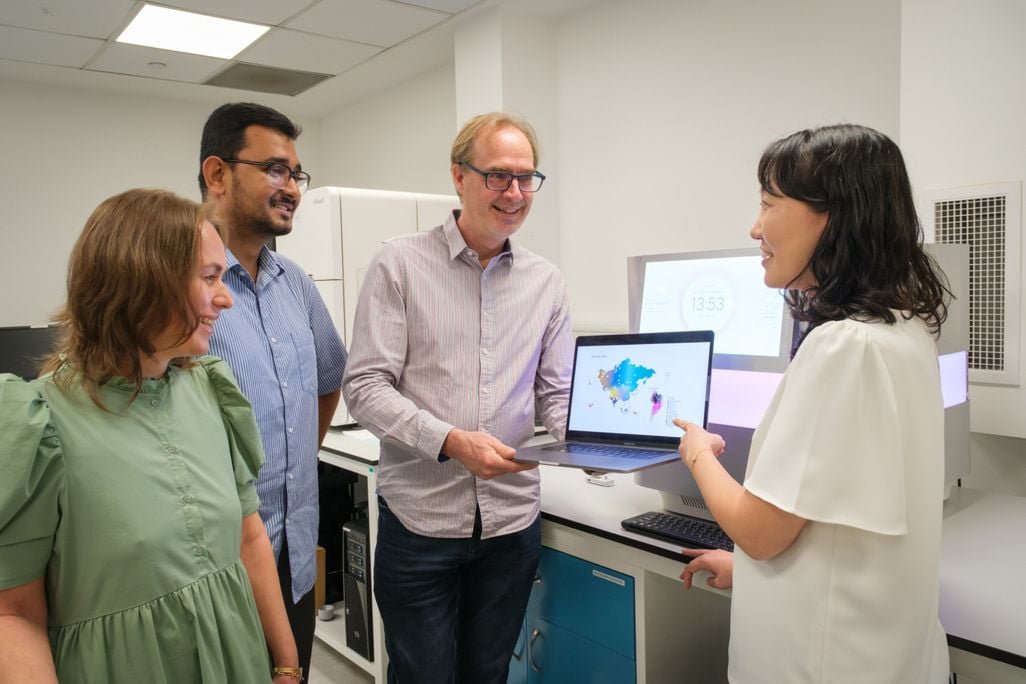
For the study, an international team of scientists analyzed the genomes of 1,537 individuals from 139 ethnic groups in South America and Northeast Eurasia. Comparing this DNA allowed them to reconstruct the human migration from Asia to South America, following the “genetic footprints left behind by the early settlers,” as lead author Elena Gusareva, a biologist at Nanyang Technological University, tells Cosmos magazine’s Evrim Yazgin.
Modern humans arrived in northern Eurasia around 45,000 years ago. By roughly 31,600 years ago, they had migrated east toward Beringia, the land bridge connecting Asia and North America in what is now the Bering Strait. From there, they walked into present-day Alaska. They expanded across North America and eventually headed into South America, reaching the continent’s northwest tip around 14,000 years ago.
“Our findings show that Native Americans are descendants of Asian populations, particularly from the West Beringian region,” says study co-author Kim Hie Lim, a genomicist at Nanyang Technological University, to the South China Morning Post’s Victoria Bela.
This South American group then split into four genetic lineages, the researchers found. One population headed east toward the Dry Chaco region, while another went south to Patagonia. One climbed up into the Andes Mountains, while another remained in the Amazon basin.
Once the groups split off, they became isolated by the continent’s geography, which reduced their genetic diversity. More specifically, the researchers found a reduced diversity of human leukocyte antigen (HLA) genes, which help support immune health. Reduced genetic diversity may have made these early South Americans more susceptible to diseases introduced by European colonists, the researchers posit.
“Understanding how ancient populations moved and settled not only helps us understand human history, but also explains how their immune systems adapted to different environments,” Kim tells the Borneo Bulletin.
Data used in the study came from GenomeAsia 100K, a large-scale project that aims to sequence 100,000 Asian human genomes.
“Most existing medicines were developed based on studies of European populations, often excluding Indigenous populations,” Kim tells Live Science’s Kristina Killgrove. “It is critical to provide tailored healthcare and disease prevention strategies that consider their specific genetic profiles.”
Sarah Kuta – Daily CorrespondentMay 23, 2025
/https://tf-cmsv2-smithsonianmag-media.s3.amazonaws.com/accounts/headshot/SarahKuta.png)

Tens of thousands of years ago, Homo sapiens embarked on a major migration out of Africa and began settling around the world. But exactly how, when and where humans expanded has long been a source of debate.
Now, researchers have used genomic sequencing to trace what they’re calling the “longest migration out of Africa.” Over the course of many generations and thousands of years, humans from Eurasia trekked more than 12,400 miles to eventually reach the southernmost tip of South America, according to a new paper published in the journal Science.
In addition to providing insight into human expansion throughout the Americas, the analysis also sheds new light on health differences between populations. In the future, the researchers hope their work will contribute to personalized medical care based on an individual’s genetic profile.
“[It is] only after we know the entire genetic makeup of humanity that we can provide precision medicine that is specific to the needs of every ethnic group, in particular, those that have become endangered and are on the brink of going extinct,” co-author Stephan Schuster, a genomicist at Nanyang Technological University in Singapore, tells the Straits Times’ Judith Tan.

For the study, an international team of scientists analyzed the genomes of 1,537 individuals from 139 ethnic groups in South America and Northeast Eurasia. Comparing this DNA allowed them to reconstruct the human migration from Asia to South America, following the “genetic footprints left behind by the early settlers,” as lead author Elena Gusareva, a biologist at Nanyang Technological University, tells Cosmos magazine’s Evrim Yazgin.
Modern humans arrived in northern Eurasia around 45,000 years ago. By roughly 31,600 years ago, they had migrated east toward Beringia, the land bridge connecting Asia and North America in what is now the Bering Strait. From there, they walked into present-day Alaska. They expanded across North America and eventually headed into South America, reaching the continent’s northwest tip around 14,000 years ago.
“Our findings show that Native Americans are descendants of Asian populations, particularly from the West Beringian region,” says study co-author Kim Hie Lim, a genomicist at Nanyang Technological University, to the South China Morning Post’s Victoria Bela.
This South American group then split into four genetic lineages, the researchers found. One population headed east toward the Dry Chaco region, while another went south to Patagonia. One climbed up into the Andes Mountains, while another remained in the Amazon basin.
Once the groups split off, they became isolated by the continent’s geography, which reduced their genetic diversity. More specifically, the researchers found a reduced diversity of human leukocyte antigen (HLA) genes, which help support immune health.
Reduced genetic diversity may have made these early South Americans more susceptible to diseases introduced by European colonists, the researchers posit.
“Understanding how ancient populations moved and settled not only helps us understand human history, but also explains how their immune systems adapted to different environments,” Kim tells the Borneo Bulletin.
Data used in the study came from GenomeAsia 100K, a large-scale project that aims to sequence 100,000 Asian human genomes.
“Most existing medicines were developed based on studies of European populations, often excluding Indigenous populations,” Kim tells Live Science’s Kristina Killgrove. “It is critical to provide tailored healthcare and disease prevention strategies that consider their specific genetic profiles.”
You Might Also Like
- Ancient DNA From Eurasian Herders Sheds Light on the Origins of Multiple SclerosisJanuary 12, 2024
- Modern Indian People Have a Wide Range of Neanderthal DNA, Study FindsMarch 13, 2024
- Researchers Track Down When Neanderthals and Early Modern Humans Interbred Using Ancient GenomesDecember 31, 2024
- Early Humans Migrated Out of Africa Several Times, DNA Study SuggestsAugust 2, 2024
- 50,000-Year-Old Neanderthal Bones Have Remains of Human Viruses, Scientists FindMay 23, 2024

Sarah Kuta | Read More
Sarah Kuta is a writer and editor based in Longmont, Colorado. She covers history, science, travel, food and beverage, sustainability, economics and other topics.
Get the latest stories in your inbox every weekday.
Email Powered by Salesforce Marketing Cloud (Privacy Notice / Terms & Conditions)
- More about:
- Asian History
- Disease
- Disease and Illnesses
- DNA
- Genetics
- Health
- History
- Human Evolution
- Migration
- New Research
- South America
Follow Us
Explore
- Smart News
- History
- Science
- Innovation
- Arts & Culture
- Travel
- At the Smithsonian
- Photo Contest
- Podcast
- Video
Subscription
Newsletters
About
- About Us
- Advertising
- Contact Us
- Content Licensing
- FAQ
- Feedback
- Internships & Employment
- Member Services
- Smithsonian Institution
- Staff
Our Partners
- Smithsonian.com
- Smithsonian Store
- Smithsonian Journeys
- Smithsonian Channel
- Smithsonian Books
- Smithsonian Membership
© 2025 Smithsonian Magazine Privacy Statement [5/20/25] Cookie Policy [5/20/25] Terms of Use Advertising Notice Your Privacy Rights Cookie Settings
 HPS Magazine