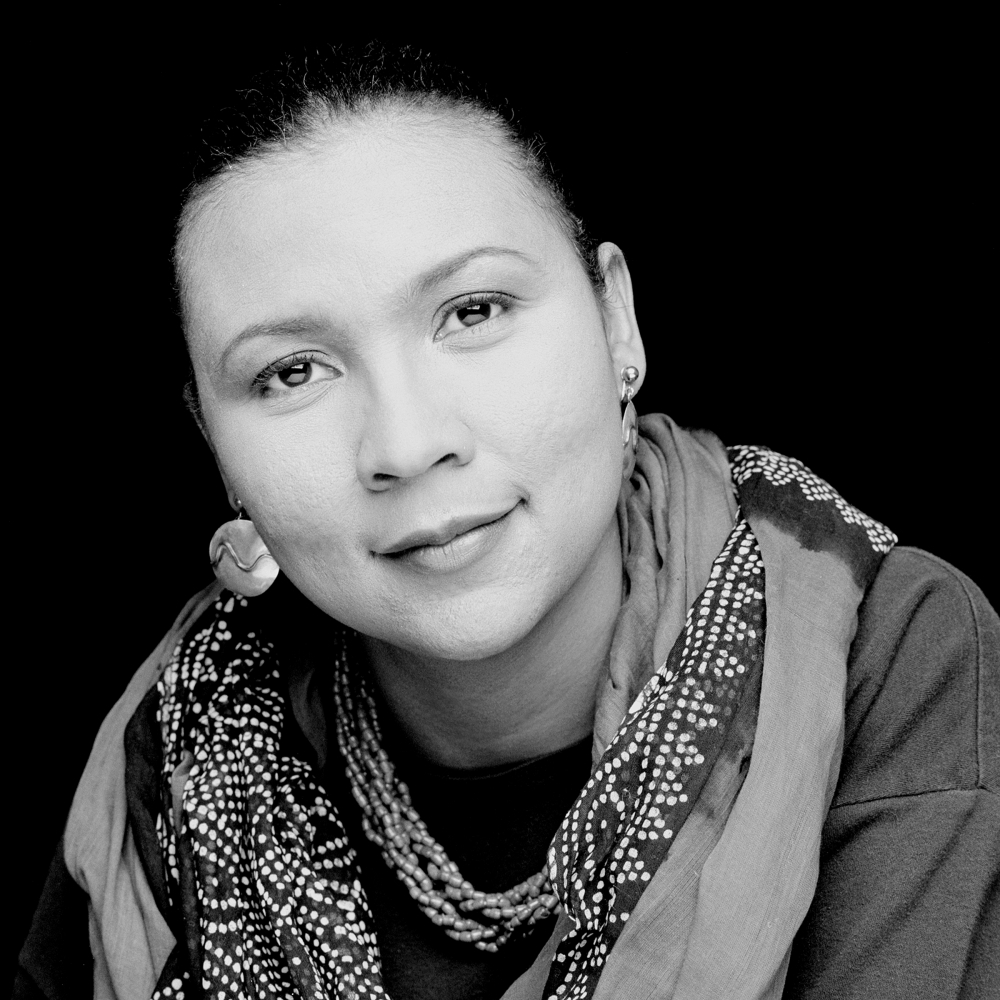
Born September 25, 1952, better known by her pen name bell hooks, is an American author, feminist, and social activist. Her writing has focused on the interconnectivity of race, class, and gender and their ability to produce and perpetuate systems of oppression and domination. She has published over thirty books and numerous scholarly and mainstream articles, appeared in several documentary films and participated in various public lectures. Primarily through a postmodern perspective, hooks has addressed race, class, and gender in education, art, history, sexuality, mass media and feminism.
Her teaching career began in 1976 as an English professor and senior lecturer in Ethnic Studies at the University of Southern California. During her three years there, Golemics (Los Angeles) released her first published work, a chapbook of poems titled “And There We Wept” (1978), written under her pen name, “bell hooks”. She adopted the names from her mother and grandmother. According to her, the name’s unconventional lowercasing signifies what is most important in her works: the “substance of books, not who I am.”
She taught at several post-secondary institutions in the early 1980s, including the University of California, Santa Cruz and San Francisco State University. South End Press (Boston) published her first major work, Ain’t I a Woman?: Black Women and Feminism in 1981, though it was written years earlier, while she was an undergraduate student. In the decades since its publication, Ain’t I a Woman? has gained widespread recognition as an influential contribution to postmodern feminist thought.
Ain’t I a Woman? examines several recurring themes in her later work: the historical impact of sexism and racism on black women, devaluation of black womanhood, media roles and portrayal, the education system, the idea of a white-supremacist-capitalist-patriarchy, the marginalization of black women, and the disregard for issues of race and class within feminism.
Since the publication of Ain’t I a Woman?, she has become eminent as a leftist and postmodern political thinker and cultural critic. She targets and appeals to a broad audience by presenting her work in a variety of media using various writing and speaking styles. As well as having written books, she has published in numerous scholarly and mainstream magazines, lectures at widely accessible venues, and appears in various documentaries.
She has published more than 30 books, ranging in topics from black men, patriarchy and masculinity to self-help, engaged pedagogy to personal memoirs, and sexuality (in regards to feminism and politics of aesthetic/visual culture). A prevalent theme in her most recent writing is the community and communion, the ability of loving communities to overcome race, class, and gender inequalities. In three conventional books and four children’s books, she demonstrates that communication and literacy (the ability to read, write, and think critically) are crucial to developing healthy communities and relationships that are not marred by race, class, or gender inequalities.
She has held positions as Professor of African and African-American Studies and English at Yale University, Associate Professor of Women’s Studies and American Literature at Oberlin College in Oberlin, Ohio, and as Distinguished Lecturer of English Literature at the City College of New York.
A commencement speech hooks gave in 2002 at Southwestern University was considered controversial. Eschewing the congratulatory mode of traditional commencement speeches, she spoke of government-sanctioned violence and oppression, and admonished students who went with the flow. The speech was booed by many in the audience, though “several graduates passed over the provost to shake her hand or give her a hug.”
In 2004 she joined forces with Berea College in Berea, Kentucky as Distinguished Professor in Residence, where she participated in a weekly feminist discussion group, “Monday Night Feminism”, a luncheon lecture series, “Peanut Butter and Gender” and a seminar, “Building Beloved Community: The Practice of Impartial Love”.
Her most recent book is entitled belonging: a culture of place, which includes a very candid interview with author Wendell Berry as well as a discussion of her move back to Kentucky.Her influences include abolitionist and feminist Sojourner Truth (whose speech Ain’t I a Woman? inspired her first major work), Brazilian educator Paulo Freire (whose perspectives on education she embraces in her theory of engaged pedagogy), Peruviantheologian and Dominican priest Gustavo Gutierrez, psychologist Erich Fromm, playwright Lorraine Hansberry, BuddhistmonkThich Nhat Hanh, writer James Baldwin, Guyanese historian Walter Rodneyblack nationalist leader Malcolm X, and civil rights leader Martin Luther King, Jr
who addresses how the strength of love unites communities.
…
 HPS Magazine